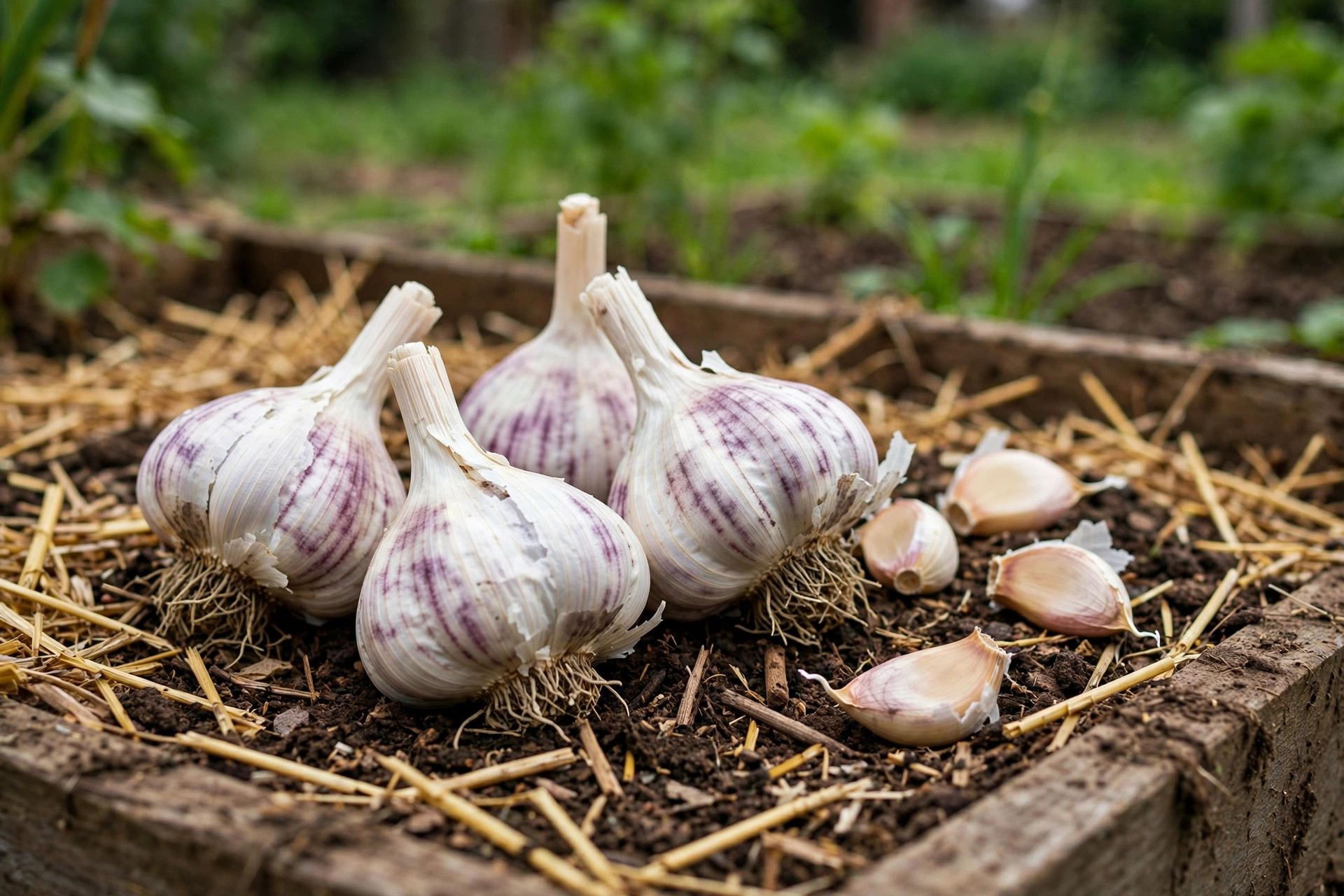
Garlic is one of the easiest crops a home gardener can grow, and this garlic bulbs planting buying guide usa will show you how to start. A single bulb planted in the fall can give you a full head of fresh garlic by the next summer. Yet many gardeners fail at the very first step: buying the right bulbs. Grocery store garlic often carries disease. It may not suit your climate. It may not even be the right kind for planting. Seed garlic, bought from a trusted grower, gives you a clean start and a known variety. Below you will learn the difference between hardneck and softneck garlic, what to check before you buy, where to order in the United States, how much to pay, and how to plant and care for your crop.
Why Garlic Deserves a Place in Your Garden
Garlic earns its space in almost any vegetable garden. A ten foot row can hold forty to sixty plants. Each plant gives one bulb. That is enough garlic for many months of cooking. Home grown garlic tastes sharper and fresher than most store garlic.
Garlic also asks for little. It needs no special tools or greenhouse. It grows in garden beds, raised beds, and large pots. It asks for sun, loose soil, and a layer of mulch. It sits in the ground through the winter and does its main growing in the spring. Pests leave it alone in most years. Diseases are rare when you start with clean seed stock.
There is another reason to grow garlic. It teaches you the rhythm of the seasons. You plant in the fall and cover the bed with straw. In spring the green shoots rise. By early summer you harvest. Few crops give so much pleasure for so little work. The sections below will help you make each step count.
What to Look for When You Buy Garlic Bulbs: Garlic Bulbs Planting Buying Guide Usa
The first rule is simple. Buy seed garlic, not eating garlic. Seed garlic is grown for planting and inspected for disease. Grocery store garlic is grown for food. It may carry viruses that do not show until the plants grow, and it is often treated to stop sprouting. It can still grow, but the results are poor in most cases.
Check the size of the bulbs. Large bulbs give large cloves, and large cloves give strong plants. Choose bulbs that feel heavy and firm in the hand. The wrapper skins should be dry and tight. Do not buy bulbs that smell musty or show mold.
Ask about disease testing. Good sellers grow from tested stock and can name the variety and where it was grown. They sell whole bulbs, and you break them into cloves just before planting. Never buy pre-separated cloves that have sat in a bin for weeks. Dried cloves root poorly.
Order early. The best varieties sell out fast. Most sellers open ordering in late summer and ship in September and October. If you wait until November, the choice will be small. Sites like Burpee and Park Seed list seed garlic each season, and specialty growers often carry rare types.
Hardneck and Softneck: The Big Choice
The most important choice is between hardneck and softneck garlic. Hardneck garlic grows a stiff stem through the center of the bulb and needs cold winters to form bulbs well. It suits the northern half of the country. It gives fewer but larger cloves, and it grows flower stalks called scapes in late spring. You can cut and eat the scapes. They taste like mild garlic.
Softneck garlic has no stiff stem. It suits warm climates with mild winters. It stores for a long time, often eight months or more. The bulbs have many small cloves in layers. This is the kind you braid into strings. Most grocery garlic is softneck.
Your climate decides for you in most cases. Cold winters point to hardneck. Warm winters point to softneck. If you live between the two, try both kinds in your first year.
Types and Options Worth Knowing
Beyond the hardneck and softneck split, there are named varieties with real differences in flavor, size, and storage life. Learning a few names will help you buy with care.
Hardneck Varieties
Rocambole types have rich, deep flavor and peel with ease, but store only three to four months. Porcelain types give very large bulbs with four to six fat cloves and keep up to seven months. Purple Stripe types show purple marks on the skins, taste strong, and keep about five months.
Hardneck bulbs have four to twelve cloves. The cloves are large and easy to peel. This makes hardneck a favorite with cooks. The scapes give a bonus harvest in spring.
Softneck Varieties
Artichoke types are the most common softneck. They give many cloves in layers and store six to eight months. Silverskin types store up to twelve months but have many small cloves with tight skins. They are the kind most often braided.
Softneck bulbs have eight to twenty cloves. The outer cloves are large. The inner cloves are small. Save the largest outer cloves for planting and use the small inner ones in the kitchen.
Elephant Garlic
Elephant garlic is not true garlic. It is closer to a leek, with very large bulbs and mild flavor. It needs the same care. If you want true garlic flavor, stick with real garlic varieties.
Where to Buy Garlic Bulbs in the USA
You have three main choices: online seed houses, local nurseries, and farm markets. Online sellers give the widest choice. Gurney’s and Burpee carry seed garlic in the fall. Park Seed lists several varieties with growing notes. Proven Winners and Monrovia focus more on ornamental plants but carry useful growing guides through their networks.
Local nurseries sell bulbs suited to your area, and the staff can tell you which varieties do well nearby.
When you order online, read the shipping notes. Seed garlic ships in the fall at planting time. Choose a ship week two to four weeks before your ground freezes. Bulbs should arrive firm and dry. If they arrive soft or moldy, ask for a refund at once.
A good seller lists the variety name, the type, the expected bulb size, and the clove count. Vague listings that say only “garlic bulbs” are a warning sign. The Old Farmer’s Almanac publishes planting calendars by zone that help you time your order. The National Institute of Food and Agriculture offers research on crop health that serious growers can read. For general garden advice, The Spruce and Gardening Know How keep large libraries of growing guides.
Cost and Price
Seed garlic costs more than eating garlic. Expect to pay between one and six dollars per bulb at most sellers. A pound of seed garlic holds eight to twelve bulbs and costs about fifteen to thirty dollars. Rare or new varieties cost more.
Think in terms of return. One bulb gives five to ten bulbs at harvest. A twenty dollar order can give you one hundred to two hundred bulbs the next year. Save your largest bulbs each year for replanting. After the first year, you may never need to buy garlic again.
Shipping adds cost, usually eight to fifteen dollars. Order with a friend and split it. Watch for minimum orders of ten or fifteen dollars at some sellers.
How to Plant Garlic Step by Step
Garlic planting follows the same steps in every region. Only the timing changes. In the north, plant four to six weeks before the ground freezes, often in October. In the south, plant in November or even December. The goal is the same: roots grow before winter, but shoots stay small.
Pick a sunny spot. Garlic needs six to eight hours of sun each day, and the soil should drain well. Garlic rots in standing water. Raised beds work well in heavy clay soil. Do not plant garlic where onions or garlic grew in the last three years. This lowers disease risk.
Work the soil eight to ten inches deep. Mix in two to three inches of compost. Garlic is a heavy feeder and likes rich soil with a pH between 6.0 and 7.0. A simple soil test from your county office will tell you the pH.
Break the bulbs into cloves the day you plant. Keep the papery skin on each clove. Plant only the large outer cloves. Small cloves give small bulbs.
Push each clove two inches deep with the pointed end up. Space cloves six inches apart in rows twelve inches apart. Cover the bed with four to six inches of straw mulch after planting. The mulch guards against frost heave and spring weeds. Water once after planting if the soil is dry.
In spring, pull back any extra mulch when shoots are four inches tall. Leave two to three inches of mulch to hold moisture. Water when the top inch of soil is dry. Stop watering two weeks before harvest, as this helps the bulbs cure.
For hardneck garlic, cut the scapes when they curl into one loop. This sends energy to the bulb. Eat the scapes fresh or cooked.
Harvest when the lower three or four leaves turn brown but five or six green leaves remain. Dig one bulb to check. The skins should be tight and the cloves full. Dig with a fork to avoid cuts. Shake off the soil. Do not wash the bulbs.
Cure the bulbs in a dry, shaded place with good air flow for two to four weeks. After curing, cut the stems and trim the roots. Store in a cool, dry place at fifty to sixty degrees. Good storage gives you garlic for many months.
Care and Upkeep Through the Season
Garlic needs steady care but not daily work. In fall, the mulch does most of the job. Check that wind has not blown it away, and add more straw if bare soil shows.
In spring, feed the plants once. Use a balanced fertilizer or side dress with compost when shoots are six inches tall. Weeds are the main enemy. Garlic has shallow roots and hates competition. Pull weeds by hand while they are small. The mulch layer will stop most of them.
Watch for pests. Onion maggots can attack in some areas, and row covers in spring keep the flies off. Aphids may gather on leaves, but a strong spray of water removes them. In most gardens, garlic grows with no pest trouble at all.
Diseases are rare with clean seed stock. White rot is the worst garlic disease. It shows as white fluff on the bulb base with tiny black dots. There is no cure. Pull and destroy sick plants at once, and do not compost them. Rotate your garlic bed to fresh ground each year.
Keep notes. Write down the variety, the planting date, and the harvest date. Note which varieties did well. This record makes each year better than the last.
Safety
Garlic is safe for most people to grow and eat. A few points still matter. Wear gloves if your skin reacts to garlic juice, as some people get rashes from long contact with raw cloves.
Keep dogs and cats away from large amounts of garlic. Garlic can harm pets if they eat a lot of it. Do not feed garlic to pets on purpose.
Do not eat bulbs that show blue green mold inside. Some mold on garlic can make toxins. When in doubt, throw it out. This is rare with home grown garlic stored in dry air.
Wash your hands after handling soil and compost, and use clean tools. These simple habits keep both you and your garden safe.
Frequently Asked Questions
Can I plant garlic from the grocery store? You can, but you should not expect good results. Store garlic may carry disease and is often treated to stop sprouting. The variety may not suit your climate. Seed garlic costs a little more and gives far better harvests.
When is the best time to plant garlic in the USA? Plant in the fall, four to six weeks before the ground freezes. In northern states this means October. In southern states this means November or December.
How deep should I plant garlic cloves? Plant cloves two inches deep with the pointed end up, spaced six inches apart. In very cold areas, plant three inches deep for extra frost protection.
How much garlic should I plant for a family? Plant one hundred cloves for a family that cooks often. That is about ten to fifteen bulbs of seed garlic, and a four by eight foot bed holds this amount with ease.
Why did my garlic grow only one round bulb? Single round bulbs, called rounds, form when garlic is planted too late in spring or gets no cold period. Fall planting with enough chill time fixes this. Rounds are still good to eat.
How long does home grown garlic store? Softneck garlic stores six to twelve months in cool, dry air. Hardneck garlic stores three to seven months depending on the type. Eat hardneck first and save softneck for later.
A Final Word
Good garlic starts at the store, not in the soil. Buy clean seed garlic of the right type for your climate. Plant it in rich soil in the fall. Mulch it well. Give it water and weed free ground in spring. Harvest on time and cure it with care. Follow this garlic bulbs planting buying guide usa and your first crop will likely succeed. Each year after that gets easier. Save your best bulbs for replanting and share extras with neighbors. If you also grow flowers or herbs, you may enjoy our guides to wildflower seed mixes usa online deals, a native grass seed buying guide usa, and dahlia bulbs bulk florida homes usa for more planting ideas.
References
Burpee. (n.d.). Seeds, plants, and gardening supplies. https://www.burpee.com Gardening Know How. (n.d.). Gardening guides and plant care. https://www.gardeningknowhow.com Gurney’s Seed & Nursery Co. (n.d.). Seeds, plants, and garden supplies. https://www.gurneys.com Monrovia. (n.d.). Plants for home gardens. https://www.monrovia.com National Institute of Food and Agriculture. (n.d.). Agricultural research and extension. https://www.nifa.usda.gov Park Seed. (n.d.). Seeds, plants, and gardening supplies. https://www.parkseed.com Proven Winners. (n.d.). Plants and gardening inspiration. https://www.provenwinners.com The Old Farmer’s Almanac. (n.d.). Gardening calendars and advice. https://www.almanac.com The Spruce. (n.d.). Home and garden advice. https://www.thespruce.com
Was this guide helpful?

About Lisa Anderson
The My Garden US editorial team writes practical, in-depth home and garden guides for American homeowners — tested advice, no fluff.