
Many shoppers start with a bamboo roman shades price comparison usa search when they want the warm look of natural fiber without paying too much. The prices they find can feel all over the map. One site lists a shade for thirty dollars. Another lists a similar shade for three hundred. This guide lays out the real ranges, explains why the numbers differ, and shows how to compare prices in a fair way.
Why Bamboo Roman Shades Cost What They Do
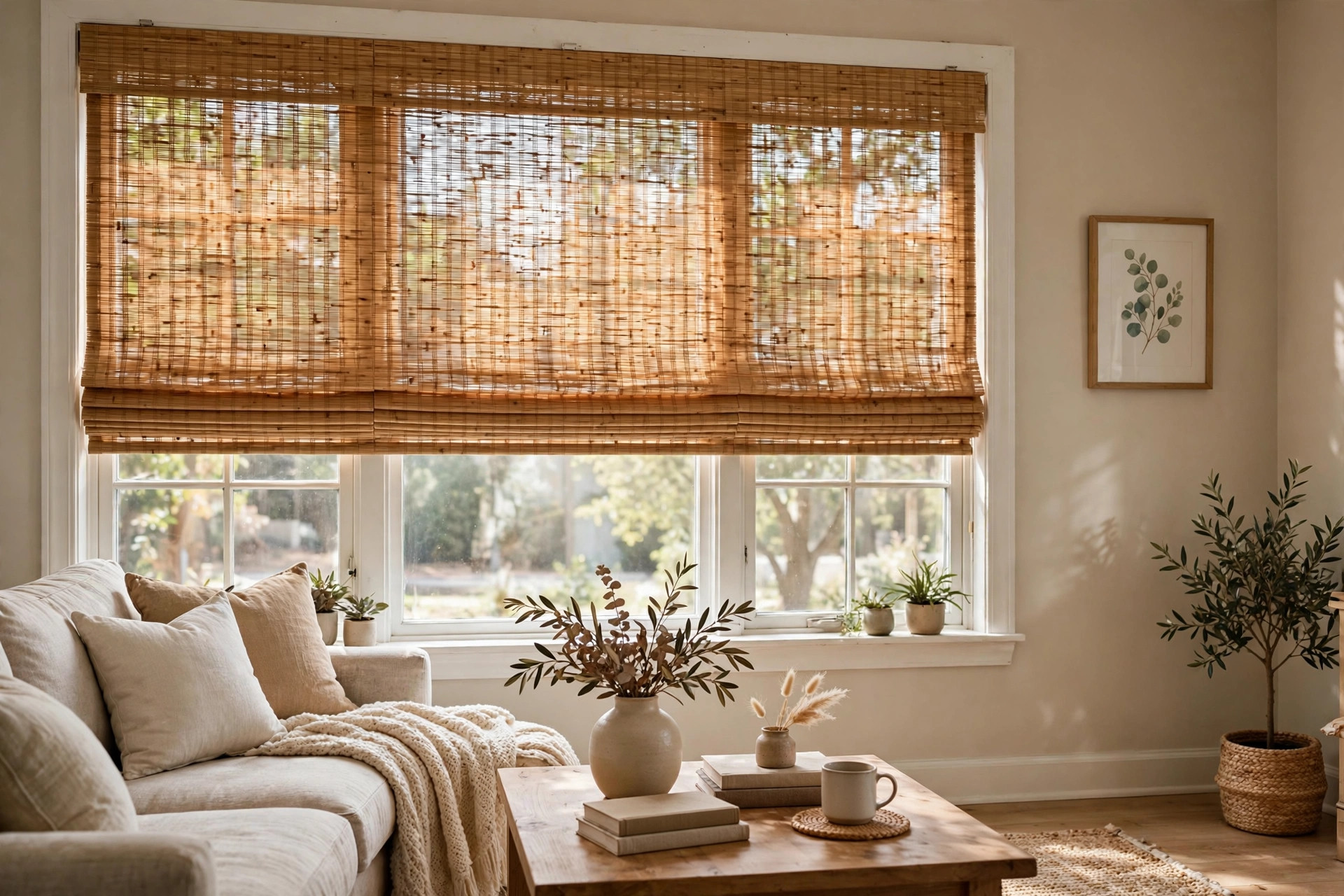
Bamboo roman shades sit in a middle ground. They cost more than basic vinyl or aluminum mini blinds. They cost less than full custom drapery. The reason is the material and the build. Bamboo shades are woven from bamboo reeds, grass reeds, or bamboo matchsticks. A roman style folds up in neat horizontal pleats when raised. That folding needs a cord system, rings, and a headrail, which adds labor.
The grade of the weave matters most. Cheap shades use thin reeds with wide gaps. They filter light but offer little privacy. Mid-range shades use tighter weaves that still show texture. High-end shades use fine split bamboo or woven grass with neat edges and a lined back. Each step up in material quality adds to the price.
Lining is the second big factor. An unlined shade is the cheapest option. A shade with a privacy liner costs more. A shade with a blackout liner costs the most. The liner adds fabric, labor, and a better lift mechanism, because lined shades are heavier.
The third factor is sizing. Stock sizes fit common windows and cost the least. Semi-custom shades come in more widths and lengths and cost a bit more. Full custom shades are made to the exact measurement of your window. They cost the most but fit best.
What to Look For When You Compare: Bamboo Roman Shades Price Comparison Usa
A fair price comparison only works if you compare the same thing. Shoppers often compare an unlined stock shade on one site with a lined custom shade on another. That is not a fair test. Use the points below so every price you check covers the same ground.
Size and Mount
Write down your window width and length before you shop. Prices jump at common width breaks, such as every six inches. Also note whether you will mount inside the frame or outside it. Inside mounts need exact measurements. Outside mounts can be a little wider and often look fuller.
Weave and Material
Ask what the shade is made of. Terms like “natural bamboo,” “woven wood,” and “matchstick” describe different products. Matchstick shades are the thinnest and cheapest. Woven wood shades use bamboo, reeds, or grasses in a tighter weave and cost more. The weave label tells you how much light and privacy you will get.
Liner Type
Decide whether you need a liner at all. For a kitchen or dining room, an unlined shade may be enough. For a bedroom, a privacy or blackout liner is worth the extra cost. When you compare prices, match liner to liner. A lined shade from a discount store can cost the same as an unlined shade from a custom maker.
Lift Style
Corded lifts are the oldest and cheapest style. Cordless lifts cost more and are safer in homes with small children. Top-down bottom-up shades cost the most. Motorized shades sit at the top of the range. When one price seems much higher than another, check the lift style first.
Types of Bamboo Roman Shades
Bamboo roman shades come in a few main types. Knowing the type helps you read prices with care.
Flat roman fold. The shade lies flat when lowered and folds into crisp pleats when raised. This is the classic look. Prices are moderate.
Hobbled or soft roman fold. The fabric keeps its soft folds even when lowered. This style uses more material and often costs more than the flat fold.
Matchstick roll-up. The shade rolls up from the bottom like a mat. This is the simplest build and the lowest price, but it gives the least finished look.
Woven wood with valance. A fabric valance hides the headrail at the top. The valance adds a tailored finish and a small price increase.
Lined or unlined. As noted above, liners change both price and function. Privacy liners cut glare and add privacy. Blackout liners block nearly all light.
Some shoppers compare bamboo roman shades with blackout roller shades when the goal is a dark bedroom. Roller shades block more light per dollar. Bamboo roman shades win on warmth and texture. The right choice depends on which quality matters more in that room.
Bamboo Roman Shades Price Comparison USA: The Ranges
The numbers below reflect typical advertised prices across American retailers in recent years. Prices move with sales, so treat these as ranges, not fixed tags.
Stock sizes, unlined. The cheapest tier. A basic matchstick or light bamboo shade in a stock size runs about 25 to 60 dollars per window. These appear in big box stores and discount outlets. The weave is simple. The cord is basic. They suit renters and low-traffic rooms.
Stock sizes, lined. Add a privacy liner and the range moves to about 50 to 110 dollars per window. Blackout-lined stock shades run about 70 to 140 dollars. The jump comes from the liner fabric and the stronger lift cord.
Semi-custom woven wood. Shades ordered in your width, with a choice of liner and lift, run about 100 to 250 dollars per window. This tier covers most mid-range online blind stores. The weave is tighter. The finish looks more polished. Cordless lifts are common here.
Full custom. Made-to-measure bamboo roman shades run about 180 to 450 dollars per window. Designer fabrics, fine bamboo weaves, and motorized lifts push past 500 dollars for large windows. Custom work includes exact fitting, edge binding, and often professional measuring.
Large or specialty windows. Wide patio doors and tall windows cost more in every tier. Expect to pay 50 to 100 percent above the standard ranges for oversize widths. Arched tops and cut-outs are specialty work and carry custom pricing.
When you run your own bamboo roman shades price comparison usa, build a simple table. List the retailer, the exact size, the weave type, the liner, and the lift style. Then write the price per window. This five-column table keeps every quote honest. Without it, a low price may hide a thin weave or a missing liner.
Sales change the picture a lot. Many blind stores run site-wide sales of 20 to 40 percent off several times a year. A shade listed at 220 dollars may sell for 132 dollars during a sale. Because of this, the list price matters less than the sale rhythm. Track a few shades for a month before you buy. Major home improvement retailers carry natural shades year round, so you can check listed prices at Home Depot and Lowe’s against the specialty blind shops.
Online blind stores often price below the big box stores for the same build. A specialty site like Blinds.com focuses only on window coverings, so its mid-range prices can beat a general retailer. Style-focused marketplaces such as Wayfair and IKEA carry natural-fiber shades in the low to mid range. Read the specs line by line before you decide. A bargain price with a thin weave is not a bargain.
Cost Beyond the Sticker Price
The shade is not the only cost. Shipping can add 10 to 30 dollars for a set of shades, though many stores ship free over a set amount. Measuring tools cost little: a steel tape measure and a pencil are enough. Most shades come with mounting hardware and a basic guide.
Professional installation runs about 50 to 100 dollars per window in most markets. Many homeowners mount their own shades with a drill and a level. A standard window takes about 20 to 30 minutes. If you hire help, ask whether the price covers measuring, mounting, and old-shade removal.
Returns matter too. Custom shades are often final sale. Stock shades can usually go back. This policy difference has real value. A custom shade that fits poorly is money lost. Measure twice. Many custom shops offer a remake policy for their own measuring errors, which is worth asking about before you order.
Care and Upkeep
Bamboo roman shades last a long time with light care. Dust them every few weeks with a soft cloth or a vacuum brush. A feather duster works well for the folds. Avoid soaking the shade. Water can warp bamboo reeds and spot the weave.
For lined shades, follow the liner’s care tag. Most liners need only a wipe with a damp cloth. Never use harsh cleaners on the bamboo. A mild soap solution on a cloth handles most spots. Let the shade dry fully in the lowered position before you raise it.
Sunlight is the slow enemy of natural fiber. Bamboo can fade on the sun side over the years. A liner slows this fading a great deal. Rotating the shade is not an option, so the liner is the main defense. In very sunny rooms, a lined shade is worth the price for this reason alone.
Cord care matters for safety and life span. Pull the cord straight down, not at an angle. Angled pulls wear the cord guides. Replace frayed cords at once. Many makers sell cord repair kits for a few dollars. A cordless lift avoids this whole problem, which is one more reason cordless shades cost more up front.
Safety
Window cords are a known hazard for small children and pets. The U.S. Consumer Product Safety Commission has long warned that corded window coverings can strangle a child. For this reason, many experts advise cordless shades in nurseries, playrooms, and any room a child uses.
If you already own corded bamboo shades, safety devices help. Cord cleats hold excess cord high on the frame. Cord tensioners keep looped cords tight against the wall. Keep cribs, beds, and play areas away from windows with cords. When you compare prices, do not treat the cordless upgrade as a luxury. In a child’s room, it is a safety feature, and its cost is well spent.
Motorized shades remove cords entirely. They cost the most, but they also remove the hazard. They also suit hard-to-reach windows, where pulling a cord is a daily chore. Weigh the price against the room and the window before you rule them out.
Where Shoppers Compare Prices
Most buyers check three or four sources before they buy. A common pattern works well. First, browse design ideas on sites like HGTV and The Spruce to learn which styles suit your rooms. These sites explain weaves, liners, and mounting in plain terms. Then check stock prices at the big box stores. Then get quotes from two online blind shops for the same size and liner. This order keeps you from paying a premium for a look you could name in cheaper words.
Watch for shipping times too. Stock shades ship in days. Semi-custom shades take one to three weeks. Full custom shades can take four to six weeks. If you need shades before guests arrive, the faster stock tier may beat the cheaper custom quote.
Shoppers in warm states sometimes want shades that also cut noise and heat. A related guide to noise reducing bamboo roman shades for Texas homes covers liners and weaves that block more sound. Heat works the same way: a tighter weave and a liner keep a room cooler. If your windows face west, budget for the liner. The energy savings repay the difference over a few summers.
For buyers on a tight budget, an affordable bamboo roman shades buying guide walks through the cheapest reliable options. The short version is this: pick a stock size close to your window, skip the liner where privacy allows, and buy during a sale. The savings are real, often 30 percent or more.
Frequently Asked Questions
How much do bamboo roman shades cost per window in the USA? Stock unlined shades run about 25 to 60 dollars. Lined stock shades run about 50 to 140 dollars. Semi-custom shades run about 100 to 250 dollars. Full custom shades run about 180 to 450 dollars or more.
Are bamboo roman shades cheaper than custom drapes? Yes, in most cases. Custom drapery with fabric, lining, and labor often runs 400 to 1,000 dollars per window. Bamboo roman shades give a finished look for much less, though drapes offer more pattern and color choice.
Do bamboo roman shades provide privacy at night? Unlined shades do not. Light from inside the room makes the weave see-through after dark. A privacy liner fixes this. For full privacy, choose a lined shade or add a separate liner.
Can I cut a bamboo roman shade to fit? No. Cutting the shade ruins the weave and the lift cords. Some matchstick roll-up shades can be trimmed in width by removing edge reeds, but this is risky. Order the right size instead.
How long do bamboo roman shades last? With light care, a good shade lasts 7 to 12 years. Sun fades the fiber over time. Liners slow the fading. Cheap thin shades may wear out in 3 to 5 years, which is why the lowest price is not always the best value.
Are cordless bamboo roman shades worth the extra cost? In homes with children or pets, yes. The safety gain is the main reason. Cordless lifts also look cleaner and are easier to use on wide windows. Expect to pay 20 to 40 dollars more per window for cordless.
A Short Final Word
A careful bamboo roman shades price comparison usa comes down to five facts: size, weave, liner, lift, and seller. Write those down for every quote. Compare like with like. Buy lined shades where privacy or sun matters, and cordless shades where children play. Track prices through one sale cycle before you order. Done this way, you will pay a fair price for shades that look warm, fit well, and last for years.
References
Blinds.com. (n.d.). Window blinds, shades, and shutters. https://www.blinds.com HGTV. (n.d.). Home and garden ideas. https://www.hgtv.com IKEA. (n.d.). Home furnishings. https://www.ikea.com Lowe’s. (n.d.). Home improvement products. https://www.lowes.com The Home Depot. (n.d.). Home improvement products. https://www.homedepot.com The Spruce. (n.d.). Home and garden advice. https://www.thespruce.com U.S. Consumer Product Safety Commission. (n.d.). Product safety information. https://www.cpsc.gov Wayfair. (n.d.). Furniture and home goods. https://www.wayfair.com
Was this guide helpful?

About Lisa Anderson
The My Garden US editorial team writes practical, in-depth home and garden guides for American homeowners — tested advice, no fluff.
You May Also Like
The Best Double Curtain Rod Brackets for Sale: A Homeowner’s Guide
August 22, 2026 0 views
Best Bamboo Roman Shades With Free Shipping: A Practical Buying Guide
January 27, 2026 0 views
Energy Efficient Decorative Window Film Buying Guide
August 26, 2026 0 views