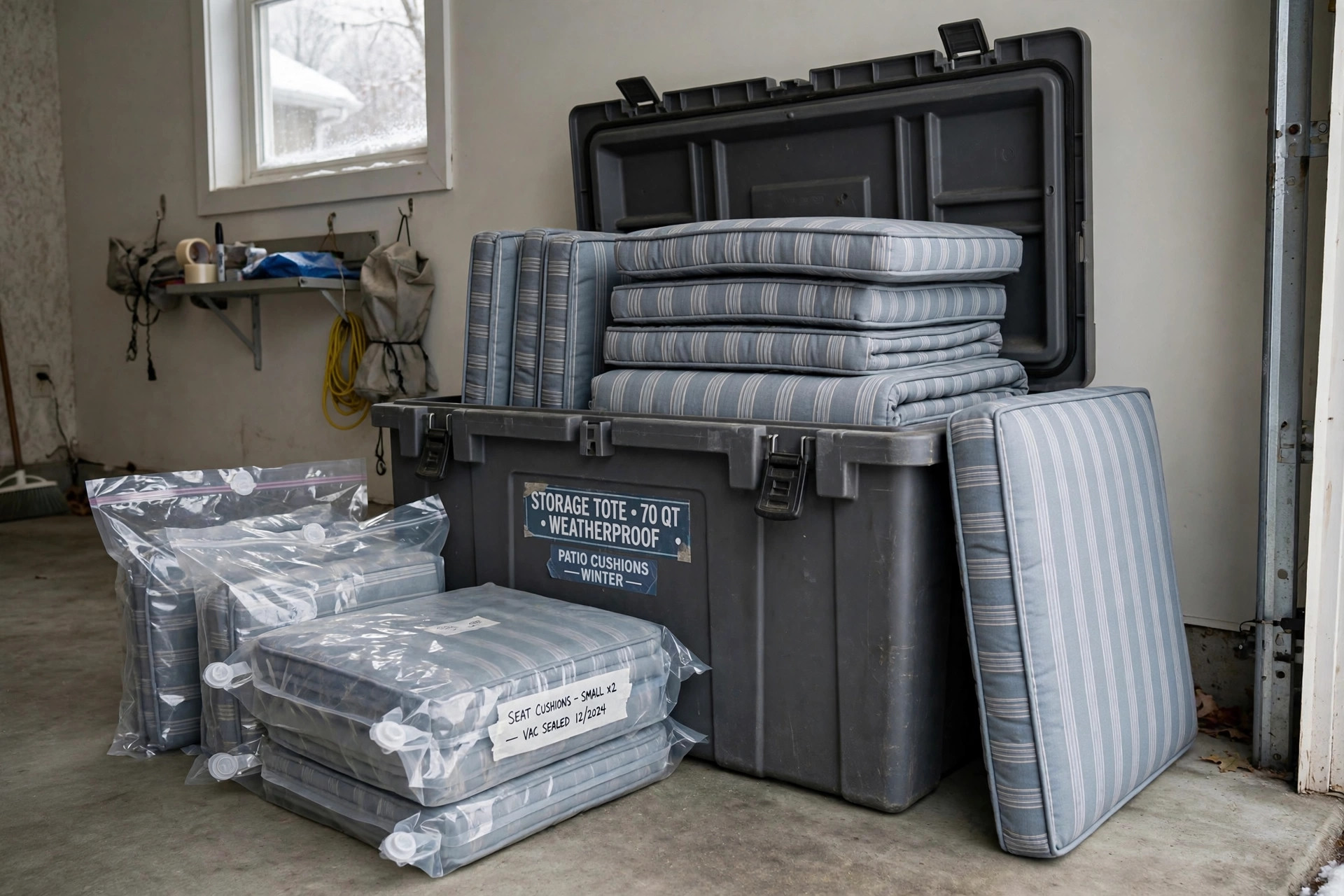

Every autumn, millions of American homeowners face the same question: how to store patio cushions in winter so they are still worth using when spring returns. Cushions left out in the cold absorb water, grow mold, fade in the low winter sun, and lose their shape. A set of good outdoor cushions can cost two hundred dollars or more, and replacing them each year is a waste of money. This guide shows how to store patio cushions in winter so they stay clean, dry, and in good shape until the first warm day of spring.
Why It Matters
Patio cushions are built for fair weather. The foam and fiber fillings inside them act like sponges when rain, snow, or damp air reaches them. Once water soaks deep into the core of a cushion, it is very hard to dry out. In cold months, trapped moisture leads to mildew and rot. Even cushions marked as water resistant are not waterproof. They shed light rain but cannot stand up to weeks of snow and sleet.
Cold itself also causes damage. Freeze and thaw cycles can crack foam cores and weaken the fabric covering them. The low winter sun, though weaker than summer light, still fades colors over a long season. Wind tosses loose cushions across the yard or against sharp metal frames, which tears seams.
Storing cushions inside before the worst weather arrives solves all of these problems at once. It takes an hour or less, it costs little or nothing, and it adds years to the life of your outdoor furniture. A homeowner who follows a good storing plan each fall will replace cushions far less often than one who leaves them out all year.
What to Look For Before You Pack Them Away: How to Store Patio Cushions in Winter
The first step in learning how to store patio cushions in winter is knowing when to start. Watch the night temperatures. When nights begin to drop below forty-five degrees on a regular basis, it is time to bring the cushions in. Do not wait for the first snow. Damp cushions are much harder to store than dry ones, and a wet week in late autumn can leave them full of moisture before the cold even begins.
Clean each cushion before storage. Dirt, pollen, spilled food, and suntan oil left on the fabric all winter will stain it for good. A full guide to how to clean outdoor furniture cushions walks through the whole washing process, but the short version is simple: brush off loose dirt, wash with warm water and a mild soap, rinse well, and let each cushion dry in full sun for at least a full day. Never store a cushion that is even slightly damp. Press your hand firmly into the center of each one and wait a minute. If the fabric feels cool or the hand comes away damp, give it another day in the sun.
Check each cushion for damage while you clean it. Look for torn seams, broken zippers, and fabric that has worn thin. Small tears are easy to fix now, before storage. A torn seam left open all winter lets dust and pests inside.
Take one more look at the storage spot you plan to use. The ideal place is indoors, cool, and dry with some air flow. Good options include a garage, a basement, a shed with a sealed floor, a spare closet, or even a covered attic. Bad options include a spot under a deck, a lean-to with open sides, or a plastic shed that leaks when it rains. If the floor is concrete, plan to keep cushions off it. Concrete draws moisture from the ground and can pass it straight into fabric that sits on it.
Types of Storage: How to Store Patio Cushions in Winter
There is no single right way to store patio cushions in winter. The best method depends on how many cushions you own, how much space you have, and how much you want to spend. Below are the main options, from the simplest to the most thorough.
Stack and Cover
The simplest method is to stack clean, dry cushions in a sheltered spot and cover them with a heavy-duty tarp or fitted furniture cover. This works well for a garage or shed that stays dry all winter. Stand large seat cushions on edge against a wall rather than piling them high in a heap, which squeezes the foam flat. Pull the cover down snugly and tie it tight so dust cannot drift in. This method costs nothing if you already own a tarp.
Weatherproof Storage Boxes
Outdoor storage boxes, often called deck boxes, are the most popular choice for cushion storage. They sit right on the patio or porch, so there is no long trip to the garage. Look for boxes made of solid resin with a tight lid and a rubber gasket. These are the same kinds of boxes shown in guides to weatherproof patio furniture covers heavy duty. A quality deck box from a home center like Lowe’s or The Home Depot will hold four to six chair cushions and cost between fifty and one hundred fifty dollars. Be sure the box lid closes fully. If cushions keep the lid propped open, water will find its way in.
Vacuum-Seal Bags
Vacuum-seal bags squeeze cushions down to a fraction of their size by pulling the air out. They are ideal for people with many cushions and little room. Place a clean, dry cushion in the bag, zip it shut, and draw the air out with a vacuum hose. The cushion will shrink to a thin flat pack that slides easily under a bed or on top of a closet shelf. One caution: leave the cushion sealed for the winter only. Months of tight compression can flatten foam that is left sealed too long, so open the bags as soon as spring arrives. Vacuum bags also give excellent protection against dust, moisture, and insects, since the sealed plastic is a full barrier.
Hanging and Shelving
If you have wall space in a garage or shed, shelving or hanging racks keep cushions off the floor and away from mice. Wide garage shelving holds stacked cushions with air flow all around them. Some homeowners hang large cushions from wall hooks through their tie straps. Just be sure hooks and shelves are clean and dry, and never hang a damp cushion, since still air around a damp cushion invites mildew.
Indoor Closet Space
For a small set of cushions, an ordinary closet works fine. Line a shelf with a clean sheet, stack the cushions loosely, and shut the door. Closets in the living part of the house stay at an even temperature and have low humidity, which is the best possible storage climate. This costs nothing and gives the cushions the safest winter they can get.
Cost and Price Guide
Storing patio cushions for the winter does not have to be expensive. Most homeowners spend nothing at all, using tarps, closets, and garage shelves they already own. Here is a rough idea of what the main options cost when bought new.
A heavy-duty tarp or fitted cover costs fifteen to forty dollars and lasts for several seasons. A solid resin deck box with a gasketed lid costs fifty to one hundred fifty dollars, depending on size and brand. Vacuum-seal bags come in sets of four or eight for twenty to thirty-five dollars, and they can be reused for a few years. A simple garage shelving unit costs forty to eighty dollars at most home centers and serves many purposes besides cushion storage. Mothballs or cedar blocks, used by some people to keep pests away, cost less than ten dollars.
Compare these prices to the cost of replacement cushions. A basic replacement set for four chairs runs about one hundred to two hundred dollars. A full set for a deep-seating outdoor sofa can cost three hundred to six hundred dollars. Furniture makers such as Article and Polywood sell premium replacement cushions at even higher prices.
Care and Upkeep During the Winter
Storage is not a task you do once and forget. Cushions benefit from a small amount of attention during the winter months.
Check them once a month. Open the box, bag, or closet and look at each cushion. Feel for dampness, sniff for a musty smell, and watch for signs of mice such as droppings or chewed fabric. If you find moisture, move the cushions to a drier spot at once and let them air out before putting them back.
Keep the storage area dry. In a garage or shed, fix any leaks as soon as you spot them. Do not park wet equipment against the cushion storage. A small dehumidifier in a closed storage room does more good than any single storage product, and HGTV often points to dry indoor air as the key to winter storage success.
Handle cushions gently when you move them. Lift rather than drag them across a rough floor, which wears the fabric thin. Put the largest and heaviest cushions on the bottom of any stack and the smallest on top. Never place sharp tools or heavy boxes on top of stored cushions.
As winter ends, plan the return. Open vacuum bags early and let the foam breathe for a day or two. Wipe down each cushion with a damp cloth before putting it back outside. This is also a good time to reread ideas for patio furniture storage ideas for winter so that next autumn the whole job goes even more smoothly.
Safety
Cushion storage is a low-risk job, but a few simple safety rules still apply.
First, never use mothballs or chemical pest repellents on cushions that children or pets will touch in the spring. Mothballs contain chemicals that can be harmful if swallowed or breathed in a closed room. Cedar blocks and dried lavender are safer choices, and a clean, sealed container is the best defense of all.
Second, be careful when stacking cushions high. A tall stack of soft, slippery cushions can topple onto a person, especially a child. Keep stacks below shoulder height, or store cushions on sturdy shelving that is bolted to the wall.
Fourth, check electrical equipment in the storage area. Do not place cushions against a furnace, water heater, or space heater. Foam filling burns quickly, and fabric covers catch fire easily. Keep at least three feet of clear space between stored cushions and any heat source.
Frequently Asked Questions
Can I leave my patio cushions outside all winter if they are covered?
It is not a good idea. Even a heavy cover lets some moisture in over a long season, and cold air moves under loose edges. Cushions left outside gather mildew, fade, and attract nesting animals. Home guides at The Spruce and Frontgate both advise moving cushions indoors before the first hard freeze. If you truly have no indoor space, a gasketed deck box in a sheltered spot is the minimum protection.
Do I really need to clean the cushions before storing them?
Yes. Dirt, food, sunscreen, and tree sap all stain more deeply over time. A spot that would wash out in August can become permanent by March. Cleaning is also your chance to check for damage. Testers at Consumer Reports note that fabric care is one of the main factors in how long outdoor cushions last.
Will vacuum bags ruin the foam in my cushions?
Not if you use them for one winter only. Short-term compression is fine for most foam and polyester fillings. Open the bags as soon as spring arrives and let the cushions sit in the sun for a day to puff back up. Do not store cushions in vacuum bags for longer than a year.
How cold is too cold for patio cushions?
Most cushion fabrics and foams can handle normal winter temperatures as long as they stay dry. Moisture is the real enemy, not cold. A cushion stored dry in an unheated garage at ten degrees will survive just fine. A cushion stored damp in a shed at thirty degrees will grow mildew. Keep them dry first and worry about temperature second.
Should I store the cushions and the frames together or separately?
Separately. Frames made of metal, wood, or wicker can stay outside under a cover all winter, though indoors is better. Cushions should go inside. Storing them together traps moisture between the cushion and the frame, which rusts metal and rots wood. Clean and cover the frames on their own, following a winter furniture plan, and keep the cushions in their own dry spot.
What is the best way to keep mice out of stored cushions?
Start with a sealed container. Mice chew through fabric and cardboard but cannot chew through a solid plastic box with a latching lid. Keep the storage area free of food and clutter that attracts them. Steel wool stuffed into small gaps keeps them out of sheds and garages. Check once a month for signs of chewing. If mice are a known problem in your area, a trap or two near the storage spot is cheap insurance.
A Short Final Word
Learning how to store patio cushions in winter is one of those small home habits that pays off far beyond the effort it takes. An hour of cleaning and packing each autumn keeps your cushions fresh, clean, and comfortable for many springs to come. Choose the storage method that fits your space and your budget, keep the cushions dry above all else, and give them a quick check once a month. When warm weather returns, you will pull out cushions that look and feel as good as the day you put them away. Guides from Wayfair and other outdoor living sources agree: the cushions that last the longest are simply the ones that spent the winter indoors.
References
Article. (n.d.). Modern furniture. https://www.article.com Bob Vila. (n.d.). Home improvement advice. https://www.bobvila.com Consumer Reports. (n.d.). Product reviews and ratings. https://www.consumerreports.org Frontgate. (n.d.). Outdoor furniture and decor. https://www.frontgate.com HGTV. (n.d.). Home and garden ideas. https://www.hgtv.com Lowe’s. (n.d.). Home improvement products. https://www.lowes.com Polywood. (n.d.). Outdoor furniture. https://www.polywood.com The Home Depot. (n.d.). Home improvement products. https://www.homedepot.com The Spruce. (n.d.). Home and garden advice. https://www.thespruce.com Wayfair. (n.d.). Furniture and home goods. https://www.wayfair.com
Was this guide helpful?

About Sarah Mitchell
The My Garden US editorial team writes practical, in-depth home and garden guides for American homeowners — tested advice, no fluff.
You May Also Like

How to Winterize Outdoor Furniture Cushions: A Complete Guide
June 21, 2026 0 views
How to Level Patio Furniture on Grass
September 14, 2026 0 views
Best Porch Swing for Two People: A Practical Buying Guide
August 10, 2026 1 views