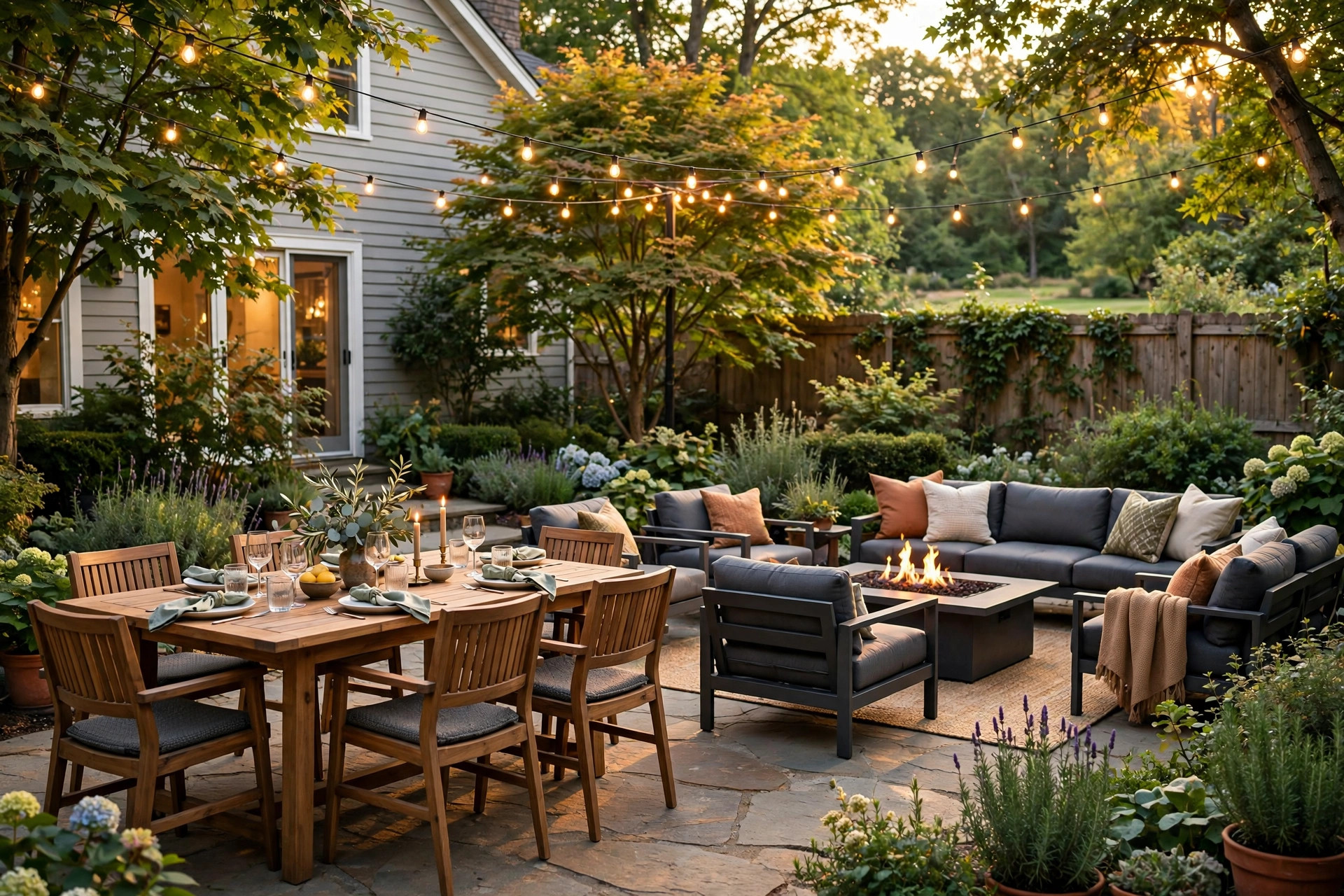

Good patio furniture layout ideas for entertaining start with a simple question: how do your guests move, sit, and gather? Most patios are not short on furniture. They are short on a plan. A clear plan turns a jumble of chairs into a place where people linger and talk. This guide walks you through the planning step by step: how to divide your patio into zones, how to keep paths open, and how to pick pieces that fit the space you have.
Why Your Patio Layout Matters
A patio is an outdoor room. Inside the house, nobody pushes a sofa against the only door. Yet outside, many people do just that with their grill or their largest chair. Guests then squeeze past, drinks spill, and the host spends the evening moving things out of the way.
A sound layout solves three common problems. First, it keeps traffic moving. People should be able to walk from the back door to the grill to their seats without turning sideways. Second, it puts the right furniture near the right activity. Food and drink belong near the cooking spot. Soft chairs belong where people talk. Third, it sets the mood. A circle of chairs feels warm. A long straight row feels stiff. When the seats face each other and the drinks are within reach, guests stay longer and the host relaxes. That is the whole point of entertaining.
Measure Before You Move a Single Chair: Patio Furniture Layout Ideas for Entertaining
Every strong layout begins with a tape measure. Walk out to your patio with paper and pencil. Write down the length and width of the paved area. Note the fixed points: the door from the house, the steps down to the yard, any posts, the grill hookup, and outdoor outlets. Mark which side gets sun at dinner time and which side stays in shade.
Draw the shape on paper. Even a rough sketch is enough. Place the door first, because it is the start of every trip guests take. Leave a path at least three feet wide from the door to the yard and to the cooking area. Three feet is about the width of one person carrying a tray. Four feet is better if you host often.
Now stand in the space and watch how it feels at different hours. Morning light tells you where breakfast chairs belong. Late sun tells you where you will need an umbrella. Wind tells you where napkins will fly. These small notes save you from placing the dining table in a gusty corner.
The Three-Zone Method
Professional hosts divide the patio into three zones: cooking, dining, and talking. You do not need a huge patio for this. Even a small one can hold all three if the zones are planned.
The Cooking Zone
Put the grill or outdoor kitchen near the back door. The cook should never carry raw food far. Leave clear floor space on both sides of the grill, at least three feet, so the cook can move without bumping guests. Place a small table or cart next to the grill for tools, plates, and the tray of cooked food. If you have a gas grill, check that it sits well away from the house wall and from anything that can burn. The grill is the work corner of the patio, so it is fine for it to look plain. Keep it tidy and keep the path to it open.
The Dining Zone
Place the dining table in the second-best spot on the patio. The best spot often goes to the talking area, where people spend the most time. The dining zone needs room for chairs to pull out. Allow about two feet of space behind each chair. A round table helps conversation because everyone can see each other. A rectangular table suits a long narrow patio and seats more people in a straight line. Keep a serving surface near the table, such as a side table or a rolling cart, so dishes do not crowd the center of the table.
The Talking Zone
The talking zone is the heart of the party. Put it where the view is best or where the shade falls at the hour your guests arrive. Arrange the seats so they face inward. A sofa with two chairs opposite forms a natural circle. A fire pit in the middle gives the circle a center and gives hands something to do on a cool night. Every seat should be near a place to set a drink. A chair with no table beside it leaves a guest holding a glass all evening, and that guest will not stay long.
Layout Ideas for Small Patios
Small patios reward clear thinking. When space is tight, every piece must earn its place. Start with one zone and let it grow. A small bistro table with two chairs can serve as both dining and talking space for a quiet evening with one couple.
Choose furniture that does double work. A storage bench gives seating and a place to keep cushions. Folding chairs can come out when guests arrive and lean against the wall when they leave. A wall-mounted drop-leaf table folds flat on days when the patio is empty. Round tables fit tight corners better than square ones because they have no sharp corners to bump.
Think upward as well as outward. Hanging planters, wall shelves for glasses, and a tall narrow bar cart use the air instead of the floor. Keep the center of a small patio open. An open center makes the space feel larger and lets two people pass each other without a dance. For seating comfort in tight quarters, many hosts look for the best outdoor sectional sofa for small patios, since a well-sized sectional can hug a wall and seat more people than loose chairs.
Light is a layout tool on a small patio. A string of warm lights across a pergola pulls the eye up and makes the floor feel bigger. One large lantern on the table leaves the table free for plates.
Layout Ideas for Large Backyards
A large patio has the opposite problem: it can feel empty and scattered. The fix is to break it into smaller outdoor rooms. Use outdoor rugs to mark each zone. A rug under the dining set says this is the dining room. A different rug under the sofa set says this is the living room. Leave open walkways between the rugs so the rooms connect.
Give each zone a clear purpose. One corner can hold the dining table near the kitchen door. Another can hold a seating group around a fire feature. A third can be a quiet spot with two chairs facing the garden for guests who want a calm talk.
On a large patio, distance is the enemy of conversation. If the seats are more than about eight feet apart, people must raise their voices, and the talk dies. Pull chairs in. You can always move them back for a big group photo. Anchor large zones with something heavy at the center, such as a fire pit table or a large planter, so the furniture does not drift apart over the season. Many families build the evening around an outdoor coffee table with fire pit because it gives the talking zone warmth, light, and a natural meeting point.
Shade needs planning on a big patio too. One umbrella rarely covers a large dining set and a seating group. Plan two shade points, or place one zone in the natural shade of the house.
Choosing Pieces That Fit the Plan
Buy the layout, not the set. Stores sell matching sets because they photograph well, but your patio may need a dining table from one line and chairs from another. Start with the largest piece, usually the dining table or the sofa, and build around it.
Check scale with tape on the floor. Before you buy, mark the footprint of each piece on the patio with painter’s tape. Walk the paths. This ten-minute test prevents the most common mistake in patio furnishing: a table that looked fine in the store but blocks the door at home.
Pick materials for your climate. Metal frames last long but can rust near salt air unless they are treated. Teak weathers to a soft gray and stands up to rain. All-weather wicker resists sun and showers and needs little care. Sit in a chair before you commit. A beautiful chair that hurts after twenty minutes will sit empty while guests crowd onto the good seats.
For the dining zone, match the table to your guest list. If you often host eight, do not hope a table for six will stretch. Hosts who feed a crowd on a regular basis often search for an affordable outdoor dining table for eight as the anchor piece, then add folding chairs for the rare larger night. Comfort counts as much as looks: cushions with ties stay put in wind, and quick-dry foam keeps a surprise shower from ending the party.
Cost and Price
Patio furniture prices run wide. A basic metal dining set for four can cost a few hundred dollars. A large teak or cast aluminum set can run into the thousands. Cushions, umbrellas, rugs, and lights add more. Plan the budget by zone, not by piece. Decide what the dining zone may cost and what the talking zone may cost, and keep a small reserve for shade and lighting.
The layout itself is free, and it is the part that matters most. Moving the chairs you already own into a circle costs nothing and can change the feel of the whole evening. When you do spend, spend first on the pieces guests touch: seats and tables. Decorative items can wait. Watch for end-of-season sales in late summer, when stores clear floor stock at deep discounts. Sites like IKEA and Wayfair also run regular promotions worth checking before you buy.
Care and Upkeep
A good layout lasts longer when the furniture is cared for. Brush off cushions after each gathering so crumbs and pollen do not stain. Hose down the paved area once a month in the busy season. Oil teak once a year if you want to keep its warm color; leave it alone if you like the silvered look.
Store or cover furniture in the off season. Heavy-duty covers keep rain and sun off frames and cushions, and they cost far less than replacing a set. Check the product advice on Consumer Reports for testing notes on durability before you buy. Bring cushions indoors when storms threaten. A dry cushion is a comfortable cushion.
Tighten bolts at the start of each season. Patio furniture loosens with use, and a wobbly chair makes a poor impression. Keep a small box of spare screws, touch-up paint, and cushion ties near the back door so small fixes happen fast.
Safety
Safety is part of the layout, not an afterthought. Keep the grill at least ten feet from the house and away from railings, overhangs, and dry plants. Never place a fire pit under a low roof or a fabric shade. Leave clear space around any flame so sleeves and tablecloths cannot catch.
Weight down umbrellas with proper bases. A gust can turn a loose umbrella into a hazard in seconds. Run extension cords for lights along edges and tape them down or use cord covers, so nobody trips in the dusk. Choose lighting bright enough for steps and paths; guests should see where the patio ends and the stairs begin.
Check the weight limits on swings, benches, and hanging chairs, and place them where a fall would land on grass or a rug rather than bare stone. Keep a small fire extinguisher near the cooking zone. It is cheap, it is simple to use, and every host who grills should own one. On cool nights, a heater extends the evening; many hosts read patio heater for outdoor dining reviews before choosing a safe model for their space.
Frequently Asked Questions
How much space do I need between patio furniture pieces?
Leave at least two feet between the edge of a table and the nearest seat for leg room. Keep main walkways three to four feet wide. Between the backs of chairs in different zones, three feet lets two people pass with ease. When in doubt, tape the layout on the ground and walk it before you buy.
What is the best layout for a narrow patio?
Line the furniture along one side and keep the other side open as a walkway. A bench against the wall with a narrow table in front seats several people without blocking the path. Use the wall for shelves and lights so the floor stays clear. Round pieces soften the tunnel feel of a long narrow space.
Should the dining table or the seating area go near the house?
Put dining near the kitchen door so food travels a short distance. Put the talking area in the best spot for view, shade, or sunset. If your patio is small and must hold one zone, choose a dining set that doubles as the conversation spot, and add side tables for drinks.
How do I arrange patio furniture for a large party?
Open the center for standing room and push seating to the edges in small groups of three or four. Set up two or three drink stations so guests do not crowd one spot. Keep the food table against a wall or railing so the serving line flows in one direction. Save the cozy circle layout for smaller nights.
What lighting works best for evening entertaining?
Layer three kinds of light. Overhead string lights give a warm general glow. Table lanterns light faces so people can see each other talk. Path lights mark edges and stairs for safety. Keep all of it warm in color, near the tone of candlelight, for the most welcoming feel.
Can I mix different furniture styles on one patio?
Yes, and it often looks better than a matched set. Keep one thing consistent to tie it together: the same wood tone, the same metal finish, or cushions in one color family. Mixed styles feel collected and personal, which suits a home. Just keep the scale similar so no single piece looks lost or oversized.
A Final Word
The best patio furniture layout ideas for entertaining share one trait: they put the guest first. Open paths, seats that face each other, drinks within reach, and a cook who is not trapped behind the grill. Measure your space, sketch the three zones, and move what you own before you buy anything new. Then invite people over and watch how the evening flows. Adjust once, and you will have an outdoor room that serves you for years.
References
IKEA. (n.d.). Outdoor furniture and patio ideas. https://www.ikea.com Wayfair. (n.d.). Patio furniture and outdoor decor. https://www.wayfair.com Consumer Reports. (n.d.). Product reviews and ratings. https://www.consumerreports.org
Was this guide helpful?

About Sarah Mitchell
The My Garden US editorial team writes practical, in-depth home and garden guides for American homeowners — tested advice, no fluff.
You May Also Like
Best Outdoor Ottoman With Storage: A Practical Buying Guide
May 26, 2026 0 views
Outdoor Daybed with Canopy for Adults: Comfort, Shade, and Style in One Piece
May 15, 2026 0 views
Outdoor Rug Pad for Concrete Patio: A Plain Guide
June 4, 2026 0 views