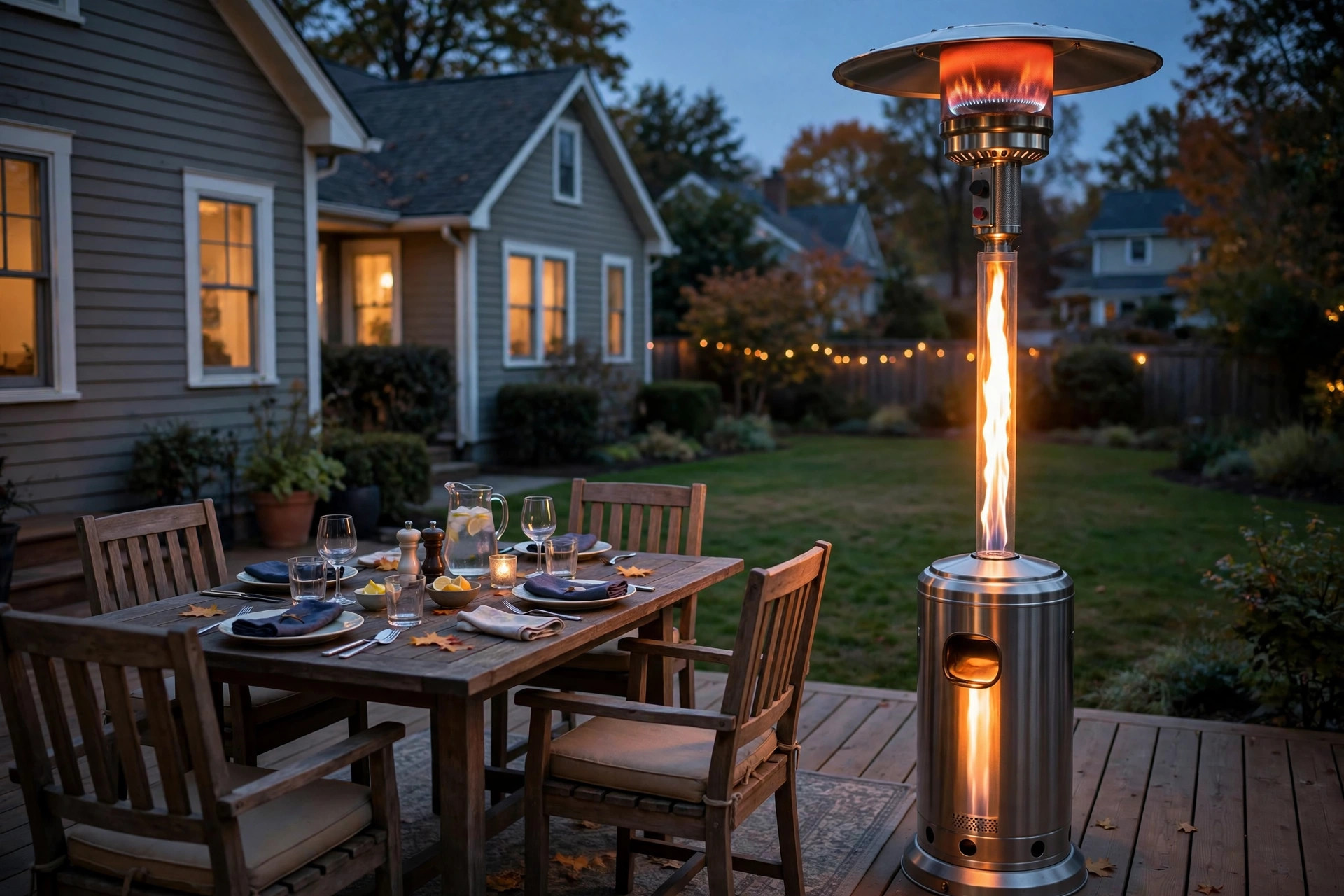

A patio heater can turn a cold deck into a dining room. Many people read patio heater for outdoor dining reviews before they spend money, and that is wise. Heaters vary a great deal in price, power, and safety. This guide reads like those reviews. It sums up what buyers and testers say about the main types, and it helps you pick the right one for your table.
In this article you will learn why a heater matters, what features to check, the four main types, what they cost to run, how to care for them, and the safety rules that come with open heat and gas. The answers are plain. They are based on the same points that come up again and again in buyer reviews.
Why a Patio Heater Changes Outdoor Dining
Dinner outside stops when the sun goes down in many parts of the country. A patio heater pushes the season back by weeks or months. A good heater warms a circle of about fifteen to twenty feet. That is enough for a table of six or eight. People stay out longer. They talk more. They use the patio they paid for.
Reviews of patio heaters for outdoor dining often make the same point. The heater is not about luxury. It is about use. A deck that sits empty from October to April is a waste. A heater that costs a few hundred dollars can bring that space back for the price of a few tanks of propane or a small rise in the electric bill.
Heat also makes the light better. Many heaters glow. The warm light sits well with string lights and lanterns. Reviewers often say the mood is the best part. Dinner feels slower. It feels calmer. That is hard to measure, but it shows up in nearly every review of a heater that worked well.
What to Look for When You Read Reviews: Patio Heater for Outdoor Dining Reviews
Reviews vary in quality. Some are honest. Some are paid. The useful ones share the same checks. When you read a review of a patio heater, look for these four things.
Heat Output and Coverage
Heat output is measured in BTU for gas heaters and in watts for electric ones. A standard full size propane heater puts out about 40,000 to 48,000 BTU. That is enough for about 200 square feet. Electric heaters are rated from 1,500 watts for a small unit to 6,000 watts for a wall mount.
Good reviews give a real world test. They tell you how far away people could sit and still feel warm. They tell you what the night was like. A heater that feels strong in mild fall air may feel weak in real winter wind. Look for reviews that tested in cold air, not just cool air.
Fuel Type
Propane is the most common. It is easy to find and easy to change. Natural gas is cheaper to run but it needs a fixed gas line. Electric heat is clean and quiet but it warms a smaller area. Reviewers who heat a large dining set almost always choose propane or natural gas.
Build and Weather Rating
Steel heaters are strong but they can rust. Stainless steel holds up better. Aluminum is light and does not rust. Reviewers in wet or coastal areas always praise stainless and aluminum. A cover is also a must. Many poor reviews are really reviews of a heater left out in the rain with no cover.
Real Owner Reports
The best reviews come from owners who have used the heater for a year. They report what breaks. Common weak points are the ignition button, the thermocouple, and the tilt safety switch. If many owners report the same fault, believe them. One bad review means little. Twenty like it means a lot. Product testers at Consumer Reports check outdoor gear with the same long view, and their method is a good model for reading any review.
Types of Patio Heaters
There are four main types. Each suits a different space and a different budget.
Freestanding Propane Heaters
This is the tall mushroom shape most people know. It stands about seven feet high. A 20 pound propane tank sits in the base. It throws heat in all directions. These are the most common choice for outdoor dining.
Reviews praise the heat and the look. They complain about the weight and the tank changes. A full tank lasts about eight to ten hours on high. Plan for a spare tank if you dine out often. Many owners buy a second tank and swap them.
Prices run from about 150 dollars to 500 dollars. The cheap ones work but the ignition and paint fail sooner. Mid range models are the sweet spot in most reviews.
Electric and Infrared Heaters
Electric heaters are quiet and have no flame. They mount on a wall, hang from a ceiling, or stand on a post. Infrared models warm people and objects rather than the air. That makes them good under a covered patio or a pergola, where gas heat would rise and escape.
Reviews say the heat feels gentle and direct. The downside is range. A 1,500 watt plug in model warms two to four chairs. To warm a full table you need a bigger hardwired unit or two smaller ones. Running cost is simple: about 20 to 30 cents an hour per 1,500 watts at average rates.
Tabletop Heaters
These are small propane heaters that sit on the table itself. They are short, often two to three feet tall. They use small one pound propane bottles. Reviews call them nice for two people. For a full dinner party they are too weak. Most reviewers suggest them as a second heater, not the main one.
They cost 80 to 150 dollars. They are easy to store. They are also easy to knock over, so a stable base and a tilt shut off are a must.
Natural Gas Heaters
If your home has a gas line to the patio, a natural gas heater is the cheapest to run. Fuel costs a fraction of propane. The heater never runs dry in the middle of dinner. Reviews from owners with a gas line are very positive.
The catch is the hookup. A plumber must run the line. That can cost 300 to 1,000 dollars. For a home where you dine outside all year, it pays back. For a rental or a small deck, it is too much work.
Cost and Price
The purchase price is only half the story. Reviewers who track cost give the full picture.
A freestanding propane heater costs 200 to 400 dollars for a good one. A 20 pound tank refill costs 15 to 25 dollars and lasts about eight hours on high. That is two to three dollars an hour. Dining out three nights a week for a season can cost 150 to 250 dollars in propane.
Electric heaters cost less to buy in small sizes, 100 to 300 dollars, but big wall units run 400 to 800 dollars. Running cost is lower per hour than propane, often under a dollar, but the warm area is smaller.
Natural gas costs the least to run, often under a dollar an hour, but the install is the most costly. Tabletop heaters are cheap to buy but the small bottles cost more per hour of heat than a big tank.
When you compare models, check the warranty. Most heaters carry one to two years. Better brands offer three to five years on the burner and housing. Reviews suggest the warranty is a fair guide to build quality.
Care and Upkeep
A patio heater is simple to care for. Most of the work is cleaning and storage.
Wipe the reflector and the emitter screen at the start of the season. Dust and spider webs block heat. Check the burner ports for blockages. A soft brush is enough. Never poke the ports with a wire. You can widen the holes and ruin the flame pattern.
Store the tank outside, never in a garage or shed. Keep the heater covered when not in use. A fitted cover costs 20 to 40 dollars and adds years of life. If you live where winters are hard, move the heater to a shed or cover it well and drain any standing water from the base.
Ignition problems are the most common repair. The battery in a push button igniter dies every year or two. A thermocouple that wears out can shut the pilot off. Both parts are cheap. Reviews often praise brands whose parts are easy to buy. Before you buy, check that spare parts exist for the model.
Pair your heater with good patio pieces. An affordable outdoor dining table for eight seats the crowd, and a best patio umbrella for wind reviews guide helps you shade the same space by day. If you want flames at the table as well, read our notes on the outdoor coffee table with fire pit before you choose.
Safety Rules
Heat and fuel demand respect. Reviews sometimes skip this, but safety is part of every good heater guide.
Keep the heater at least three feet from walls, railings, and furniture. Keep it clear of low branches and fabric awnings. The top of a tall heater can reach very high heat. Never use a propane heater under a roof or inside a tent. Carbon monoxide is odorless and it kills.
Place the heater on flat ground. Use the tilt shut off. If your model lacks one, do not buy it. Anchor tall heaters in wind. Some bases hold sand or water for weight. Check the gas hose for cracks each season. If you smell gas, turn the tank off, move away, and let the area air out.
Electric heaters need a dry outlet and a proper circuit. Do not run them on long thin extension cords. Infrared heaters get very hot on the surface. Keep children and pets at a safe distance. Retailers like IKEA and Wayfair list clearance distances in their product pages, and those numbers are worth reading before you set the heater in place.
Frequently Asked Questions
How long does a propane tank last in a patio heater?
A standard 20 pound tank lasts about eight to ten hours on the highest setting. On a medium setting it can last twelve to fifteen hours. Most diners run the heater on medium once the table is warm, so a tank often covers two or three long evenings.
Can I use a patio heater on a wood deck?
Yes, if you follow the rules. Keep clearances, place it on a level spot, and never leave it burning alone. Many reviewers use a heat resistant mat under the base for extra care. Check your local fire code first. Some towns limit open flame heaters on wooden structures.
Are electric patio heaters cheaper to run than propane?
Per hour, yes. A 1,500 watt electric heater costs about 20 to 30 cents an hour. A propane heater costs two to three dollars an hour on high. But electric heat covers less area, so you may need two units to warm the same table.
Do patio heaters work in wind?
They work, but wind cuts the effect. Freestanding heaters lose a lot of heat to wind. A windbreak, a fence, or a glass screen helps. Infrared heaters do better in wind because they warm objects, not air. Reviews from windy areas rate infrared and wall mounted models higher.
What size heater do I need for a table of eight?
A full size freestanding propane heater at 40,000 BTU or more is the standard answer in reviews. For electric, plan on 4,000 to 6,000 watts across one or two units. Measure your space. A table of eight with chairs needs about 150 to 200 square feet of coverage.
A Final Word
Reading patio heater for outdoor dining reviews is the right start. The pattern in those reviews is clear. Buy the fuel type that fits your space. Size the heat to the table, not the deck. Choose stainless or aluminum if rain is common. Keep up with simple care. Follow the safety rules every time.
A good heater pays for itself in evenings outside. Pick one with a strong warranty, a stable base, and parts you can buy. Then invite people over and eat dinner under the sky, warm and unhurried, long after the sun is gone.
References
Consumer Reports. (n.d.). Product reviews and ratings. https://www.consumerreports.org IKEA. (n.d.). Home furnishings. https://www.ikea.com Wayfair. (n.d.). Home goods and outdoor furniture. https://www.wayfair.com
Was this guide helpful?

About Lisa Anderson
The My Garden US editorial team writes practical, in-depth home and garden guides for American homeowners — tested advice, no fluff.
You May Also Like
How to Secure Patio Umbrella in Wind
February 4, 2026 0 views
Best Outdoor Rocking Chairs Set of Two for Your Porch or Patio
February 26, 2026 0 views
Best Outdoor Sectional Under 800 Dollars: A Plain Guide for Real Patios
August 10, 2026 0 views