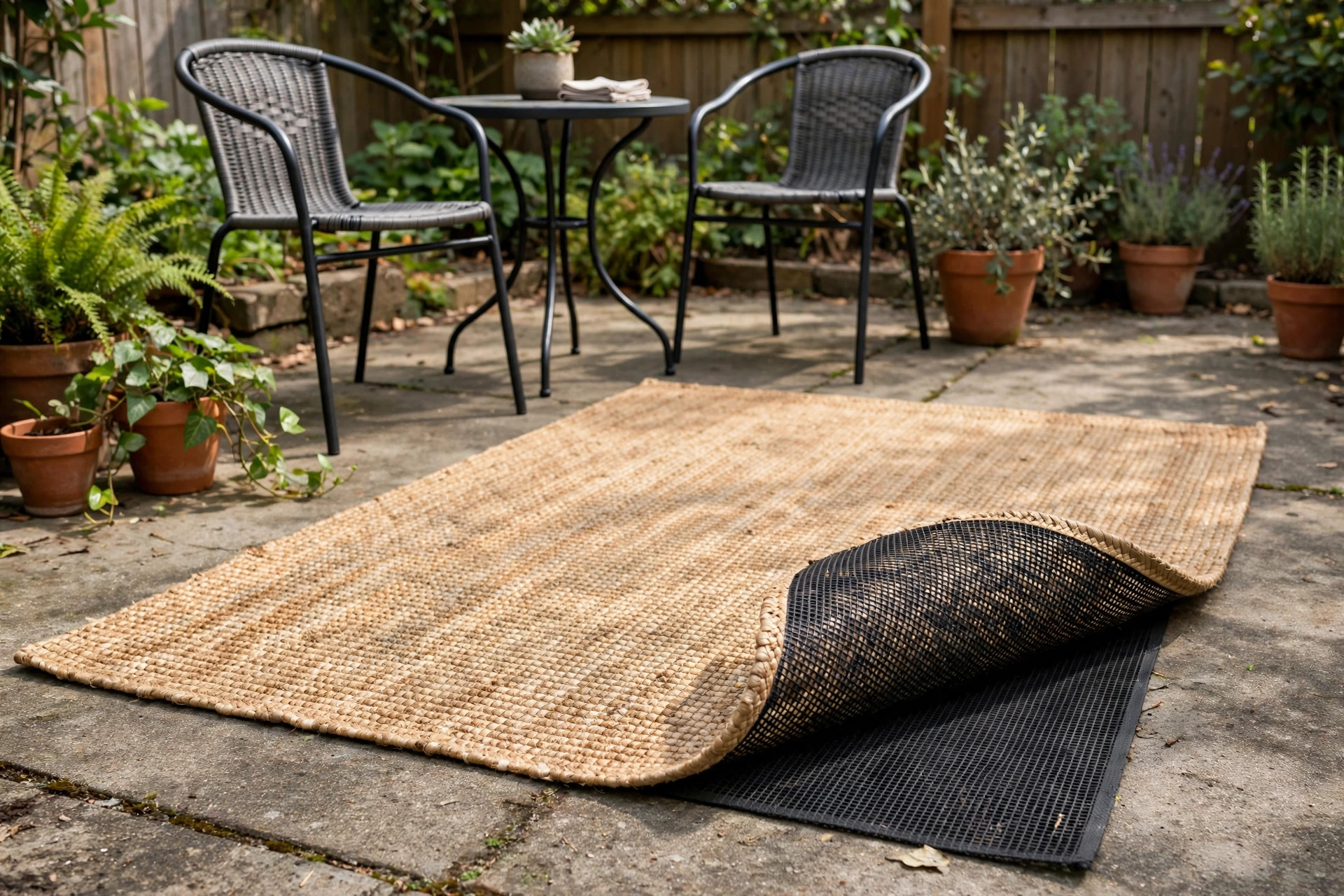

An outdoor rug pad for concrete patio is the layer that sits between a patio rug and the concrete slab. Most shoppers buy the rug first and forget the pad. That is a mistake. Concrete is hard, rough, and slow to drain. A rug placed straight on concrete will trap water, grow mold, and slide when wet. A good pad solves all three problems. This guide explains why the pad matters, how to pick one, what it costs, and how to keep it in good shape for years.
Why an Outdoor Rug Pad for Concrete Patio Matters
Concrete looks tough, but it is rough on soft goods. The surface is full of tiny sharp points. Foot traffic grinds a rug against those points every day. In a single season, the rug backing can wear thin. A pad puts a cushion between the fibers and the stone. It doubles the life of most patio rugs.
Water is the second reason. Rain soaks a rug and pools on concrete because the slab does not absorb it. A rug lying flat holds that water like a sponge. Mildew follows within days. A pad made for outdoor use lets water pass through and air move under the rug. The space it creates dries faster. That keeps the rug cleaner and the patio free of musty smell.
The third reason is safety. Wet concrete under a rug is slick. Without a pad, the rug can creep across the slab when people walk on it. Edges curl up and become trip points. A pad with grip on the bottom locks the rug in place. Family members and guests can walk with confidence. This matters most near patio string light poles for backyard gatherings, where people move around in the dark.
A pad also makes the patio feel better. Concrete is hard underfoot. The pad adds a soft layer that takes the edge off. Morning coffee on the patio feels warmer and more pleasant. Small gains, but they add up over a summer.
What to Look For When You Choose: Outdoor Rug Pad for Concrete Patio
Start with drainage. An outdoor rug pad for concrete patio must let water through. Look for open mesh designs or materials with holes that drain. Closed foam pads made for indoor rooms will hold water against the slab. That leads to stains and mold. Retailers like Wayfair list outdoor pads with drainage holes in the product details. Check for that line before you buy.
Next, check the grip. The bottom of the pad should grab the concrete. Rubber and latex-free grip materials work best on a slab. Felt alone does not hold well outdoors. The top of the pad should be soft enough to cushion the rug but firm enough to support it. Many good pads use a two-part design: a tough grip layer below and a cushion layer above.
Measure the rug, not the patio. The pad should be about two inches smaller than the rug on every side. This keeps the pad edge hidden and lets the rug lie flat. A pad that sticks out from under the rug looks sloppy and trips people. Use a tape measure on the actual rug. Do not guess from the store tag.
Thickness matters too. Most outdoor pads run from one quarter inch to one half inch thick. Thin pads work well under flat weave rugs. Thicker pads suit heavy rugs near an affordable outdoor dining table for eight, where chairs push and pull across the surface. A thick pad stops chair legs from denting the rug fibers.
Check for weather proofing. The pad should stand up to sun, rain, and heat without breaking down. Terms like UV resistant and mold resistant are worth seeking out. Independent testing groups such as Consumer Reports publish buying advice on outdoor products and the features that hold up in bad weather.
Types and Options
PVC open grid pads are the most common choice. They look like a plastic mesh net. Water drains right through the holes. Air flows under the rug. They grip concrete well. These pads are light and easy to cut to size with scissors. They work on nearly every patio. Many homeowners find them at big home stores like Home Depot.
Recycled rubber pads are heavier and very stable. They do not blow away in strong wind. They cushion well and last for many years. The trade-off is weight. A large rubber pad can be hard to lift when you want to clean under the rug. They also cost more than mesh pads.
Felt and rubber blends add a plush feel. A thin felt layer on top gives the rug a soft base. The rubber bottom grips the slab. These blends feel the most like an indoor rug pad. They work best on covered patios where rain is less of a concern. Brands sold at Article often focus on comfort and looks, which suits a sheltered porch.
Eco friendly options use recycled plastic or plant based fibers. They drain well and feel good underfoot. Shoppers who want a green patio can find these at IKEA, which stocks outdoor rugs and pads made with recycled content.
Custom cut pads are worth a look for odd shapes. If your rug is round or shaped to fit around a fire pit, a pad you can trim is a must. Most mesh and rubber pads cut cleanly with strong scissors. Some sellers at Lowe’s offer pads in rolls you can size at home.
Cost and Price
Prices for an outdoor rug pad for concrete patio sit in a modest range. Expect to pay based on size and material.
Small pads for a two by three foot rug run about fifteen to twenty-five dollars. These fit entry rugs and door mats on a patio slab.
Mid size pads for a five by eight foot rug cost about thirty to sixty dollars. This is the most common size for a seating area with two chairs and a small table. Mesh pads sit at the low end of this range. Rubber pads sit at the high end.
Large pads for an eight by ten foot rug or bigger cost about sixty to one hundred twenty dollars. These cover dining areas and full lounge sets. Quality counts at this size because a large rug is a big investment to protect.
Watch for sales in spring and late summer. Outdoor goods go on sale when the season turns. Buying a pad in September can save twenty percent or more. The product guides at The Spruce track seasonal buying tips for patio items.
Keep in mind that the pad is cheap insurance. A good patio rug can cost three hundred dollars or more. A forty dollar pad that makes the rug last twice as long pays for itself fast.
Care and Upkeep
An outdoor rug pad for concrete patio needs only light care. Lift the rug once or twice a season. Shake off dirt and leaves trapped between the pad and the slab. Sweep the concrete clean. Hose the pad down and let it dry in the sun before you put the rug back. This takes fifteen minutes and stops mold before it starts.
Inspect the pad for wear each spring. Look for torn mesh, flattened cushion, or crumbling rubber. Replace the pad when it stops gripping or cushioning. A worn pad is worse than no pad because it can trap water in its cracks. Replacement is cheap, so do not stretch a dead pad for another year.
Store the pad dry in winter if you live where snow falls. Roll it up and keep it in a shed or garage. Concrete that freezes and thaws can heave and crack pads left out all winter. Home repair sites such as Bob Vila advise lifting outdoor textiles before the first hard freeze.
If the pad smells musty, wash it with a mild soap and water. Let it dry fully in open air. Never stack a damp pad. Trapped moisture is the main cause of odor and mildew. A sunny afternoon is the best dryer you can get.
Rotate the rug and pad once a year if the patio gets uneven sun. This evens out wear and keeps the color of the rug more uniform. It is a small habit that extends the life of both pieces.
Safety
A pad adds safety, but only if it is the right one. A pad that is too small can bunch up under the rug and create a hump. A pad that is too big will poke out and trip feet. Measure twice and trim to fit.
Keep the pad flat when you place it. Folds and rolls in the pad transfer to the rug surface. Smooth it by hand from the center out. Walk the rug flat after you lay it down.
On a sloped patio, make sure drainage works. Most concrete patios slope slightly so water runs off. The pad should follow that slope. Do not stack pads to level the floor. A level rug on a sloped slab will pool water under the high side.
Watch for slip when the pad is new. Some rubber pads are slick until the first rain washes off the factory coating. Hose a new pad before you put the rug on it. This small step prevents the first week of sliding.
Frequently Asked Questions
Do I really need a pad under an outdoor rug on concrete?
Yes. Without a pad, the rug wears fast on the rough slab, traps water, grows mold, and slides when wet. A pad costs little and fixes all of these problems at once. It is the simplest way to protect a patio rug.
What size pad should I buy?
Buy a pad about two inches smaller than the rug on each side. If the rug is six by nine feet, the pad should be about five feet eight inches by eight feet eight inches. This keeps the pad hidden and lets the rug lie flat.
Can I use an indoor rug pad outside?
No. Indoor pads are not built for water and sun. They soak up rain, grow mold, and break down in heat. An outdoor rug pad for concrete patio uses materials that drain and resist weather. Always choose a pad marked for outdoor use.
How long does an outdoor rug pad last?
Most outdoor pads last two to five years. Mesh pads last longer because they are simple and tough. Felt blends wear out faster in rain. Good care, winter storage, and seasonal cleaning push a pad to the long end of that range.
Will a pad damage the concrete?
A quality outdoor pad will not harm the slab. It sits loose on the surface with no glue. Problems come only from pads that trap water for months. Choose a draining pad and lift it for cleaning, and the concrete stays fine. Design inspiration sites like Frontgate show patio setups where pads protect both rug and slab.
Can I cut a rug pad to fit?
Yes. Most outdoor pads cut easily with household scissors or a utility knife. Mesh and rubber pads trim clean. Mark your cut line with chalk, cut on a flat surface, and round the corners slightly so they do not poke the rug. A pad near an outdoor pouf for patio seating reviews corner often needs a small trim to fit the seating layout.
Final Word
An outdoor rug pad for concrete patio is a small buy with a big job. It guards the rug, drains the rain, grips the slab, and softens every step. Pick a pad that drains, fits two inches inside the rug edge, and suits your weather. Care for it with a seasonal lift and rinse. Then forget about it and enjoy the patio. The best pad is the one you never have to think about again.
References
Article. (n.d.). Modern furniture. https://www.article.com Bob Vila. (n.d.). Home improvement advice. https://www.bobvila.com Consumer Reports. (n.d.). Product reviews and ratings. https://www.consumerreports.org Frontgate. (n.d.). Outdoor furniture and decor. https://www.frontgate.com IKEA. (n.d.). Home furnishings. https://www.ikea.com Lowe’s. (n.d.). Home improvement products. https://www.lowes.com The Home Depot. (n.d.). Home improvement products. https://www.homedepot.com The Spruce. (n.d.). Home and garden advice. https://www.thespruce.com Wayfair. (n.d.). Furniture and home goods. https://www.wayfair.com
Was this guide helpful?

About Jennifer Lee
The My Garden US editorial team writes practical, in-depth home and garden guides for American homeowners — tested advice, no fluff.
You May Also Like

How to Keep Patio Cushions From Fading: A Practical Guide
January 18, 2026 0 views
Outdoor Sectional for L Shaped Patio: A Practical Buying Guide
August 25, 2026 0 views
The Best Patio Furniture Brands Made in USA: Quality for Your Outdoor Space
March 8, 2026 0 views