
Introduction
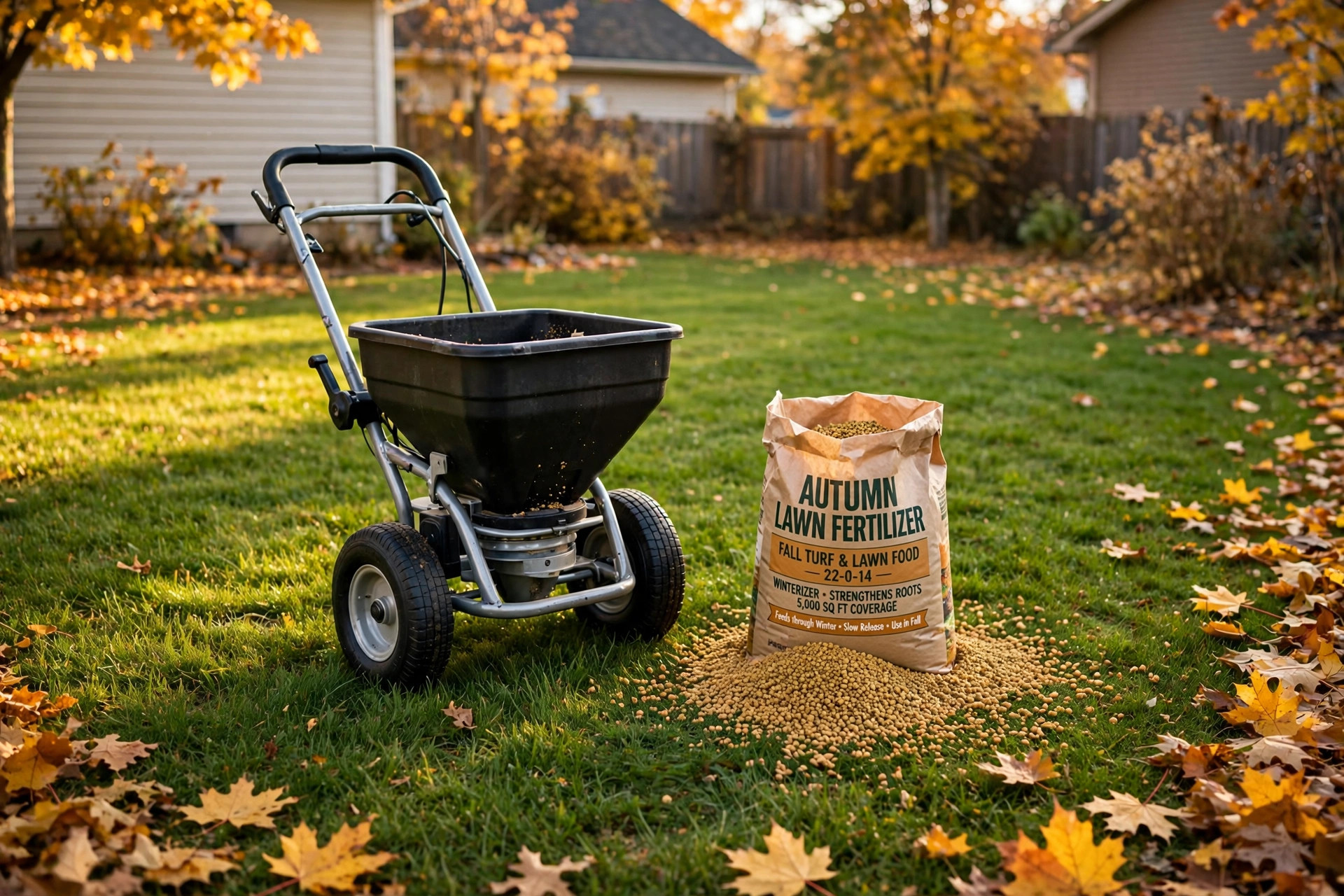
Every yard owner wants a thick green lawn in spring. The secret often lies in the best lawn fertilizer for fall application. Fall feeding is one of the most important jobs in lawn care. Grass plants use the short days of autumn to build strong roots. Food applied now goes straight to the roots. It does not go to fast leaf growth. The result is a lawn that survives winter and greens up early.
Many people feed their lawns in spring and forget about fall. This is a mistake. Lawn experts have said for years that fall is the best time to feed cool season grasses. Kentucky bluegrass, fescue, and ryegrass all grow strong roots in September and October. If you live in the South, warm season grasses also benefit from an early fall feeding before they rest for winter.
This guide explains how to pick the best lawn fertilizer for fall application. It covers what to look for on the bag, the right time to apply, how much to use, and how to stay safe. It also answers common questions and gives price ranges so you can plan your budget.
Why Fall Feeding Matters: Best Lawn Fertilizer for Fall Application
Fall is the season when grass plants repair summer damage. Heat, drought, and heavy use wear a lawn down. In autumn, soil is still warm. Air is cool. This is the ideal mix for root growth. The plant sends energy down, not up. Fertilizer applied at this time feeds the roots directly.
A fall-fed lawn has many benefits. Roots grow deeper. Deep roots hold water better. They resist disease. They survive cold winter nights. In spring, the stored food helps the grass green up weeks earlier than an unfed lawn. The turf also grows dense. Dense turf crowds out weeds. This means fewer weeds and less weed killer in spring.
Research from land-grant universities has shown this for decades. Fall nitrogen gives the best return of any single feeding in the year. One good fall feeding can do more than three light spring feedings. That makes the best lawn fertilizer for fall application the smartest buy in lawn care.
What to Look for in a Fall Lawn Fertilizer
Walk into any garden center and you will see walls of bags. The labels can be confusing. Here is how to read them.
The NPK Numbers
Every fertilizer bag shows three numbers, such as 24-0-10 or 10-10-10. These are the NPK numbers. They stand for nitrogen, phosphorus, and potassium. Nitrogen feeds leaf and root growth. Phosphorus helps root development. Potassium builds hardiness against cold and disease.
For fall, look for a bag with high nitrogen and high potassium. A formula like 24-0-10 or 22-0-14 is typical for fall use. Many states now limit phosphorus, so a zero in the middle is common and fine. Your soil may not need extra phosphorus. A soil test can tell you for sure.
Slow Release Nitrogen
The best lawn fertilizer for fall application uses slow release nitrogen. Slow release granules feed the grass over six to eight weeks. They do not dump all the food at once. This protects the grass from burn. It also protects waterways from runoff. Look for words like “slow release,” “coated,” or “controlled release” on the bag. Sulfur coated urea and polymer coated nitrogen are common forms.
Granule Size and Quality
Small even granules spread more evenly than large clumps. Cheap fertilizer with large rough granules can land in piles and burn spots. A mid priced bag with fine even granules is worth the extra money. The bag should also list iron. Iron gives a quick green up without pushing soft growth.
Organic or Synthetic
Both kinds work in fall. Synthetic fertilizers give fast predictable results. Organic fertilizers feed soil life as well as grass. Organic feeds are slower and safer from burn. They cost more per pound of nitrogen. For a quick fall feeding, many owners pick synthetic slow release. For long term soil health, organic is a fine choice.
Types of Fertilizer for Fall Application
Winterizer Fertilizers
Products labeled “winterizer” are made for late fall use. They carry high nitrogen and high potassium. Apply them six to eight weeks after your first fall feeding, or as the last feeding before the grass stops growing. Winterizer feeds the roots for winter storage.
Starter Fertilizer with Overseeding
If you plan overseeding, a starter fertilizer helps new seed. A guide to overseeding lawn in fall step by step pairs well with a light starter feeding. Use a formula lower in nitrogen, such as 10-18-10, so young seedlings are not burned. Seed first, then feed lightly.
Warm Season Formulas
In Texas and the deep South, St. Augustine and Bermuda grasses need care before their winter rest. Readers with warm season turf can also read about the best fertilizer for st augustine grass texas for southern lawns. Feed warm season grass in early fall only. Do not feed late. Late feeding pushes soft growth that frost will kill.
Lime Is Not Fertilizer
Lime changes soil pH. It is not plant food. But pH affects how well grass uses fertilizer. If your soil test shows low pH, lime in fall works well because winter rains carry it into the soil. Check lawn lime application rate per square foot before you buy lime.
When to Apply: Timing by Region
Timing matters as much as the product. Apply too early and the grass wastes food on top growth. Apply too late and the ground is frozen.
For cool season grasses in the North and Midwest, plan two feedings. The first goes down in early September. The second, the winterizer, goes down in late October or early November, after the last mowing but before the ground freezes. For cool season grass in the mid Atlantic, shift everything two to three weeks later.
For warm season grasses in the South, one feeding in early September is enough. Stop by early October. The grass is slowing down and does not want more food.
Watch the grass, not the calendar. Feed when the grass is still green and growing but nights are cool. If frost is heavy every night, it is too late. If days are still hot, it is too early.
How to Apply: A Simple Step by Step Method
A broadcast spreader gives the most even coverage. Drop spreaders work but need care to avoid stripes.
First, measure your lawn. Pace it off or use a measuring wheel. Fertilizer rates are given per 1,000 square feet. A typical fall rate is one pound of nitrogen per 1,000 square feet. Read the bag to find how many pounds of product give one pound of nitrogen. A 24-0-10 bag at 24 percent nitrogen needs about four pounds of product per 1,000 square feet.
Second, mow the lawn one notch shorter than normal. This helps granules fall to the soil. Bag or rake the clippings if they are heavy.
Third, set the spreader to the number shown on the bag. When in doubt, set it one notch lower and make two passes at half rate. Two light passes in different directions give even coverage.
Fourth, fill the spreader on the driveway, not on the lawn. Spills on grass burn spots. Sweep spilled granules off hard surfaces back onto the lawn or into the bag.
Fifth, walk at a steady pace. Overlap wheel marks slightly. Turn the spreader off at the end of each row before you turn around.
Sixth, water lightly after spreading if no rain is due within two days. A quarter inch of water washes granules off the blades and into the soil.
Equipment care matters too. Spreaders last longer when cleaned after each use. The Toro site has useful guides on keeping spreaders and mowers in good shape through the season. Good tools make the job easy.
Cost and Price Guide
Fall fertilizer is one of the cheapest lawn jobs. A 40 to 50 pound bag of slow release fall fertilizer covers 10,000 to 15,000 square feet. Prices run from 25 to 65 dollars per bag, depending on brand and formula. Organic bags cost 40 to 80 dollars for the same coverage.
For a 5,000 square foot lawn, one bag is enough for the season. Total cost for two feedings is about 30 to 70 dollars in product. A broadcast spreader costs 40 to 120 dollars and lasts for years. Hiring a lawn service for fall feeding costs 60 to 120 dollars per visit in most markets.
Buy in late summer for the best selection. Stores stock fall formulas in August. By late October, shelves may be thin.
Care and Upkeep After Feeding
Water is the partner of fertilizer. Granules need moisture to break down. If rain is scarce, run sprinklers to give the lawn about one inch of water per week through fall. Deep watering once or twice a week beats light daily watering.
Keep mowing until growth stops. Mow at three to three and a half inches for most cool season lawns. Tall grass shades the soil and keeps roots cool. Leave clippings on the lawn. They return a small amount of nitrogen and organic matter.
Rake or mulch heavy leaves. A thick mat of leaves blocks light and air. Mulch mowing chops leaves into fine bits that feed the soil. If leaves are deep, rake them off before they smother the grass.
Watch for weeds. Fall feeding thickens turf, which is the best weed control. Spot treat broadleaf weeds in fall while they are moving food to their roots. The weed killer rides along and works better than in spring.
Safety
Fertilizer is safe when used as directed, but it deserves respect. Wear gloves when handling bags. Wash hands after spreading. Keep children and pets off the lawn until granules are watered in and the grass is dry. Read the label for the exact wait time.
Store bags in a dry locked place. Keep them off concrete floors where moisture can seep in. A sealed bag in a shed is fine. Keep fertilizer away from wells, streams, and storm drains. Never spread before a heavy rain. Runoff carries nutrients into waterways.
Do not mix fertilizer with pesticides unless the label allows it. Do not use a weed and feed product late in the season if weeds are not active. You would be paying for weed killer the lawn does not need.
If a spill happens on the driveway, sweep it up. Do not hose it into the street. The EPA publishes clear guidance on keeping lawn chemicals out of local water.
Frequently Asked Questions
Can I use spring fertilizer in the fall?
You can, but a fall formula works better. Fall formulas carry more potassium for cold hardiness. Spring bags often push fast top growth. If you must use a spring bag, apply at half rate in early fall.
How late is too late to fertilize?
When the ground is frozen or frost stays all day, it is too late. Granules will sit on frozen soil and wash away. In most northern states, the cutoff is early to mid November. In the South, stop by early October for warm season grass.
Will fall fertilizer burn my lawn?
Slow release products rarely burn when applied at the labeled rate. Burn happens from over application or from fast release nitrogen in hot dry weather. Measure your lawn, set the spreader right, and water after spreading.
Should I fertilize before or after aerating?
Aerate first, then fertilize. Aeration pulls plugs of soil and opens channels. Fertilizer falls into the holes and reaches the roots faster. This pair is one of the best fall treatments for compacted lawns.
Do I need to water after applying?
Yes, if rain is not coming soon. Water washes granules off grass blades so they do not burn. A light watering of a quarter inch is enough. Then return to normal fall watering of about one inch per week.
Is one fall feeding enough?
One good feeding helps a lot. Two feedings help more for cool season lawns. The early fall feeding builds the plant. The late winterizer feeding stocks the roots. If you can only do one, make it the late October or early November winterizer.
A Short Final Word
The best lawn fertilizer for fall application is a slow release, high nitrogen, high potassium granule, applied at the right time and the right rate. It is a small job with a big payoff. Roots grow deep. Weeds lose ground. Spring arrives with thick green turf instead of thin tired grass.
Mark your calendar for early September and late October. Buy the bag early. Measure the lawn. Spread it even. Water it in. Your lawn will thank you in April.
References
Toro. (n.d.). Lawn mowers, spreaders, and yard equipment. https://www.toro.com Deere. (n.d.). Lawn care equipment and tractors. https://www.deere.com Briggs & Stratton. (n.d.). Engines and outdoor power equipment. https://www.briggsandstratton.com United States Environmental Protection Agency. (n.d.). Lawn and garden care guidance. https://www.epa.gov
Was this guide helpful?

About Robert Taylor
The My Garden US editorial team writes practical, in-depth home and garden guides for American homeowners — tested advice, no fluff.
You May Also Like
Best Wheelbarrow for Yard Work Reviews
June 7, 2026 0 views
How to Aerate Lawn Without Machine: Simple Methods That Work
March 6, 2026 0 views
Sprinkler System Repair Service Near Me: What Homeowners Should Know
September 30, 2026 0 views