---
Table of Contents
Table of Contents
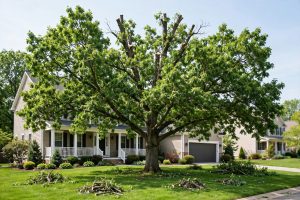
Drive through any suburb and you will see them: neat cones of mulch piled a foot high around tree trunks, like little volcanoes. They look tidy. They look intentional. And they are slowly killing the trees. Mulch volcanoes are one of the most common landscaping mistakes in America, and arborists have been warning against them for years.
Mulch itself is not the enemy. Used right, it is one of the best things you can do for a tree. The problem is the pile: mulch heaped against the trunk, burying the root flare, trapping moisture where the tree needs air. Here is what goes wrong, and how to fix it.
Mulch Volcanoes: What a Mulch Volcano Does to Bark
When it comes to mulch volcanoes, getting the details right makes all the difference.
Many homeowners find that mulch volcanoes is easier than they expected once they know the basics.
Tree bark is built to stay dry. It sheds rain, breathes through tiny pores, and forms the tree's first defense against insects and disease. When mulch sits against the bark and stays damp, that defense breaks down.
Constant moisture softens the bark. Fungi move in. The inner bark layer, the phloem that carries food up and down the tree, starts to rot. Once that food pipeline is damaged, roots starve and the whole tree declines. Penn State Extension's Master Gardener article Just Say No to a Volcano explains that mulch touching the trunk flare is a problem at any depth, because the trapped moisture suffocates the living tissue under the bark.
A weakened trunk also invites secondary attackers. Borers, canker fungi, and bacteria all prefer stressed, damp bark. The tree spends its energy fighting infections instead of growing. University of Illinois Extension's report on mulch volcanoes notes that rotted bark cannot protect the tree, and the warm, moist environment inside a mulch pile is ideal for the very pests and diseases the bark is supposed to keep out.
The pile also makes a fine home for rodents. Mice and voles nest in the mulch, hidden from predators, and gnaw the bark all winter. A girdled trunk, chewed all the way around, can kill a tree outright.
Girdling Roots: The Hidden Killer
Many homeowners find that mulch volcanoes is easier than they expected once they know the basics.
The key to mulch volcanoes is choosing the right approach for your space and budget.
The damage below ground is worse because you cannot see it until it is too late.
Tree roots naturally grow outward and down, away from the trunk. But when a mulch volcano surrounds the trunk, the moist, airy mulch tricks the tree. Roots grow up into the pile instead of out into the soil. They circle around the trunk, following the cone. Over the years, these circling roots thicken. They press against the trunk and against the tree's own structural roots. Like a belt pulled tighter every year, they strangle the flow of water and nutrients.
Arborists call these stem girdling roots, and they are a leading cause of slow tree decline in landscapes. The cruel part is the timeline. A tree can look fine for a decade while the roots tighten. Then the canopy thins. Leaves drop early. Branches die back from the top. By the time the symptoms show, the girdling is often too advanced to fix. A Realtor.com piece on mulch volcano damage quotes arborists who warn that mature trees with established girdling roots may be beyond saving, and removing a dead large tree can cost thousands.
Maples are especially prone to this. Their shallow roots love the moist mulch layer. But any tree piled with mulch is at risk.
The Umbrella Effect
The key to mulch volcanoes is choosing the right approach for your space and budget.
With a little planning, mulch volcanoes can fit even a busy schedule.
A mulch volcano can also starve the tree of water, which surprises people. The pile looks like it should hold moisture in. Often it does the opposite.
As the mulch breaks down, fungal threads can make the surface of the pile water-repellent. Rain hits the cone and sheets off the sides instead of soaking in. The pile becomes an umbrella, shedding water away from the root ball. This hits newly planted trees hardest. A new tree still lives mostly off its original root ball, like a container plant. If the volcano sheds water past the root ball, the tree dries out even in rainy weather. UGA Extension's mulch volcano report describes exactly this: the volcano keeps the root ball dry while looking like it is helping.
Deep mulch also cuts off oxygen. Roots need air as much as water. A foot of packed mulch over the root zone suffocates the fine feeder roots near the surface. The tree responds by growing roots up into the mulch, which brings us back to girdling.
Young Trees Suffer First
With a little planning, mulch volcanoes can fit even a busy schedule.
Before you start, it helps to understand how mulch volcanoes works in real homes.
Newly planted trees are the most common victims. Landscapers pile mulch high around a new tree to make the planting look finished. The customer sees a tidy cone and assumes it is good care.
A young tree buried under a volcano faces every problem at once: bark rot at the trunk, roots circling instead of anchoring outward, water shedding past the root ball, and low oxygen. Some small trees decline within a few seasons. The tragedy is that the fix is free: pull the mulch back.
If you just planted a tree, check the root flare today. The flare is the widening at the base where the trunk becomes roots. You should see it above the soil and above the mulch. If the trunk goes straight into the ground like a telephone pole, the tree is planted too deep, mulched too high, or both. Southern Living's guide to volcano mulching explains that burying the flare tricks the tree's dormant buds into sprouting roots from the trunk, which then wrap and strangle it.
How to Fix a Mulch Volcano
Before you start, it helps to understand how mulch volcanoes works in real homes.
A good plan for mulch volcanoes saves time, money, and frustration.
If your trees are volcanoed, you can fix it in an afternoon. The sooner the better.
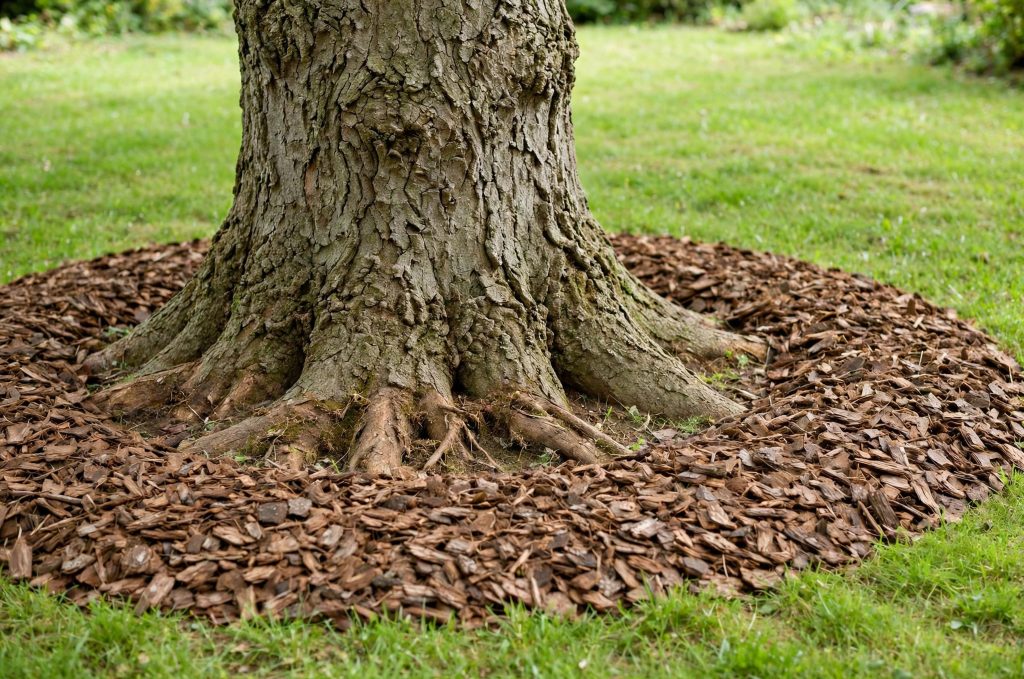
1. Pull the mulch back. Rake or shovel the pile away from the trunk until you see the root flare. Be gentle near the bark. Do not scrape it. 2. Check the depth. The remaining mulch over the root zone should be two to three inches deep, no more. If the old pile left six inches of packed mulch across the whole bed, thin it out. 3. Leave a gap. Keep mulch three to six inches away from the trunk all the way around. Bare soil right at the trunk is correct. It looks unfinished to some people. It is exactly right.
4. Reshape into a donut, not a volcano. Spread the mulch in a wide, flat ring. Wider is better. Extending the ring out toward the drip line covers more of the root zone, which is where the tree actually feeds. 5. Check for girdling roots. While the flare is exposed, look for roots crossing over the flare or pressing against the trunk. Small ones can be carefully pruned. Large ones need an arborist. Do not cut big roots on your own.
UGA's avoid the volcano article recommends picturing a donut: mulch ring with a hole in the middle where the trunk stands free. Three inches deep after settling is enough for most plants.
How to Mulch Right
A good plan for mulch volcanoes saves time, money, and frustration.
For most people, mulch volcanoes comes down to a few smart choices.
Proper mulching gives the tree every benefit with none of the harm.
Depth: two to four inches. Two to three inches of shredded bark or wood chips is the sweet spot. Pine straw can go a bit deeper because air moves through it easily. More than four inches starts cutting off air.
Width: as wide as you can. Tree roots spread far beyond the trunk, often as wide as the canopy or wider. A big flat mulch bed beats a small deep one every time. If you are replacing lawn around a tree, our guide to native plant landscaping for front yards has ideas for planting the bed so it looks intentional.
Material: shredded bark or wood chips. Shredded bark knits together and stays put on slopes. Wood chips are often free from tree services and break down into great soil food. Avoid fine sawdust, which mats into a water-shedding crust, and avoid dyed mulches of unknown origin. Our guide on making leaf mold compost covers a free mulch and soil amendment you can make from fall leaves.
Keep it off the trunk. This is the whole rule. Mulch near the tree, never touching the tree.
Refresh, don't stack. Each year, check the depth. If it has thinned below two inches, add an inch. Do not pile fresh mulch on top of old every year without checking. That is how volcanoes grow: one well-meaning top-up at a time. Rake the old mulch lightly to break any crust before adding new. Fallen leaves make an excellent free top-up layer, as our guide on how to compost leaves in bags explains for the leaves you do not mulch in place.
A Townsend Arborcare article on volcano mulching adds that correcting girdling roots is a slow process, sometimes taking years, which is all the more reason to prevent them with proper mulching from the start.
What Good Mulch Does
For most people, mulch volcanoes comes down to a few smart choices.
It is worth saying what proper mulch achieves, because the benefits are real.
A flat ring of mulch holds soil moisture steady, which means less watering. It insulates roots from heat and cold. It stops weeds that would compete with the tree. It creates a mow-free zone, so string trimmers never nick the bark. Mower and trimmer wounds are one of the top causes of young tree death in lawns, and a mulch ring eliminates the need to trim close to the trunk. As the mulch breaks down, it feeds the soil life that feeds the tree.
A WCIA report calling volcano mulching a landscaping epidemic quotes extension experts who put it simply: mulch is not the enemy, but it has to be used properly, spread out over the root zone and tapered away from the trunk.
Southern Living's guide to mulching around exposed roots adds practical detail: pull mulch back from the root collar, make the bed as wide as possible, and never pile soil or mulch against the trunk to plant flowers there.
So keep mulching. Just make donuts, not volcanoes. Your trees will live longer for it, and the yard will look better once you get used to the flat, wide ring. The volcano looks tidy for a season. The donut keeps the tree alive for decades.
References
If you are new to mulch volcanoes, start with the simplest option and build from there.
Penn State Extension. (n.d.). Just say no to a volcano! https://extension.psu.edu/programs/master-gardener/counties/adams/news/just-say-no-to-a-volcano
University of Illinois Extension. (n.d.). Too much of a good thing: Mulch volcanoes slowly kill trees. https://extension.illinois.edu/news-releases/too-much-good-thing-mulch-volcanoes-slowly-kill-trees
UGA CAES Field Report. (n.d.). Mulch volcano: Too much of a good thing in the landscape. https://fieldreport.caes.uga.edu/news/mulch-volcano-too-much-of-good-thing-in-landscape/
UGA Today. (n.d.). Avoid mulch 'volcano' in landscape. https://news.uga.edu/?p=18291
Southern Living. (n.d.). What is volcano mulching? The common mistake that can damage your trees. https://www.southernliving.com/what-is-volcano-mulching-11952297
Southern Living. (n.d.). Should you mulch around exposed tree roots? https://www.southernliving.com/should-you-mulch-around-exposed-tree-roots-12147218
Realtor.com. (n.d.). Mulch volcanoes: The landscaping mistake that can damage your trees. https://www.realtor.com/advice/home-improvement/mulch-volcanoes-landscaping/
Townsend Arborcare. (n.d.). Ask an arborist: Why is volcano mulching bad for trees? https://townsendarborcare.com/blog/ask-an-arborist-why-is-volcano-mulching-bad-for-trees-and-what-are-the-benefits-of-removing-the-excess-mulch/
WCIA. (n.d.). Expert says common gardening practice is choking trees: A landscaping 'epidemic'. https://www.wcia.com/news/national/expert-says-common-gardening-practice-is-choking-trees-a-landscaping-epidemic/
When it comes to mulch volcanoes, getting the details right makes all the difference.
Many homeowners find that mulch volcanoes is easier than they expected once they know the basics.
Was this guide helpful?

About My Garden US
The My Garden US editorial team writes practical, in-depth home and garden guides for American homeowners — tested advice, no fluff.
You May Also Like
Best Fertilizer for St Augustine Grass Texas: A Complete Guide
February 17, 2026 16 views
Best Lawn Roller for Leveling Uneven Ground
July 6, 2026 21 views
Best Walk Behind String Mower Reviews: What the Tests Show
June 26, 2026 17 views