
Many front yards look the same. A patch of lawn, two shrubs, and a tired flower bed. Native plant landscaping ideas for front yards offer a better path. They use plants that belong in your region. These plants grew in your soil long before the town was built. They need less water, less food, and less care than lawn grass or exotic flowers. This guide shows how to plan a native front yard, what it costs, and how to keep it looking fine.
Why Native Plants Matter
A native plant is one that grew wild in your area for thousands of years. It fits the local soil, rain, and weather. Because of this, it asks little from you. Most natives need no extra fertilizer once they settle in. Many need no extra water after the first year. A yard full of them cuts your water bill and your weekend labor.
There is a second reason. Native flowers feed native insects. Native grasses give birds seed and shelter. A plain lawn feeds almost nothing. When you plant what belongs, you bring life back to your block. You will see more bees, more butterflies, and more birds. The yard stays pretty while it does good work.
A third reason is money. Turf grass is costly to keep green. It drinks water, eats fertilizer, and needs weekly mowing. Native plant landscaping ideas for front yards replace some or all of that lawn. Owners report saving hundreds of dollars a year on water and lawn care. The savings begin in year two and grow over time.
How to Choose the Right Plants: Native Plant Landscaping Ideas for Front Yards
Start with your region. Native in Texas is not native in Ohio. Buy a plant guide for your state, or ask your county extension office for a native list. Garden centers carry native sections now, and plant advice at The Spruce helps you read tags with care.
Next, read your yard. Watch where the sun falls. Mark the full-sun spots, the half-shade spots, and the damp low corners. Each native plant has its own needs. A dry-land plant will rot in a wet corner. A woodland flower will burn in full sun. Match the plant to the place.
Think in layers. Tall grasses in back, mid-height flowers in the middle, low groundcover in front. This gives the bed a finished look from the street. It also blocks weeds. A thick planting leaves no bare soil for weeds to take.
Mix bloom times. Pick spring, summer, and fall bloomers. Then something always looks alive. Add grasses for winter interest. Their seed heads stand through snow and look fine behind a light frost.
Front Yard Design Ideas That Work
The meadow strip. Replace the lawn between the sidewalk and the street with a low meadow. Use short native grasses and small flowers. Keep it under two feet so it never blocks the view of drivers. Mow it once a year in late winter.
The foundation bed. Swap thirsty shrubs along the house for native evergreens and perennials. Many natives stay green all winter. They need no shearing. The house looks dressed without weekly work.
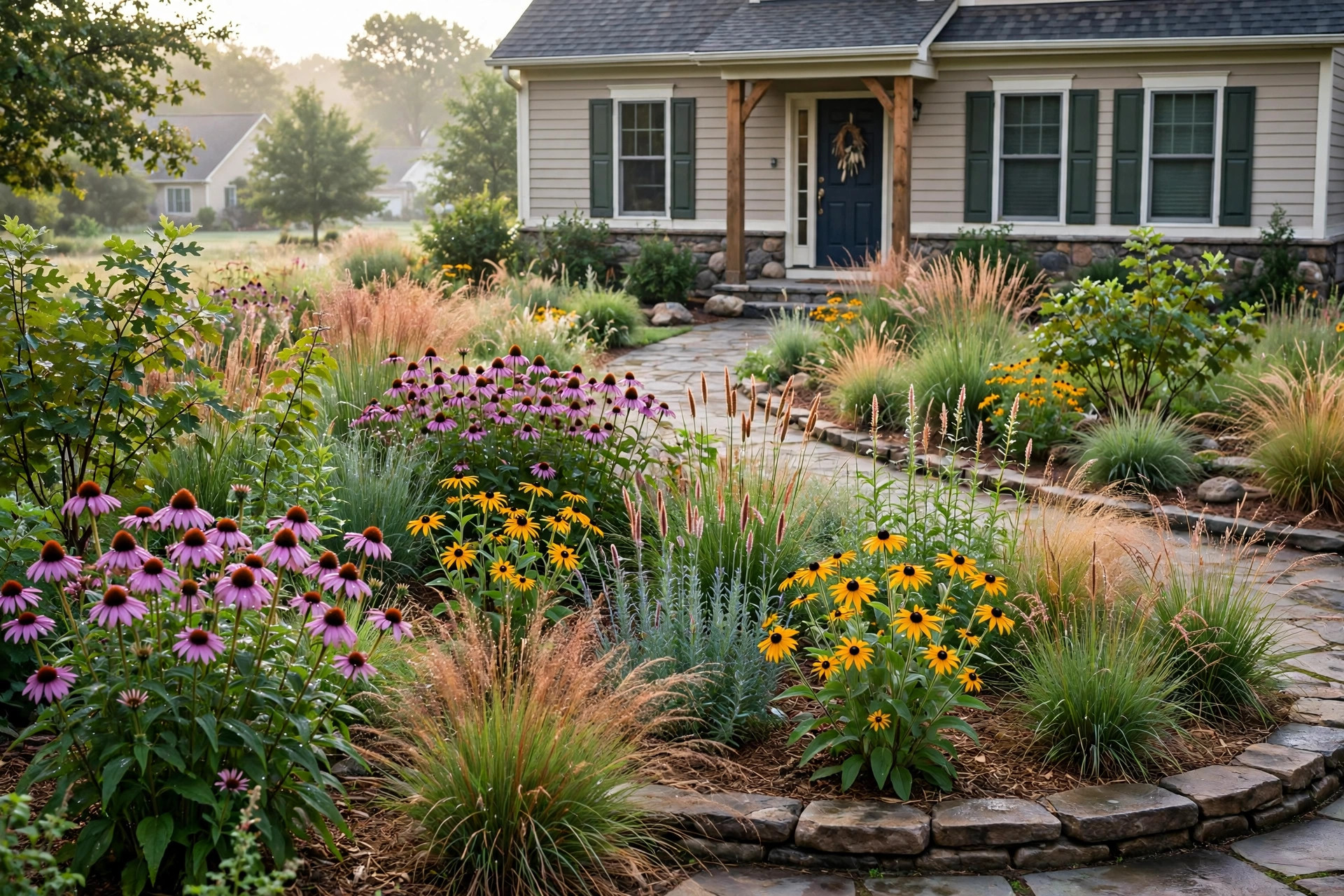
The wildflower drift. Plant one kind of native flower in big groups of nine or more. A drift of black-eyed Susans or coneflowers reads as planned, not messy. Three or four drifts make a whole bed.
The rain garden. If your yard holds water after storms, dig a shallow bowl and plant natives that like wet feet. They drink the runoff and stop muddy spots. The garden looks like a bed, but works like a sponge.
The entry island. A small bed by the front walk with three anchor plants, a mulch ring, and an edge stone. It gives a strong first look for little money. This is a good first step if a full change feels too big.
Keep the front yard tidy by design. Use a clean edge of brick or metal between bed and path. Mulch the first year. Neighbors accept a native yard faster when the edges look sharp. Local lawn guides from LawnStarter show how edging and mulch turn a wild bed into a cared-for bed.
What Plants to Consider
Exact plants depend on your region, but the types repeat across the country.
Native grasses. Little bluestem, prairie dropseed, and switchgrass give form and movement. They stand through winter and need one cut a year. Seed companies and the guides at Scotts explain how grasses share space with turf where you keep some lawn.
Native perennials. Coneflower, black-eyed Susan, bee balm, and milkweed bloom for months. Bees and butterflies favor them. Milkweed feeds monarch caterpillars. Cut dead stems in late winter, not in fall, so insects can shelter in them.
Native shrubs. Serviceberry, ninebark, and inkberry feed birds with fruit. They need little pruning. Plant them where the old foundation shrubs sat.
Native groundcovers. Wild strawberry, foamflower, and Pennsylvania sedge cover soil under trees. They replace struggling lawn in shade. Some take light foot traffic.
Native trees. A single native oak or dogwood can anchor a whole yard. One tree can feed hundreds of insect species. Give it room to grow. Never plant a large tree under power lines.
Cost and Price
Native plants cost about the same as nursery plants. A small perennial in a one-gallon pot runs three to eight dollars. Grasses run five to ten dollars. Shrubs run ten to twenty-five dollars. A bag of native seed costs eight to twenty dollars and covers a large bed.
A full plan costs less than a lawn over time. Expect to pay 300 to 900 dollars to plant a 500-square-foot bed with small pots. Seed cuts that to under 100 dollars, but takes two years to fill in. The savings on water, fertilizer, and mowing pay back the cost in two to three years.
Labor is the real cost. A pro design and install runs one to five thousand dollars for a front yard, based on size. Many owners do the digging themselves in stages. Buy a few flats each spring. The work feels light when it is spread out.
Mulch is a small but real cost in year one. Two to three inches of mulch holds water while roots grow. You need less of it each year after. If you prefer pine straw, look up /cheap-pine-straw-mulch-delivery-near-me/ to find low-cost delivery near you. Big retailers like Home Depot also stock bagged mulch in many styles.
How to Plant
Plant in spring or fall. Fall is best in warm states. The roots grow through winter while the top rests. Spring works everywhere if you water through the first summer.
Dig each hole twice as wide as the pot and just as deep. Set the plant level with the soil. Water it in. Spread mulch, but keep it two inches from the stems. Water twice a week for the first month, then once a week until the first fall.
Seed is cheaper but slower. Clear the weeds first. A weed-free start decides the outcome. Scatter the seed, press it into the soil, and keep it moist until it sprouts. Do not expect flowers in year one. Roots grow first. Year two brings leaves. Year three brings the full show.
Care and Upkeep
The first year needs the most care. Water new plants through dry weeks. Pull weeds while they are small. Mulch bare spots. After that, work drops fast.
Year two and beyond, the routine is simple. Cut back grasses and dead stems once a year in late winter. Pull the few weeds that show. Add a thin top of mulch each spring. That is the whole list for many beds.
Mowing needs fall. A native bed needs no weekly mow. A short native meadow needs one cut a year. Even a native lawn replacement cuts fuel and time. Tool makers like Echo and Ryobi offer battery trimmers for edges, while Greenworks covers cordless mowers for the turf you keep. Reviews at Consumer Reports help you compare before you buy.
Many natives want no fertilizer. Too much food makes them floppy. If growth looks weak, test the soil before you feed. Most of the time the answer is patience, not fertilizer.
Dividing is easy. Every three to four years, dig up crowded clumps and split them. Plant the pieces in new spots or give them away. Your yard grows for free.
Where Turf Still Fits
Many owners keep a small lawn panel for kids and pets and plant the rest native. That mix is wise. Keep the turf you keep in good shape. Warm-climate owners can follow a Bermuda grass lawn care schedule for Florida to time water, feed, and mow. Northern owners can use a cool-season overseed blend to thicken turf each fall. Turf equipment from John Deere and engines from Briggs and Stratton power the larger machines for bigger lots.
Safety
Native does not mean harmless. Some natives have thorns, sap that burns skin, or berries that are not food. Learn the risky ones in your region. Keep them away from the walk and the play area.
Check for poison ivy before you dig. It hides in many beds. Wear gloves and long sleeves when you clear a new area. Wash tools and clothes after.
Water still needs care. New plants want water, but standing water breeds mosquitoes. Grade the soil so it drains. A rain garden should drain in one to two days.
Sun safety counts too. Planting days run long. Wear a hat, drink water, and rest in shade. A native yard is a long project. There is no need to finish it in one hot weekend.
Watch fire rules in dry states. Some counties ask owners to keep plants cut back near the house. Leave five feet of low, lean planting by the walls. Use gravel, not bark, in that zone.
FAQ
How fast will a native front yard look good? With pots, it looks neat from day one and fills in by year two. With seed, year one looks thin. Give it three years. The old saying is true: sleep, creep, leap.
Will a native yard look messy? It can if you let it. Clean edges, mulch, and drifts of one plant keep it neat. Leave the wild look for the back corner. The street side should read as cared for.
Can I keep some lawn? Yes. Many owners keep a small lawn panel for kids and pets and plant the rest. A native bed by the house and a small lawn by the walk is a fine mix.
Do native plants need less water forever? They need less, not none. The first year wants steady water. After roots run deep, most natives live on rain in their home region. A bad drought may still call for a deep soak.
What about ticks and pests? A tidy native bed holds fewer ticks than tall brush. Keep beds away from play spots and check pets. Most insects in a native bed are the good kind that feed birds.
How do I start small? Begin with one bed by the front door. Plant three to five natives, mulch, and edge it. Learn from that bed for one season. Then grow the plan.
A Short Final Word
Native plant landscaping ideas for front yards are not a fad. They are a return to what worked before lawns took over. You spend less, water less, and mow less. Your yard feeds bees and birds. It still looks fine from the street. Start with one bed this season. Watch what thrives. Build on that. In three years you will have a front yard that asks little and gives much.
References
Home Depot. (n.d.). Home improvement and garden supplies. https://www.homedepot.com Ryobi. (n.d.). Outdoor power tools. https://www.ryobitools.com John Deere. (n.d.). Lawn and garden equipment. https://www.deere.com Echo. (n.d.). Outdoor power equipment. https://www.echo-usa.com Scotts. (n.d.). Lawn care products. https://www.scotts.com Greenworks. (n.d.). Battery powered outdoor tools. https://www.greenworkstools.com Briggs & Stratton. (n.d.). Small engines and outdoor power. https://www.briggsandstratton.com The Spruce. (n.d.). Home and garden advice. https://www.thespruce.com Consumer Reports. (n.d.). Product ratings and reviews. https://www.consumerreports.org LawnStarter. (n.d.). Lawn care and landscaping guides. https://www.lawnstarter.com
Was this guide helpful?

About James Carter
The My Garden US editorial team writes practical, in-depth home and garden guides for American homeowners — tested advice, no fluff.
You May Also Like
Battery Powered Hedge Trimmer Reviews 2026
July 29, 2026 0 views
Grub Killer for Lawns Safe for Dogs: A Practical Guide
July 1, 2026 2 views
Best Fertilizer for St Augustine Grass Texas: A Complete Guide
February 17, 2026 0 views