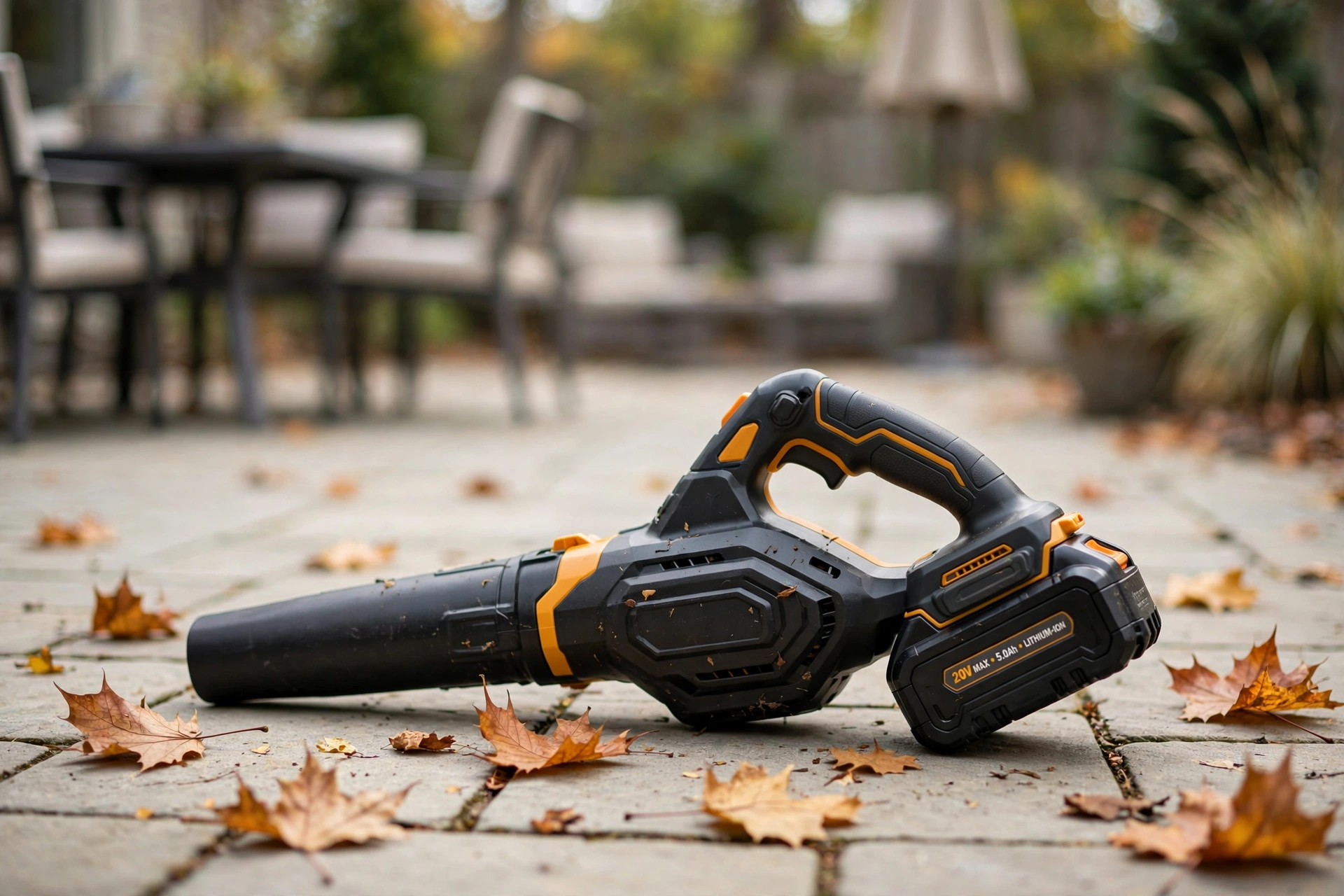

A patio should be a place of rest. Leaves fall on it. Dust settles on it. Small stones blow across it. A broom takes time and effort. A gas blower is loud and heavy. The best battery leaf blower for patios solves both problems at once. It is quiet. It is light. It starts with the push of a button. This guide will help you choose one that fits your patio and your budget.
Why a Battery Blower Fits the Patio
A patio is a small space with hard surfaces. Stone, brick, and concrete do not need a full-size gas blower. They need a tool that moves light debris with care. Battery blowers were made for this kind of work.
Gas blowers have ruled the market for years. They are strong. They are also loud. Most towns now limit their use in the morning and evening. Some towns ban them on weekends. A battery blower runs at a much lower sound level. You can use it early in the day without bothering your neighbors. Brands such as Toro now build cordless lines made for this kind of quiet work.
There is also no pull cord. No fuel to mix. No oil to change. You charge the battery and you work. For a patio of average size, one battery charge is often enough to finish the whole job.
Patios sit close to the house. Fumes from a gas engine can drift through open windows. Battery blowers make no fumes at all. This matters for homes with children and pets.
What to Look for When You Choose: Best Battery Leaf Blower for Patios
Not all battery blowers work the same on a patio. A patio needs control more than raw force. Look at these points before you buy.
Air speed. This is measured in miles per hour. For a patio, 90 to 120 miles per hour is enough. It will move dry leaves and light dust. Wet leaves may need a little more.
Air volume. This is measured in cubic feet per minute. It tells you how much air the blower pushes. A range of 300 to 450 cubic feet per minute works well on patios and walkways.
Battery run time. Most battery blowers run 20 to 45 minutes on one charge. A small patio takes about 10 minutes. A large patio with steps and furniture may take 20. Buy a model with a battery that matches your space.
Weight. You will hold the blower in one hand. Look for a weight under eight pounds with the battery in place. Lighter models cause less strain on the arm and shoulder.
Noise level. Check the decibel rating. Anything under 65 decibels is quiet enough for most neighborhoods. Many battery models run between 55 and 62 decibels. That is about the sound of a normal talk.
Speed control. A good patio blower has more than one speed. Low speed clears dust from corners. High speed moves wet leaves and small sticks. A variable trigger gives the best control of all.
Battery system. Many brands sell a line of tools that share one battery. If you already own a battery mower or trimmer from the same brand, check if the blower takes the same pack. This saves money.
Types of Battery Leaf Blowers
There are three main types. Each one fits a different kind of patio owner.
Handheld Models
These are the most common. You hold them in one hand and point the tube. They weigh the least. They cost the least. For most patios, a handheld model is the right choice. If you want more power in a handheld form, read our guide to the best backpack leaf blower for homeowners to compare styles.
Backpack Models
The battery sits in a pack on your back. The blower tube is light because the weight is not in your hand. These run longer and push more air. They cost more. They suit large patios or homes where the blower also clears a driveway.
Blower and Vacuum Combos
Some models switch from blowing to vacuuming. The vacuum mode sucks up leaves into a bag and chops them small. This is handy if you have no place to blow leaves to. The bag fills fast on wet leaves, so this mode works best with dry debris.
Battery Types and Charging Habits
Most patio blowers use lithium-ion batteries. This is the same type of battery found in many cordless tools. It holds a charge well and does not lose power as it drains. Older nickel-based batteries fade as they empty. Lithium-ion keeps full strength until near the end.
Voltage tells you the power class. Common sizes are 18 volt, 20 volt, and 40 volt. A 40-volt battery drives a stronger motor. An 18 or 20-volt battery is lighter and cheaper. For a small patio, the lower voltage is often enough. For a large patio with heavy leaves, the higher voltage pays off.
Amp-hours measure capacity. A 2.0 amp-hour battery runs about 20 minutes. A 5.0 amp-hour battery runs about 45 minutes on the same tool. Bigger capacity means more weight. Many owners buy one large battery for heavy jobs and one small battery for quick touch-ups.
Charging habits matter. Use the charger made by the same brand. Third-party chargers may charge at the wrong rate and wear the cells. Do not charge on a hot driveway in full sun. Heat is the main enemy of battery life. A cool garage shelf is a better spot.
If you will not use the blower for a month or more, store the battery at about half charge. A battery stored full for months loses capacity faster. A battery stored empty may not wake up at all. Check it once a month and top it up to half if it has dropped low.
Many buyers join a battery family on purpose. One brand makes a mower, a trimmer, a blower, and a hedge tool that all take the same pack. Two batteries can then run four tools. This is the cheapest way to build a cordless yard set over time.
How to Clear a Patio the Right Way
A blower is only as good as the method you use. Follow these steps for a clean patio with less work.
First, move the furniture. Stack light chairs to one side. Lift plant pots onto a table. A clear surface lets the air reach the dirt.
Start at the house wall and work outward. Blow debris away from doors and walls toward the open edge. This keeps dirt from piling up against the house.
Use a slow sweep of the tube. Move it side to side like a broom. Hold the tube low. Pointing it straight down scatters dust in all directions.
Work with the wind, not against it. On a breezy day, start on the upwind side. Let the breeze help carry light leaves along.
Blow debris into one pile at the edge of the patio. Then sweep the pile into a dustpan or a lawn bag. A blower does the heavy work. A broom finishes the job.
Clean corners last with a short burst on low speed. Corners collect dust that a high-speed blast will only throw around. For heavy seasonal leaf fall, a leaf vacuum for large yards buying guide can help you plan the full yard cleanup.
Cost and Price
Battery leaf blowers for patios fall into three price groups.
Under 100 dollars. These are basic handheld models. They suit small patios and light use. Air speed runs near 90 miles per hour. The battery is small. Expect 15 to 20 minutes of run time.
100 to 200 dollars. This is the sweet spot for most buyers. You get better air volume, longer run time, and a brushless motor. Many models in this range share batteries with other yard tools. If you plan to expand your tool set, compare a battery powered hedge trimmer from the same brand line to share packs.
Over 200 dollars. These are strong handheld and backpack models. They move wet leaves and cover large areas. They suit homes where the blower does double duty on driveways and decks.
Watch for kits that include two batteries. A spare battery doubles your run time. It costs less in a kit than bought alone.
Care and Upkeep
A battery blower needs little care. A few simple habits will keep it running for years.
Charge the battery after each use. Do not leave it fully dead for weeks. Store batteries in a dry place at room temperature. Heat and cold both shorten battery life.
Keep the air intake clear. Leaves and dust can block the vents on the side of the motor. Wipe them with a dry cloth after use.
Check the tube for cracks. A cracked tube leaks air and loses power. Most tubes twist off for easy replacement. Maker guides from Briggs & Stratton and other engine firms explain these simple checks in plain terms.
In winter, store the blower and the battery indoors. Charge the battery to about half before long storage. Check the charge once a month.
Safety on the Patio
Battery blowers are safer than gas models, but they still move air with force. Wear safety glasses. Small stones and hard seeds can fly up at surprising speed.
Keep the blower away from loose gravel near the patio edge. Gravel turns into small projectiles under a strong blast. Use low speed near gravel beds.
Watch where pets and children stand. Keep them out of the work area. The sound is mild, but flying debris is not.
Do not use the blower in the rain. Water and battery tools do not mix. Wet leaves are also heavier and harder to move. Wait for a dry day.
Unplug the charger when the battery is full. This is a small step, but it protects both the battery and the charger over time. Dealer sites such as Deere also publish charging and storage tips for cordless yard tools.
Blower Care Through the Seasons
Spring brings pollen and seed pods. These are light and fine. Low speed is best. High speed only lifts pollen into the air where it settles again.
Summer brings dust. Patios near roads collect a thin film each week. A quick five-minute blow once a week keeps it clean. Do this in the morning before the heat.
Fall brings leaves. This is the heavy season. Blow leaves every few days rather than letting them pile up. Wet piles are hard to move. Dry leaves move fast.
Winter brings grit from de-icing salt and sand. Sweep the worst of it first. Then use the blower on low speed to clear the fine dust from the joints between pavers.
Frequently Asked Questions
Is a battery blower strong enough for wet leaves?
Light wet leaves, yes. Heavy soaked piles, no. For damp leaves, use high speed and move slowly. For soaked mats, loosen them with a rake first, then blow the loose pieces.
How long does the battery last?
Most patio jobs take 10 to 20 minutes. A standard battery runs 20 to 45 minutes depending on speed. A second battery removes any worry for large patios.
Can I use it on a wooden deck?
Yes, but use low or medium speed. High speed can force water and dirt into the wood grain. Hold the tube at a low angle rather than pointing straight down.
Are battery blowers really quieter than gas?
Yes. Most run between 55 and 65 decibels. Gas blowers often run above 90 decibels. The difference is large enough that most neighbors will not notice a battery blower.
Do I need to wear ear protection?
For short patio jobs under 15 minutes, most people do not. For longer sessions or stronger models, simple foam earplugs are a good idea.
Will one battery work with other tools?
Only within the same brand and voltage line. Check the label before you buy. Many brands print a chart on the box that shows which tools share a battery.
A Short Final Word
The best battery leaf blower for patios is not the strongest one on the shelf. It is the one that fits your space, your arm, and your habits. Choose a light model with good speed control. Keep a second battery if your patio is large. Work with the wind and start at the house. Do these things and your patio will stay clean with ten minutes of easy work. A quiet tool, a clean patio, and a free morning are worth more than raw power.
References
Toro. (n.d.). Yard tools and outdoor power equipment. https://www.toro.com Deere & Company. (n.d.). Lawn care and outdoor equipment. https://www.deere.com Briggs & Stratton. (n.d.). Small engines and outdoor power. https://www.briggsandstratton.com
Was this guide helpful?

About James Carter
The My Garden US editorial team writes practical, in-depth home and garden guides for American homeowners — tested advice, no fluff.
You May Also Like

Best Soil for Topdressing Lawn Reviews: A Plain Guide to What Really Works
March 8, 2026 0 views
Best Mulch for Flower Beds Bulk Delivery: A Complete Guide
April 13, 2026 0 views
Lawn Irrigation Winterization Service Near Me: What to Know Before the First Freeze
September 23, 2026 0 views