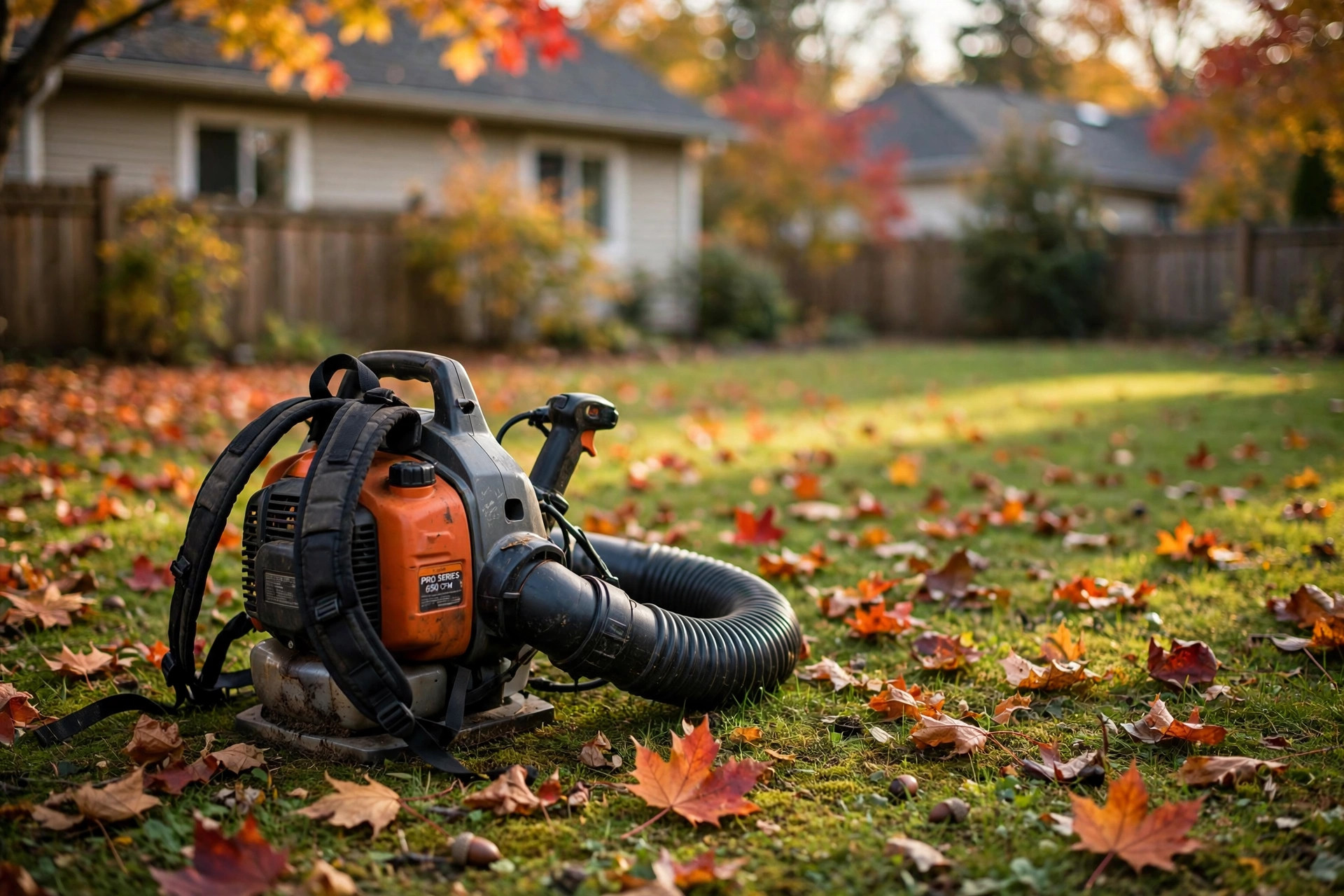

Fall comes each year, and with it come the leaves. For many owners of a house, the leaves pile up on the lawn, the drive, and the walk. A rake can do the job, but it takes hours. This is why so many people now search for the best backpack leaf blower for homeowners. It is a tool that clears a yard in far less time than a rake, and it does the job with less strain on the back.
A backpack leaf blower is worn like a pack. The motor sits on the back, and a tube in the hand directs the air. This design spreads the weight over the shoulders and hips. That makes it far easier to use for an hour or more than a hand-held blower. This guide explains what matters, what to look for, how much to pay, and how to keep the tool in good shape.
Why a Backpack Leaf Blower Matters
A home with trees is a fine thing in summer. Shade keeps the house cool and the yard looks full. But in fall the same trees drop a heavy load. A large yard can be buried under leaves in a single week. Wet leaves stick to the grass and block the light. They can kill the lawn in patches if they are left too long.
A backpack blower for home use saves hours across a season. A job that takes three hours with a rake may take forty minutes with a good blower. The work is also kinder to the body. Raking bends the back over and over. A backpack unit lets the worker stand tall and walk the yard in straight lines. For older home owners this can be the difference between doing the work and hiring it out.
There is a second benefit. Leaves that are blown into piles can be moved to a compost pile or to the curb for pickup. Many towns collect yard waste on set days. A blower gets the leaves to the curb fast. The tool pays for itself in time saved across one season.
Yard work is not only about the mower. A robot lawn mower for half acre yards can cut the grass on its own, but it cannot clear leaves. A top rated string trimmer for thick weeds can edge the beds, yet leaves still pile up. The backpack blower fills the gap. It is the cleanup tool that keeps the whole yard tidy.
What to Look for When You Buy: Best Backpack Leaf Blower for Homeowners
Buying the best backpack leaf blower for homeowners is not about the biggest number on the box. It is about the right mix of power, weight, fit, and fuel type for the size of the yard. Below are the points that matter most.
Power: CFM and MPH
Two numbers tell the power story. CFM means cubic feet per minute. It is the volume of air the blower moves. MPH means miles per hour. It is the speed of the air stream. High CFM moves a wide swath of leaves. High MPH breaks loose leaves that are stuck to the grass.
For a small yard, 350 CFM and 150 MPH may be enough. For a large yard with many trees, 500 CFM or more is a better pick. Some makers list a combined force number in newtons, which blends volume and speed into one value. Sites like Toro and Echo list these figures for each model, so a buyer can compare before a store visit.
Weight and Fit
Backpack blowers range from about 14 pounds to more than 25 pounds. The harness matters as much as the weight. A good harness has wide padded straps and a hip belt. The hip belt shifts the load to the legs, which tire less than the shoulders. Look for straps that adjust with simple buckles. A poor harness makes a light blower feel heavy.
Also check the tube. The tube should reach the ground when the pack is worn. The grip should turn with ease so the wrist does not strain. Some tubes telescope to fit tall or short users. A cruise control lever or a throttle lock is a fine feature. It lets the user set the power and rest the hand on long passes. John Deere and other farm and lawn brands have long sold pack-style tools, and their dealer guides often show how a proper fit should look.
Gas or Battery
Gas models have ruled the market for years. They run long on a tank and bring strong power. Battery models have grown much better in recent years. A battery pack blower is quiet, starts with a button, and needs no fuel mixing. The trade-off is run time. A single battery may last 30 to 60 minutes at full power. Home owners with big yards may need a second battery.
Noise rules also play a part. Some towns limit gas blowers by hour or ban them on certain days. Battery models meet almost all local rules. Check the town code before buying gas if the yard is in a strict area. Both types do fine work when matched to the right yard size.
Types of Backpack Leaf Blowers
There are three main types on the market. Each has its place.
Gas backpack blowers. These use a small two-stroke or four-stroke engine. Two-stroke models are lighter but need oil mixed with the fuel. Four-stroke models run on straight gas and tend to be cleaner. Gas units lead in power and run time. They suit lots of a half acre or more, or yards with heavy wet leaves. Engine makers like Briggs & Stratton power many of these machines, and their free care guides apply to most gas blowers.
Battery backpack blowers. These run on large lithium-ion packs, often 40 to 80 volts. They are the easiest to start and the quietest to use. There is no fuel to buy or mix. They suit small to mid-size yards, or owners who want light upkeep. The main cost is the battery itself. A second pack adds money but doubles the run time. Brands such as Ryobi and Greenworks publish run-time figures for each pack, which helps a buyer plan how many packs a yard will need.
Wheeled and corded models. A wheeled walk-behind blower rolls on wheels and brings huge power for very large yards. Corded electric hand blowers are light and cheap, but the cord limits the reach. They suit patios and small drives, not full yards.
Most home owners find the best fit in a gas or battery backpack model. A powerful leaf blower for large yards is worth the money when the lot is big. A lighter battery pack is the smart pick when the yard is small and the trees are few.
Cost and Price
Prices span a wide range. A fair map of the market looks like this.
Entry-level battery backpack blowers start near 150 dollars. These include one battery and a charger. They handle light jobs and small yards. Mid-range models, both battery and gas, run from 250 to 450 dollars. This is the sweet spot for most homes. The power is strong, the harness is good, and the build is made to last years.
Pro-grade gas backpack blowers run from 450 to 650 dollars or more. These are built for daily work by lawn crews, but some home owners buy them for very large lots. The power is high and the parts are heavy duty. Add a second battery for a battery unit, and the total can reach the same range.
Beyond the price tag, think of running costs. Gas needs fuel and oil, plus filters and spark plugs over time. Battery models need little beyond the cost of power from the wall. A battery pack wears out after some years and costs 100 to 200 dollars to replace. Over a decade the total cost of the two types is often close.
Shop with care. Prices move with the season. Late summer and early fall bring sales as stores stock up for leaf season. Large retailers like The Home Depot post current prices online, which helps a buyer set a fair number in mind before shopping. Reading independent tests helps too. Consumer Reports rates blowers side by side on power and noise.
For a home owner who only needs a blower once a year, rental is an option too. Some dealers rent backpack blowers by the day. It is the same idea as checking lawn dethatcher rental prices near me before buying a dethatcher. Renting a blower for a fall weekend can cost far less than buying, though owning is cheaper after two or three seasons.
Care and Upkeep
A backpack leaf blower lasts many years with simple care. Neglect is what kills these tools. The rules differ a bit for gas and battery models.
For gas models, use fresh fuel. Gas that is more than 30 days old can gum up the carburetor. Mix the oil at the ratio the manual gives, often 50 to 1. Check the air filter each season and tap out the dust. A clogged filter cuts power and wastes fuel. Change the spark plug once a year. Keep the cooling fins free of grass and leaves so the engine does not run hot.
At the end of the season, run the tank dry or add fuel stabilizer. Store the blower in a dry shed or garage. Hang it by the frame so the tube does not bend. A bent tube cuts airflow and makes the motor work harder.
For battery models, the care is simpler. Keep the battery at a mid charge for storage. Do not leave it on the charger for months. Wipe the vents clean so the motor cools well. Store the battery in a dry place that does not freeze.
For both types, check the tube and nozzle for cracks. A cracked tube leaks air and cuts power. Tape is a short-term fix, but a new tube is cheap and worth it. Tighten any loose screws on the frame. A blower that rattles is a blower that wears out faster.
Safety
A leaf blower is a loud, fast tool. Treat it with respect. Wear ear protection. Gas blowers run near 100 decibels, which can harm hearing in minutes. Even battery models are loud enough to need ear plugs on long jobs.
Wear safety glasses. The air stream throws small stones, twigs, and dust. A pair of glasses or goggles keeps the eyes safe. A dust mask helps on dry days when the air is thick with dirt. Gloves cut vibration and give a firm grip on the tube.
Work with care around others. Do not aim the tube at people or pets. Keep children and pets inside or far from the work area. Blow away from the house so dust does not enter open windows. Never use a gas blower in a closed garage. The exhaust fumes can build up fast.
Mind the ground. Wet leaves are slick. Walk with care on slopes. Turn off the tool when moving between areas. These small habits keep a routine job from turning into an injury.
Frequently Asked Questions
How big a yard needs a backpack blower?
A backpack blower earns its keep on lots from a quarter acre up. On smaller yards a hand-held blower or a rake is often enough. On large lots with many trees, a backpack unit is almost a must. If raking takes more than two hours, a backpack blower is worth a hard look.
Gas or battery: which is better for a home owner?
It depends on the yard and the ears. Gas brings more power and longer run time for the money. Battery brings less noise, easy starts, and no fuel chores. For yards under a half acre, battery is often the better pick. For big yards with thick leaf cover, gas still leads. Check local noise rules before buying gas.
How long does a backpack blower last?
A well-kept gas blower lasts 8 to 15 years. A battery blower frame lasts as long, but the battery pack may need replacement after 3 to 6 years. Care is the main factor. Clean filters, fresh fuel, and dry storage add years to any tool. Cheap units with thin plastic parts wear out sooner.
Can a backpack blower clear wet leaves?
Yes, but it takes more power and more time. Wet leaves stick to the grass and to each other. Use the highest setting and work in slow passes. It helps to wait a day after rain if the schedule allows. A blower rated above 500 CFM moves wet leaves much better than a small unit.
Is it hard on the back to wear one for an hour?
Not with a good harness. The hip belt carries most of the load. Take a short break every 30 minutes and drink water. Switch the tube hand now and then to rest the wrist. Users with back trouble should try the harness in the store before buying.
What should I do with the leaves after blowing?
Pile them at the curb if the town collects yard waste. Bag them in paper lawn bags where required. Or blow them into a corner to compost. Some owners run a mower over the piles to chop them, then leave the bits on the lawn as free mulch.
A Final Word
The best backpack leaf blower for homeowners is the one that fits the yard, the body, and the budget. Do not chase the biggest numbers. Match the power to the lot. Pick a harness that feels right. Choose gas for big jobs and long run times, or battery for quiet ease and simple care. For broader lawn advice, guides at LawnStarter and Scotts cover how leaf cleanup fits the full season. Keep the tool clean and store it dry, and it will serve for many falls to come.
Leaf season comes each year without fail. A good blower turns it from a long chore into a short morning walk. Read the reviews, check the prices, and buy once. The yard will thank you.
References
Briggs & Stratton. (n.d.). Small engines and outdoor power equipment. https://www.briggsandstratton.com Consumer Reports. (n.d.). Product reviews and ratings. https://www.consumerreports.org ECHO. (n.d.). Outdoor power equipment. https://www.echo-usa.com Greenworks Tools. (n.d.). Battery powered outdoor tools. https://www.greenworkstools.com John Deere. (n.d.). Lawn and garden equipment. https://www.deere.com LawnStarter. (n.d.). Lawn care services and guides. https://www.lawnstarter.com Ryobi. (n.d.). Outdoor power tools. https://www.ryobitools.com Scotts. (n.d.). Lawn care products. https://www.scotts.com The Home Depot. (n.d.). Home improvement and garden supplies. https://www.homedepot.com Toro. (n.d.). Outdoor power equipment. https://www.toro.com
Was this guide helpful?

About James Carter
The My Garden US editorial team writes practical, in-depth home and garden guides for American homeowners — tested advice, no fluff.
You May Also Like
How to Fix Sprinkler Head Leaks
August 14, 2026 0 views
Riding Mower Tires for Sale Near Me: A Plain Guide to Fit, Types, and Fair Prices
May 22, 2026 0 views
Best Organic Lawn Care Products in the USA
January 27, 2026 0 views