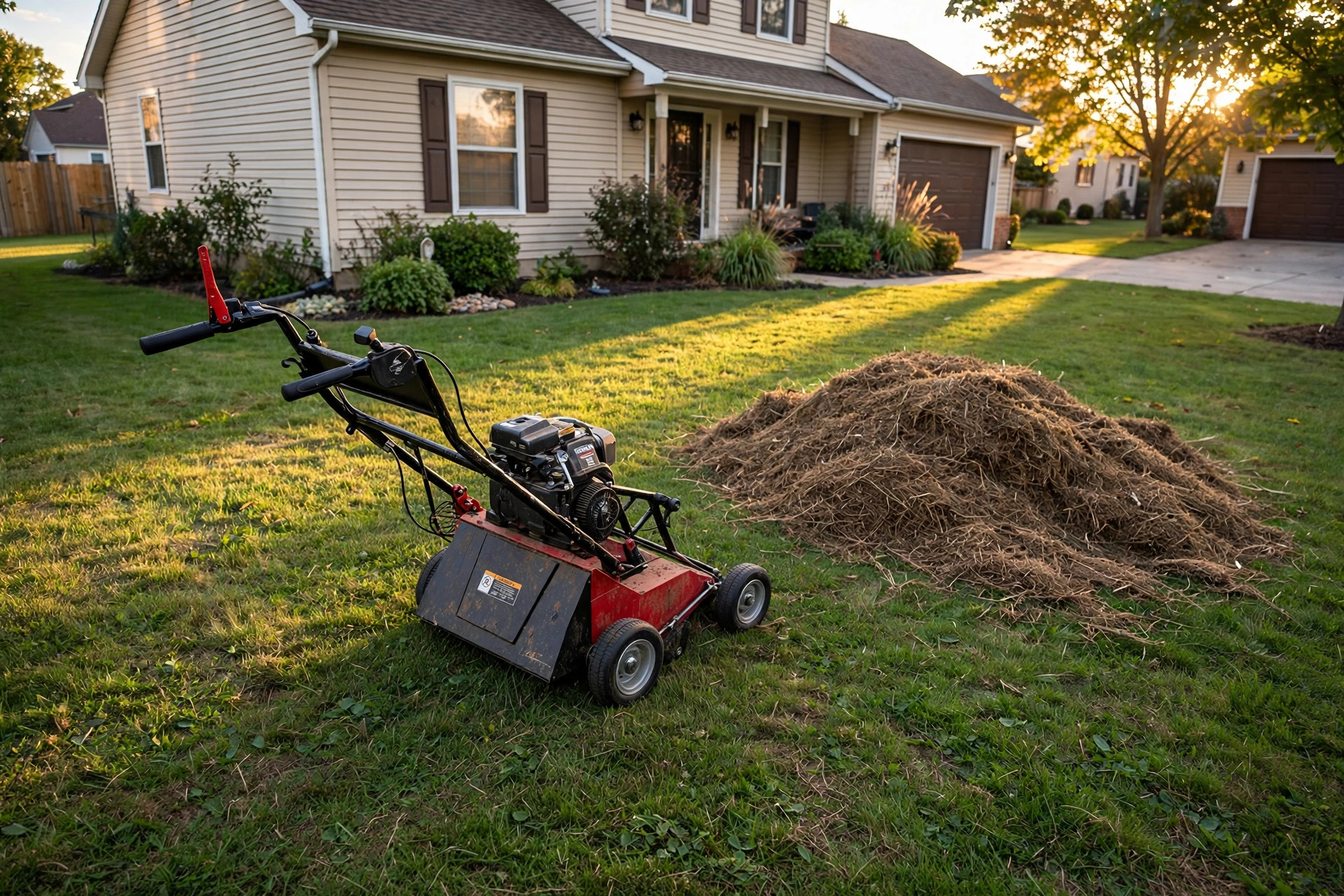

A lawn that feels soft under your feet is not always a healthy lawn. Under the green blades there may sit a thick mat of dead stems, roots, and clippings. That mat has a name. It is called thatch. When it grows thicker than half an inch, water and air can no longer reach the soil. Grass turns thin and pale. Weeds move in. That is when many home owners start to search for lawn dethatcher rental prices near me.
Renting is the sensible choice for most people. A power dethatcher is a big machine with steel tines that rip and lift the thatch from the soil. You need it only once every year or two. Owning one means paying for a machine that sits in the garage for eleven months of the year. Renting means you pay for one day of hard work and return the machine. This guide explains what the job costs, what to expect at the rental counter, and how to get good value for your money.
Why Thatch Matters
Thatch is a layer of dead and living plant matter between the soil and the green grass blades. Every lawn has some. A thin layer, about a quarter of an inch, is normal and even useful. It cushions the roots and slows water loss.
Trouble starts when the layer grows past half an inch. Thick thatch acts like a roof. Rain runs off it instead of soaking through. Fertilizer sits on top and never reaches the roots. Air cannot move freely. The roots of the grass then grow up into the thatch instead of down into the soil. Shallow roots dry out fast in summer heat.
You can test your lawn with a simple check. Cut out a small plug of grass and soil with a shovel, about four inches deep. Look at the brown spongy layer between the green blades and the dark soil. Measure it with a ruler. If it is thicker than half an inch, your lawn needs dethatching. Spring and early fall are the best times to do the work, when grass grows strongly and can heal fast.
What to Look for in a Rental Dethatcher: Lawn Dethatcher Rental Prices near Me
Rental shops carry several styles of machine. The most common is the walk-behind power rake. It looks like a heavy lawn mower. A spinning reel of steel tines digs into the thatch and throws the debris up and back. You walk behind it the same way you walk behind a mower.
Check the Width and the Weight
Dethatchers come in widths from about 15 inches to 22 inches. A wider machine covers ground faster but is harder to turn and harder to load into a truck. Most home lawns do well with a 20-inch model. It is wide enough to move quickly and narrow enough to fit through a standard gate.
Weight matters at two points: loading and pushing. A power dethatcher can weigh over 100 pounds. Ask the shop if they will help you load it into your truck or trailer. Bring tie-down straps. A machine that slides in the truck bed is a danger to you and to the machine.
Check the Tines
The tines are the working heart of the machine. Look at them before you sign the rental papers. They should be straight and sharp enough to scratch the soil surface. Bent or missing tines leave strips of thatch behind. Some shops keep spare tines and will swap them on the spot. Ask about that before you leave.
Types of Dethatchers You Can Rent
Walk-Behind Power Rakes
This is the standard rental unit. Gas engines drive the tine reel. Most shops rent units made by well-known outdoor power brands such as Toro, RYOBI, ECHO, or Greenworks. These machines suit lawns from a few hundred square feet up to about half an acre. For bigger ground, you will want something you can tow.
Tow-Behind Dethatchers
A tow-behind unit has spring tines on a wide frame and hitches to a riding mower or garden tractor. It covers more ground with less effort. If you already own a mower suited to half acre yards, this option can save you hours. Not every rental shop stocks them, so call ahead. The rental price is often close to the price of a walk-behind unit, which makes it good value for large yards.
Manual and Electric Options
Some shops also rent electric dethatchers. They are lighter and quieter, and they suit small lawns and town-house yards. They plug into a standard outlet, so you will need a long outdoor extension cord rated for power tools. For very small patches, a simple manual thatching rake costs little to buy and needs no rental at all.
What It Costs: Lawn Dethatcher Rental Prices Near Me
Now to the main question. Across the United States, a walk-behind power dethatcher rents for about 40 to 75 dollars for four hours, and about 60 to 100 dollars for a full day. A full weekend rental, from Friday afternoon to Monday morning, often runs 120 to 180 dollars. Prices shift with the city, the season, and the shop. Rates rise in spring and early fall, when demand is highest.
Large national rental desks, such as the tool rental counters at Home Depot, list their prices online by store. Local independent shops often match or beat those prices, and they may give better advice. Call two or three shops near you. Ask these questions:
– What is the four-hour rate and the full-day rate? – Is fuel included, or do I bring it back full? – Is there a damage waiver, and what does it cost? – Do you help with loading? – What happens if the machine breaks on the job?
Tow-behind dethatchers usually rent for 50 to 90 dollars per day, a little less than the powered walk-behind units in many shops. Electric models are often the cheapest option, at 30 to 50 dollars per day, where they are available.
The Hidden Costs to Watch
The rental price on the sign is not always the final bill. Many shops add a damage waiver of 10 to 15 percent. Some charge a cleaning fee if you return the machine caked in mud and grass. You will also need fuel for a gas unit, usually one or two gallons for a day’s work. If you must rent a trailer to move the machine, add that cost too. Ask for the total before you hand over your card.
Renting Against Buying
A new walk-behind power dethatcher costs between 200 and 600 dollars, depending on width and brand. At a rental rate of 75 dollars per day, the machine pays for itself after three to eight uses. That sounds tempting. But most lawns need dethatching only once every one to three years.
Do the math for your own yard. If you dethatch every other year, eight uses means sixteen years of ownership. Over that time you will pay for oil, spark plugs, belts, and new tines. You will also give up garage space. For most home owners, renting wins. It makes sense to buy only if you share the machine with neighbors or if you run a small lawn service on the side.
A third option sits between the two: hiring a lawn service. Companies listed on sites like LawnStarter will dethatch an average lawn for 150 to 250 dollars, which includes the labor. If your back is bad or your time is short, that price can beat a rental once you count your own hours.
How the Job Goes, Step by Step
Dethatching is simple work but it is hard work. Plan for it the way you would plan for a long day in the garden.
1. Mow the grass short, to about two inches, a day or two before. Short grass lets the tines reach the thatch. 2. Mark every sprinkler head, shallow pipe, and buried cable with flags. The tines will tear up anything they catch. 3. Water the lawn lightly the evening before. Damp soil lets the tines dig in without tearing out healthy grass. 4. Set the tine depth shallow for the first pass. The tines should scratch the soil surface, not plow it. 5. Work in straight, overlapping lines, like mowing. Overlap each pass by a few inches. 6. Rake up the loose thatch with a leaf rake or run a mower with a bagger over the lawn. A thick lawn can produce a shocking pile of debris. 7. Water and feed the lawn after the job. The open soil takes in seed and fertilizer well, which is why many people dethatch and overseed in the same weekend.
Expect your lawn to look rough for a week or two. Bare patches are normal. The grass will fill back in fast if you water it well.
Care and Upkeep After Dethatching
The days right after dethatching decide how well your lawn recovers. Water deeply but not daily. About one inch of water per week is the standard rule, delivered in one or two long soakings. Long soakings push roots deep. Short daily sprinkles keep roots shallow.
Feed the lawn with a balanced fertilizer two to three weeks after the job. Products from lawn care makers such as Scotts and Pennington label their bags clearly with the right spreader settings. Follow the label. More fertilizer is not better. Too much burns the new growth.
This is also the perfect window for overseeding. With the thatch gone, seed falls straight onto open soil. Our guide to overseeding your lawn in fall, step by step, walks through seed choice and timing. If your yard has low spots that collect water, this is also a good time to think about a lawn roller for leveling uneven ground before the grass knits back together.
Keep foot traffic light for two weeks. Keep pets off the new seed if you can. A little patience now pays back in a thick lawn by midsummer.
Safety Rules at the Rental Counter and on the Lawn
A power dethatcher is a serious machine. Treat it with respect.
– Wear closed boots, long pants, gloves, and eye protection. The tines throw stones and sticks. – Never put your hands near the tine reel while the engine runs. – Keep children and pets far from the work area. – Let the engine cool before you refuel. Wipe up any spill. – On slopes, work across the slope, never up and down. The machine is heavy and can slide. – Know where your underground lines are. In the United States, dial 811 before you dig or scarify soil. The service marks public lines for free. – Read the safety sheet the shop gives you. Every model has its own quirks.
Independent testers such as Consumer Reports rate outdoor power equipment for safety and build quality. Their ratings can help you judge whether a shop’s rental fleet is made of sturdy, well-kept machines.
Frequently Asked Questions
How often should I dethatch my lawn?
Most lawns need it every one to three years. Fast-growing grasses in warm states build thatch faster than slow grasses in cool states. Test with the plug method each spring. Only dethatch when the layer is thicker than half an inch.
What time of year is best?
Early spring or early fall. The grass should be growing strongly so it heals fast. Avoid the heat of midsummer. Stressed grass recovers slowly and weeds rush into the bare spots.
Can I dethatch by hand instead of renting?
Yes, for small areas. A manual thatching rake costs about 30 to 50 dollars to buy. It is slow, tiring work. For anything larger than a few hundred square feet, a rented power machine saves your back and your weekend.
Will dethatching hurt my lawn?
It will look rough for a week or two. That is normal. Set the tines shallow, work when the grass is growing, and water well after. The lawn almost always comes back thicker than before.
Do I need to bag the thatch after?
Yes. Rake it up or mow over it with a bagging mower. Leaving thick piles of thatch on the lawn smothers the grass you just freed. Many towns take bagged yard waste at the curb. Check your local rules before the job so you have bags ready.
Should I rent for four hours or a full day?
A four-hour rental suits lawns up to about 5,000 square feet if you work steadily and have help raking. Larger lawns need a full day. Remember that loading, driving, and cleanup eat into your time. When in doubt, take the full day. The price difference is usually small.
A Final Word
Searching for lawn dethatcher rental prices near me is the first step, not the last one. The best deal is not always the lowest price on the sign. A shop that keeps its machines sharp, answers your questions, and helps you load the unit is worth a few extra dollars. Call ahead, ask about the total cost, and book early in spring and fall when machines go fast.
Dethatching is one of the hardest jobs in lawn care and one of the most rewarding. One long day of honest work can change a tired, thinning lawn into thick green carpet. Rent the machine, mind the safety rules, water well after, and your grass will thank you all summer long. For plain-language yard guides, The Spruce keeps a deep library of lawn care how-tos worth a read before you start.
References
Pennington. (n.d.). Lawn care and grass seed products. https://www.pennington.com LawnStarter. (n.d.). Lawn care services and pricing. https://www.lawnstarter.com Toro. (n.d.). Outdoor power equipment. https://www.toro.com Scotts. (n.d.). Lawn care products. https://www.scotts.com Home Depot. (n.d.). Tool rental. https://www.homedepot.com RYOBI. (n.d.). Power tools and outdoor equipment. https://www.ryobitools.com ECHO. (n.d.). Outdoor power equipment. https://www.echo-usa.com Consumer Reports. (n.d.). Product ratings and reviews. https://www.consumerreports.org The Spruce. (n.d.). Home and garden guides. https://www.thespruce.com Greenworks. (n.d.). Battery-powered outdoor tools. https://www.greenworkstools.com
Was this guide helpful?

About Michael Thompson
The My Garden US editorial team writes practical, in-depth home and garden guides for American homeowners — tested advice, no fluff.
You May Also Like
Fire Ant Treatment for Yards Safe for Pets
September 8, 2026 0 views
Robot Lawn Mower for Half Acre Yards: What to Know Before You Buy
September 10, 2026 0 views
Best Shade Tolerant Grass Seed Mix: A Plain Guide for Shady Lawns
September 10, 2026 0 views