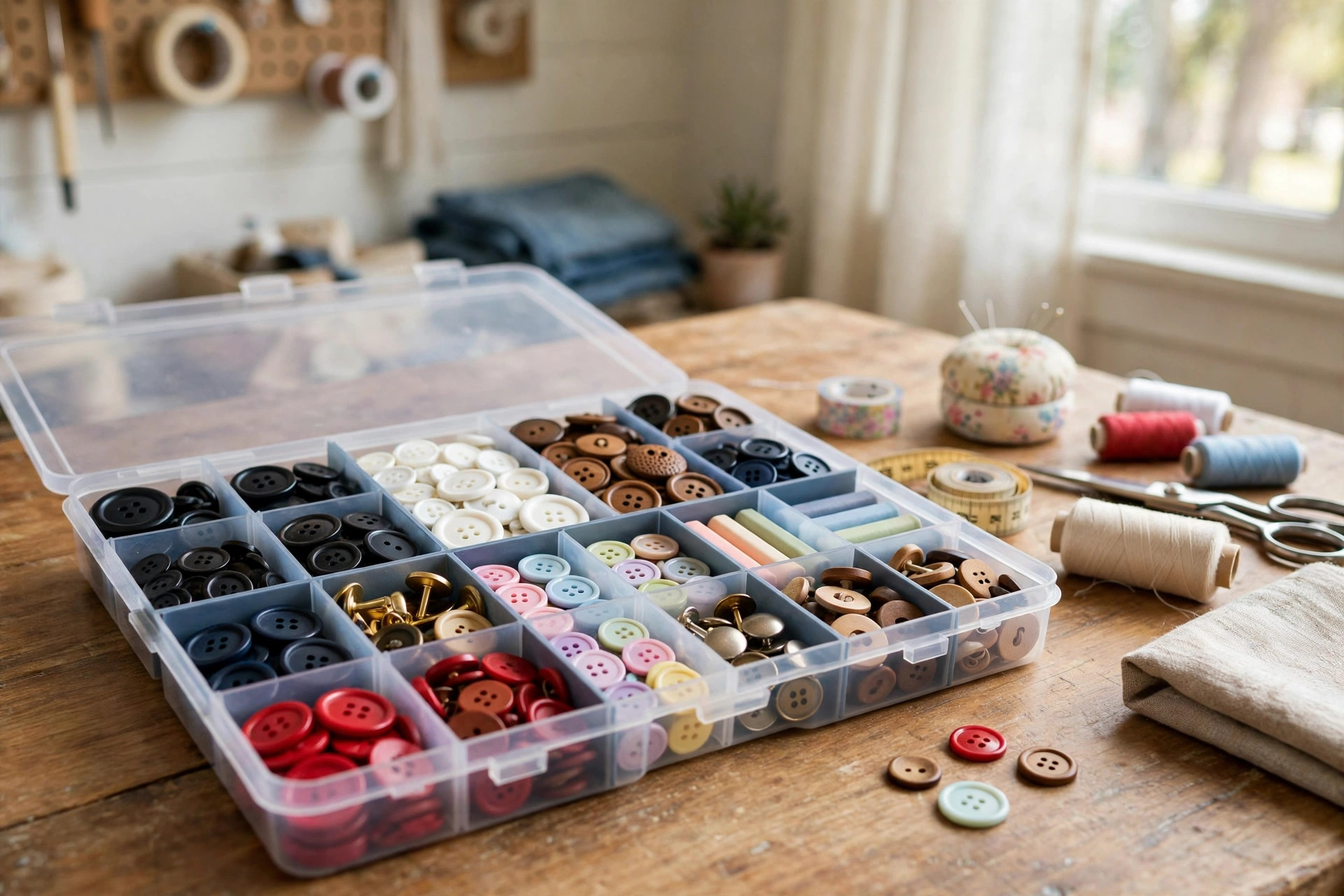

A button assortment kit for sewing and crafts is one of the most useful supplies a home sewer or crafter can own. It is a box or tray that holds many kinds of buttons at once. It may hold small shirt buttons, large coat buttons, and fun shapes for craft work. It may hold wood, metal, plastic, and cloth-covered styles. When a button falls off a shirt or a child needs buttons for a school project, the right one is already in the box. There is no trip to the store. There is no delay.
Many people think of buttons as small details. They are small, but they matter. A missing button can make a coat unusable in winter. A good button can turn a plain dress into a special one. Crafters use buttons for cards, scrapbooks, wreaths, and holiday ornaments. A single kit can serve both sewing and craft needs for years. The cost is low, and the use is high.
This guide explains what to look for in a button assortment kit for sewing and crafts. It covers the types of buttons, the sizes and colors to expect, and the price range. It also covers how to store the kit, how to use it for repairs, and how to keep small children safe around it. By the end, you will know how to pick a kit that fits your needs.
Why It Matters
Buttons wear out, fall off, and get lost. It happens to shirts, coats, pants, and uniforms. A spare button is often sewn inside the garment by the maker, but many clothes do not come with one. When the spare is gone, the owner must find a match. That search can take days.
A button assortment kit for sewing and crafts ends that search. The kit holds hundreds or even thousands of buttons in many colors and sizes. The chance of a close match is high. A close match is often good enough. Most people cannot tell the difference between the old button and the new one once it is sewn on.
Crafters gain the same benefit. Buttons add texture and charm to craft work. They can be glued to wreaths, sewn onto fabric wall art, or used as eyes on stuffed toys. Craft stores sell bags of special buttons, but those bags often cost more per button. An assortment kit gives a wider range at a lower price. It also keeps everything in one place.
Parents find the kit useful for school projects. Children often need buttons for art class or holiday crafts. A kit on the shelf means the family is ready. Teachers who lead after-school sewing clubs also keep one on hand. It saves the class from buying many small bags.
What to Look For and How to Choose: Button Assortment Kit for Sewing and Crafts
Not all kits are the same. Some hold two hundred buttons. Others hold several thousand. Some focus on basic shirt buttons. Others add craft buttons in fun shapes. Before you buy, think about what you will do with the kit.
First, check the size range. A good kit should hold small buttons of about one quarter inch and large buttons of about one inch or more. Small buttons suit shirts and blouses. Medium buttons suit pants and jackets. Large buttons suit coats and crafts. If the kit holds only one size, its use will be limited.
Second, look at the colors. The most useful kits hold the colors people wear most: black, white, brown, navy, gray, beige, and clear. A kit that adds red, blue, green, and pastels is better for crafts and children. Count the colors, not just the buttons. A kit with one thousand buttons in only two colors is less useful than a kit with five hundred buttons in twenty colors.
Third, check the styles. Plain four-hole buttons are the most common for repairs. Two-hole buttons also appear on many clothes. Shank buttons have a small loop on the back and suit coats and heavy fabrics. Pearl, wood, and metal buttons suit special garments and craft projects. A mixed kit covers all these needs.
Fourth, look at the box. The best kits come in a sturdy tray with small sections. Each section holds one size or color. A good lid keeps the buttons from spilling when the box moves. Some kits use cheap boxes that break open. Read product notes about the box before you buy. A broken box means buttons all over the floor.
Fifth, think about quality. Cheap buttons can crack, fade, or break when sewn on. The plastic may be thin. The color may run in the wash. Kits from trusted craft suppliers tend to use better plastic and stronger dyes. You can compare button quality at craft stores and read reviews before you decide.
Types of Buttons You Will Find
Most assortment kits group buttons by material and style. It helps to know what each type is for.
Plastic buttons are the most common. They are light, cheap, and strong enough for daily clothes. They come in every color. They hold dye well. Most shirt and blouse buttons in a kit are plastic.
Metal buttons suit jeans, jackets, and uniforms. They are heavy and strong. They can rust if the coating wears off, so check the finish. Metal buttons with brass or nickel finish last longer.
Wood buttons suit casual clothes, bags, and craft work. They look warm and natural. They are often used on hand-knit sweaters. Keep them dry, since wood can swell in water.
Pearl and shell buttons suit dress shirts and blouses. They have a soft shine. They are more delicate than plastic. They cost more, so kits hold fewer of them.
Cloth-covered buttons are used on suits and dresses. The fabric cover matches the garment. They are harder to find in kits, but some large kits include them.
Craft buttons come in fun shapes: stars, hearts, flowers, and animals. They are made for projects, not clothes. They may be flat with holes or shaped with a shank on the back. Crafters use them for cards, frames, and holiday decor. You can find ideas for craft buttons in seasonal craft guides or browse art and craft supply collections for new project ideas.
Shank buttons deserve special care. They do not lie flat. They have a loop or stem on the back. They are sewn with a thread shank, which gives room for thick fabric. Coat buttons are often shank style. Do not try to force a flat button onto a heavy coat. It will sit wrong and strain the fabric.
Cost and Price
A button assortment kit for sewing and crafts is one of the cheapest sewing supplies you can buy. Most kits cost between five and twenty dollars. The price depends on the count, the quality, and the box.
Small kits with two to three hundred buttons often cost under ten dollars. They suit a beginner or a small household. They cover basic repairs and simple crafts.
Large kits with one to three thousand buttons often cost ten to twenty dollars. They suit families, teachers, and active crafters. The cost per button is very low. A kit this size can last for years.
Special kits cost more. Kits with real shell buttons or metal jeans buttons may cost twenty dollars or more. Kits made for doll clothes or quilts may also cost more per button. Compare the contents before you pay extra. A higher price should mean better material or a wider range.
You can check current prices at home and craft retailers and compare them with specialty sewing shops. Large chains like Walmart also list craft kits online, which makes price comparison easy. Online prices are often lower than store prices, but you cannot check the colors in person. If color match matters for a repair, a store visit may be worth the time.
Buying single buttons is costly by comparison. A card of six shirt buttons can cost three dollars. That is fifty cents per button. A large assortment kit can bring the cost down to less than one cent per button. The kit pays for itself after a few repairs.
Care and Upkeep
A button kit needs little care, but a few habits keep it useful for years.
Keep the kit in a dry place. Moisture can harm wood buttons and metal buttons. A closet shelf or a sewing room drawer is fine. Do not store the kit in a damp basement or garage.
Keep the sections sorted. It is easy to mix colors when you are in a hurry. Take a minute to put each button back in the right section. A sorted kit makes the next repair fast. Some sewers keep small storage organizers nearby for extra sorting space.
Check the box often. The small sections can crack. The lid can loosen. If the box breaks, move the buttons to a new tray before they spill. Fishing thousands of buttons off the floor is a job no one enjoys.
Clean buttons before you store spares. If you remove buttons from an old shirt before you throw it away, wash them first. Dry them well. Then add them to the right section. Old buttons from worn-out clothes are a free way to grow your kit.
Replace what you use. If you take the last white shirt button, add a note to buy more. The kit works best when it is full. A quick check once a year keeps it ready.
Safety
Buttons are small. Small objects are a risk for young children and pets. A button can block the airway if a child puts it in the mouth. Keep the kit closed and out of reach when children under three are near.
Teach older children the rule. Buttons are for sewing and crafts, not for play near the mouth. When a child finishes a craft, help them pick up every button. Count the buttons at the start and the end if needed.
Pets can also swallow buttons. Dogs chew small objects. Keep the kit off low tables where a dog can reach it. Sweep the floor after a sewing session. One lost button can mean a vet visit.
Needles and pins often sit near the button kit. Keep them in a pin cushion, not loose on the table. A beginner sewing kit with a closed case helps keep sharp tools safe. For more on home safety with small craft parts, see consumer safety guidance.
Frequently Asked Questions
How many buttons should a good kit hold? It depends on your needs. A household that does basic repairs can get by with three to five hundred buttons. A teacher or an active crafter may want one to two thousand. More is better if the box keeps them sorted.
Will I find an exact match for a lost button? Sometimes yes, sometimes no. The kit holds many styles, so a close match is likely. A close match in the same color and size looks fine on most clothes. For a favorite coat or suit, you may want an exact match from the maker or a fabric store.
Can I wash clothes with these buttons on? Most plastic buttons in a kit can be washed and dried like normal clothes. Wood buttons should be kept dry when you can. Pearl and shell buttons prefer gentle cycles. When in doubt, check the garment care label first.
Are craft buttons safe for baby clothes? No. Do not sew small buttons on clothes for babies or small children. Babies pull at buttons and can swallow them. Use snaps or sewn closures on baby garments instead. This is a firm safety rule.
How do I sew on a shank button? Push the needle up through the fabric and through the shank loop. Take four to six stitches through the loop. Pull the thread firm but not tight. Tie off on the back of the fabric. The shank gives room for thick fabric to sit under the button.
What is the best way to sort a mixed kit? Sort by color first, then by size. Most people search for a color first. Put all the black buttons together, then divide them into small, medium, and large. This method is fast and works for large kits too.
A Short Final Word
A button assortment kit for sewing and crafts is a small buy with a long life. It fixes clothes, feeds craft projects, and saves trips to the store. Pick a kit with many colors and sizes, a strong box, and good plastic or metal. Keep it sorted and dry. Keep it away from small children and pets. For a few dollars, you gain a supply that serves your home for years.
If you are building a full sewing corner, pair the kit with a sewing kit for beginners and sharp craft scissors for paper and fabric. For your next handmade gift, add a ribbon set for gift wrapping and crafts to your supplies. Browse handmade marketplaces for fresh project ideas, and check DIY home guides when your crafts turn into small home repairs.
References
Blick Art Materials. (n.d.). Art and craft supplies. https://www.dickblick.com Bob Vila. (n.d.). Home improvement advice. https://www.bobvila.com Etsy. (n.d.). Handmade and craft marketplace. https://www.etsy.com JOANN. (n.d.). Fabric and craft supplies. https://www.joann.com Michaels. (n.d.). Arts and crafts supplies. https://www.michaels.com The Container Store. (n.d.). Storage and organization products. https://www.containerstore.com The Home Depot. (n.d.). Home improvement products. https://www.homedepot.com U.S. Consumer Product Safety Commission. (n.d.). Product safety information. https://www.cpsc.gov Walmart. (n.d.). Everyday low prices. https://www.walmart.com
Was this guide helpful?

About Sarah Mitchell
The My Garden US editorial team writes practical, in-depth home and garden guides for American homeowners — tested advice, no fluff.
You May Also Like
DIY Bath Bomb Kit for Gifts and Crafts: A Complete Guide
June 5, 2026 0 views
Best Watercolor Paper Pad for Painting Art
August 17, 2026 0 views
Leather Cord for Jewelry Making Crafts Bulk: A Plain Buying Guide
March 24, 2026 0 views