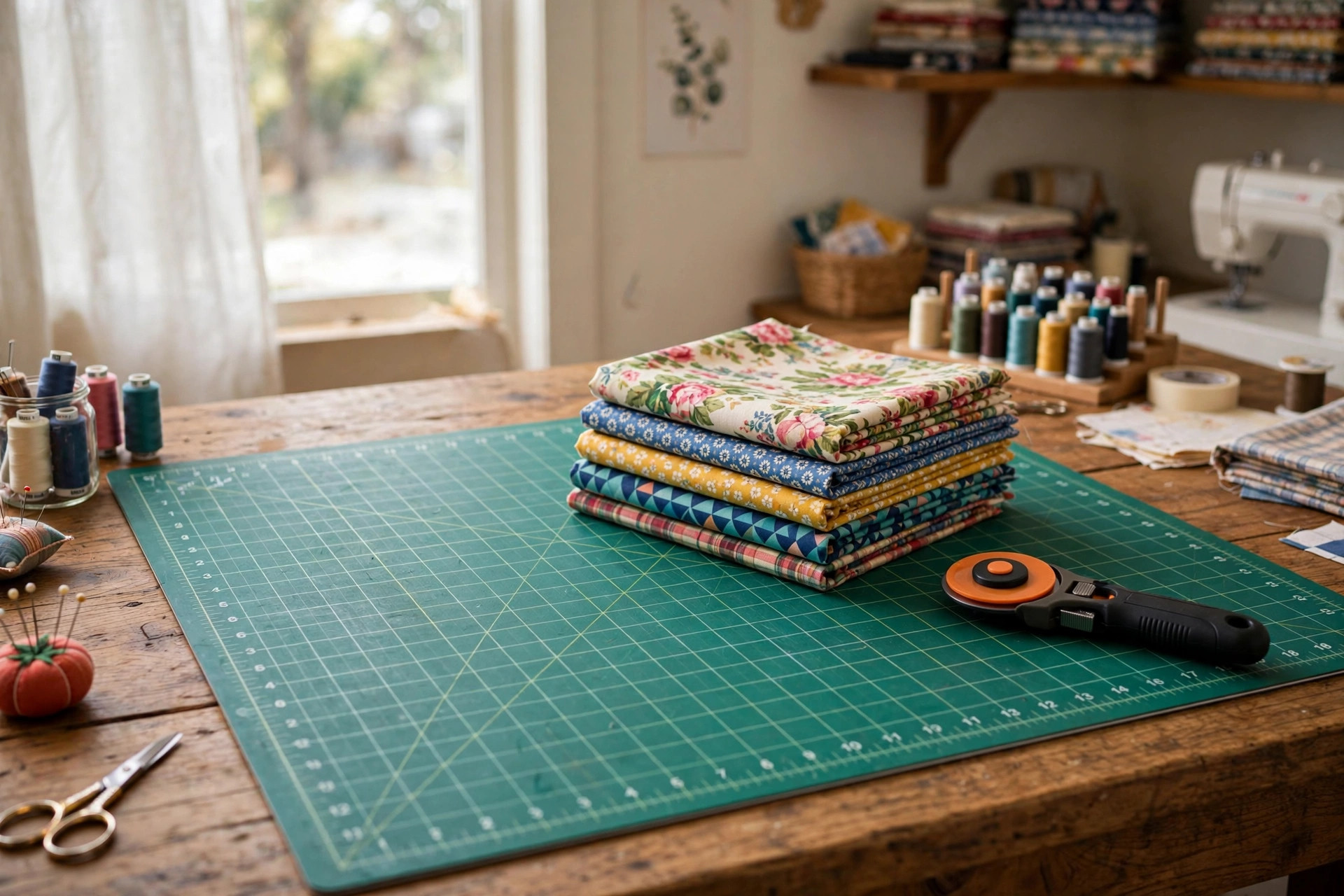

A rotary cutter is only half the story. The other half is the surface under the blade. The best craft cutting mat for rotary cutters protects your table, keeps your fabric from sliding, and gives you clean cuts every time. Without a good mat, even a sharp blade will chew your fabric and leave rough edges. With the right mat, cutting strips, squares, and curves feels smooth and easy. This guide explains what makes a mat work well, how to pick the right size, what prices to expect, and how to make your mat last for years.
Why the Right Mat Matters
A cutting mat does three jobs at once. First, it saves your table. A rotary blade cuts deep, and wood or laminate tops cannot take that kind of damage. Second, it holds fabric still. Most mats have a slightly grippy surface that keeps cloth from shifting while you cut. Third, it gives you measuring lines. Printed grids on the mat let you line up rulers and check widths without reaching for a tape measure.
Cheap or worn mats cause trouble. Old cuts in the surface catch the blade and make it skip. A warped mat lets fabric ride up and cuts crooked. A mat that is too small forces you to turn long fabric pieces in the middle of a cut, and the seam shows in your finished quilt. Buying the best craft cutting mat for rotary cutters that fits your work space is one of the simplest ways to raise the quality of your sewing.
What to Look For When You Choose: Best Craft Cutting Mat for Rotary Cutters
Not all mats are the same. Here are the details that matter most when you shop.
Size and Thickness
Think about what you cut most often. Quilters who cut long strips of fabric need a large mat, often 24 by 36 inches. Smaller projects like doll clothes or patchwork blocks fit fine on an 18 by 24 inch mat. A mat that is three millimeters thick is the standard. Thicker mats cost more but stand up better to heavy use. If your table is small, a foldable mat saves space when you put it away.
Self-Healing Surface
The best mats are called self-healing. The surface is made of layered plastic that closes back up after the blade passes through. On a good mat, the cut line nearly disappears. On a cheap mat, the groove stays open and catches the blade next time. Self-healing mats cost a little more, but they last much longer and give cleaner cuts.
Grid Lines and Markings
Look for clear grid lines in one-inch squares, with marks for smaller parts of an inch. Some mats add diagonal lines at 30, 45, and 60 degrees. Those angled lines help quilters cut bias strips and half-square triangles without extra tools. Good mats print the lines in a color you can read against your fabric. Many crafters also check guides from places like Michaels and JOANN to compare grid styles before they buy.
One Side or Two Sides
Some mats have a grid on one side and a blank surface on the other. Some have different grids on each side, such as imperial on the front and metric on the back. Double-sided mats give you more working life for the price, since you can flip the mat when one side wears down.
Types and Options
Most cutting mats fall into a few main groups. Knowing the groups helps you pick. Each type has its own strength, and many crafters own more than one.
Some mats come in very large sizes meant for professional shops. These can cover a whole table and cost well over 60 dollars. For home use they are more than most people need, but a serious quilter with a big cutting table may find one worth the price. At the other end of the scale, small 12 by 18 inch mats cost under 15 dollars and suit small crafts like card making.
Self-Healing Green Mats
These are the workhorses of the sewing world. Green, dark blue, or purple mats with white or yellow grids are the standard choice for quilters. They come in every common size. They handle cotton, fleece, denim, and vinyl with ease. If you want one mat that does most jobs, this is the type to buy. Craft stores such as Blick stock a wide range of these mats in different sizes.
Light-Colored and Translucent Mats
White or light gray mats make dark fabrics easier to see. If you sew mostly navy, black, or dark green cloth, a light mat helps you follow your lines. Some light mats are made to work with light tables for tracing patterns. They cost about the same as green mats, though they can show stains more.
Large Foldable Mats
For people with small craft rooms, foldable mats open up to a full 36-inch cutting surface and fold down for storage. The hinge is the weak point, so choose one with a sturdy seam. These mats are handy for classes and guild meetings, where you carry your supplies with you. Hardware and tool retailers like Home Depot sometimes carry foldable mats in their craft and tool sections.
Rotating Mats
A rotating mat sits on a base that turns. You spin the fabric instead of walking around the table. This is a great help for squaring up quilt blocks. Rotating mats are smaller, usually 12 or 14 inches square, and they cost more per inch than flat mats. Many quilters keep one small rotating mat next to their big mat.
Cost and Price
Prices run from about 10 dollars for a small basic mat to 60 dollars or more for a large premium mat. A popular 18 by 24 inch self-healing mat usually costs between 20 and 30 dollars. A full-size 24 by 36 inch mat often costs between 35 and 55 dollars. Small rotating mats start near 25 dollars.
Watch for sales. Craft stores run frequent coupons, and a 40 percent off coupon can cut the price of a big mat sharply. A cheaper mat is fine if you sew only now and then. If you cut fabric every week, a mid-priced mat from a known brand pays for itself by lasting years instead of months. The best craft cutting mat for rotary cutters is not always the most costly one. It is the one that matches your projects and your budget.
Care and Upkeep
A good mat can last five to ten years if you treat it right. These habits keep it flat and smooth.
– Store the mat flat, never rolled or bent. A bent mat will never lie fully flat again. – Keep it out of heat. Do not leave it in a hot car or near a heater. Heat warps the plastic. – Wipe it with a damp cloth to remove lint. For stuck bits of thread, rub gently with a soft eraser. – Do not cut in the same spot every time. Move your work around so the wear spreads out. – Never use the mat as an ironing surface. Heat from an iron will melt the grid lines. – Flip a double-sided mat now and then so both sides wear evenly.
If your mat develops a groove that the blade keeps catching, that area is worn out. You can still use the rest of the mat, but plan to replace it before long. Care guides from This Old House and Family Handyman also remind crafters to store flexible tools flat and cool, which applies to mats as well.
Safety
Rotary cutters are sharp enough to cut through skin with one slip. Your mat is part of your safety setup.
– Always cut away from your body, never toward yourself. – Keep your holding hand on the ruler, well clear of the blade path. – Close the blade guard every time you set the cutter down. – Use a blade sized for the job. A 45-millimeter blade suits most quilting. A smaller 28-millimeter blade gives more control on curves. – Keep the mat steady. If it slides on the table, put a non-slip shelf liner under it. – Store blades and cutters where children cannot reach them. – Replace dull blades. A dull blade makes you press harder, and pressing harder leads to slips.
Tool makers like Fiskars publish safety tips for rotary cutters and scissors. Reading the guide that comes with your cutter takes five minutes and prevents most accidents. Review sites such as Bob Vila also cover safe cutting setups for craft rooms.
Frequently Asked Questions
How often should I replace my cutting mat?
Most crafters replace a mat every three to five years with regular use. If you sew daily, you may need a new mat every two years. Replace it when deep grooves catch the blade, when the surface warps, or when the grid lines fade so much you cannot read them.
Can I use a rotary cutter on a wooden table without a mat?
You should not. The blade will scar the wood, and the hard surface will dull the blade fast. A mat protects both the table and the blade. Even a thick towel is not a safe stand-in, since it shifts and the blade can cut through it.
Do I need a special mat for leather or vinyl?
You do not need a special mat, but you need a sharp blade and firm pressure. Self-healing mats work fine for leather, vinyl, and cork fabric. Cut slowly, and do not cut the same heavy material in one spot too often, since thick goods wear mats faster than quilting cotton.
What size mat is best for a beginner?
An 18 by 24 inch mat suits most beginners. It fits on a kitchen table, handles fat quarters and yardage, and costs less than a full-size mat. You can buy a larger mat later if you start cutting long strips for bed-size quilts. Beginners starting other hobbies may also enjoy reading about a cross stitch kit for beginners adults patterns or bead stringing wire for necklace making crafts for craft ideas beyond sewing.
Can I cut paper or cardboard on my fabric mat?
Paper dulls rotary blades and leaves the mat rough. If you must cut paper, use a separate cheap mat or a different blade. Many crafters keep one mat for fabric and a second old mat for paper, cardboard, and craft foam. This keeps the good mat smooth for fabric work.
Are expensive mats really better?
Up to a point, yes. Mid-priced mats from trusted brands heal better and stay flat longer than the cheapest mats. Past about 50 or 60 dollars for a standard size, you pay for extras like rotating bases or special coatings rather than basic quality. Read the reviews, check the warranty, and pick the best craft cutting mat for rotary cutters that fits how often you sew. For finishing work, you might also like a guide to best fabric glue for patches and repairs.
A Short Final Word
A cutting mat is a quiet tool. It does not hum or shine, but it sits under every quilt, dress, and wall hanging you make. Choose a size that fits your table and your projects. Pick a self-healing surface with clear grids. When you shop, bring a ruler and a small piece of fabric if you can. Lay the fabric on the sample mat in the store and make a test cut. You will feel right away whether the surface grips well and whether the blade moves smoothly. Online buyers should read recent reviews that mention healing and flatness, since those are the traits that change most with time. Do these simple things and the best craft cutting mat for rotary cutters will serve you well for many years of cutting.
References
Blick Art Materials. (n.d.). Art and craft supplies. https://www.dickblick.com Bob Vila. (n.d.). Home improvement advice. https://www.bobvila.com Family Handyman. (n.d.). DIY home repair and maintenance. https://www.familyhandyman.com Fiskars. (n.d.). Garden and cutting tools. https://www.fiskars.com JOANN. (n.d.). Fabric and craft supplies. https://www.joann.com Michaels. (n.d.). Arts and crafts supplies. https://www.michaels.com The Home Depot. (n.d.). Home improvement products. https://www.homedepot.com This Old House. (n.d.). Home renovation guidance. https://www.thisoldhouse.com
Was this guide helpful?

About Michael Thompson
The My Garden US editorial team writes practical, in-depth home and garden guides for American homeowners — tested advice, no fluff.
You May Also Like
The Best Craft Table Foldable for Small Apartments: A Practical Guide
February 19, 2026 0 views
Weaving Loom Kit for Beginners Wall Art: A Complete Guide
March 7, 2026 0 views
Acrylic Paint Set for Beginners Canvas Art: A Simple Start
August 25, 2026 0 views