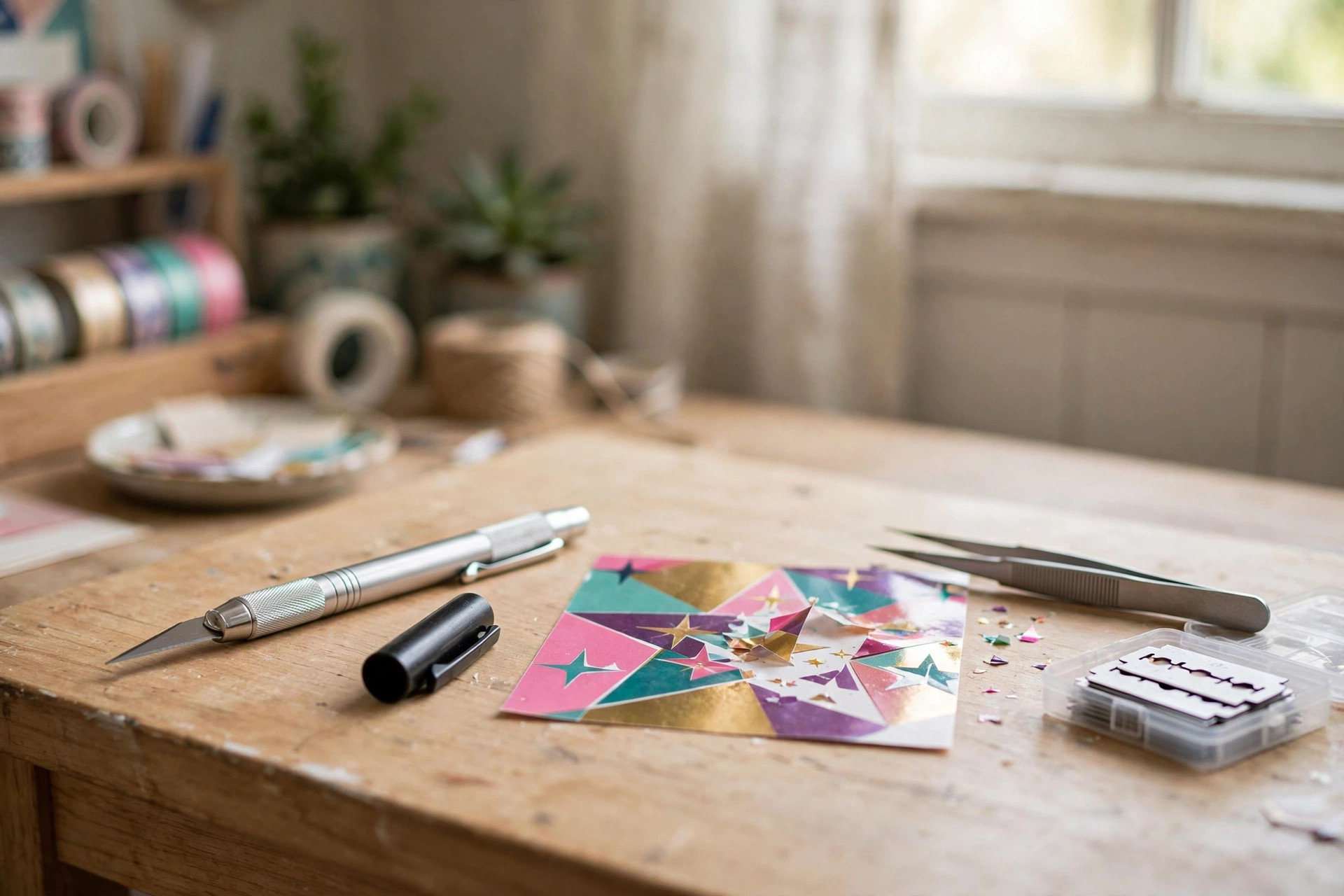

Weeding vinyl is the slow, careful part of a Cricut project. The machine cuts the design, but a person must lift away every small scrap of waste vinyl around it. Tiny letters, thin lines, and small dots all need a steady tool. Many crafters find that the best craft knife for vinyl weeding cricut work is a simple pen-style knife with a sharp, fine point. It is cheap, easy to hold, and it reaches into corners that thick tools cannot touch.
This guide walks through what matters when you pick one. It covers the blade, the handle, the main types on the market, what you should expect to pay, how to keep the blade sharp and safe, and how to work without nicking your vinyl. It is written in plain terms for the home crafter who wants good results without fuss.
Why the Right Knife Matters
Vinyl weeding looks easy until you try it. A dull or clumsy tool will lift the wrong piece, tear thin lettering, or leave scratches on the carrier sheet. When the blade is too thick, small dots in the design pop out with the waste. When the handle is too heavy, your hand tires after a few minutes, and tired hands make mistakes.
The best craft knife for vinyl weeding cricut projects solves these small problems before they start. A fine point slides under the edge of the waste vinyl and lifts it in one pull. A light body lets you work for an hour without strain. A cap that fits well keeps the point sharp when the knife is in a drawer.
Most crafters learn this the hard way. They start with whatever is in the kitchen drawer, such as a kitchen knife or box cutter, and ruin a few sheets of vinyl. A proper craft knife costs very little and saves much more in wasted material. Vinyl sheets are not free, and a single torn design can waste an hour of design work along with the sheet.
There is also the matter of the Cricut cut itself. Modern machines cut very clean, thin lines. A heavy hand with a bad tool can drag across the cut and catch the design. A light pen knife follows the cut instead of fighting it. For people who sell shirts, decals, or labels from home, this small difference shows up in the finish of every piece they ship.
What to Look For and How to Choose: Best Craft Knife for Vinyl Weeding Cricut
Blade Style and Sharpness
The heart of any craft knife is the blade. For vinyl weeding, you want a blade that is short, thin, and sharp. The standard number eleven blade, the slim triangular point used in hobby knives, is the common choice. It pierces the edge of the waste vinyl with almost no pressure.
Some knives use thicker blades meant for cutting wood or thick board. Those are fine for other crafts, but they are too blunt for fine weeding. Check the product listing to see the blade shape. The thin triangular point is what you want.
Sharpness matters more than brand. A fresh, sharp cheap blade beats a dull expensive one every time. Plan to change blades often. When the point stops sliding under the vinyl edge with ease, it is time for a new blade. Some makers sell blade packs in bulk, which keeps the cost of fresh blades low.
Handle Comfort and Grip
You will hold this knife for long stretches. The handle should be slim and light, like a pen. Many good craft knives have a soft rubber grip in the middle. This stops your fingers from slipping when you work on small detail.
Heavier metal handles feel solid, but they can tire your hand. If you weed large sheets, a lighter handle is often the better pick. Some crafters like handles with a slight taper, because it rests against the fingers in a natural way. There is no single right answer here, so pick what feels good in your own hand.
Length also counts. A knife that is about the length of a pen gives the best control. Very long handles push your hand too far from the tip, which makes small work harder to see and control.
Safety Cap and Storage
A craft knife without a cap is a hazard. The point is razor sharp. Look for a cap that fits tight and does not pop off in a drawer or bag. Some knives come with a small stand or case. That is a nice extra, but a snug cap is the main thing.
If you have small children at home, store the knife up high or in a locked craft box. The blade packs should be kept in their own closed container too, since loose blades are easy to miss.
Works Well With Cricut Cuts
Cricut machines cut many materials, from thick vinyl to paper and thin card. Your craft knife should suit the vinyl types you use most. Adhesive vinyl and heat transfer vinyl both weed much the same way, but glitter vinyl and thicker sport vinyl need a touch more care. A fine point handles them all if it is sharp.
Some crafters pair their knife with a cricut machine buying guide for crafters usa when they set up a new craft room, so the tool and the machine suit each other. The knife itself, though, is a simple hand tool. It does not plug in or connect to the machine. It only needs to be sharp, light, and easy to hold.
Types and Options on the Market
Pen-Style Hobby Knives
This is the classic pick and the one most crafters start with. It looks like a fat pen, holds a number eleven blade, and costs only a few dollars. The knife sold by craft stores such as Michaels in this style is a solid example of the form. Many crafters keep two or three on hand, each with a fresh blade, so they never have to stop mid-sheet.
The strength of the pen knife is control. You hold it the way you hold a pen, which is a grip your hand already knows.
Retractable Craft Knives
Some craft knives hide the blade inside the body with a slide or twist. These are safer to carry and store, since the blade is only out while you work. The tradeoff is that the blade often wiggles a bit more than a fixed pen knife. For coarse weeding on big designs, that wiggle does not matter much. For tiny lettering, the pen knife still wins.
Swivel Knives
A swivel knife has a small blade that turns as you push it. It is made for cutting curves in vinyl and thin material. A few crafters use it to free large pieces of waste before weeding the fine detail with a pen knife. It is not a weeding tool by itself, but it can speed up the first rough pass on big designs.
Weeding Picks and Hooks
Weeding tools sold in Cricut accessory sets are often thin metal picks with a hooked end. They are not knives, but they do much the same job. Some crafters prefer the pick because it cannot cut the design by accident. Others find the hook clumsy on flat sheets. A good craft knife usually beats a pick for speed, but the pick has a place in the toolkit. Many sets from craft retailers like Joann include both, which lets you learn which one suits your hand.
Knife-and-Handle Kits
Bulk kits that include several handles and a pack of blades are popular with people who weed vinyl daily. The per-unit price is low, and you always have a fresh blade ready. Art supply stores such as Dick Blick carry this kind of kit, often with a range of blade shapes. For the home crafter who weeds a few sheets a week, a simple two-pack of pen knives plus one blade refill pack is plenty.
Cost and Price
One of the good things about this tool is the price. A single pen-style craft knife usually costs between three and eight dollars at a craft store. Blade refill packs of five or ten run two to six dollars. Even a full starter kit with several handles and dozens of blades rarely passes twenty dollars.
Do not be tempted by the cheapest no-name knives at the bottom of the shelf without checking them. A knife whose chuck cannot hold the blade tight is a waste of money at any price. Read a few buyer reviews before you pick one. Sites like Consumer Reports and craft community pages carry honest reviews of hand tools, and they can save you from a bad buy.
The running cost is the blades. If you weed often, you may use a blade a week. Buying blades in bulk keeps the price per blade under a dollar. Compared to the cost of the vinyl you are protecting, that is money well spent.
Home improvement chains like The Home Depot also carry craft and hobby knives, sometimes at lower prices than craft stores. Their stock leans toward heavy-duty utility knives, so read the listing to make sure you are getting a fine pen knife and not a box cutter.
Care and Upkeep
A craft knife needs little care, but it does need some. The main task is blade changes. Change the blade when it starts to drag instead of glide. Forcing a dull blade leads to slips, and slips lead to torn vinyl and cut fingers.
To change the blade, loosen the chuck, slide the old blade out with care, and seat the new one fully before you tighten. Some blades are held by a small collar instead of a chuck; the idea is the same. Never change a blade while holding the knife toward your body.
Keep the knife clean. Vinyl leaves a thin film of adhesive on the blade over time. Wipe the blade with a soft cloth and a drop of rubbing alcohol now and then. This keeps the edge free and stops sticky buildup from dragging on the vinyl.
Store the knife capped and away from moisture. Rust on the blade dulls it fast. If you buy blade packs in bulk, keep them in the closed pack until you need one. A loose blade in a drawer is a cut waiting to happen.
For general craft room upkeep, guides from The Spruce cover safe tool storage, and home repair sites like This Old House carry good advice on keeping small hand tools in working order.
Safety
A craft knife is a small tool with a very sharp point. Treat it with respect. Always cut away from your fingers, never toward them. When you weed, anchor the vinyl sheet with your free hand well clear of the blade path.
Keep your work area tidy. A knife that rolls off the table can land point-down on a foot. A small dish or tray for the knife between passes keeps it where you put it. Many crafters also keep a hot glue gun for craft projects in the same tray, so one tidy spot holds the sharp tools.
Wear nothing loose near the work. Sleeves that catch the knife can pull it across the vinyl. Work in good light so you can see the cut lines clearly. If your eyes tire, take a break. Most weeding mistakes happen when the crafter is tired and rushing.
Dispose of used blades safely. Do not toss them loose in the trash. Wrap the old blade in tape or a scrap of cardboard, or keep a small sealed container just for used blades. Label it so no one opens it by mistake.
If you craft with children nearby, the knife should be put away the moment you stop using it. The official Cricut brand site at Cricut sells blunt-tipped weeding tools made for younger crafters, which can be a safer pick for family craft time.
Frequently Asked Questions
Do I need a special knife for vinyl weeding, or will any craft knife work?
Any sharp pen-style craft knife works. There is no vinyl-only magic in the blade. What matters is a fine point, a light handle, and a blade that stays sharp. The knives sold as weeding knives are just hobby knives in nicer packaging.
How often should I change the blade?
Change it when it stops gliding under the vinyl edge with ease. For a casual crafter, that may be every few weeks. A fresh blade is cheap, so do not stretch a dull one.
Can a craft knife damage my Cricut mat or the carrier sheet?
Yes, if you press too hard. Use a light touch. The knife should lift the waste, not cut through the sheet under it. Practice on scrap vinyl first. A steady hand and a sharp blade let you use almost no pressure.
Is a weeding pick better than a craft knife?
It depends on the person. Picks cannot cut the design by accident, which suits beginners. Knives are faster on large sheets once you have the touch. Many crafters keep both and reach for the one that fits the job.
What else should I have on my weeding table?
Good light, a flat clean surface, and a pair of fine tweezers for tiny dots. If you do paper crafts too, a paper cutter for scrapbooking is a useful partner tool. Keep the knife capped when you set it down.
Can I sharpen the blades instead of replacing them?
You can strop a blade lightly to extend its life a bit, but hobby blades are thin and cheap. Most crafters find that replacing beats sharpening for both cost and edge quality. Keep a spare pack on hand instead.
Final Word
The best craft knife for vinyl weeding cricut work is not a fancy or costly tool. It is a light pen knife with a sharp fine point, a snug cap, and a handle that suits your hand. Buy from a known craft store, change blades before they dull, store the knife safely, and work in good light. Do those simple things and your weeding will be faster, cleaner, and far less wasteful.
References
Blick Art Materials. (n.d.). Art and craft supplies. https://www.dickblick.com Consumer Reports. (n.d.). Product reviews and ratings. https://www.consumerreports.org Cricut. (n.d.). Cutting machines and craft supplies. https://www.cricut.com JOANN. (n.d.). Fabric and craft supplies. https://www.joann.com Michaels. (n.d.). Arts and crafts supplies. https://www.michaels.com The Home Depot. (n.d.). Home improvement products. https://www.homedepot.com The Spruce. (n.d.). Home and garden advice. https://www.thespruce.com This Old House. (n.d.). Home renovation guidance. https://www.thisoldhouse.com
Was this guide helpful?

About Lisa Anderson
The My Garden US editorial team writes practical, in-depth home and garden guides for American homeowners — tested advice, no fluff.
You May Also Like
The Best Craft Knife Set for Precision Cutting: A Complete Buyer’s Guide
July 21, 2026 0 views
Leather Crafting Tools Kit for Beginners USA
February 21, 2026 0 views
Best Heat Press Machine for Home T Shirts: A Complete Buyer’s Guide
February 28, 2026 0 views