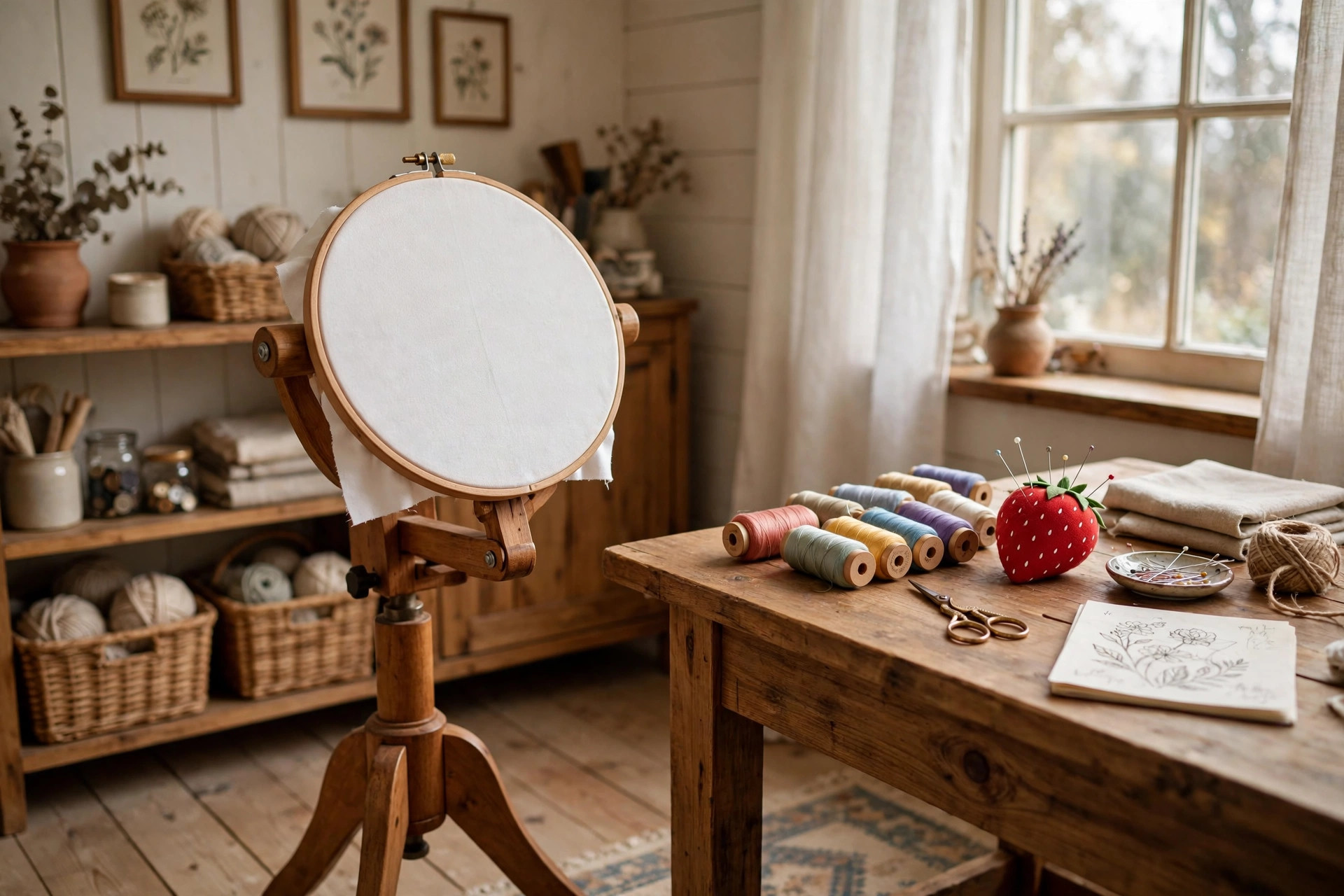

An embroidery stand holds your hoop still so both hands stay free. The best embroidery stand for hands free stitching grips the hoop tight and holds it at a good height. One hand guides the needle above the fabric. The other hand works below it. This is how fine, even stitches are made.
Many stitchers begin with the hoop held in one hand. After an hour, that hand grows tired. The fabric slips. Stitches turn uneven. Work slows down. A stand solves all of this. It clamps to a table, stands on the floor, or rests across the lap. The hoop never moves. The hands do the real work of the craft.
This guide explains what to look for in a stand. It covers the main types, fair prices, simple care, and safe use. It also answers common questions. Whether you sew cross stitch, crewel work, or fine linen pieces, the right stand will serve you well for many years. A pair of sharp craft scissors and a good hoop set, such as a quality embroidery hoop set, complete the basic kit.
Why a Stand Changes Your Stitching
A stand brings steady tension to the fabric. When the hoop is fixed in place, the fabric stays drum-tight. The needle passes through clean holes. Each stitch sits level with the last. The back of the work looks neat. The front looks smooth and even.
Speed improves as well. With both hands free, a stitcher can use the old two-hand method. The right hand pushes the needle down through the cloth. The left hand draws it up from below. There is no need to stop, turn the hoop, and start again. Long rows of stem stitch or chain stitch move fast. Large filling stitches go faster still.
Comfort is a third gain. Holding a hoop means the wrist bends at a hard angle. Over time, that bend can ache. A stand takes the weight off the wrist. The shoulders stay level. The neck does not crane. People who stitch for long evenings report less pain once they switch to a stand. Beginners who start with cross stitch kits often find a stand helps them learn the two-hand rhythm early, before bad habits set in.
There is also a quiet gain in pleasure. The work sits before you like a small frame on an easel. Both hands move freely. The mind settles into the rhythm. Many stitchers say the craft feels different once the hoop is held for them. It feels less like a chore and more like an art.
How to Choose the Right Stand: Best Embroidery Stand for Hands Free Stitching
Not every stand suits every stitcher. Five points matter most.
Clamp Strength and Grip
The clamp is the heart of the stand. It must hold the hoop without slipping. Test it by tugging the hoop. A good clamp locks tight and releases with a simple twist or lever. Cheap stands use weak springs. They slip mid-row and must be reset. Look for solid wood jaws or metal clamps with rubber pads. Rubber pads protect the hoop from scratches.
Height and Reach
The hoop should sit at chest height when you sit straight. If you must hunch, the stand is too low. If your arms lift high, it is too tall. Floor stands often adjust from about 28 to 42 inches. Tabletop stands should raise the hoop at least 10 inches above the table. Measure your chair and your table before you buy. A stand that cannot reach your working height is useless.
Size of Hoop It Holds
Most stands accept hoops from 4 inches to 12 inches across. Check the maximum width of the jaws. If you stitch large pieces on 14-inch hoops, make sure the stand can take them. Some stands also hold scroll frames. A scroll frame suits long work, such as table runners or wide borders. If you plan to use one, buy a stand made for it.
Weight and Stability
A stand must not tip. Floor stands need a wide, heavy base. Cast iron or solid hardwood bases work best. Tabletop stands need a strong clamp that bites deep into the table edge. Lap stands need a low center of weight. Wobble ruins tension. A rock-solid stand is worth more than a tall or fancy one that shakes.
Wood or Metal
Wooden stands look warm and suit home craft rooms. Beech and oak last for decades. Metal stands suit heavy use. They adjust fast and hold great weight. Either can be excellent. The choice comes down to taste and budget. Stores like Michaels and JOANN carry both styles, so you can compare them in hand before you decide.
The Main Types of Embroidery Stands
Tabletop Clamp Stands
A tabletop stand clamps to the edge of a desk or craft table. A short arm holds the hoop above the table. This type costs the least. It folds flat for storage. It suits small rooms and small hoops.
The limit is reach. The hoop sits close to the table edge. Large hoops may hit the table. Heavy scroll frames can pull the clamp loose. For cross stitch on 8-inch hoops, though, a tabletop stand does the job well. It is the best first stand for most beginners.
Floor Stands
A floor stand rises from a base on the floor, like a music stand. The arm swings over your chair and holds the hoop in front of you. This type gives the most freedom. The hoop can tilt to any angle. Both sides of the fabric are easy to reach.
Floor stands cost more. They take up room. Cheap ones tip when the arm extends far. A good floor stand has a heavy base and a smooth tilt lock. Serious stitchers who work on large pieces swear by them. If you stitch daily, a floor stand repays its price.
Lap Stands
A lap stand rests across the lap or on a low table. Two legs hold a frame or hoop low and level. This type suits armchairs and sofas. It is light and easy to carry from room to room.
The limit is height. The work sits low, so the back may bend. A cushion under the stand can raise it. Lap stands suit small and medium hoops best. They are a favorite of stitchers who like to work while the family gathers in the living room.
Sit-On and Weighted Stands
A sit-on stand has a flat base that slides under the leg or under a cushion. Your own weight holds it steady. No clamp and no floor base are needed. It works in any chair.
The trade is adjustability. Most sit-on stands hold the hoop at one fixed angle. They suit simple work and short sessions. They travel well and cost little. Many stitchers keep one as a second stand for travel or for the porch.
What You Should Expect to Pay
Prices run wide. A simple tabletop clamp stand often costs between $25 and $60. These hold small hoops and suit beginners. Mid-range stands, including good floor stands with heavy bases, run from $60 to $150. They adjust well and last for years.
Fine hardwood stands from craft makers can cost $150 to $300 or more. These are built like furniture. They hold large scroll frames with no wobble. The clamps are smooth and strong. For a stitcher who works every day, this price is fair.
Watch for hidden costs. Some stands sell the frame holder and the base apart. Make sure the price covers the full stand. Check whether it includes the hardware to fit your hoop size. Spare clamps and pads are cheap and worth buying at the start. Big retailers such as Home Depot, Walmart, and Target list full kits with clear part lists, which helps you compare prices. Online marketplaces like Amazon carry a wide range, and reviews there often mention long-term durability.
Do not judge a stand by price alone. A $40 stand with a solid clamp beats a $120 stand with a weak one. Read the details. Ask what the clamp is made of. Ask how wide a hoop it takes. A plain stand that holds tight is better than a fancy one that slips.
Care and Upkeep
An embroidery stand needs little care. Wooden stands like a dry room. Keep them out of damp basements. Once a year, rub the joints with a drop of wood oil. Check the screws. Tighten any that have worked loose. Loose joints cause wobble, and wobble ruins tension.
Metal stands need a wipe with a dry cloth now and then. A drop of light oil keeps tilt locks smooth. Do not use heavy grease. It gathers dust and grit. Keep the rubber pads on the clamps clean. Sticky pads grip better. If a pad wears thin, replace it. Spare pads cost little.
Store the stand where it will not fall. Floor stands tip if bumped. Tabletop stands should be unclamped and laid flat. Keep the stand out of strong sun. Sun dries wood and cracks it over time. With this small care, a good stand lasts twenty years or more. Art suppliers such as Blick sell care oils and small replacement parts that fit most wooden craft stands.
Safety at the Work Table
A stand is safe when it is stable. Test every new stand before you stitch. Push the hoop from each side. It should not move. If a floor stand rocks, set it on a rug. If a tabletop clamp slips, move it to a thicker part of the table.
Keep needles in a pincushion, not loose on the table. A loose needle near a tilting stand can roll and stick. Keep scissors closed when not in use. Keep the work area lit. Good light prevents eye strain and keeps the needle where it belongs.
Children and pets add risk. A floor stand can tip if a child grabs the arm. Keep stands out of play paths. Unplug nothing, since stands need no power, but keep cords from lamps tucked away. These are small steps. They keep the craft room safe for everyone. Project guides from Bob Vila, Family Handyman, and This Old House offer more tips on setting up a safe, well-lit craft space at home.
Frequently Asked Questions
Can I use an embroidery stand with any hoop?
Most stands take round wooden or plastic hoops from 4 to 12 inches. Check the jaw width before you buy. Very large hoops and deep scroll frames need a stand made for them. Bring your hoop to the store if you can, or measure it and compare with the stand’s listed range.
Is a floor stand better than a tabletop stand?
It depends on your work. A floor stand gives more reach and holds larger hoops. It suits daily stitchers and big projects. A tabletop stand costs less and stores flat. It suits small hoops and small rooms. Neither is always better. Match the stand to your space and your projects.
Will a stand really make my stitches neater?
Yes, for most people. The hoop stays still, so tension stays even. Both hands work in rhythm. Stitches land in straight rows. The change shows within the first few evenings of use. It will not fix every flaw, but it removes the biggest cause of uneven work: a shifting hoop.
How do I stop the fabric from slipping in the hoop?
Tighten the hoop screw until the fabric is drum-tight. It should give a small tap sound when flicked. If it still slips, wrap the inner ring with cotton twill tape. The tape adds grip. Also check the stand clamp. If the hoop turns inside the clamp, the pads may be worn. Replace them.
Can I take a stand when I travel?
Lap stands and small tabletop stands travel well. They fold flat and fit in a tote bag. Floor stands are too tall for most travel. A sit-on stand is a good travel choice. It weighs little and needs no table. Pack the hoop apart from the stand so the clamp does not press on the fabric.
How long does a good stand last?
A solid wood or steel stand lasts decades with small care. The parts that wear are the rubber pads and the tilt lock. Both are cheap to replace. Cheap stands with plastic clamps may last only a year or two of heavy use. Buy the best clamp you can afford. The clamp is the part that does the work.
A Short Final Word
The best embroidery stand for hands free stitching is the one that holds your hoop still, fits your chair, and suits your projects. Start with a sturdy tabletop stand if you are new. Move to a floor stand when your work grows large. Keep the clamp tight, the joints oiled, and the work well lit. Your hands will thank you. Your stitches will show it. Good tools do not make the artist, but they clear the path. A good stand clears the path for every stitch you sew.
References
Amazon. (n.d.). Online shopping. https://www.amazon.com Blick Art Materials. (n.d.). Art and craft supplies. https://www.dickblick.com Bob Vila. (n.d.). Home improvement advice. https://www.bobvila.com Family Handyman. (n.d.). DIY home repair and maintenance. https://www.familyhandyman.com JOANN. (n.d.). Fabric and craft supplies. https://www.joann.com Michaels. (n.d.). Arts and crafts supplies. https://www.michaels.com Target. (n.d.). Retail store. https://www.target.com The Home Depot. (n.d.). Home improvement products. https://www.homedepot.com This Old House. (n.d.). Home renovation guidance. https://www.thisoldhouse.com Walmart. (n.d.). Everyday low prices. https://www.walmart.com
Was this guide helpful?

About Michael Thompson
The My Garden US editorial team writes practical, in-depth home and garden guides for American homeowners — tested advice, no fluff.
You May Also Like
Paint Brush Cleaner for Acrylic and Oil Paints: A Complete Guide
June 2, 2026 0 views
DIY Welcome Sign Kit for Front Porch Decor: How to Make One That Lasts
March 7, 2026 0 views
Knitting Needles Set for Beginners: A Plain Guide to Bamboo Sets in the USA
August 19, 2026 0 views