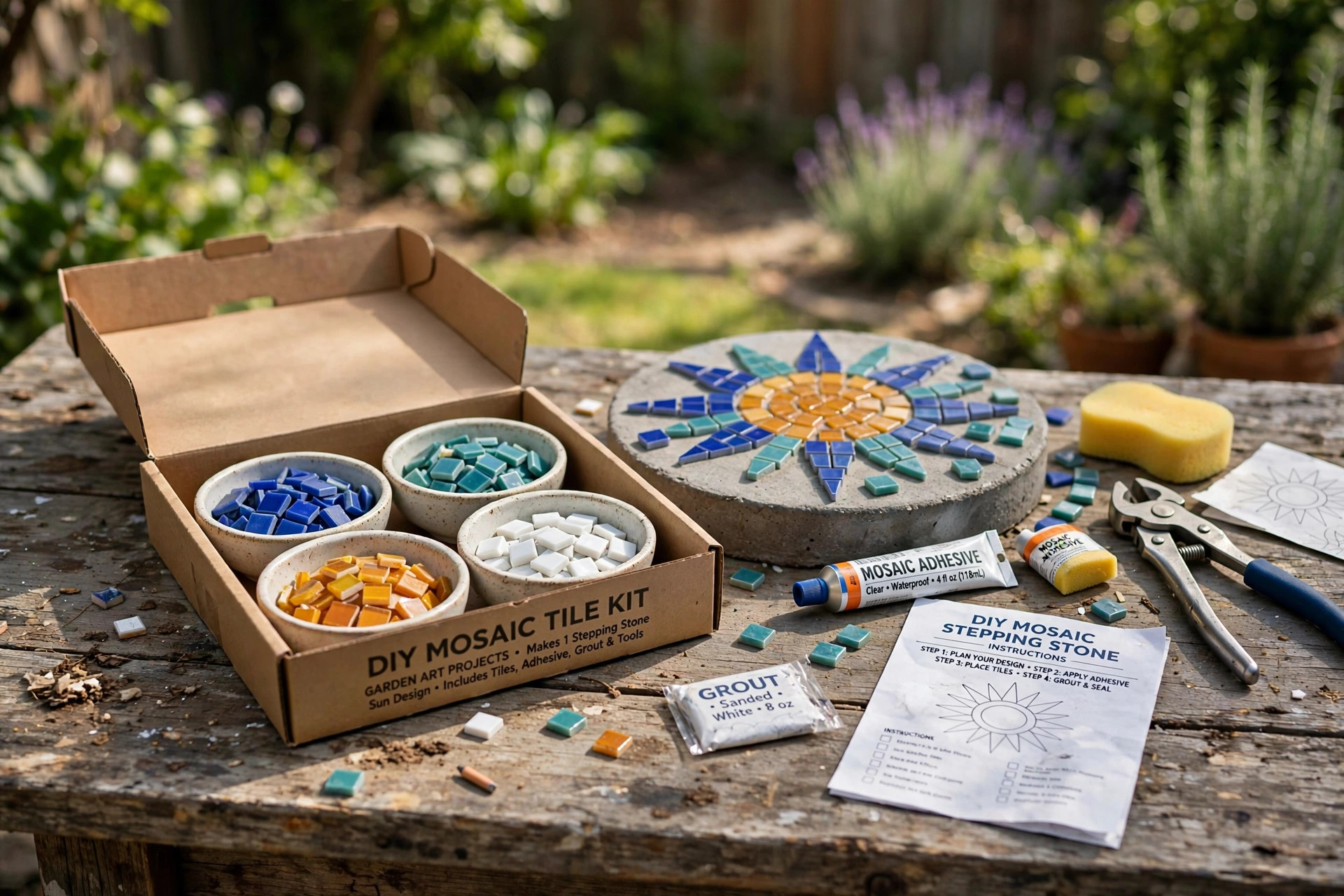

A diy mosaic tile kit for garden art projects gives you every piece you need to decorate your own yard with small bits of colored tile. Most kits hold cut glass tiles, small ceramic pieces, adhesive, grout, a sponge, and a guide. You do not need to buy each item one by one. The box holds it all. This makes the craft easy to start for people who have never tried mosaic art before. In one weekend you can finish a stepping stone, a flower pot, or a small wall panel for your garden. The work is simple, and the result looks bright and personal. Many home crafters in the United States keep a kit on the shelf for rainy days. It is a calm hobby, and the finished art adds color to the garden for years.
Why Garden Mosaic Art Matters
A plain yard can feel flat and gray. Bright mosaic art changes that mood at once. Small bits of blue, green, and amber catch the sun. They give a path or a wall a warm and human touch. A hand made piece also tells a story. No store bought ornament looks quite the same.
Garden art made at home has a long past. Tile work goes back thousands of years, from old Roman floors to church walls in Mexico and Spain. The craft came into the American home through garden clubs and art classes in the last century. Today a diy mosaic tile kit for garden art projects brings this old craft to the kitchen table. You do not need an art degree. You need patience and a few free hours.
A kit is also kind to the home budget. A single finished stepping stone from a shop can cost thirty or forty dollars. A kit that makes four or six pieces may cost the same amount. Craft stores such as Michaels and Joann carry these kits in their craft aisles and on their web sites. Home improvement stores such as Home Depot and Lowe’s also stock outdoor rated tiles and adhesives for garden use.
There is one more reason to try it. Mosaic work is gentle and slow. You pick up one small tile at a time. You set it in place. The mind rests. Many people find the work peaceful after a long day. If you enjoy other slow crafts, you may also like an acrylic paint set for beginners canvas art, a resin art kit for beginners jewelry making, or a diy terrarium kit for succulents and plants. Each one fills an afternoon with quiet hand work.
What to Look for When You Choose a Kit: Diy Mosaic Tile Kit for Garden Art Projects
Not all kits are made for the garden. Some kits are made for indoor crafts only. Indoor tiles and glue will not last in rain and frost. Read the box before you buy. Look for words like outdoor, weatherproof, or frost resistant. These are the signs of a kit that will hold up outside.
Tile Material
Most kits hold glass tiles. Glass is bright and keeps its color in the sun. It works well on flat surfaces. Some kits hold ceramic or porcelain pieces. These are harder and stand up to foot traffic on stepping stones. A few kits mix in small stones or shells. Mixed kits give a natural look but need more care when you grout.
Check the size of the tiles. Small tiles of about three quarters of an inch give fine detail. Larger tiles of one inch or more cover ground fast. Beginners do best with medium tiles. They are easy to hold and place.
Adhesive and Grout
The glue must be rated for outdoor use. Thinset mortar is the best choice for stone and concrete bases. Some kits include a ready made outdoor adhesive instead. Both work if the label says weatherproof. The grout fills the gaps between tiles. Sanded grout is right for outdoor work. It is strong and hides small errors in spacing. If the kit does not include grout, you can buy a small bag at a home store. Guides at Family Handyman and This Old House explain how to mix and spread grout for small tile jobs.
Tools and Instructions
A good kit holds a spreader, a sponge, and a pair of tile nippers. Nippers let you cut tiles into shapes. You do not need to be exact. Mosaic art loves rough edges. The guide should show clear steps with pictures. A weak guide can be fixed with a short look at craft books or the free project pages at Bob Vila.
Types of Garden Art You Can Make
One kit can make many kinds of garden art. Think about where the piece will live before you start. A stepping stone must be flat and strong. A wall panel only needs to look good from a few feet away.
Stepping Stones
Stepping stones are the most loved garden mosaic project. You press tiles into a round or square concrete base. The art faces up, so walkers see it with each step. Use hard ceramic or porcelain tiles for the top. Glass can chip under shoes. Keep the tile surface level with the stone so no one trips. A set of four matching stones can line a path from the door to the fence.
Flower Pots and Planters
A plain clay pot turns into a bright planter with a band of mosaic tile. Work on the outside of the pot only. Seal the finished work with an outdoor tile sealer. The sealer keeps water from getting behind the tiles. Small pots make fine gifts. Large planters make a strong mark by the front step.
Birdbaths, Garden Balls, and Wall Panels
A birdbath bowl with a mosaic rim draws birds and guests. Use only food safe sealers near the water basin, and keep the mosaic on the outer rim where birds do not drink. Glass garden balls covered in tile catch light in a flower bed. Wall panels on a fence or shed give color through winter when little blooms. Art supply shops such as Blick sell extra tile packs if your kit runs short mid project.
How to Use Your Kit, Step by Step
Work on a flat table covered with newspaper. Wear gloves and safety glasses when you cut tile. The steps below fit most kits.
First, clean your base. Wash the stone, pot, or panel with soap and water. Let it dry fully. Dust and grease stop the glue from holding.
Second, plan your design. Lay tiles on the base without glue. Move them until the pattern pleases you. Simple shapes work best for a first try. Rings, waves, and sunbursts are kind to beginners. Take a photo of the dry layout so you can rebuild it.
Third, spread the adhesive. Use the notched spreader to lay a thin layer on a small section of the base. Press each tile in place with a small twist. Leave a narrow gap between tiles for the grout. Work in small sections so the glue does not skin over before you finish.
Fourth, let the piece cure. Most outdoor adhesives need twenty four to forty eight hours. Keep the piece dry and out of strong sun while it cures. Do not rush this step. Weak bonds are the main cause of tiles that pop off later.
Fifth, grout the piece. Mix the grout to the thickness of peanut butter. Spread it over the tiles with a rubber float or sponge, pushing it into every gap. Wipe the extra grout off the tile faces with a damp sponge. Rinse the sponge often. Let the grout haze dry, then buff the tiles with a soft cloth. General craft guidance at The Spruce covers the same basic method for indoor mosaic crafts, and the steps transfer well to garden pieces.
Sixth, seal the work. After three days, brush on an outdoor tile and grout sealer. The sealer adds a clear shield against rain and sun. Reapply the sealer once a year for pieces that stay outside all winter.
Cost and Price
A diy mosaic tile kit for garden art projects is one of the cheapest ways to decorate a yard by hand. Small starter kits cost between twelve and twenty five dollars. They make one or two small pieces. Mid size kits cost between twenty five and fifty dollars and hold enough tile for four to six projects. Large or deluxe kits with nippers, sealer, and extra tile packs can reach sixty to eighty dollars.
Extra costs stay low. A bag of sanded grout costs under ten dollars and covers many pieces. A bottle of outdoor sealer costs about the same. If you make your own concrete stepping stone bases, a bag of quick set concrete costs less than ten dollars and yields several stones. Watch for seasonal sales at craft stores. Kits often drop in price after the summer garden season and before the winter holidays.
Compare the kit price to the cost of finished art. A hand made mosaic stepping stone at a garden center sells for twenty five to forty five dollars. Your kit made stone costs five to eight dollars in materials. The savings grow with each piece you finish.
Care and Upkeep of Outdoor Mosaic Work
Mosaic garden art lasts for years with small care. The two enemies are water and frost. Water finds cracks in old grout. Frost makes the water swell and push tiles loose. A yearly check stops small damage from growing.
Each spring, look over your pieces. Tap the tiles lightly. A hollow sound marks a loose tile. Pull it off, clean the old glue, and reset it with outdoor adhesive. Regrout the spot and seal it. This small repair takes ten minutes and saves the whole piece.
Clean the art with a soft brush and mild soap. Do not use a pressure washer on mosaic work. The hard spray can force water behind the tiles and blast grout from the gaps. In cold states, move small pieces like pots and garden balls into a shed or garage for winter. Heavy stepping stones can stay out if they sit on well drained soil and carry a fresh coat of sealer.
If grout stains turn dark, a paste of baking soda and water lifts most marks. Rub gently, rinse, and let the piece dry in the sun. Avoid bleach. It can fade colored grout and harm nearby plants when it washes into the soil.
Safety Tips
Mosaic work is safe when you follow a few plain rules. Cut tile throws sharp chips, so wear safety glasses every time you use nippers. Work gloves protect your hands from sharp edges. Keep small tiles away from young children and pets. The pieces are bright and look like candy.
Work in fresh air or a well aired room when you mix grout or use sealer. Dust from dry grout can irritate the lungs. A simple dust mask costs little and works well. Wash your hands after you handle adhesive and grout. Read every label in the kit before you start. The labels tell you the cure time and the right cleanup method.
For general home project safety, the free guides at Family Handyman and This Old House give sound advice that fits craft work as well as repair work.
Frequently Asked Questions
How long does a first mosaic project take? A small stepping stone or pot takes three to five hours of active work, plus two days of drying time. Plan the design on day one, set the tiles on day two, and grout on day three. Do not rush the cure times.
Can I use a diy mosaic tile kit for garden art projects indoors too? Yes. Every outdoor rated kit also works indoors. Outdoor tiles and glue are simply stronger. You can decorate a bathroom mirror frame, a table top, or a kitchen backsplash panel with the same kit.
What is the best base for a beginner? A plain concrete stepping stone base is the kindest start. It is flat, strong, and cheap. Unglazed clay pots come second. Avoid bases that bend or swell, such as thin wood, for outdoor pieces.
Will the colors fade in the sun? Glass tiles keep their color for many years. Cheap dyed tiles may fade. Look for kits that use real colored glass rather than painted tile. A coat of UV rated sealer slows fading of grout and adhesive.
How do I fix tiles that fall off? Scrape the old glue from the base and the tile back. Apply fresh outdoor adhesive, press the tile in place, and let it cure for a full day. Fill the gaps with grout, wipe clean, and seal the spot. The repair blends in well.
Where can I find more design ideas? Craft store web sites show free project photos. Michaels, Joann, and Blick each host galleries of customer work. Bob Vila and The Spruce publish step by step garden craft guides with pictures.
A Short Final Word
A diy mosaic tile kit for garden art projects turns a quiet weekend into lasting beauty. The cost is low. The skill is easy to learn. The garden gains color that no store shelf can match. Start with one small stone. Learn the feel of the tile and the grout. Then let your next piece grow bolder. Your yard will thank you for many seasons.
References
Blick Art Materials. (n.d.). Art and craft supplies. https://www.dickblick.com Bob Vila. (n.d.). Home improvement advice. https://www.bobvila.com Family Handyman. (n.d.). DIY home repair and maintenance. https://www.familyhandyman.com JOANN. (n.d.). Fabric and craft supplies. https://www.joann.com Lowe’s. (n.d.). Home improvement products. https://www.lowes.com Michaels. (n.d.). Arts and crafts supplies. https://www.michaels.com The Home Depot. (n.d.). Home improvement products. https://www.homedepot.com The Spruce. (n.d.). Home and garden advice. https://www.thespruce.com This Old House. (n.d.). Home renovation guidance. https://www.thisoldhouse.com
Was this guide helpful?

About Robert Taylor
The My Garden US editorial team writes practical, in-depth home and garden guides for American homeowners — tested advice, no fluff.
You May Also Like

Paper Mache Kit for Kids Art Projects Home: A Parent’s Buying and Project Guide
March 28, 2026 0 views
Paint Brush Cleaner for Acrylic and Oil Paints: A Complete Guide
June 2, 2026 0 views
Best Yarn for Knitting Sweaters Warm: A Practical Guide
April 20, 2026 0 views