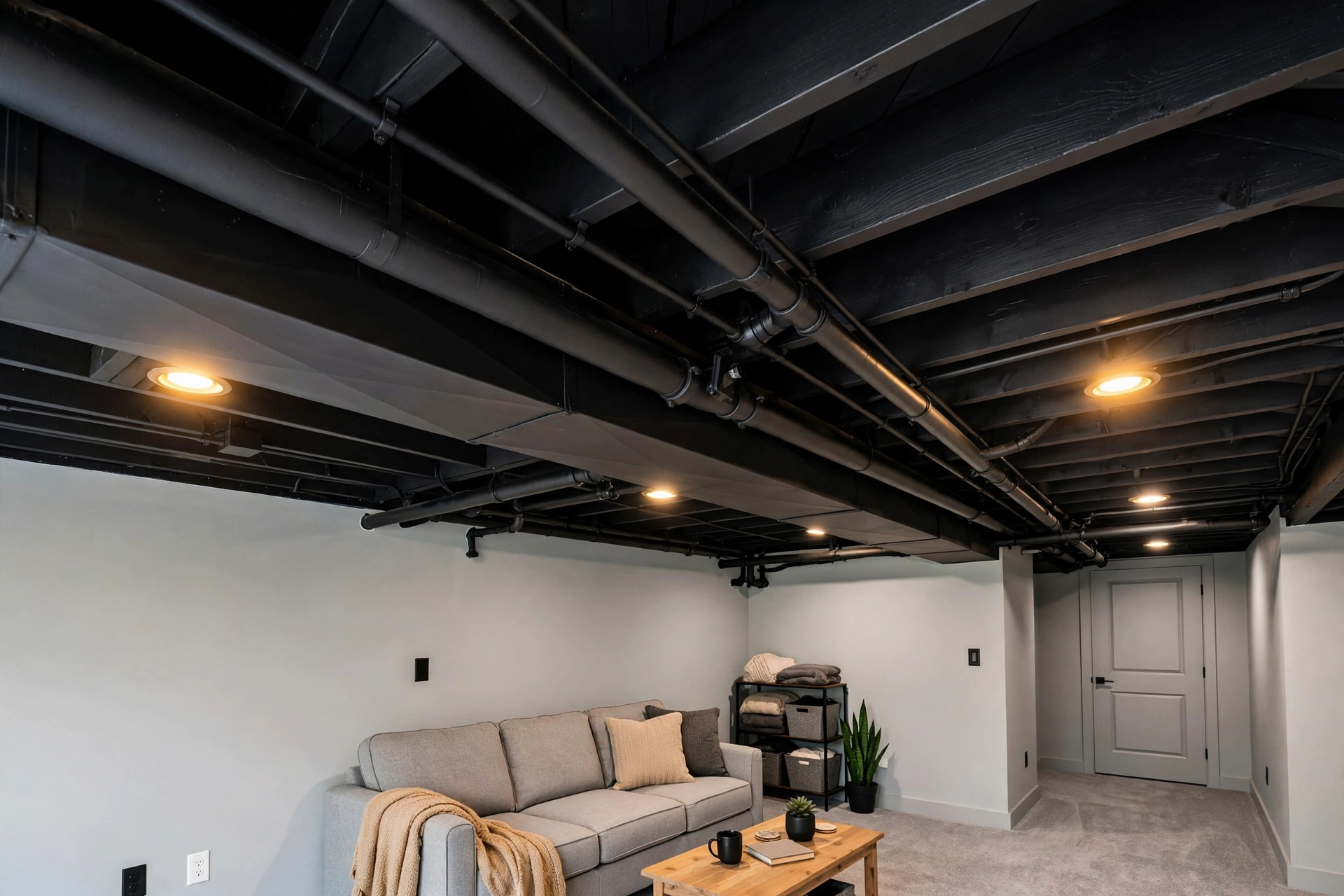

Many people who finish a basement ask the same question. Should the ceiling be black? Reading black ceiling paint for basement reviews can help answer that question. Black paint on a basement ceiling is a common choice. It hides pipes, wires, and ducts. It gives the room a clean and modern look. But not every black paint works well. Some paints leave streaks. Some take too many coats. Some cost more than they should.
This guide walks through what matters when you choose a black ceiling paint for a basement. It covers why black works, what to look for, the types of paint, the cost, and how to keep the ceiling looking good. It also answers common questions from homeowners.
Why Black Paint Works in a Basement
The Problem With Basement Ceilings
Basement ceilings are different from other ceilings in a house. They often have low beams. They carry heating ducts, water pipes, drain lines, and electrical wires. Most of these parts are gray, silver, or white. They stand out against a light wall. A standard drywall ceiling would hide them, but a drywall ceiling takes space away. In a basement with seven or eight feet of height, every inch counts. Black paint solves this problem in a simple way. It coats all the parts in one dark color. The eye no longer picks out each pipe or duct. The whole ceiling fades back and looks neat.
The Look People Want
A black ceiling gives a basement a finished feel without a dropped ceiling. It works well in home theaters, game rooms, bars, and offices. Designers featured on HGTV have used dark ceilings to make low rooms feel taller and more open. The dark color draws the eye downward to the walls and the furniture. Recessed lights and lamps stand out against the dark background.
One Color for Everything
Another reason people choose black is simple. One paint covers everything. The wood joists, the metal ducts, the PVC pipes, and the copper lines all get the same color. This saves time. It also saves money because you do not need special colors for each surface. Most black ceiling paint for basement reviews point to this as the biggest advantage.
What to Look for When You Choose: Black Ceiling Paint for Basement Reviews
Flat or Matte Finish
The finish matters more than most people think. Flat or matte black paint is the best choice for a basement ceiling. A flat finish does not reflect light. It hides small marks and dents. It also hides the seams between different materials. Semi-gloss or satin black paint will shine under lights. Every pipe and duct will show its shape again. Almost all reviews agree: buy flat or matte.
One-Coat Coverage
Black paint often needs two coats to look even. That is normal. But some paints cover better than others. Look for labels that say high-hiding or one-coat coverage. These paints have more solids in the can. They hide the old color faster. Reviews on The Spruce often test coverage on dark colors. A paint that covers in two thin coats will save you both time and money.
Low Odor and Low VOC
Basements have poor air flow. Paint fumes can sit in the air for a long time. Choose a paint with low VOC levels. VOC stands for volatile organic compounds. These are the chemicals that cause strong paint smells. Low-VOC paint is safer to use indoors. It lets you move back into the room sooner. Many paint makers, such as Sherwin-Williams and Benjamin Moore, now sell low-VOC black paints in flat finishes.
Mildew Resistance
Basements can be damp. Damp rooms can grow mildew on painted surfaces. Some ceiling paints include mildew-resistant additives. These paints help stop mold growth on the paint film. If your basement has any moisture, this feature is worth the extra cost. For other damp rooms, see our guide to mildew resistant bathroom paint reviews. A dry basement still benefits from a paint that resists stains and mildew.
Spray or Roll
Think about how you will apply the paint. A roller works for flat wood joists. But around pipes and ducts, a roller misses spots. A paint sprayer reaches every corner and side of a pipe. Many black ceiling paint for basement reviews say a sprayer gives the best result. It also speeds up the work. If you do not own a sprayer, some stores rent them for the day.
Types of Black Ceiling Paint
Interior Flat Latex Paint
The most common choice is interior flat latex paint in black. It dries fast. It cleans up with water. It works on wood, drywall, and primed metal. Latex paint also has less smell than oil paint. For most basement ceilings, this is the right type. Brands like Behr sell flat black interior paint at a fair price. Many reviewers say it covers well in two coats.
Ceiling-Specific Paint
Some makers sell paint made just for ceilings. These paints are thicker. They drip less when you roll them overhead. They often come in flat white, but many can be tinted to black or near-black. Ceiling paint also dries to a very flat finish. If you are nervous about drips, a ceiling-specific paint tinted black is a good pick.
Chalk-Style and Ultra-Flat Paint
Ultra-flat or chalk-style black paint gives the darkest look. It absorbs almost all light. The ceiling seems to vanish. This type of paint is common in home theaters. It costs a bit more per gallon. It also marks more easily if you touch it. Keep extra paint for touch-ups.
Spray Paint for Small Areas
Spray cans of flat black paint help with touch-ups after the main job. They cost too much per square foot for a whole ceiling.
Primer When Needed
Raw metal ducts and bare wood soak up paint at different rates. A primer evens this out and helps the black topcoat stick to metal. Some painters use a gray or dark primer under black paint. Others use a bonding primer on metal ducts. If the ceiling has stains from water, a stain-blocking primer stops the stains from bleeding through the black paint.
Cost and Price
Paint Cost Per Gallon
A gallon of flat black interior paint costs between twenty and fifty dollars. Basic store-brand paint sits at the low end. Premium paint with better coverage sits at the high end. A ceiling-specific paint or ultra-flat paint may cost up to sixty dollars per gallon. Most basement ceilings need two gallons for the first coat and one or two more for the second coat. Plan for three to four gallons for a room of about five hundred square feet.
Sprayer Rental Cost
Renting a paint sprayer costs about fifty to ninety dollars per day at most home stores. Some reviewers say a sprayer cuts the job time in half. You will also need drop cloths, masking tape, and plastic sheeting. These supplies add about thirty to fifty dollars to the job.
Hiring a Painter
A professional painter charges about two to four dollars per square foot for a sprayed ceiling. For a five hundred square foot basement, that is one thousand to two thousand dollars. This includes labor and materials. Hiring help makes sense if the ceiling is very low or full of pipes. The painter brings the sprayer and the skill to avoid overspray on walls.
Total Budget Range
A do-it-yourself job costs about one hundred fifty to three hundred dollars in paint and supplies. A hired job costs one thousand to two thousand dollars. Many homeowners choose the do-it-yourself route because the ceiling does not need a perfect finish. The flat black color forgives small flaws.
How to Paint a Basement Ceiling Black
Step 1: Clear and Protect the Room
Move all furniture out of the basement. Cover the floor with drop cloths. Cover the walls with plastic sheeting if you plan to spray. Tape the top edge of the walls where they meet the ceiling.
Step 2: Clean the Ceiling
Dust and cobwebs sit on basement ceilings. Sweep the joists and pipes with a broom or a shop vacuum. Wipe metal ducts with a damp cloth. Paint sticks better to a clean surface. Let everything dry before you paint.
Step 3: Fix Moisture Problems First
Paint does not fix a wet basement. If water comes through the walls or floor, fix that first. Some homeowners pair ceiling paint with basement waterproofing paint on the walls. Reviews of concrete floor paint for basements can also help if you plan to coat the floor. A dry basement keeps the new paint looking good for years.
Step 4: Prime Bare Spots
Spot-prime bare metal, bare wood, and water stains. Use a stain-blocking primer on any brown or yellow marks. Let the primer dry for the time shown on the can.
Step 5: Spray or Roll the First Coat
Start at one corner and work across the room. If you spray, hold the gun about twelve inches from the surface. Move in smooth, even passes. Overlap each pass by about half. If you roll, use a thick roller cover. Push the paint into the gaps between joists. Do not worry if the first coat looks thin. The second coat will even it out.
Step 6: Let It Dry and Add the Second Coat
Most latex paints need two to four hours between coats. Check the can. When the first coat is dry, look at the ceiling under a bright light. Mark any thin spots. Apply the second coat the same way as the first.
Step 7: Touch Up and Clean Up
After the second coat dries, check the ceiling again. Touch up missed spots with a brush or a spray can. Pull the tape while the paint is still a bit soft for a clean line. Let the room air out for a day before you move furniture back.
Care and Upkeep
Cleaning a Black Ceiling
Flat black paint shows dust. In a basement, dust settles on pipes and ducts over time. Clean the ceiling once or twice a year with a soft brush or a vacuum with a brush head. Do not scrub with water. Scrubbing can leave shiny marks on flat paint.
Touching Up Scuffs
Pipes and ducts get bumped during repairs. Keep a small can of the same paint for touch-ups. Shake the can well before use. Dab the paint on with a small brush. Feather the edges so the repair blends in. Ultra-flat paint touches up better than paint with any sheen.
Checking for Moisture
Once a year, look at the ceiling for signs of water. Brown spots, peeling paint, or a musty smell mean moisture is getting in. Fix the source of the water first, then scrape, prime, and repaint the damaged area.
Repainting Timeline
A well-painted black ceiling lasts eight to twelve years in a dry basement. When the black starts to look gray or dusty, one new coat brings it back.
Safety
Ventilation
Open windows and doors while you paint. Set up a fan to push air out of the basement. Even low-VOC paint needs fresh air. Take breaks and step outside if you feel dizzy or get a headache.
Protective Gear
Wear a mask rated for paint fumes when you spray. Wear safety glasses to keep paint out of your eyes. Wear gloves to keep paint off your hands. Cover your head with a cap. Sprayed paint settles on hair and skin.
Electrical Safety
Basement ceilings hold wires and junction boxes. Turn off power to the ceiling circuits before you paint. Cover smoke detectors, outlets, and light fixtures with tape or plastic. Do not paint over a smoke detector or a vent. Wait until paint is fully dry before you turn the power back on.
Lead Paint Warning
Older homes may have lead paint on basement wood or pipes. If your house was built before 1978, test for lead before you scrape or sand. Guides from This Old House explain safe ways to handle old paint. If lead is present, call a certified contractor.
FAQ
Will a black ceiling make my basement feel smaller?
It can feel cozier, but most people say it does not feel smaller. The dark color hides the ceiling height. Your eye focuses on the walls and the floor instead. Good lighting matters. Add recessed lights or bright lamps. Reviews on Bob Vila note that a black ceiling with warm light feels like a modern lounge, not a cave.
How many coats of black paint does a basement ceiling need?
Two coats are enough for most ceilings. The first coat covers the old color. The second coat evens out the finish. Raw wood or bright white surfaces may need a primer plus two coats. Always let the first coat dry fully before the second.
Can I paint over a white ceiling with black paint?
Yes. Clean the surface first. Then prime any stains. Then apply two coats of flat black paint. White ceilings take black paint well. The change in color is strong, so check your work under bright light to catch thin spots.
Is it better to spray or roll a black basement ceiling?
Spraying gives a smoother and faster result. It coats all sides of pipes and ducts. Rolling works but takes longer and misses hidden spots. If you roll, use a thick nap roller and push paint into every corner. Many black ceiling paint for basement reviews rank spraying as the top method.
What is the best black paint for a basement ceiling?
There is no single winner. Look for a flat or matte finish, low VOC, and good coverage. Paints from Behr, Sherwin-Williams, and Benjamin Moore all get strong reviews. Compare prices at Home Depot and Lowe’s before you buy.
Does black ceiling paint help with sound?
A little. Paint alone does not soundproof a room. But a flat black ceiling with no hard drywall can cut some echo. For real noise control, add insulation between the joists before you paint.
A Final Word
Painting a basement ceiling black is one of the simplest upgrades a homeowner can make. The paint is cheap. The job takes a weekend. The result hides pipes, ducts, and wires in one clean color. Read black ceiling paint for basement reviews before you shop. Pick a flat finish with low odor. Spray if you can. Fix moisture first. With those steps done, your basement will look finished and modern for years.
References
Behr. (n.d.). Paints, primers, and stains. https://www.behr.com Benjamin Moore. (n.d.). Paints and stains. https://www.benjaminmoore.com Bob Vila. (n.d.). Home improvement advice. https://www.bobvila.com HGTV. (n.d.). Home and garden ideas. https://www.hgtv.com Lowe’s. (n.d.). Home improvement products. https://www.lowes.com Sherwin-Williams. (n.d.). Paints and coatings. https://www.sherwin-williams.com The Home Depot. (n.d.). Home improvement products. https://www.homedepot.com The Spruce. (n.d.). Home and garden advice. https://www.thespruce.com This Old House. (n.d.). Home renovation guidance. https://www.thisoldhouse.com
Was this guide helpful?

About Michael Thompson
The My Garden US editorial team writes practical, in-depth home and garden guides for American homeowners — tested advice, no fluff.
You May Also Like

Terracotta Paint Colors for Accent Walls: How to Choose and Paint the Warmest Wall in Your Home
March 6, 2026 0 views
Tropical Wallpaper for Sunroom Reviews USA: A Simple Guide
May 2, 2026 0 views
Best Primer for Drywall Patches: What USA Homeowners Need to Know
July 1, 2026 0 views