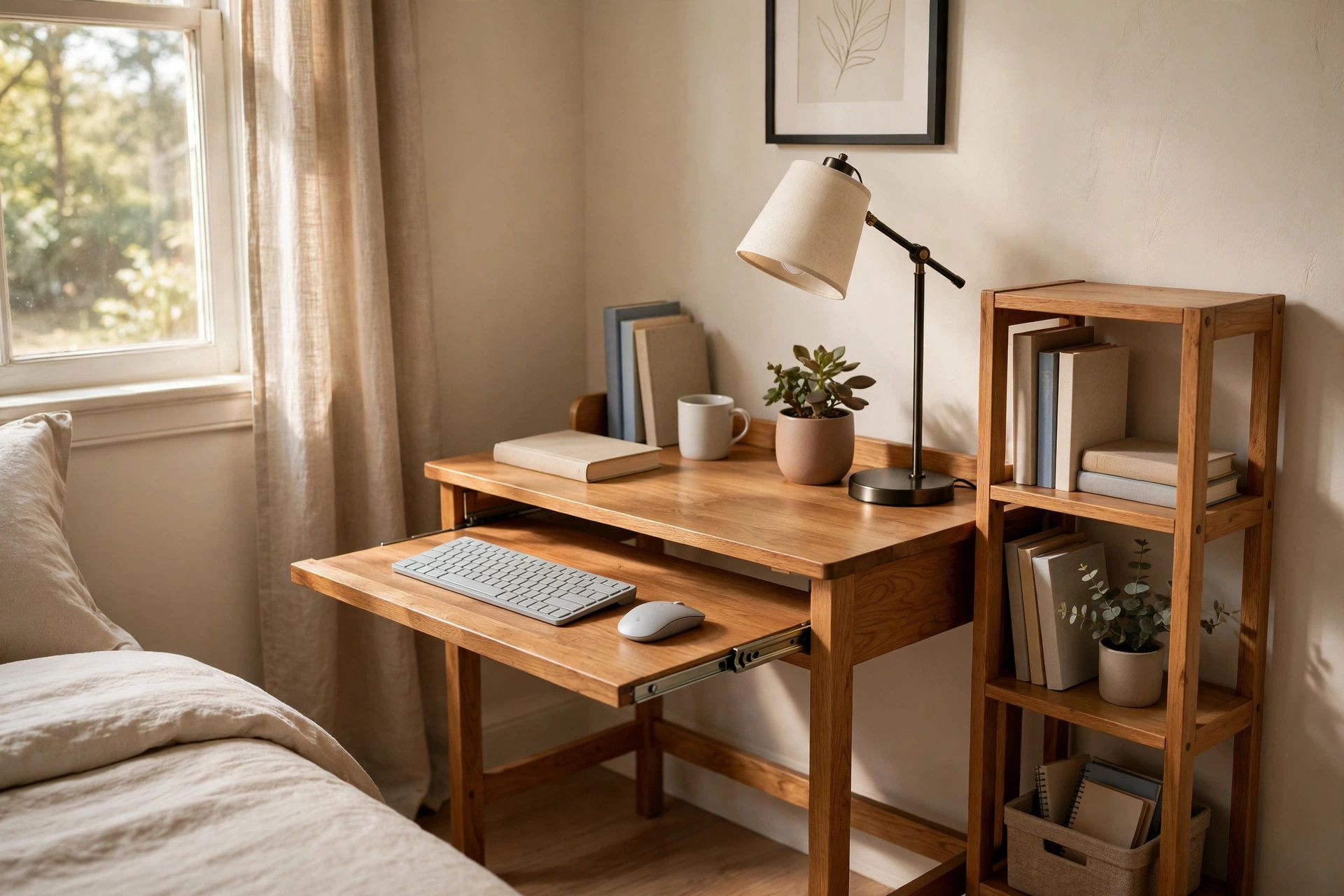

A compact desk with keyboard tray for small room use is one of the smartest purchases a home worker can make. Floor space in small rooms is precious. A desk that is too large eats up the room. A desk that is too small leaves no room to work. The keyboard tray solves part of this problem. It moves the keyboard off the main surface. The main surface stays free for papers, a notebook, or a coffee cup. The keyboard sits at a lower level, which is better for the wrists and shoulders. This guide explains what to look for, which types work best, what they cost, and how to keep yours in good shape for years.
Why a Compact Desk With Keyboard Tray Matters in a Small Room
Small rooms punish bad furniture choices. A bulky desk can block a door, cover a heating vent, or make the room feel dark. When the room feels crowded, work feels harder. Studies of workplace comfort have long shown that a neat, well-ordered work area helps people focus. A compact desk with keyboard tray for small room corners gives you a full work station without the bulk.
The keyboard tray itself does more than save space. Most desks are about 29 inches high. That height is fine for writing with a pen. It is too high for typing. A keyboard at desk height forces the wrists to bend upward. Over hours, that bend causes strain. A keyboard tray drops the keyboard two to four inches below the desk surface. The arms hang at a natural angle. The wrists stay flat. Many office health guides have recommended this setup for decades. It is simple ergonomics, and it works.
In a small room, the tray also keeps the chair pushed in. The keyboard does not stick out past the desk edge when you slide the tray in. You gain a few inches of floor space back. Those inches matter in a ten-by-ten bedroom or a studio alcove. For buyers comparing options, Ikea and Wayfair both carry wide lines of small desks with pull-out trays, and their product pages show real dimensions that help you measure before you buy.
What to Look For When You Choose One: Compact Desk with Keyboard Tray for Small Room
Size and Footprint
Measure your room before you shop. Write down the width, depth, and height of the spot where the desk will go. Leave at least 30 inches of clear space in front for your chair. Leave room to open drawers or slide the tray out. A compact desk is usually 32 to 48 inches wide and 18 to 24 inches deep. Anything deeper may push you too far from the screen. Check the tray width too. A full-size keyboard needs about 26 inches of tray width. A tenkeyless keyboard needs about 18 inches.
The Keyboard Tray Mechanism
Not all trays are equal. The best trays glide on metal ball-bearing slides. They pull out smoothly and lock in place. Cheap trays on plastic rollers can sag or stick. Check the weight rating. A tray rated for at least 25 pounds will hold a keyboard and mouse without bowing. Some trays tilt up and down. A slight tilt, down at the front edge, helps keep wrists straight. Look for a tray with a raised lip or stop at the front so the keyboard does not slide off. If you work on a laptop, make sure the tray is deep enough to hold it, or plan to use the laptop on the main surface with an external keyboard on the tray.
Height and Adjustability
Fixed-height desks are common and cheap. They work if the height suits you. If you are very tall or very short, look for adjustable legs. Some desks have feet that twist to change height by an inch or two. Others use a crank or motor. An adjustable-height model from a specialist maker like Uplift Desk lets you switch between sitting and standing, though those models cost more than a basic compact desk. For most buyers, a fixed desk near 29 inches high plus a good tray gives fine results.
Build Material
Particleboard with a laminate top is the most common material in this price range. It is light and affordable. It can chip at the edges if it is bumped. Solid wood tops last longer and look better, but they add weight and cost. Metal frames with wood tops are a strong middle choice. The frame carries the load. The top gives a warm look. Read buyer reviews for notes on wobble. A desk that rocks when you type will annoy you every day.
Types and Options
Writing Desk With Pull-Out Tray
The classic writing desk is a simple table with a shallow drawer-like tray under the front edge. The tray is meant for a keyboard. Some trays also hold pens and a notepad. This style suits small rooms well because it has no side storage to widen the footprint. It pairs nicely with a separate file cart or a wall shelf for storage. If you want more closed storage, a small corner desk with drawers for apartment office setups adds drawers without much extra width.
Corner Desk With Keyboard Tray
Corner desks use the L shape to give more surface in the same room. The keyboard tray usually sits under the long side. Corner units work well in square bedrooms. The downside is size. Even a compact corner desk needs a clear corner of about 40 by 40 inches. Measure carefully and check that the door swing does not hit it.
Fold-Down and Wall-Mounted Desks With Trays
Some wall-mounted desks include a small keyboard ledge. These save the most floor space because the legs are gone. They must be bolted to wall studs to be safe. They are best for light work, not heavy monitors. A related choice is the wall mounted fold down desk for small spaces, which folds flat against the wall when the workday ends.
Standing-Height Compact Desks
A few compact desks offer standing height with a tray at keyboard level. These suit tall users and people who like to stand for part of the day. They cost more and need a sturdy frame to stay steady at full height. Reviews from testing labs like Wirecutter often cover stability, which is the main thing to check on any tall desk.
Floating Shelf Desk With Slide-Out Keyboard Ledge
A floating shelf desk bolts to the wall with hidden brackets. Add a shallow slide-out ledge below for the keyboard and you get a very small footprint. This style fits tiny bedroom offices and dorm rooms. It holds less weight than a legged desk, so keep heavy books elsewhere. A floating shelf desk for tiny bedroom office layout can be built from separate parts, which makes it easy to match the exact width your wall allows.
Cost and Price
Prices for a compact desk with keyboard tray for small room use fall into three bands.
Budget desks cost 60 to 140 dollars. These are usually particleboard tops with simple steel or plastic trays. They look fine and serve light use. Expect some assembly time and check the screws after a few months, as budget hardware can loosen.
Mid-range desks cost 140 to 350 dollars. You get better slides on the tray, thicker tops, and sturdier frames. Many models in this range come from office furniture brands like Herman Miller entry lines or Steelcase partners, and they tend to survive moves without damage. This is the sweet spot for most home workers.
Premium desks cost 350 to 800 dollars or more. These use solid wood, height-adjustable frames, or high-end finishes. The trays are smooth and silent. If you type eight hours a day, the comfort is worth the price. PCMag rounds up desk options each year, and their price tiers are a useful reality check before you spend.
Watch for hidden costs. Assembly may take two hours. Some sellers charge extra for delivery of heavy items. Cable clips, a monitor riser, and a good chair are separate purchases that complete the setup. The Spruce has buying guides that list the extras people forget, such as surge protectors and proper lighting for the work surface.
Care and Upkeep
A compact desk lasts longer with simple care. Dust the top weekly with a soft cloth. Wipe spills at once, since water can swell particleboard edges. Do not place hot cups directly on laminate tops. Use a coaster or a mat.
The keyboard tray needs the most attention. Dust the slides every few months. A drop of silicone lubricant on metal slides keeps them gliding. Never use cooking oil, which turns gummy. Tighten the tray screws once a year. A loose tray sags and strains the slides. If the tray starts to stick, pull it out fully, check for bent rails, and straighten them gently with pliers if needed.
Keep cables tidy. A cable tray or clips under the desk keep cords from snagging the keyboard tray as it slides. Snagged cords are a common cause of broken trays. If you add a printer or scanner nearby, put it on a separate stand so its weight never rests on the desk.
Safety in a Small Room
Small rooms bring the desk close to doors, beds, and walkways. Anchor tall or narrow desks to the wall with the anti-tip straps that come in the box. This takes ten minutes and prevents the desk from tipping if a child climbs on it or someone bumps it in the dark.
Watch the keyboard tray when small children are near. A tray that slides can pinch fingers. Choose a model with soft-close slides if toddlers visit the room. Keep the area under the desk clear so feet do not catch on the tray rails.
Check weight limits. The desk maker lists a top weight limit and a tray weight limit. Stay under both. A heavy all-in-one computer or a large printer can exceed a budget desk’s rating. If the desk creaks or leans, move weight off it and tighten all bolts before use.
Mind the electrics. Do not overload one outlet with the computer, monitor, lamp, printer, and phone charger. Use a surge protector. Keep liquids away from the power strip. In a small room, it is tempting to run an extension cord under a rug. Avoid this. Cords under rugs overheat and wear out.
Frequently Asked Questions
What size desk do I need for a small room?
Measure your free wall space first. Most small rooms fit a desk 36 to 48 inches wide and 20 to 24 inches deep. Leave 30 inches in front for the chair and enough side clearance to slide the keyboard tray out fully. Write the numbers down and compare them to the product dimensions before you order.
Is a keyboard tray really better for my wrists?
Yes, for most people. A tray places the keyboard two to four inches below the desk surface. That lower position lets the forearms rest at a natural downward angle with the wrists flat. At full desk height, the wrists must bend upward to reach the keys, which causes strain over long typing sessions.
Can I fit a full-size keyboard and mouse on the tray?
It depends on the tray width. A full-size keyboard with a number pad is about 18 inches wide. Add a mouse and you need about 26 inches of tray width. Check the listed tray dimensions. If the tray is too narrow, use a tenkeyless keyboard or place the mouse on the main desk surface.
Will a compact desk hold a dual monitor setup?
Many can, but check the weight limit. Two 24-inch monitors plus arms can weigh 20 to 30 pounds. Budget desks may flex under that load. A mid-range desk with a steel frame handles it better. Make sure the desk is deep enough that the screens sit at least 20 inches from your eyes.
How do I keep the keyboard tray from sagging?
Buy a tray rated for at least 25 pounds. Keep only the keyboard and mouse on it. Tighten the mounting screws each year. Do not lean on the tray or use it as an armrest. If it still sags, the slides may be worn, and replacement slides are sold at most hardware stores.
Are wall-mounted desks with keyboard ledges safe for heavy monitors?
Only if they are bolted into wall studs with proper hardware. Drywall anchors alone are not enough for a monitor and a keyboard. Follow the weight rating exactly. When in doubt, choose a legged desk, which carries weight more safely in a small room.
A Short Final Word
A compact desk with keyboard tray for small room corners is a small purchase that pays off every workday. It frees floor space, it frees desk space, and it puts the keyboard where your hands want it. Measure your room, pick a tray with smooth metal slides, stay within the weight limits, and keep the cables tidy. Do that, and even the smallest room can hold a comfortable, lasting work station.
References
Herman Miller. (n.d.). Office furniture and ergonomic seating. https://www.hermanmiller.com IKEA. (n.d.). Home furnishings. https://www.ikea.com PCMag. (n.d.). Technology product reviews. https://www.pcmag.com Steelcase. (n.d.). Office furniture and workplace research. https://www.steelcase.com The Spruce. (n.d.). Home and garden advice. https://www.thespruce.com UPLIFT Desk. (n.d.). Standing desks and ergonomic office furniture. https://www.uplift-desk.com Wayfair. (n.d.). Furniture and home goods. https://www.wayfair.com Wirecutter. (n.d.). Product reviews from The New York Times. https://www.nytimes.com/wirecutter
Was this guide helpful?

About Emily Rodriguez
The My Garden US editorial team writes practical, in-depth home and garden guides for American homeowners — tested advice, no fluff.
You May Also Like

Best Task Lighting for Home Office Desk Setup
June 14, 2026 0 views
Home Office Wall Shelf for Printer Storage: A Practical Guide
July 19, 2026 0 views
Adjustable Standing Desk with Memory Presets USA: A Plain Guide for Home Offices
January 19, 2026 0 views