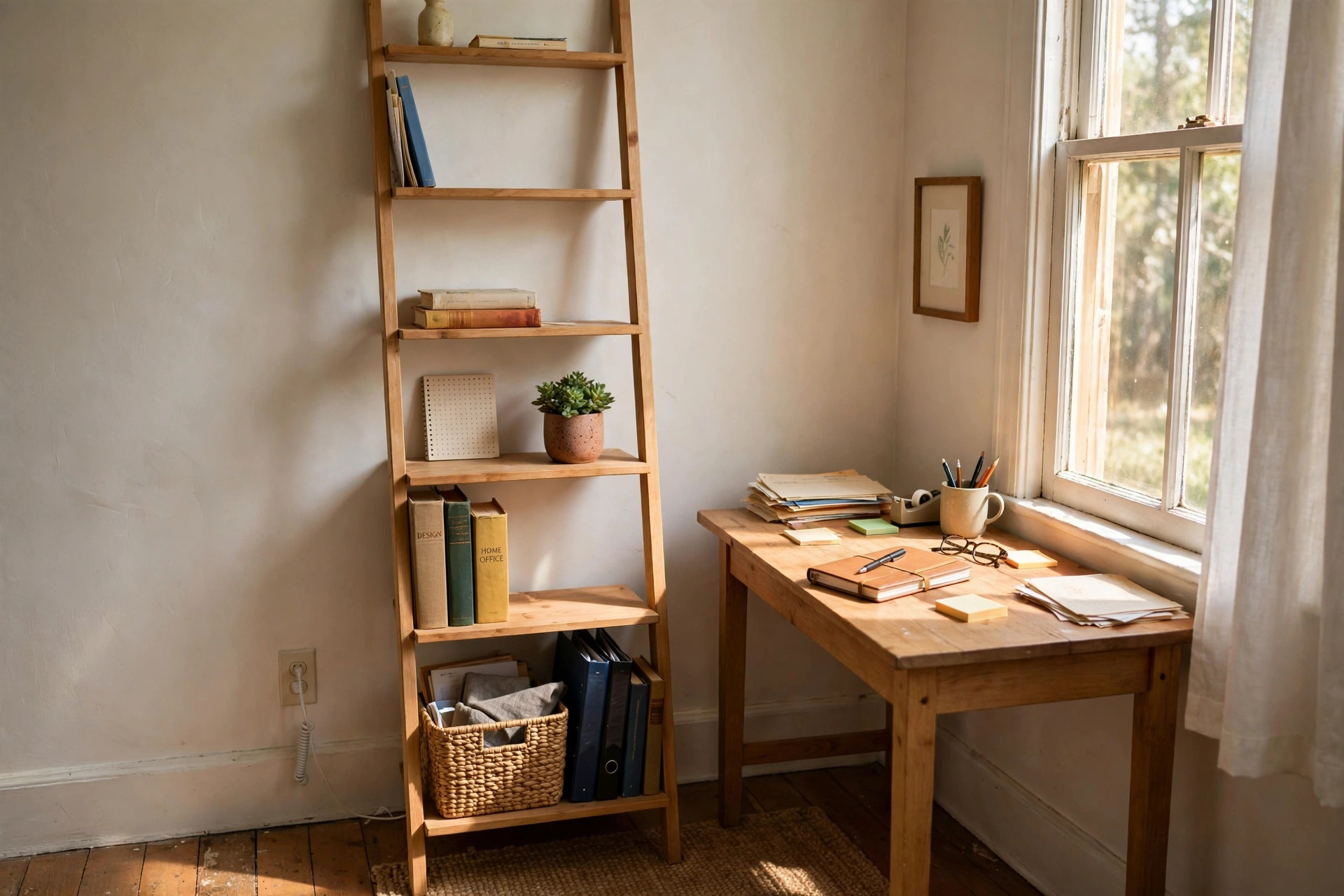

Many people now work from home. Their work rooms are often small. A spare bedroom corner, a nook under the stairs, or a slice of the living room may serve as the office. In such tight quarters, every inch of wall space matters. A home office bookshelf ladder style narrow unit answers this need. It leans against the wall, climbs upward, and holds books, files, and small tools without taking up floor room.
A ladder shelf looks much like the old wooden ladders our fathers kept in the garage. It has two side rails, and between them run shelves that grow deeper as they go down and shallower as they go up. This shape gives the piece a light, open feel.
This guide will help you understand the home office bookshelf ladder style narrow. We will look at why it suits small work rooms, what to check before you buy, the main styles on the market, what you can expect to pay, how to care for it, and how to keep it safe. By the end, you will know if this slim shelf is the right pick for your home office.
Why a Narrow Ladder Bookshelf Fits the Home Office
Work rooms are getting smaller. Many homes were built before the work-from-home age. They were not planned with offices in mind. People squeeze desks into corners and closets. A wide, deep bookcase can block a door or crowd a desk. A narrow ladder shelf avoids this trouble.
First, it uses wall height instead of floor width. Most narrow ladder shelves are 17 to 24 inches wide. They stand about 60 to 72 inches tall. That is less than two feet of wall. Yet they offer four or five shelves of storage. This trade of width for height is a smart one in small rooms.
Second, the open back lets light pass through. A solid bookcase blocks light and makes a wall feel heavy. A ladder shelf has no back panel. The wall color shows between the shelves. The room stays bright. This matters in a small office where light is scarce.
Third, the shelves are within easy reach. The top shelf is high but shallow. You can grab a book or a small plant from it without a step stool. The lower shelves hold heavier items. They sit low and steady. This makes daily use simple and quick.
Fourth, the piece fits many styles of decor. You can find ladder shelves in pine, oak, walnut-look finishes, white paint, and black metal. A home office storage cabinet with locking doors hides papers from view. A ladder shelf puts them on display. For workers who like a neat, open look, the ladder shelf wins.
What to Look for When You Choose One: Home Office Bookshelf Ladder Style Narrow
Do not buy the first ladder shelf you see. Look closely at a few points. These details decide whether the shelf will serve you well for years.
Width and Depth
Measure your wall space with a tape. Leave at least two inches of room on each side for a clean look. Check the depth of the bottom shelf too. Most run 12 to 16 inches deep, and that must clear any baseboards or heaters on the wall.
Shelf Height and Spacing
About 12 to 14 inches between shelves suits most books and files. Some ladder shelves have one or two shelves you can move. That extra freedom is worth a little more money.
Material and Build
Ladder shelves are made from solid wood, engineered wood, metal, or a mix. Solid pine is light and takes paint well. It can dent, but dents add charm. Engineered wood is cheaper and smooth. It does not take water well, so keep drinks away. Metal frames with wood shelves look modern and last long. Check the weight limit for each shelf. Cheap shelves may hold only 10 pounds per shelf. Stronger ones hold 25 pounds or more.
Lean Angle and Wall Grip
Feet at the bottom must grip the floor. Rubber caps help on hard floors. On carpet, a wider foot or a small pad under each foot keeps the shelf level.
Wall Anchor
Any tall shelf should be fixed to the wall. This is not a choice. It is a rule for safety. Good ladder shelves come with a wall anchor strap or a bracket in the box. If the one you buy lacks it, buy an anti-tip kit from the store. A shelf full of books is heavy. It can tip forward and hurt a child or a pet. Anchor it on day one.
Types and Options
Makers sell several kinds of narrow ladder shelves. Each has its own feel and use.
Solid Wood Ladder Shelves
These are the classic kind. They are cut from pine, rubberwood, or acacia. The grain shows. They take stain or paint. They fit farmhouse, coastal, and rustic rooms. They are heavier than other types, which helps them stand steady, and they last for decades with care.
Engineered Wood Ladder Shelves
These shelves use boards made from pressed wood fiber with a printed wood look or painted finish. They are light and cheap, but they do not like water or rough handling. Tighten the screws well when you build them.
Metal Frame Ladder Shelves
These have slim steel tubes for the rails with wood or metal mesh shelves. They look sharp in modern and industrial offices, hold more weight than wood of the same size, and resist warping.
Corner Ladder Shelves
Some ladder shelves are shaped to fit a corner. They have two faces that meet at a right angle. These use dead corner space well. They suit L-shaped rooms and rooms where the desk already takes the main wall. If your office has an empty corner, look at this type before you buy a flat one.
Ladder Shelves with a Desk Nook
A few designs build a small desk board into the lower part of the shelf. The shelf becomes a mini workstation. This is a clever pick for very small rooms, wide enough for a laptop but not for two screens. For bigger desk needs, a separate piece such as a small corner desk with drawers for apartment office may suit you better.
Cost and Price
Prices for a home office bookshelf ladder style narrow unit cover a wide range. What you pay depends on material, brand, and size.
Budget shelves made from engineered wood often cost between 40 and 90 dollars and come flat in a box. Mid-range shelves made from solid pine or metal frames often cost between 100 and 200 dollars, with tighter joints, smoother finish, and higher weight limits. This range gives the best value for most buyers.
High-end shelves made from oak, walnut, or strong steel can cost 200 to 400 dollars or more. These are built to last a lifetime with thick wood and rich finish. If your office doubles as a meeting room on video calls, the look may be worth the price.
If you plan to paint a bare pine shelf, add the cost of primer and paint. Big home stores and online sellers run sales often, so check a few stores before you buy. Read the reviews, and look at what buyers say about wobble, missing parts, and true width.
Care and Upkeep
A ladder shelf asks for little care. A few simple habits will keep it strong and good looking.
Dust the shelves once a week with a dry soft cloth. Dust builds up fast on open shelves and can mark books. For sticky spots, use a cloth just damp with water and wipe dry at once. Never soak wood shelves.
Check the screws twice a year. Wood moves with the seasons and screws loosen. A quick turn of the driver keeps joints tight and stops wobble.
Keep weight spread out. Put heavy books and binders on the lower shelves. Put light items like small plants, frames, and boxes on the upper shelves. Do not stack all the heavy books on the top shelf. That raises the center of gravity and makes the shelf less steady.
Keep the shelf out of strong sun and away from heat vents. Sun fades wood and painted finishes. Heat dries wood and can crack it. A shelf placed a few feet from a window lasts longer and looks better.
If the finish wears, refresh it. A pine shelf takes a new coat of paint with ease. Sand it lightly, wipe it clean, and brush on two thin coats. Metal frames can be touched up with matching spray paint. Small care like this keeps the shelf looking new.
Setting Up and Styling Your Shelf
Place the shelf on a wall near your desk but not behind your chair, so you can reach it without rolling far. Do not block a window or a door swing. In a very small room, the wall beside the door often works well.
Use baskets and boxes on some shelves. A home office bookshelf with closed storage bins hides clutter behind doors. With an open ladder shelf, you get the same calm look by using two or three matching baskets for papers, cords, and small tools.
Rows of books alone can look hard, so add a small plant, a framed photo, or a clock, and leave a little empty space on each shelf. A shelf packed edge to edge feels heavy. A shelf with breathing room feels calm.
Mind the cords. If you charge a phone or run a lamp from the shelf, run the cord down the back rail. Clip it with small cord clips. A neat cord path keeps the look clean and stops snags.
Safety
The shelf is light at the top and open in the back, so it needs respect.
Anchor the shelf to the wall. Use the strap or bracket in the box, or buy an anti-tip kit. Screw the strap into a wall stud, not just drywall. Test the strap by pulling the top of the shelf gently. It should not move.
Keep heavy items low. A shelf of full binders can weigh 50 pounds. Put that weight near the floor and light decor up top.
Keep the floor in front clear. Do not place the shelf where people must squeeze past it. In a home office that children enter, keep small heavy items out of their reach. Kids climb. A ladder shelf looks like a ladder to a child. The wall anchor is your main guard here.
On slick floors the feet can slide, so use rubber caps or a small rug under them. On thick carpet the shelf may lean more than planned; level it with pads.
If you move the shelf, empty it first. Carry it upright. Re-anchor it in the new spot. A shelf full of books is hard to hold and easy to drop.
Frequently Asked Questions
Will a narrow ladder shelf hold heavy books?
It can, if you pick the right one. Check the weight limit for each shelf. Metal frame shelves often hold 25 to 30 pounds per shelf. Solid wood shelves hold about the same. Engineered wood shelves may hold only 10 to 15 pounds per shelf. Put heavy books on the lower shelves. Spread the weight. Anchor the shelf to the wall. With these steps, the shelf will hold a good row of books.
How wide is a narrow ladder shelf?
Check the listed width against reviews, since buyers often find the real width differs slightly.
Does a ladder shelf need to be attached to the wall?
Yes. Every tall shelf should be fixed to the wall with an anchor strap or bracket. Ladder shelves lean back, but a lean alone is not safe. A child pulling on a shelf, a pet jumping up, or a quake can tip it. The anchor takes minutes to fit. Do it on the day you build the shelf.
Can I use a ladder shelf in a rented home?
You can. Most wall anchors need only one or two small screws in the wall. When you move out, you fill the small holes with filler and touch up the paint. Many landlords accept this. If your lease bans all wall holes, look for a free-standing anchor that uses floor weight instead. Ask your landlord first to be safe.
What is the best material for a ladder shelf?
It depends on your needs. Solid wood lasts longest and looks warm. Metal frames hold the most weight and suit modern rooms. Engineered wood costs the least and looks fine for light use. For a busy home office with many books, pick solid wood or metal. For light decor and a few books, engineered wood is enough.
How do I stop a ladder shelf from wobbling?
First, build it on a flat floor and tighten every screw. Second, anchor it to the wall. The anchor stops most wobble. Third, check the feet. Add rubber caps on hard floors or pads on carpet to level it. Fourth, spread weight evenly across the shelves. If it still wobbles, take it apart and rebuild it with care. A loose joint is often the cause.
Final Word
A home office bookshelf ladder style narrow unit is a small piece that does big work. It fits walls where wide bookcases cannot go. It keeps books, files, and tools close to your desk. It lets light through and keeps small rooms feeling open. Pick a size that fits your wall, a material that fits your load, and a style that fits your room. Anchor it to the wall on day one. Give it a little care through the years. Do that, and this slim shelf will serve your home office well for a long time.
For more ideas on setting up a compact work space, browse guides from trusted home and office sources such as IKEA, Wayfair, Herman Miller, Steelcase, UPLIFT Desk, The Spruce, Wirecutter, PCMag, Staples, and Office Depot.
References
Herman Miller. (n.d.). Office furniture and ergonomic seating. https://www.hermanmiller.com IKEA. (n.d.). Home furnishings. https://www.ikea.com Office Depot. (n.d.). Office supplies and furniture. https://www.officedepot.com PCMag. (n.d.). Technology product reviews. https://www.pcmag.com Staples. (n.d.). Office supplies and furniture. https://www.staples.com Steelcase. (n.d.). Office furniture and workplace research. https://www.steelcase.com The Spruce. (n.d.). Home and garden advice. https://www.thespruce.com UPLIFT Desk. (n.d.). Standing desks and ergonomic office furniture. https://www.uplift-desk.com Wayfair. (n.d.). Furniture and home goods. https://www.wayfair.com Wirecutter. (n.d.). Product reviews from The New York Times. https://www.nytimes.com/wirecutter
Was this guide helpful?

About Lisa Anderson
The My Garden US editorial team writes practical, in-depth home and garden guides for American homeowners — tested advice, no fluff.
You May Also Like

USB C Docking Station for Home Office Setup: A Plain Guide
May 8, 2026 0 views
Adjustable Desk Fan With USB Charging Port: A Plain Guide for a Cooler Desk
September 20, 2026 0 views
Home Office Closet Organizer for Office Supplies: A Complete Guide
May 26, 2026 0 views