
The best solar security camera reviews 2026 usa tell a clear story. Homeowners want cameras that need no wires and no electrician. They want a lens that watches the driveway and the door. They want a small solar panel that keeps the battery full. This guide brings the main points of those reviews together in plain words.
A solar security camera is a small video camera with its own battery and its own sun panel. The panel charges the battery each day. The camera sends video to a phone app through the home Wi-Fi. When motion passes, the camera records and sends an alert.
Why It Matters
A camera at the door changes how a house feels. A delivery driver sees the lens and leaves the package in plain view. A stranger sees it and moves on. That quiet effect is the main reason these cameras sell so well.
Wires used to hold people back. A wired camera needed a cable through a wall. It needed an outlet nearby. Many older homes have no outlet at the gate or the garage. A solar camera needs only sunlight. This opens spots that wired cameras could never reach.
The reviews from 2026 show the same point again and again. People mount these cameras on fences, sheds, barns, and long driveways. They watch gates far from the house. They watch tool sheds behind the yard. The panel does the work that a cable used to do.
Cost also matters. No trench must be dug. No electrician must be called. The camera arrives, the mount goes up with screws, and the panel faces the sun. A Saturday morning is often enough.
How to Choose the Right Camera: Best Solar Security Camera Reviews 2026 Usa
Reviews point to seven things that matter most. Read each one before you buy.
Battery Size and Panel Size
The battery is the heart of the camera. A larger battery rides through cloudy weeks. The panel must be big enough to refill the battery in normal sun. Look for a panel rated at least four to six watts for a standard camera. Reviews warn that tiny panels fall behind in winter light.
Video Quality
Most good cameras now record at 2K or higher. Some still record at 1080p. A higher picture shows faces and plates from farther away. Reviews agree that 2K is the sweet spot for most yards. It shows enough detail without eating the battery.
Field of View
The lens angle tells you how much yard the camera sees. A 130 to 150 degree lens covers a wide driveway. A narrower lens looks farther down a path. For a front door, a wide lens works best. For a long gate, a narrower lens with digital zoom works better.
Night Vision
Most break-ins happen at night. A good camera must see in the dark. Some use infrared light that shows black and white pictures. Some use a spotlight that gives full color at night. The spotlight uses more battery, but color pictures help identify a person. Reviews from 2026 favor cameras that offer both modes.
Motion Detection and Alerts
The camera should tell your phone when someone comes. Look for smart motion detection that knows a person from a leaf or a cat. Cheap cameras send alerts all day. Good cameras learn the difference. Adjustable zones let you mark the driveway and ignore the road.
Storage
Video must be stored somewhere. Some cameras take a microSD card. Some send video to the cloud for a monthly fee. Some do both. Local storage costs nothing each month but can be stolen with the camera. Cloud storage is safer but adds a yearly cost. Many owners like cameras that offer local storage first.
Weather Rating
The camera lives outside in rain, snow, and heat. Look for an IP65 or IP66 rating. That code means the case keeps out dust and driving rain. Reviews praise cameras that kept working through storms and cold snaps.
Types and Options on the Market
Reviews in 2026 group solar cameras into four broad types.
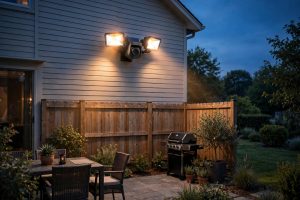
Spotlight cameras. These pair a bright LED light with the lens. Motion turns the light on. The light scares off prowlers and gives color video at night. They suit porches and back doors.
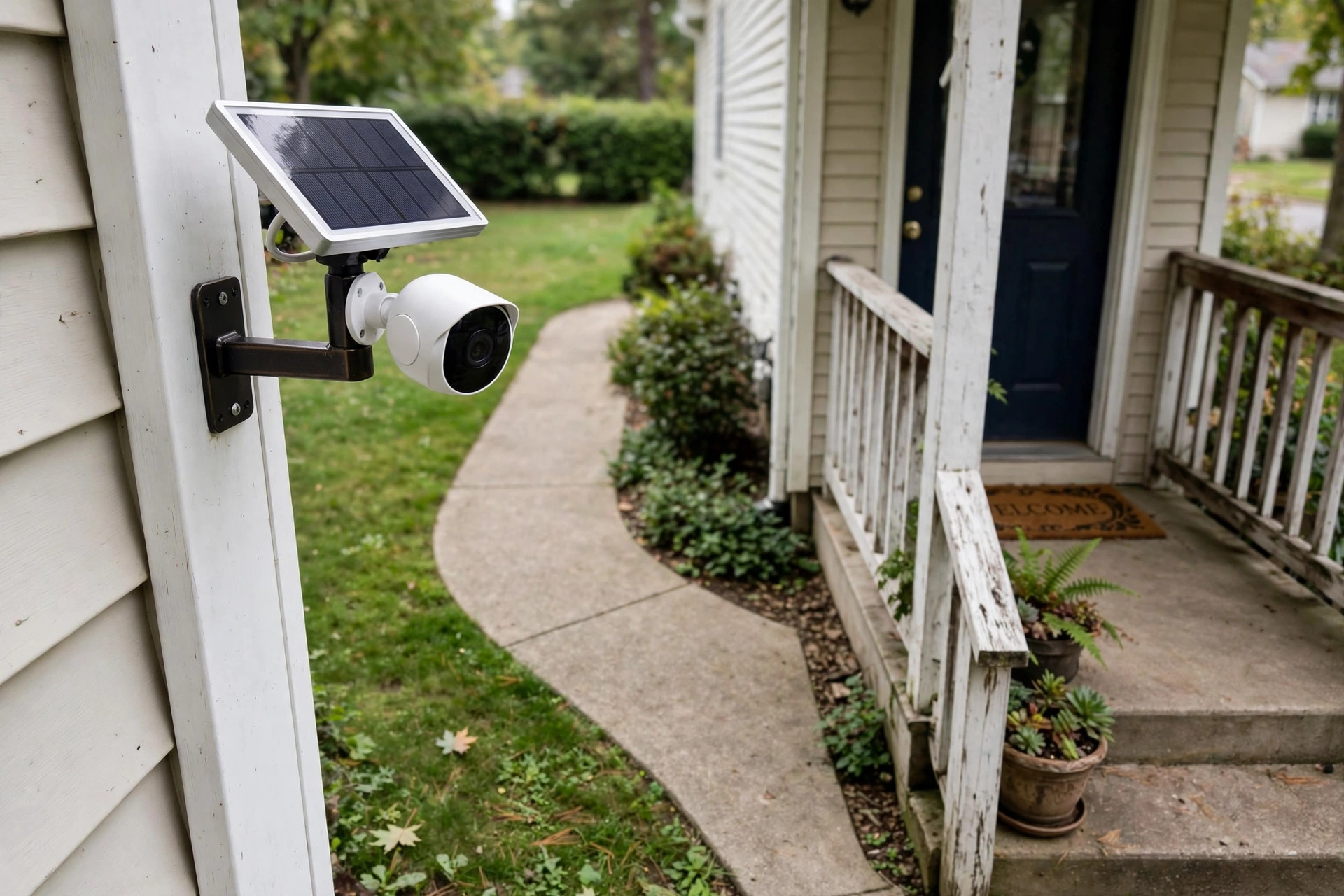
Bullet cameras with panel. These look like small tubes on a mount. They watch gates, barns, and long yards. Many have a separate panel on a long cable, so the panel can sit in sun while the camera sits in shade.
PTZ cameras. PTZ means the camera can pan, tilt, and zoom by remote control. They cover a wide area with one unit. They cost more and use more power. They suit large yards and small farms.
Wire-free door cameras. These mount by the door like a doorbell but run on solar. They give a wide view of visitors. They suit apartments and rentals where drilling is not allowed.
For readers who want a camera that works far from the house, our guide to cellular security camera no wifi reviews usa covers models that use a cell signal instead of Wi-Fi. If a wired house system is more your style, see our notes on best poe security camera system reviews usa.
Cost and Price in the USA
Prices in 2026 run from about forty dollars to about four hundred dollars. The bands are steady.
Budget models from forty to one hundred dollars cover the basics. They record at 1080p or 2K. They have small panels. They work well on a sunny porch but struggle in shade.
Midrange models from one hundred to two hundred dollars are the most reviewed group. They add 2K or 4K video, color night vision, and smarter alerts. Their panels and batteries are larger. Most homeowners land here.
Premium models from two hundred to four hundred dollars add pan and tilt, larger panels, and long battery life. They suit farms, gates, and spots with hard weather.
Cloud plans add cost. Most brands charge three to ten dollars a month per camera, or thirty to one hundred dollars a year. Many owners skip the plan and use local storage. Over five years, local storage can save several hundred dollars. This is why many buyers read floodlight camera reviews without subscription usa before they decide.
Installation and Care
Mount the camera between seven and nine feet high. That height sees faces but stays out of easy reach. Aim the panel toward the south in the northern states. Tilt the panel to match your latitude. Clean the panel with a soft cloth twice a year. Dust and pollen cut charging power.
Keep the lens clear of spider webs. A web across the lens can trigger motion alerts all night. Wipe the lens when you clean the panel. Trim bushes that blow in front of the camera. Moving leaves cause false alarms.
In winter, short days give less charge. Reviews from northern states say a good camera still works, but alerts and spotlight use drain the battery faster. Turn down the spotlight brightness in winter to save power. If the site gets almost no winter sun, pick a camera with a larger panel or add a second panel.
Update the camera software when the app asks. Updates fix bugs and close security holes. Change the default password on the camera account. Use a strong and unique password.
Safety and Placement Tips
Mount cameras on your own property. Point them at your own doors, drives, and yards. Do not point them into a neighbor’s window. Many states have rules about recording where people expect privacy. A camera that watches your own porch is fine in most places. A camera that stares into a neighbor’s bedroom is not.
Put the camera out of reach of a ladder and a long arm. Mount screws should bite into wood or a wall anchor, not soft trim. A camera that pulls off with one hand is a gift to a thief.
The U.S. Consumer Product Safety Commission reminds buyers to check that outdoor devices are rated for outdoor use and installed as the maker directs (cpsc.gov). Small children should not be able to reach a mounted camera or its screws.
Ring offers a line of solar and battery cameras with mounting guides for porches and yards (ring.com). Google lists smart home cameras that pair with its home app (store.google.com). SimpliSafe sells whole home security kits that can include cameras (simplisafe.com), and ADT offers monitored plans with professional installation (adt.com).
What the Reviews Keep Saying
Three praise points come up in nearly every review set.
First, setup is easy. Most owners mount the camera and link the app in under an hour. The app walks through Wi-Fi pairing step by step.
Second, daytime video looks sharp. Even budget models give a clear picture in sun. Faces read well at fifteen to twenty feet.
Third, no wiring is a joy. Owners who once paid for cable runs now mount cameras in minutes. This freedom is the main reason solar cameras earn high marks.
Three complaints come up as well.
First, Wi-Fi range limits placement. The camera must reach the home router. A gate one hundred feet from the house may need a Wi-Fi extender. For a full wireless option, our piece on wireless outdoor security camera reviews 2026 is worth a read.
Second, winter charging is weak. Short gray days cannot fill the battery. Owners in the north report more low-battery alerts in January.
Third, cloud fees annoy buyers. Many feel trapped when a camera needs a paid plan to keep recordings. Local storage models avoid this, but the card must be large enough for a week of clips.
Review sites such as CNET and PCMag test cameras side by side and publish yearly rankings (cnet.com, pcmag.com). Consumer Reports runs its own lab tests on cameras and smart home gear (consumerreports.org). The Verge covers new camera releases and smart home news (theverge.com).
FAQ
Do solar security cameras work at night?
Yes. The battery runs the camera after dark. Night vision uses infrared light or a small spotlight. Infrared gives black and white video and uses little power. A spotlight gives color video but drains the battery faster.
Do they work on cloudy days?
Yes, but charging slows. Panels still gather light through clouds. A good battery carries the camera through several gray days. In long stretches of dark weather, the app may warn of a low battery.
Can they record without Wi-Fi?
Most home models need Wi-Fi to send video and alerts. A few record to a card without Wi-Fi. For true off-grid use, a cellular model with its own data plan is the answer.
How long do the batteries last?
A healthy battery lasts two to five years. Heat and deep drains wear it out faster. Some brands sell replacement batteries. Others require a whole new camera when the battery dies.
Can a thief steal the footage?
If video sits only on a card inside the camera, a thief can take it. Cloud storage keeps a copy safe off site. Some cameras upload short clips to the cloud free of charge and keep full video on the card.
Are solar cameras worth the money?
For most homeowners, yes. They cost little to install and run. They guard doors, drives, and sheds that wired cameras cannot reach. Pick a midrange model with 2K video and local storage, and the value is strong.
Final Word
The best solar security camera reviews 2026 usa agree on the formula. A solid battery, a fair-sized panel, 2K video, and smart alerts make a camera worth its price. Mount it high, aim the panel at the sun, and keep the lens clean. The camera will watch the house while the sun pays the bill.
References
ADT. (n.d.). Home security and automation. https://www.adt.com CNET. (n.d.). Technology news and reviews. https://www.cnet.com Consumer Reports. (n.d.). Product reviews and ratings. https://www.consumerreports.org Google Store. (n.d.). Smart home devices. https://store.google.com PCMag. (n.d.). Technology product reviews. https://www.pcmag.com Ring. (n.d.). Smart home security devices. https://www.ring.com SimpliSafe. (n.d.). Home security systems. https://www.simplisafe.com The Verge. (n.d.). Technology news and reviews. https://www.theverge.com U.S. Consumer Product Safety Commission. (n.d.). Product safety information. https://www.cpsc.gov
Was this guide helpful?

About Michael Thompson
The My Garden US editorial team writes practical, in-depth home and garden guides for American homeowners — tested advice, no fluff.
You May Also Like
Best Smart Home Hub for Beginners USA: A Plain Guide
March 25, 2026 0 views
Best Level 2 Charger for Garage Reviews USA
August 21, 2026 0 views
The Best Parcel Drop Box for Deliveries in the USA
August 16, 2026 0 views