
Water in a crawl space is a quiet problem. It rarely makes noise. It rarely shows itself at once. But over months and years it can rot floor joists, invite mold, and damage the foundation of a house. A sump pump is the main tool homeowners use to keep that space dry. This guide explains how to choose the best sump pump for crawl space usa homes, how much it costs, and how to care for it once it is installed.
Why a Crawl Space Sump Pump Matters
A crawl space sits low, often at or below the grade of the yard around it. Rain water runs downhill. Groundwater pushes up through the soil. Without a way out, that water collects under the house. In a basement the water may be seen on the floor. In a crawl space it often hides in the dark, and a homeowner may not find it until the damage is done.
Standing water under a house causes several problems. Wood framing absorbs the moisture and softens. Mold and mildew grow in the damp air. The air from the crawl space rises into the living rooms above, and that can affect the smell and quality of the air inside the home. If the water carries a strong odor, it may signal bacteria in the groundwater. A water treatment specialist such as Aquasana can advise on testing options for a home water supply.
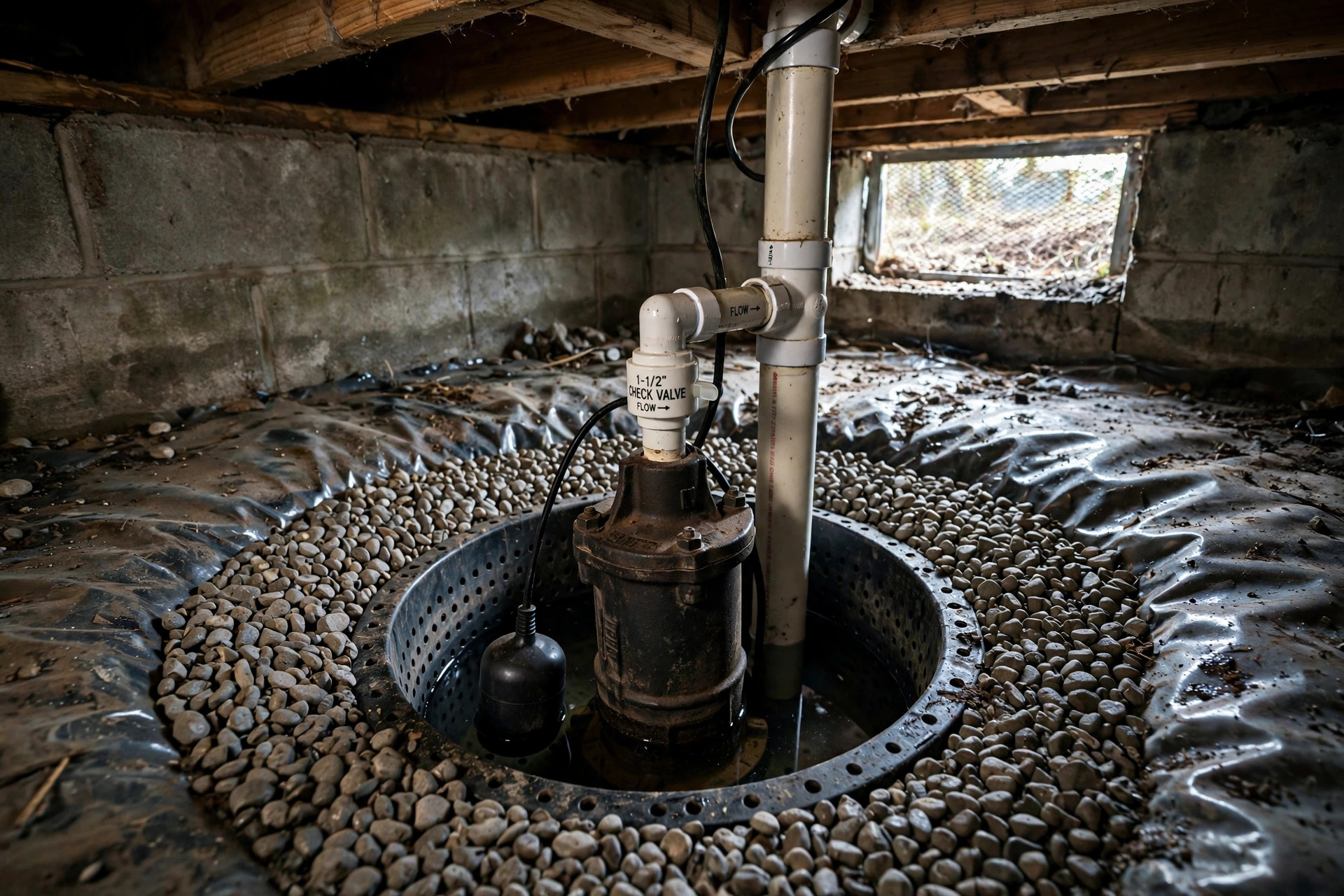
A sump pump fixes this by giving the water an exit. The pump sits in a pit called a basin. Water flows into the basin. When the water level rises, a float switch turns the pump on. The pump pushes the water out through a discharge pipe to a point away from the house. When the level falls, the switch turns the pump off. The cycle repeats on its own, day and night, without attention from the homeowner.
Homes in areas with a high water table or heavy rain seasons benefit the most. But even a house that only floods once a year can suffer damage from that single event. A pump is a form of insurance against the worst day.
What to Look for When You Choose: Best Sump Pump for Crawl Space Usa
Not every pump fits a crawl space. The space is low and tight. Access is hard. The water may carry silt and grit. Here are the main points to weigh when you shop.
Pumping Capacity
Pumps are rated in gallons per hour. A crawl space pump should handle the worst storm your area sees, not the average rain. A unit rated at 2,000 to 3,000 gallons per hour suits many homes. Houses with serious water entry may need more. A pump sizing guide for crawl space work can help you match the rating to your pit and inflow rate.
Horsepower
Most crawl space pumps run between one-third and one-half horsepower. A one-third horsepower pump handles light to moderate water. A one-half horsepower pump moves more water and handles a taller lift, which is the vertical distance the water must travel up the discharge pipe. Do not buy more power than you need. An oversized pump cycles on and off too fast, and that wears it out early.
Switch Type
The switch is the part that fails most often. Tethered float switches swing freely and need a wide basin. Vertical float switches move up and down on a rod and fit narrow pits, which are common in crawl spaces. Diaphragm or electronic switches have no moving float at all. They are a good pick where the pit is shallow or the space is cramped.
Build Quality
Crawl space water often carries sand and grit. A cast iron pump body resists abrasion better than plastic. Stainless steel fasteners hold up in damp air. A sealed motor keeps moisture out of the electrical parts. These details matter because you will not visit the pump often.
Cord Length and Discharge Size
Measure the distance from the pit to the nearest grounded outlet. A longer cord gives more freedom in pump placement. Most residential pumps use a one and one-quarter or one and one-half inch discharge pipe. Match the pipe to the pump rating so the flow is not choked.
Types of Sump Pumps for a Crawl Space
Pedestal Pumps
A pedestal pump has the motor mounted above the pit on a long shaft. The motor stays dry, which can extend its life. The trade is noise and height. Crawl spaces are low, and a pedestal pump may not fit under the floor joists. They are also easier to hear in the rooms above.
Submersible Pumps
A submersible pump sits down inside the basin, under the water. It runs quieter than a pedestal pump. It fits low spaces. Most crawl space installations use a submersible unit for these reasons. The motor is sealed against the water, so it can run while flooded.
Battery Backup Pumps
A battery backup sump pump is a second pump that runs on a deep cycle battery when the power fails. Storms that cause flooding often knock out power at the same time. Without backup, the pit fills and the house floods even with a good main pump in place. Many homeowners add a backup unit beside the main pump for peace of mind.
Combination Systems
Some products bundle a main pump and a battery backup pump in one basin with a shared controller. The controller can switch between pumps, run tests, and sound an alarm if one unit fails. These systems cost more but give the most protection.
If your home also has a basement, note that the needs differ. A sump pump for basement use may call for higher capacity because basements collect more visible water across a larger floor area.
Cost and Price
The price of the best sump pump for crawl space usa homes depends on the type and the brand. A basic submersible pump costs between 100 and 200 dollars at major home improvement retailers. A heavy duty cast iron model with a better switch runs 200 to 400 dollars. Battery backup systems add 300 to 600 dollars for the pump, battery, and charger.
Installation is a separate cost. A sump pump installation cost estimate from a plumber or waterproofing contractor usually falls between 500 and 1,500 dollars for a standard crawl space job. The range depends on how hard the pit is to dig, how far the discharge pipe must run, and whether electrical work is needed. A sealed basin lid and a check valve add to the bill but are worth the cost. The check valve stops pumped water from flowing back into the pit.
A full waterproofing job with a perimeter drain and vapor barrier can cost several thousand dollars. The pump alone is the cheaper half of that work, and many homeowners start with the pump.
Installation Basics
Most homeowners hire a professional for this job. The work involves digging a pit in a cramped space, cutting a discharge hole through the foundation wall, and wiring a dedicated outlet. That said, it helps to know the steps so you can judge the work.
First, pick the lowest point of the crawl space for the pit. Water collects there first. Dig the hole and set a perforated basin or liner in it. The liner keeps soil out while letting water in. Surround the basin with washed gravel so water flows freely to the pump.
Set the pump in the basin on a solid base, such as a brick or paver. The pump should sit level and clear of the basin walls. Fit a brass or PVC check valve just above the pump. Full-line plumbing makers such as Kohler, Moen, and Delta Faucet publish sizing guides for the valves and fittings used on discharge lines. A solid check valve stops pumped water from falling back into the pit.
Wire a dedicated grounded outlet near the pit. Do not share the circuit with other loads. A ground fault protected outlet is the standard for damp locations. Test the pump by pouring water into the basin and watching the float switch cycle.
Keep the basin covered with a sealed lid where possible. A lid keeps out debris, reduces moisture in the crawl space air, and quiets the pump.
Care and Upkeep
A sump pump needs little care, but it must be checked on a schedule. A neglected pump fails on the worst day. Follow these habits.
Test the pump every three months. Pour a bucket of water into the basin. The pump should start, run, and shut off on its own. If it runs without stopping, the switch may be stuck. If it does not start, check the power and the float.
Clean the basin once a year. Remove the pump, scoop out silt and gravel, and wash the basin. Grit wears down the impeller over time. A clean basin also lets the float move freely.
Inspect the discharge pipe each spring. Look for cracks, clogs, and ice damage. Make sure the outside end is clear of leaves and mulch. A blocked discharge burns out a pump fast.
Check the battery backup twice a year if you have one. Batteries age. Most last three to five years. Replace the battery before it fails, not after. A DIY maintenance guide from a home repair publisher lists a simple seasonal checklist you can follow.
Listen for changes. A pump that grinds, hums without pumping, or runs far longer than usual is telling you something. Fix small problems early. A replacement pump costs far less than a flooded crawl space.
Safety
Water and electricity are a dangerous mix. Treat every part of this job with care.
Always unplug the pump before you touch it or reach into the basin. Stand on a dry surface when you handle the plug. Never use an extension cord as a permanent power source. The outlet should be grounded and protected against ground faults.
Keep the discharge water away from walkways where it can freeze and form ice. In cold states, use a freeze guard or a sloped discharge line so the pipe drains after each cycle.
Crawl spaces have their own hazards: low headroom, poor air, and sometimes old wiring or pests. Wear a mask and gloves when you enter. Bring a bright light. If you see standing water near electrical lines, call an electrician before you step in.
The federal environmental agency publishes guidance on moisture control in homes that explains how water problems connect to indoor air quality. It is worth a read before you plan any waterproofing work.
Frequently Asked Questions
How long does a crawl space sump pump last?
Most pumps last seven to ten years with normal care. Hard water, heavy grit, and constant cycling shorten the life. A backup pump that rarely runs can last longer. Keep a record of the install date so you can plan a replacement before a failure.
Do I need a battery backup for a crawl space pump?
It is strongly advised in areas with frequent storms or unreliable power. Flooding and power loss often arrive together. A battery backup sump pump keeps the pit dry through an outage. Many insurance claims for water damage happen during blackouts.
What size basin should I use?
An eighteen inch diameter basin is the common choice for crawl spaces. It holds enough water to let the pump run in full cycles without short cycling. A deeper basin gives more buffer during a storm. Make sure the basin you pick fits the height of your crawl space.
Can I install a sump pump in my crawl space myself?
A handy homeowner can do it, but the job is hard. Digging in a low crawl space is slow work. Cutting through the foundation wall and running new wiring may need permits and inspections. Many people hire a contractor for the pit and pipe and do the upkeep themselves. Get at least two quotes before you decide.
Why does my sump pump run all the time?
Constant running points to a problem. The switch may be stuck in the on position. The check valve may have failed, letting water flow back into the pit. Or groundwater may be rising faster than the pump can move it. Check the switch and valve first. If the water table is simply high, you may need a larger pump or a second pit.
Does a sump pump need a sealed lid?
A sealed lid is a good idea in a crawl space. It blocks humid air, keeps out debris and pests, and quiets the pump. Some lids have a viewing port so you can check the pump without removing the cover. Pair the lid with a radon resistant design if radon is a concern in your area.
A Short Final Word
The best sump pump for crawl space usa homes is the one that matches your water, your pit, and your power situation. Size it right. Buy solid build quality. Add a battery backup if storms take your power. Then test it on a schedule and keep the basin clean. A dry crawl space protects the wood, the air, and the value of your home. The pump is a small machine doing a large job, and it deserves a little attention each season.
References
Aquasana. (n.d.). Water filtration systems. https://www.aquasana.com Delta Faucet. (n.d.). Kitchen and bathroom faucets. https://www.deltafaucet.com Family Handyman. (n.d.). DIY home repair and maintenance. https://www.familyhandyman.com Kohler. (n.d.). Bathroom and kitchen fixtures. https://www.kohler.com Lowe’s. (n.d.). Home improvement products. https://www.lowes.com Moen. (n.d.). Faucets and plumbing fixtures. https://www.moen.com The Home Depot. (n.d.). Home improvement products. https://www.homedepot.com This Old House. (n.d.). Home renovation guidance. https://www.thisoldhouse.com U.S. Environmental Protection Agency. (n.d.). Protecting human health and the environment. https://www.epa.gov
Was this guide helpful?

About Michael Thompson
The My Garden US editorial team writes practical, in-depth home and garden guides for American homeowners — tested advice, no fluff.
You May Also Like
Best PEX Fittings for DIYers: Reviews and Buying Guide for USA Homes
August 11, 2026 0 views
Commercial Style Kitchen Faucet Reviews USA: What to Know Before You Buy
June 5, 2026 0 views
Heat Tape for Water Pipes Reviews USA: A Plain Guide for Homeowners
August 21, 2026 0 views