
Introduction
The mrcool vs pioneer mini split comparison usa buyers ask about most often starts with a simple question. Which of these two ductless brands gives the ordinary American homeowner more value for the dollar? Both MrCool and Pioneer sell ductless mini split systems across the United States. Both promise low cost, strong efficiency, and do-it-yourself installation on many models. This guide walks through the differences in plain terms. It covers efficiency ratings, installation choices, system sizes, prices, warranties, noise, and long-term care. By the end, you should know which brand fits your house, your budget, and your comfort with home improvement work. For a broader look at choosing the right size, our guide to energy efficient mini split for 1500 sq ft pairs well with this comparison.
Why This Comparison Matters: Mrcool vs Pioneer Mini Split Comparison Usa
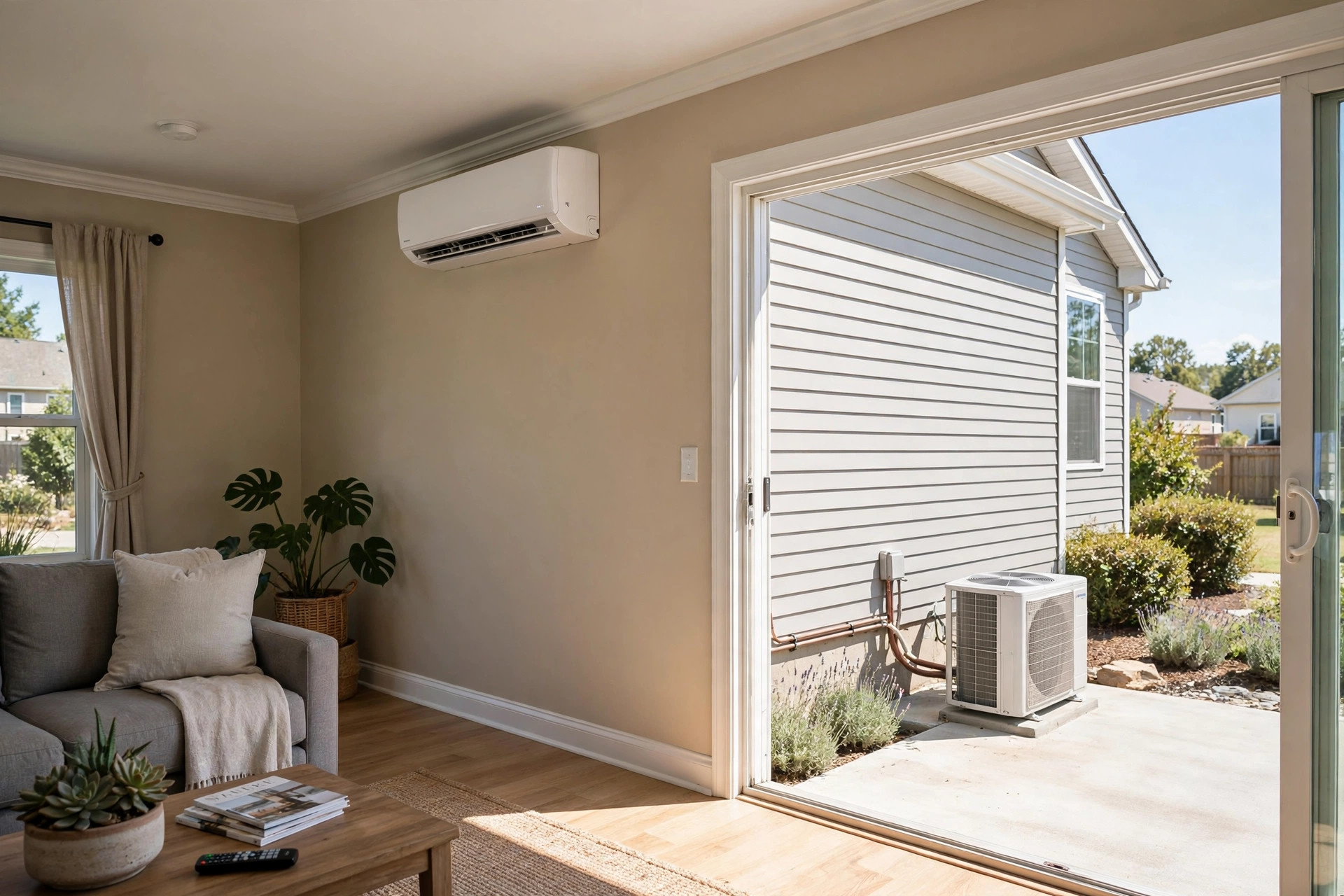
A mini split is a ductless heating and cooling system. It has an outdoor condenser and one or more indoor air handlers. No ductwork is needed. That makes it a popular choice for older homes, room additions, garages, and sunrooms. A homeowner who installs the unit alone saves a large labor bill. But a mistake in sizing or in the refrigerant line can cause poor performance and even damage the compressor. The U.S. Department of Energy offers background on heat pump and ductless technology that helps explain how these systems reach their efficiency numbers, and ENERGY STAR publishes guidance on what efficiency ratings mean in real homes.
What to Look for When Comparing Mini Splits
Before the brand names enter the picture, learn the terms that matter. They decide comfort and cost.
Efficiency Ratings: SEER2 and HSPF2
Modern mini splits in America carry SEER2 and HSPF2 ratings. SEER2 measures cooling efficiency. HSPF2 measures heating efficiency. Higher numbers mean lower electric bills. Both MrCool and Pioneer sell models in the mid to upper teens for SEER2 on their better lines. The exact number changes by model and size. When you compare two systems, match the same size class. A 12,000 BTU unit should be compared with another 12,000 BTU unit. The number of British thermal units, or BTUs, tells you the cooling power. Most rooms need about 20 BTUs per square foot, but ceiling height, windows, and insulation change the math.
Inverter Technology
Both brands use inverter-driven compressors. The compressor speeds up and slows down instead of switching on and off in full bursts. This saves energy and holds the room at a steadier temperature. Inverter systems also run more quietly. Noise level, measured in decibels, matters when the indoor unit hangs in a bedroom. Good mini splits run near 20 decibels on low fan speed. That is quieter than a whisper.
Single Zone and Multi Zone
A single-zone system has one indoor unit. A multi-zone system has two or more indoor units served by one outdoor condenser. Both MrCool and Pioneer offer both kinds. If you plan to cool a whole small house, a multi-zone system from either brand is worth pricing. If you only need one room, stay with single-zone and save money.
The Brands Side by Side
MrCool: The DIY Leader
MrCool built its name in the United States on do-it-yourself installation. Its DIY series ships with a pre-charged quick-connect line set. The refrigerant lines connect with special fittings, so the homeowner does not need to vacuum the lines with a pump or handle loose refrigerant. The indoor unit, outdoor unit, and remote control come in one box. Many buyers mount the indoor unit, hang the outdoor unit on a bracket or pad, snap the lines together, and power the system up in a day. This Old House has covered mini split installation projects that show the steps involved, and Family Handyman offers practical how-to guidance for homeowners who take on the work themselves.
MrCool sells several series. The DIY line is the easiest to install. The Olympus line, sold through dealers, needs professional installation and carries different warranty terms. Customer service answers questions by phone and email. Many users report quick help with parts and wiring questions.
On price, MrCool usually sits in the middle of the value range. A typical 12,000 BTU DIY single-zone system often costs more than a Pioneer unit of the same size. The extra money buys the quick-connect line set and the support network around it. For warranty, MrCool has historically offered a limited lifetime compressor warranty on certain lines, with parts warranties that run several years. Read the fine print. Warranty terms change, and the do-it-yourself models and dealer models carry different coverage. Register the product after purchase. Most brands require registration within a set number of days to keep the full warranty.
Pioneer: The Budget Contender
Pioneer, known as Pioneer Air Conditioner, is a value brand with long roots in the American market. Its mini splits are also imported, and the company supports buyers from the United States. Pioneer sells through online stores and home improvement outlets. The brand wins many sales on price alone. A 12,000 BTU Pioneer single-zone system often costs less than the equivalent MrCool DIY unit by a clear margin.
Pioneer offers DIY models too. Some carry quick-connect line sets that let a handy homeowner install the system without a vacuum pump. Other Pioneer models need standard installation with a licensed technician, which adds labor cost but follows the usual trade practice. Pioneer covers a wide range of sizes, from small 9,000 BTU units for single rooms to large 36,000 BTU systems for bigger spaces. Multi-zone options exist as well.
Efficiency on Pioneer models is solid for the price. Many models carry SEER2 ratings in the high teens or low twenties on the better lines. Features include remote controls, sleep modes, timers, and Wi-Fi on some models. Cooling performance satisfies most buyers. Customer support is reachable, though owners sometimes report slower answers than MrCool buyers report. When comparing a value brand with a premium one, resources like the buying guides at Goodman Manufacturing and Rheem help explain what support and warranty coverage should look like, and Lennox provides useful background on heating performance in cold weather. Carrier and Trane also publish helpful material on choosing ductless systems.
Head-to-Head Summary
Price goes to Pioneer in most size classes. Ease of do-it-yourself installation goes to MrCool. Efficiency is close. Warranty terms favor MrCool on paper for the DIY line, but only if you register and follow the rules. Support quality tilts toward MrCool in most owner reports. If you want the lowest price, Pioneer saves money. If you want the smoothest do-it-yourself experience and a deeper support network, MrCool earns its premium.
For help deciding between cooling-only choices, our portable ac vs window ac comparison usa article explains another common trade-off, and our closed cell vs open cell foam comparison usa covers insulation, which affects how much cooling power any mini split needs.
Cost and Price: What You Will Pay
Mini split prices in the United States vary by size, efficiency, and installation type. A small 9,000 BTU single-zone system from a value brand may cost a few hundred dollars at the low end. A 12,000 BTU system, the most common size, often falls in the mid hundreds. Larger single-zone units of 18,000 to 24,000 BTU run higher. Multi-zone systems with two or three indoor units can run into the low thousands for equipment alone. These are equipment prices only. Professional installation adds a large sum. A licensed technician may charge one thousand dollars or more for a single-zone install, depending on the region and the difficulty of the run.
That labor cost explains the appeal of the do-it-yourself models. If the unit truly needs no special tools, the homeowner keeps that money. But count the hidden costs. You may need a wall bracket, a concrete pad, a disconnect box, wiring, and a dedicated circuit from the breaker panel. Electrical work must meet local code. Many cities require a permit and an inspection for new circuits. Check before you start. The federal government also offers tax credits for high-efficiency heat pumps in some years, which can lower the real cost.
Installation: DIY or Professional
Both MrCool and Pioneer sell models meant for the handy homeowner. The quick-connect line set is the key part. It comes pre-charged and sealed. You run the line through the wall, connect the fittings, and tighten them. No vacuum pump, no gauges, no refrigerant handling. The job still needs care. The indoor unit must hang level so the drain pan empties. The outdoor unit needs clear space for airflow. The wall hole must be sealed against rain and insects. The electrical disconnect must sit within sight of the outdoor unit in most jurisdictions.
If the model does not use a quick-connect set, hire a licensed technician. Handling refrigerant without a license is against federal law in the United States. A bad flare connection leaks, and a leak kills performance and harms the environment. A professional also sizes the system. An oversized unit short-cycles and leaves humidity in the air. An undersized unit runs all day and never catches up.
For the mrcool vs pioneer mini split comparison usa shoppers care about, the honest answer is this. MrCool DIY is the easier path for a true beginner. Pioneer DIY models also work well, but the instructions and support may feel thinner. Either way, if you are unsure about the electrical work, call an electrician.
Care and Upkeep
Mini splits need little care, but they need it on schedule. Clean or replace the indoor filters every one to three months. Dust builds fast. Dirty filters cut airflow and raise the electric bill. Wipe the indoor coil once or twice a year. Keep plants and clutter away from the outdoor unit. Two feet of clear space on all sides is a good rule. Hose the outdoor coil gently in spring to clear pollen and leaves. Never use a pressure washer on the fins. Check the drain line for clogs. A clogged drain spills water down the wall. In fall, look for ice buildup patterns that suggest a refrigerant problem. If cooling drops suddenly or the unit makes new noises, call a technician. Do not open the sealed system yourself.
Both brands sell replacement filters and remotes through their websites and dealers. Keep the model number and serial number in a safe place. You will need them for warranty claims and parts orders.
Safety
Safety comes first with any heating and cooling equipment. Turn off power at the breaker before you touch wiring. Mini splits run on 208 to 230 volts in most American homes. That voltage can injure or kill. Mount the outdoor unit where it cannot fall on anyone. A condenser weighs over one hundred pounds on larger models. Use a proper bracket or pad rated for the weight. Keep the wall penetration sealed so exhaust fumes and moisture stay outside. Never place the outdoor unit where a dryer vent or grill can blow into it. Follow the clearance distances in the manual. Local building codes may require a permit for the electrical circuit. An inspection protects you if you ever sell the house. If the unit uses standard refrigerant lines instead of a sealed quick-connect set, a licensed technician must make the final connections. Federal rules on refrigerant handling are strict, and the fines are real.
Frequently Asked Questions
Which is cheaper, MrCool or Pioneer? Pioneer is usually cheaper for the same size and class. The gap is often a few hundred dollars on a 12,000 BTU single-zone system. MrCool charges more for its quick-connect line set and support network.
Which is better for do-it-yourself installation? MrCool. Its DIY series was built for homeowners from the start. The quick-connect line set, the guides, and the support line make the job smoother for a first-timer. Pioneer DIY models also work, but the experience may feel less polished.
Do both brands heat as well as cool? Yes. Both sell heat pump mini splits that heat and cool. Heating power drops in very cold weather. Check the HSPF2 rating and the rated low-temperature heating limit. In cold northern states, a backup heat source is wise.
How long do these mini splits last? With clean filters and yearly care, a mini split often lasts 12 to 15 years. Harsh sun, salt air, and neglect shorten that life.
Can I install a mini split myself and keep the warranty? On true DIY models, yes, if you follow the manual and register the product. On models that call for professional installation, doing it yourself may void the warranty. Read the warranty card in the box. It is the document that counts.
Which brand has better customer support? Owner reports favor MrCool for faster answers and clearer guidance. Pioneer support works but can be slower. Both companies support their products from the United States. Keep your receipt and serial number ready when you call.
A Short Final Word
The mrcool vs pioneer mini split comparison usa debate has no single winner. Pioneer wins on price. MrCool wins on the do-it-yourself experience and support. Both cool well for the money. Both use inverter technology. Both offer single-zone and multi-zone systems. Choose Pioneer if the budget is tight and you can manage a standard install or hire a technician. Choose MrCool if you want the easiest self-install and a thicker safety net behind it. Either way, size the system right, follow the electrical code, keep the filters clean, and the unit will serve your home for many years.
References
Carrier. (n.d.). Heating and cooling systems. https://www.carrier.com ENERGY STAR. (n.d.). Energy efficient products. https://www.energystar.gov Family Handyman. (n.d.). DIY home repair and maintenance. https://www.familyhandyman.com Goodman. (n.d.). Heating and cooling equipment. https://www.goodmanmfg.com Lennox. (n.d.). Heating and cooling systems. https://www.lennox.com Rheem. (n.d.). Heating, cooling, and water heating. https://www.rheem.com This Old House. (n.d.). Home renovation guidance. https://www.thisoldhouse.com Trane. (n.d.). Heating and air conditioning. https://www.trane.com U.S. Department of Energy. (n.d.). Energy efficiency and renewable energy. https://www.energy.gov
Was this guide helpful?

About David Wilson
The My Garden US editorial team writes practical, in-depth home and garden guides for American homeowners — tested advice, no fluff.
You May Also Like

Best Window AC for Large Rooms Reviews USA
September 16, 2026 0 views
70 Pint Dehumidifier Reviews for Basements: A Plain Buyer’s Guide
July 22, 2026 0 views
Best Corn Stove for Home Heating Reviews: What the Reviews Tell You
July 21, 2026 0 views