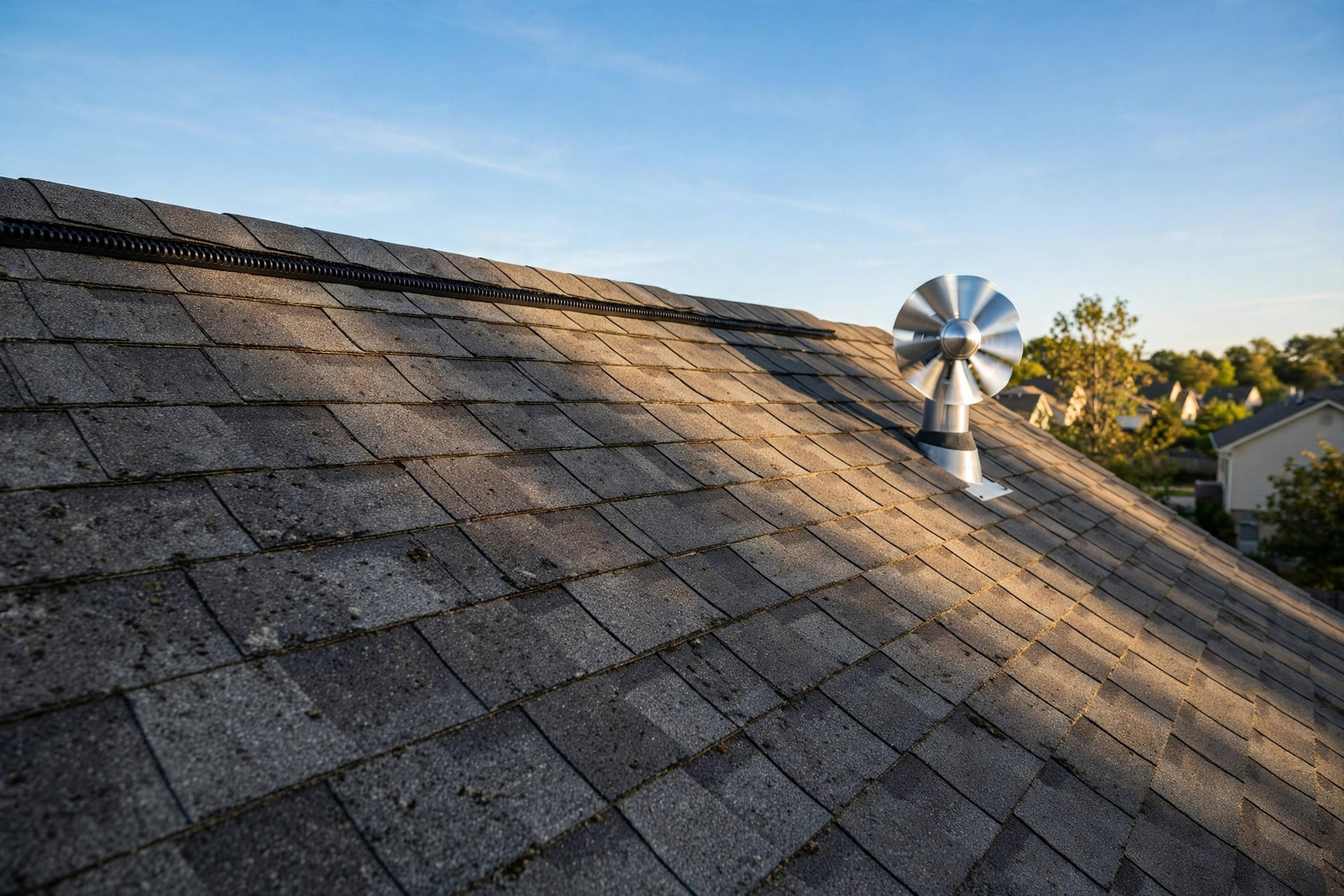

A ridge vent vs turbine vent comparison usa homeowners often ask for comes down to one simple question: how do you let hot air out of the attic? Every roof needs a way to release the heat that builds up under it in summer and the damp air that gathers in winter. Two of the most common tools for the job are the ridge vent and the turbine vent. They both move air out of the attic, but they do it in very different ways. This guide walks through each one, compares them side by side, and helps you pick the right vent for your house.
Why Attic Ventilation Matters
An attic is not just dead space above the ceiling. It breathes. When the sun hits your roof, the air inside the attic can reach 130 degrees or more on a hot afternoon. That heat pushes down into the rooms below and forces your air conditioner to work harder. In winter, warm moist air rises from the living space into the cold attic. There it can turn into water on the wood, and that water feeds mold and rot.
Good ventilation keeps air moving through the attic. Cool fresh air comes in low through the soffit vents under the eaves. Hot stale air leaves high through vents near the peak. This steady flow carries heat out in summer and moisture out in winter. Roofing makers often require proper ventilation before they will honor a shingle warranty. A roofer who installs a new roof will almost always check the vents as part of the job. For a wider look at attic cooling options in warm states, see our guide to the best attic ventilation for hot climates.
How a Ridge Vent Works: Ridge Vent vs Turbine Vent Comparison Usa
A ridge vent is a long, low strip that runs along the very peak of the roof. The roofer cuts a slot in the deck along the ridge line, then sets the vent over the slot. The vent has a cap that sheds rain but leaves a narrow gap underneath. Hot air rises, slips out through the gap, and flows away along the ridge.
Ridge vents are hard to see from the ground. They blend into the roof line and keep the roof profile clean. They work best on roofs with a clear, long ridge and enough pitch for the slot to be cut. On roofs with many short ridge sections, hips, or dormers, one ridge vent may not cover the whole attic, and extra vents may be needed.
How a Turbine Vent Works
A turbine vent is the round metal ball you see spinning on many American roofs. The ball sits on a neck that rises through the roof deck. Inside the ball are curved vanes. When wind blows, the vanes catch it and the ball turns. As it turns, it throws air out of the attic. Even in light wind, the ball keeps spinning for a long time once it starts.
Turbine vents do not need power. They run on wind, which is free. One turbine can move a large volume of air, often more than a short section of ridge vent. They are common on older homes across the South and Midwest, where many were installed decades ago and are still turning.
The turbine vents at one point on the roof rather than along a line. Air from the far ends of the attic has to travel to reach it. The spinning ball is visible from the street, which some owners like and others do not. In a strong storm the ball can wobble, and the moving parts need oil from time to time.
Airflow and Performance Compared
In a fair ridge vent vs turbine vent comparison usa shoppers should look at airflow numbers with care. A ridge vent moves air along the whole ridge line, usually rated in square inches of net free area per foot. A twelve-foot ridge vent with 18 square inches per foot gives about 216 square inches of exhaust area. That is steady and even, but it depends on wind and temperature difference to push the air.
A turbine vent is rated by the cubic feet of air it can move per minute. A standard twelve-inch turbine can move around 350 cubic feet per minute in a ten-mile-an-hour wind. That is a strong pull from a single point. In calm weather, though, the ball slows and the pull drops. On still, hot days, the ridge vent keeps working on rising heat while the turbine does little.
Balance matters more than raw power. Both vents need enough intake air from the soffits. Without intake, a strong turbine can pull air down from the attic through the ceiling, and may draw conditioned air from the rooms below. The whole house fan vs attic fan comparison explains a similar balance problem for powered fans.
Cost and Installation
Cost is a big part of any ridge vent vs turbine vent comparison usa buyers make. A ridge vent is usually installed during a re-roofing job. The vent material itself is modest in price, often a few dollars per foot. The main cost is the labor to cut the ridge slot and set the vent, and that labor is cheapest when the roof is already open for new shingles. Adding a ridge vent to an old roof later costs more because the crew must cut through finished shingles and cap the work neatly.
A turbine vent is cheaper and simpler to add to an existing roof. The vent itself is a stock item at most roofing supply stores, and the labor is one roof penetration with flashing. Typical installed cost for one turbine runs well under the cost of a full ridge vent retrofit on an old roof. For exact local numbers, read our notes on attic fan installation cost near me.
Over the long run, the ridge vent costs nothing to run and almost nothing to keep. The turbine vent costs nothing to run but needs oil and may need its bearings or ball replaced after fifteen to twenty years.
Looks, Noise, and Durability
Looks are a matter of taste, but they count when you sell a house. A ridge vent is nearly invisible. The roof keeps a clean, modern line. Many new-home buyers expect it. A turbine vent is a landmark on the roof. Some people see it as a sign of an older house. Others like the steady motion as proof the attic is breathing.
Noise is a real difference. A ridge vent is silent. A turbine vent hums, clicks, or rattles when the wind picks up or when the bearings wear. Owners often do not hear it inside, but bedrooms under the turbine can pick up a low sound on windy nights. A drop of oil usually quiets a squeak, but a worn bearing means a new ball.
Durability favors the ridge vent. It is a static piece of formed metal or plastic with a weather cap. There is nothing to wear out. A good ridge vent lasts as long as the roof. The turbine vent has moving parts exposed to weather. Rain caps and bearings wear, and a dented ball may wobble and spin poorly.
Types and Options
Ridge vents come in two broad types. The shingle-over style lets the roofer run the top course of shingles over the vent so it disappears into the roof. The aluminum style sits on top of the shingles with its own cap. Both work the same way. Shingle-over looks better; rigid aluminum moves air a touch faster in some tests.
Turbine vents come in sizes from ten to fourteen inches, measured across the ball. Larger balls move more air. Most homes use the twelve-inch size. Internal-brace models run quieter and hold up better in wind. External-brace models are cheaper. Some makers now sell turbines with sealed bearings that need less oil.
Both vents can be mixed with other vents on the same roof, but mixing must be done with care. Putting a turbine vent and a ridge vent close together can short-circuit the airflow: the turbine pulls air from the nearest ridge vent opening instead of from the soffits below. If you add vents, keep the plan simple and let one exhaust type serve each attic section.
Weather and Climate Fit
Climate shapes the choice. In hot, still climates such as Florida, Texas, and Arizona, summer air often hangs heavy with little wind. The ridge vent works day and night on rising heat, which fits these states well. Turbines shine in breezy plains states where wind is steady most days.
In cold northern states, both vents must be sized with winter in mind. Too much exhaust without matching intake can pull warm moist house air into the attic, where it condenses on cold wood. A balanced system, half intake and half exhaust by net free area, is the standard rule.
In hurricane and high-wind zones, check local code. Some coastal counties limit roof penetrations and require vents rated for wind-driven rain. A ridge vent with an external baffle handles wind-driven rain well. A turbine vent must be firmly fastened, and the ball should be removed or tied down if a major storm is forecast.
Care and Upkeep
A ridge vent asks little. Once a year, look at it from the ground with binoculars. Check that the cap is straight and that no shingles have lifted over it. Keep the soffit vents clear of paint, insulation, and leaves, because the ridge vent is only as good as its intake air.
A turbine vent asks for a yearly visit. Oil the bearings with a few drops of light machine oil. Check that the ball spins freely by hand. Look for rust at the base, cracked flashing, and loose fasteners. Clear bird nests and leaves from around the neck. If the ball wobbles or makes noise after oiling, plan to replace the head before it fails in the middle of summer.
Insulation can block both systems. Blown insulation often creeps over the soffit vents during install. Cardboard or foam baffles at the eaves keep an air channel open from the soffit to the attic. An energy audit, the kind promoted by national efficiency programs, will often flag blocked soffits as a first fix.
Safety Notes
Roof work is dangerous. Falls are the leading cause of injury in home projects. Never climb a wet, icy, or steep roof without proper fall protection, and never work alone. If the slope is steep or the roof is high, hire a roofer. The cost of a service call is small next to the cost of a fall.
Inside the attic, watch your step. Walk only on joists or on boards laid across them. One missed step can put a foot through the ceiling. Wear a dust mask and gloves; old insulation and droppings are not things you want to breathe or touch. Turn off power to any attic wiring before you move insulation near it.
When cutting a ridge slot, the roofer must avoid cutting the ridge beam or rafters. The slot is cut in the deck only, about an inch or two wide on each side of the peak. Turbine vent flashing must seal tight to the shingles, or the first hard rain will find the leak. In both cases, a licensed roofer who does this work every week is worth the fee.
Frequently Asked Questions
Can I use a ridge vent and a turbine vent on the same roof? You can, but keep them on separate attic sections. On the same section they fight each other. The turbine will pull air from the ridge vent instead of from the soffits, and the system loses its balance.
Which vent moves more air? One twelve-inch turbine vent can move more air in a breeze than a short run of ridge vent. Over a full roof, though, a ridge vent that spans the whole peak gives even, roof-wide exhaust. The right answer depends on your roof shape and your wind.
Do turbine vents leak? A well-installed turbine vent does not leak. The flashing and storm collar seal the penetration like any other roof vent. Leaks happen when flashing cracks with age or when the vent is set on a low-slope roof where water can pond around the base.
Will a ridge vent let rain in? A quality ridge vent with an external baffle or weather filter sheds rain and snow. Problems are rare and usually trace to a cheap vent, a slot cut too wide, or installation on a roof too flat for the design.
How long does each vent last? A ridge vent lasts the life of the roof, often twenty to thirty years. A turbine vent head lasts about fifteen to twenty years before bearings or the ball need replacement, though the base flashing can last longer.
Does better ventilation lower cooling bills? It can, modestly. A cooler attic means less heat pressing down into the rooms, so the air conditioner cycles less. Savings vary with climate, insulation, and duct location, but the bigger win is longer shingle life and a drier, healthier attic.
Final Word
There is no single winner in the ridge vent vs turbine vent comparison usa homeowners weigh. The ridge vent is quiet, hidden, and even, and it works best when installed with a new roof. The turbine vent is cheap, simple to retrofit, and strong in the wind, but it shows on the roofline and needs oil and care. Match the vent to your roof, your climate, and your budget, keep the soffit intake clear, and either choice will give your attic the steady breath of air it needs.
For more background, see Carrier, Trane, and Lennox. For more background, see Goodman, Rheem, and ENERGY STAR. See This Old House for more detail.
References
Carrier. (n.d.). Heating and cooling systems. https://www.carrier.com ENERGY STAR. (n.d.). Energy efficient products. https://www.energystar.gov Goodman. (n.d.). Heating and cooling equipment. https://www.goodmanmfg.com Lennox. (n.d.). Heating and cooling systems. https://www.lennox.com Rheem. (n.d.). Heating, cooling, and water heating. https://www.rheem.com This Old House. (n.d.). Home renovation guidance. https://www.thisoldhouse.com Trane. (n.d.). Heating and air conditioning. https://www.trane.com U.S. Department of Energy. (n.d.). Energy efficiency and renewable energy. https://www.energy.gov
Was this guide helpful?

About Robert Taylor
The My Garden US editorial team writes practical, in-depth home and garden guides for American homeowners — tested advice, no fluff.
You May Also Like
Whole House Dehumidifier Installation Cost USA: A Full Guide
September 26, 2026 0 views
Air Source Heat Pump Pros and Cons USA
June 3, 2026 0 views
Ventless vs Vented Gas Fireplace Comparison: Which One Fits Your Home
August 25, 2026 0 views