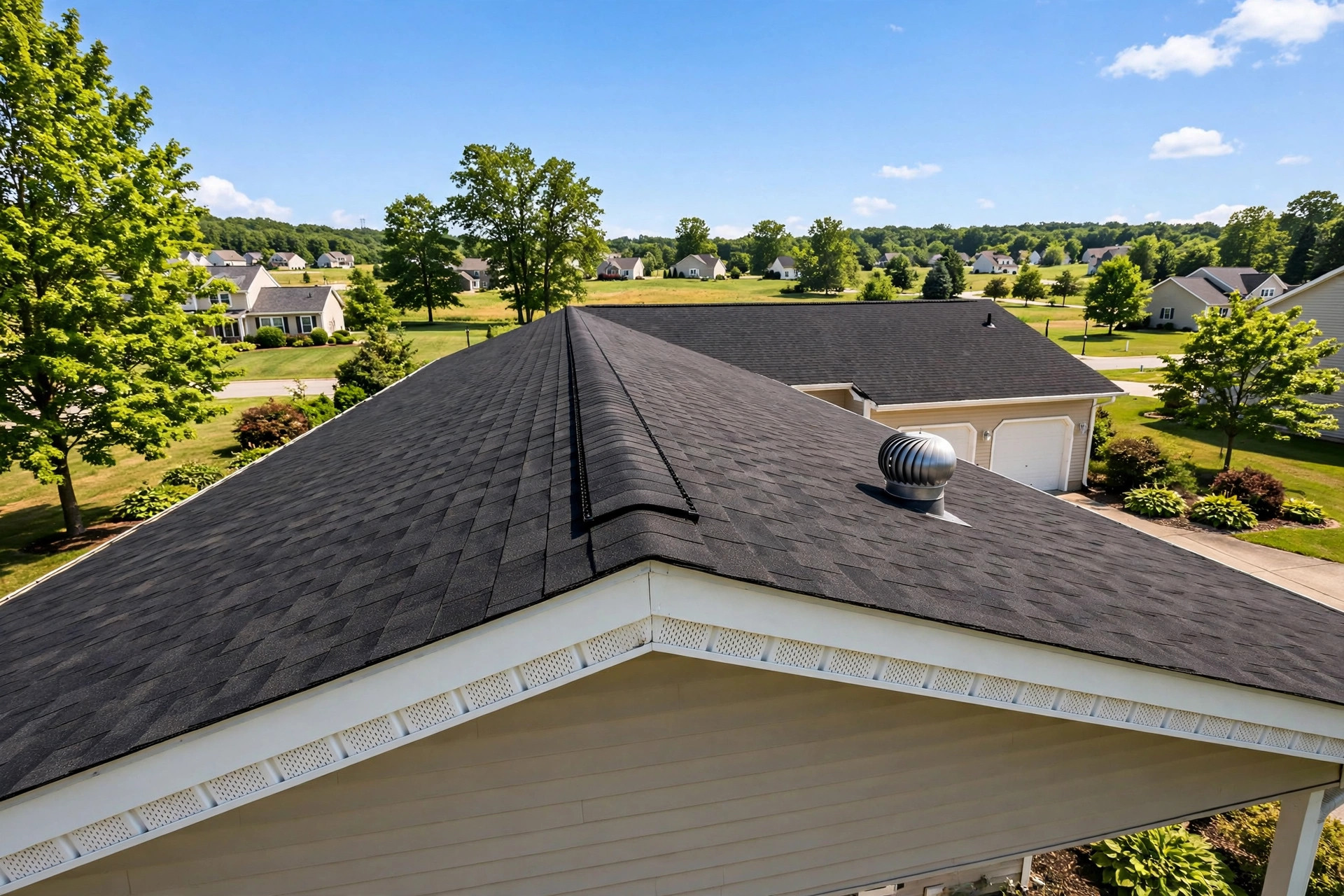

When summer comes to the hot parts of the United States, the attic often becomes the hottest room in the house. Air trapped under the roof can reach 140 to 150 degrees on a bright July day. That heat presses down into the living rooms, makes the air conditioner work far harder, and slowly wears down roof shingles and roof timbers. For that reason many owners search for the best attic ventilation for hot climates usa before they spend money on bigger cooling systems. Good ventilation does not cool the house by itself, but it gives the house a fair chance.
Why Attic Ventilation Matters in Hot Climates
A roof catches the full force of the sun. Dark shingles absorb heat and pass it into the attic space below. Without ventilation, that hot air sits there with nowhere to go. The ceiling below the attic grows warm to the touch, and the rooms under it feel stuffy even with the air conditioner running.
Ventilation lets cooler outside air enter low on the roof, usually through soffit vents under the eaves, and lets hot air escape high on the roof, usually through ridge vents or powered fans. This steady flow lowers attic temperatures by a large margin. In many homes the drop is 30 to 50 degrees on hot days.
The benefits reach further than comfort. A cooler attic means the air conditioner runs fewer hours, which lowers electric bills through the long cooling season. Roof shingles last longer because they are not baked from beneath.
There is one more point worth noting. Most shingle makers state in their warranties that poor attic ventilation can void coverage. A roofer who sees a hot, unvented attic may refuse a warranty claim on curled or failed shingles. For all these reasons, ventilation belongs high on the list of summer home projects.
How Attic Ventilation Works: Best Attic Ventilation for Hot Climates Usa
The best systems use natural air flow. Warm air rises, so if you give it a low entry point and a high exit point, the attic breathes on its own. Cool air comes in through soffit or eave vents. Hot air leaves through vents near the peak of the roof. This is called passive ventilation, and it costs nothing to run.
Balanced flow is the key idea. You want about half of your vent area low and half high. When the high side is too large and the low side too small, the system starves for intake air and works poorly. When the low side is too large, air can short-circuit and never reach the hot air at the top. Building guides from Energy.gov explain these balance rules in plain terms for homeowners.
Net free area, often written as NFA, is the measure used for vent openings. A common rule says one square foot of NFA for every 150 square feet of attic floor, or one for every 300 if half the vents are high and half are low. We will use these numbers in the sizing section below.
What to Look for When You Choose
Start with what your house already has. Walk around the outside and look under the eaves for soffit vents. Look at the roof for ridge vents, box vents, turbines, or powered fans. Go into the attic on a mild day and check whether daylight shows through the vents and whether insulation blocks them.
Then weigh these points:
– Climate and sun exposure. In Phoenix, Miami, or Dallas, the cooling load is far greater than in the mild zones. – Roof shape. A simple gable roof with a long ridge takes ridge vents well. A hip roof with short ridges may need box vents, turbines, or powered fans instead. – Intake space. Soffit vents must be clear of insulation. Baffles, also called rafter vents, hold the insulation back and keep the air path open. – Budget. Passive vents are cheap to add. Powered and solar units cost more up front.
Before you buy anything, many owners find it helpful to read a comparison such as whole house fan vs attic fan so they do not mix up two very different machines.
Types of Attic Ventilation
Ridge Vents
A ridge vent runs along the peak of the roof and lets hot air out along the full length. Paired with good soffit intake, it gives even, quiet ventilation across the whole attic. It is the first choice for many roofers in hot states.
Soffit Vents
These sit under the eaves and serve as the intake for most systems. Without enough intake, no exhaust vent can do its job. They come as long strips or small round disks.
Box Vents and Static Vents
Box vents, also called turtle vents, sit on the roof slope and let hot air escape through a simple hood. They are cheap and easy to add to an older roof. They work best in groups spread across the slope. Static vents have no moving parts, so there is nothing to wear out.
Turbine Vents
Turbines use the wind to spin a cap that draws air from the attic. They move more air than static vents on windy days and nothing extra on calm days.
Powered Attic Fans
An electric attic fan mounts on the roof or in a gable end and forces air out of the attic. It can move a great deal of air on the hottest days. Studies and field reports show they help most when intake vents are sized to match, because a fan that cannot draw enough intake air may pull cool air from the living rooms instead.
Solar Attic Fans
A solar attic fan is a powered fan with its own solar panel, so it costs nothing to run. Reviews of solar attic fans for USA homes show they suit owners who want extra air movement without wiring work.
Gable Vents
These sit in the end walls of a gable roof. On their own they ventilate poorly because both intake and exhaust are at the same height. They work better as helpers to other vent types.
Radiant Barriers
A radiant barrier is not a vent, but it often joins the same project. It is a reflective sheet, usually stapled under the rafters, that bounces radiant heat away from the attic floor. Owners in the Sun Belt often weigh the pros and cons of a radiant barrier for the attic before they decide whether to add one with new vents.
For help choosing brands and models, testing groups like Consumer Reports and buying guides at The Home Depot and Lowe’s give practical product notes.
Sizing Your Ventilation
A vent system that is too small is little better than none. Work out your attic floor area in square feet. A 1,500 square foot ranch with a simple attic has about 1,500 square feet of attic floor.
Apply the 1 to 150 rule: divide the attic area by 150 to get the square feet of net free area you need. For 1,500 square feet, that is 10 square feet of NFA. Half should be intake at the soffits and half exhaust at the ridge or roof.
If your vents are balanced high and low and the ceiling has a vapor barrier, many codes allow the 1 to 300 rule, which halves the number. For 1,500 square feet, that is 5 square feet of NFA, split 2.5 low and 2.5 high.
Vent makers print the NFA of each vent on the box in square inches. Add up what you have and what you plan to add, and check the totals against the rule.
The ENERGY STAR program and Energy.gov both publish sizing tables and attic guides that follow these same rules. When in doubt, a local energy auditor can measure the attic and confirm the numbers for a modest fee.
Cost and Price
Prices vary by region and roof type, but these ranges are common across the United States in recent years:
– Ridge vent: 400 to 900 dollars installed for a typical home, often done during a roof replacement at lower extra cost. – Soffit vents: 150 to 450 dollars for a full set, more if the soffits must be cut open. – Box or static vents: 100 to 250 dollars each installed. – Turbine vents: 150 to 350 dollars each installed. – Electric attic fan: 300 to 600 dollars installed, plus a small yearly power cost. – Solar attic fan: 250 to 500 dollars for the unit, with simple do it yourself mounting. – Gable vents: 100 to 300 dollars each installed.
Full passive systems for a mid-size home often land between 500 and 1,500 dollars. A roofer who is already replacing the roof can add ridge venting for a few hundred dollars more, which is the cheapest time to do it.
To plan the powered side of the budget, look up attic fan installation cost near me for current local labor rates. Also ask your power company about rebates. Some utilities in hot states pay part of the cost of attic improvements because cooler attics cut peak summer demand.
Care and Upkeep
Attic ventilation needs little care, but it should not be ignored.
– Check soffit vents each spring. Look for paint, dust, wasp nests, or insulation blocking the openings. Clear them with a brush or vacuum. – Walk the roof or use binoculars once a year. Make sure ridge vents, box vents, and turbine caps are intact after storm season. – Test powered fans before summer. Switch the fan on and listen for grinding or wobble. Oil the motor if the maker calls for it, and check that the thermostat or humidistat still works. – Keep insulation off the vents. After any insulation job, go into the attic and confirm the baffles still hold a clear air channel from soffit to ridge. – Clean solar panels. A quick wipe of a solar fan panel in spring keeps its output up.
Most of this takes under an hour a year. A neglected system, by contrast, can lose much of its air flow without any visible sign from the ground.
Safety
Attic work has real hazards. Heat is the first. An attic can pass 130 degrees by late morning in summer, so go in early, bring water, and leave at once if you feel dizzy. Step only on joists or on boards laid across them. One missed step can put a foot through the ceiling below.
Wear a dust mask, gloves, and eye protection. Old insulation and droppings can irritate the lungs and skin. Watch for wiring, especially old knob and tube lines, and never cover recessed light cans with insulation unless they are rated for contact.
Powered fans need a proper electric circuit. If you are not sure of the wiring, hire a licensed electrician. Solar units avoid this risk and suit confident do it yourself owners.
Finally, keep the intake and exhaust balance in mind as a safety point for the house itself. A strong powered fan with weak intake can pull air down the flue of a gas water heater or furnace. This is rare, but it is the reason pros size intake vents with care.
The Consumer Product Safety Commission also notes that safe venting of fuel burning appliances must never be blocked or starved by house pressure changes.
Frequently Asked Questions
How much cooler will my attic get with good ventilation? Most homes see attic temperatures drop 30 to 50 degrees on hot sunny days once balanced intake and exhaust are in place. The living rooms feel the change as less heat pressing down through the ceiling, so the air conditioner cycles less.
Do I need a powered attic fan, or are passive vents enough? For many homes, passive ridge and soffit vents are enough and cost nothing to run. A powered fan helps on roofs that cannot take a long ridge vent, such as hip roofs, or in extreme heat zones.
Can too much ventilation harm the house? Too much exhaust with too little intake causes the problems, not the total amount. An oversized powered fan with blocked soffits can pull conditioned air from the rooms. Keep intake and exhaust balanced and the system is safe.
Should I close attic vents in winter? No. Attics need air flow in winter too, for a different reason. Warm moist air from the house rises into the attic, and without venting it can condense on cold wood and feed mold. Leave vents open all year.
How do I know if my soffit vents are blocked? On a mild day, go into the attic and look toward the eaves. You should see daylight at each vent and feel a light draft. If insulation covers them, pull it back gently and fit baffles to hold the channel open.
Is a radiant barrier worth adding with new vents? In very hot sunny states, a radiant barrier can cut the heat reaching the attic floor by a useful margin. It works best with good ventilation, not instead of it.
A Short Final Word
The search for the best attic ventilation for hot climates usa ends with a simple rule: balanced air flow, sized to the attic, kept clear year after year. Ridge vents with open soffits suit most homes and ask for nothing once installed. Turbines, box vents, and solar fans fill the gaps on roofs where a ridge vent will not fit. Powered fans have their place but demand careful sizing. Start by measuring what you have, apply the 1 to 150 rule, clear the intake paths, and let the attic breathe. The reward is a cooler house, lower summer bills, and a roof that lasts its full life.
More brand background is easy to find at Rheem and Goodman, and hands-on how to articles at This Old House and Family Handyman walk through the common installs step by step.
References
Consumer Reports. (n.d.). Product reviews and ratings. https://www.consumerreports.org ENERGY STAR. (n.d.). Energy efficient products. https://www.energystar.gov Family Handyman. (n.d.). DIY home repair and maintenance. https://www.familyhandyman.com Goodman. (n.d.). Heating and cooling equipment. https://www.goodmanmfg.com Lowe’s. (n.d.). Home improvement products. https://www.lowes.com Rheem. (n.d.). Heating, cooling, and water heating. https://www.rheem.com The Home Depot. (n.d.). Home improvement products. https://www.homedepot.com This Old House. (n.d.). Home renovation guidance. https://www.thisoldhouse.com U.S. Consumer Product Safety Commission. (n.d.). Product safety information. https://www.cpsc.gov U.S. Department of Energy. (n.d.). Energy efficiency and renewable energy. https://www.energy.gov
Was this guide helpful?

About Michael Thompson
The My Garden US editorial team writes practical, in-depth home and garden guides for American homeowners — tested advice, no fluff.
You May Also Like

Geothermal Heating Pros and Cons USA Homeowners Should Know
August 23, 2026 0 views
Furnace Maintenance Checklist for Fall USA: Get Ready Before Winter
June 14, 2026 0 views
Solar Pool Heater Reviews for USA Homes: A Simple Guide
September 6, 2026 0 views