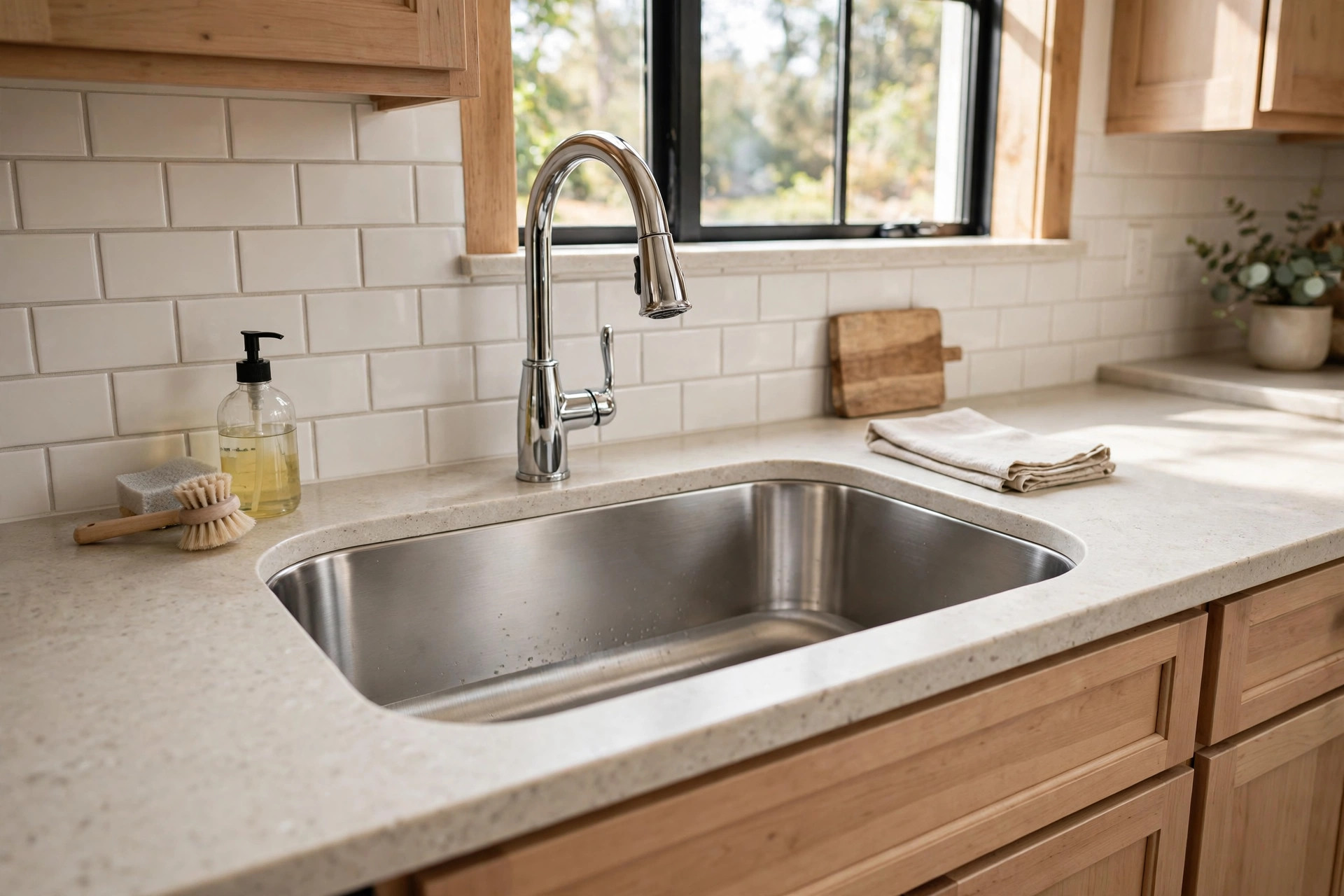

The kitchen sink is one of the most used fixtures in any American home. It serves morning coffee, midday dishes, and late-night cleanup. This guide to undermount stainless sinks for American homes explains what these sinks are, how to choose one, what they cost, and how to keep them in good shape for years. Whether you are building a new house or updating an old kitchen, the advice here will help you make a sound choice.
Why It Matters
A sink is not a small purchase. It sits in the center of daily work, and a poor choice causes trouble for years. The undermount stainless sink has become a common pick in American homes for good reason. It mounts beneath the countertop instead of dropping in from above. The edge of the counter flows straight into the bowl. There is no rim to trap food, no lip to scrub around, and no place for water to pool.
This clean line changes how the kitchen feels and works. Crumbs and spills wipe straight from the counter into the sink in one motion. The countertop itself becomes easier to clean. The sink bowl is fully visible, and the look is simple and modern. Many homeowners find that this one change makes the whole kitchen easier to keep tidy.
Stainless steel adds its own strengths. It does not stain the way porcelain can. It resists heat from hot pots. It costs less than stone or copper. It suits almost any style of kitchen, from a farmhouse to a city apartment. For families with children, the steel surface is forgiving. A dropped plate may chip a porcelain sink, but stainless steel dents or scratches at most, and it keeps working.
The choice matters most during a remodel. Once the countertop is cut and set, changing the sink later is hard and costly. An undermount sink must be fixed before the counter goes in, because its brackets mount from below. So the decision must come early in the project. Reading this guide before you order your counters will save you from a late change that costs time and money.
What to Look For: How to Choose: Undermount Stainless Sinks American Homes Guide
Start with the gauge of the steel. Gauge measures thickness, and lower numbers mean thicker steel. Most good sinks are 16 or 18 gauge. A 16-gauge sink feels solid and resists dents. An 18-gauge sink is lighter and costs less, but it can sound hollow and flex under heavy pots. For a main kitchen sink, 16 gauge is the safer pick. Thin sinks of 20 gauge or more are best avoided in a busy home.
Next, look at the depth of the bowls. A bowl depth of nine or ten inches hides a tall stack of dishes. It also keeps water from splashing onto the counter. But very deep bowls mean you bend further to reach the bottom, which can tire the back. Measure your own reach before you decide. A bowl that is eight inches deep works well for most people.
Check the corners. Older stainless sinks had sharp square corners that were hard to clean. Many new models have rounded inner corners with a small radius. These rounded corners still look crisp but wipe clean with one pass of a sponge. If you plan to hand wash often, choose gentle curves over sharp lines.
Look at the sound. Stainless steel can ring when water hits it. Good sinks have sound-dampening pads glued to the underside and a spray coating. Knock on the bowl in the store. A dull thud means good padding. A loud ring means noise with every use. This matters in open floor plans where the kitchen joins the living room.
Check the drain placement. A rear drain, set toward the back of the bowl, leaves more clear space below in the cabinet. That extra room matters if you need to fit a garbage disposal and a water filter under the sink. A center drain is standard and works fine with most disposals.
Measure your cabinet. An undermount sink needs a base cabinet wide enough to hold it. A 30-inch sink usually needs at least a 33-inch cabinet. Bring the cabinet size with you when you shop, or check the maker’s cut sheet. The sink’s cut sheet shows the exact cutout the installer needs. Good guides from Consumer Reports and This Old House stress this point: measure twice, cut once.
Finally, think about finish. Brushed or satin finishes hide water spots better than mirror finishes. They also hide light scratches. A matte finish keeps its looks longer in a hard-working kitchen.
Types and Options
Undermount stainless sinks come in several layouts. The single bowl is the simplest. One large basin holds sheet pans, stock pots, and roasting trays without trouble. Cooks who wash big items by hand often prefer it. It also suits small kitchens because the whole sink area stays open.
The double bowl splits the sink into two basins. One side can hold soapy water while the other rinses. Some doubles have equal bowls. Others have one large and one small bowl, which suits those who want a prep area and a wash area at once. Think about your habits. If you use a dishwasher for most items and hand wash only a few, a single bowl may serve you better.
The bar or prep sink is a smaller second sink, often set in an island. It is useful when two people work in the kitchen at once. One person preps vegetables at the island while the other cooks at the main counter. Prep sinks are a nice extra, but they are not a must for most homes.
Workstation sinks add a ledge inside the bowl. The ledge holds a cutting board, a colander, or a drying rack at counter height. These accessories slide back and forth over the bowl. A workstation sink turns the sink area into a prep station. They cost more, but busy cooks value them. Retailers such as Home Depot and Lowe’s carry wide ranges of these models, and maker sites like Whirlpool, GE Appliances, and Bosch offer kitchen planning help that shows how a sink fits the whole room.
There are also farmhouse-style apron sinks in stainless steel, but those mount differently and show a front panel. This guide focuses on true undermount models, which stay hidden under the counter edge.
Cost and Price
Prices for undermount stainless sinks range widely. A basic single-bowl model in 18 gauge may cost from about one hundred to two hundred fifty dollars. A mid-range 16-gauge sink with good sound padding often runs from two hundred fifty to six hundred dollars. High-end workstation sinks with accessories can reach eight hundred dollars or more.
The sink itself is only part of the cost. Installation adds more. A plumber may charge several hundred dollars to set the sink, connect the drain, and seal the seams. If the countertop needs a special cut or extra support, the fabricator charges for that too. Ask for the full price, sink plus install, before you commit.
Countertop choice affects the total as well. Undermount sinks work best with solid counters such as granite, quartz, or solid surface. These materials hold the clips and brackets from below. Laminate counters are a poor match because the cut edge can swell with water. If you have laminate, an undermount sink may not be the right choice at all.
Compare prices across stores and read product tests. Sites like The Spruce and Bob Vila publish buying guides that compare models side by side. Energy and appliance standards from Energy Star can also help when you shop for matching kitchen appliances at the same time.
A related upgrade many buyers pair with a new sink is a stainless range hood over the cooktop. Others match the sink to butcher block countertops for a warm, classic look. Good lighting over the sink area matters too, and many shoppers read a kitchen island hanging lights buying guide before they finish the plan.
Care and Upkeep
Daily care is simple. Rinse the bowl after each use. Wipe it with a soft sponge and a drop of dish soap. Rinse again and dry with a clean cloth. Drying keeps hard-water spots from forming. In areas with hard water, this one habit does more than any cleaner.
Once a week, give the sink a deeper clean. Sprinkle baking soda over the damp bowl. Scrub gently with a soft sponge, following the grain of the brushed finish. Rinse well. For shine, rub a small amount of white vinegar on the surface, then rinse and dry. This weekly routine keeps the steel bright without harsh chemicals.
Avoid steel wool and harsh scouring pads. They leave fine scratches that dull the finish over time. Avoid bleach left to sit in the bowl. It can pit the steel. If you must disinfect, use a mild cleaner and rinse it away fast. Do not leave cast iron pans soaking overnight, since the iron can leave rust marks that are hard to remove.
Check the caulk line each year. The joint between the sink and the countertop is sealed with silicone. Over time it can shrink or pull loose. A failing seal lets water seep into the cabinet below. If you see gaps or dark lines, clean the old caulk out and lay a fresh bead. This small job protects the cabinet and the counter from water damage.
Once a year, also check the mounting clips under the sink. Open the cabinet and look at the brackets. Tighten any that feel loose. A sink that shifts can break its seal and leak. This check takes five minutes and prevents a costly repair.
Safety
A stainless sink is safe by nature, but a few points deserve care. The steel edges of a cheap sink can be sharp where the flange meets the counter. Run a finger lightly along the joint when the sink is new. If you feel a sharp spot, ask the installer to smooth it or cover it with sealant.
Heavy items need support. An undermount sink full of water and dishes is heavy. The mounting system must carry that weight. Make sure the installer uses the maker’s brackets and adds support rails for wide sinks. A sink that falls from its mounts is a danger to anyone below it in the cabinet.
Hot water safety matters too. Set the water heater to no more than 120 degrees Fahrenheit. Water hotter than that can scald in seconds, and a deep sink bowl holds a large volume of hot water. This setting also saves energy. Families with small children should take this step before the new sink goes in.
Garbage disposals add their own risks. Keep hands clear of the drain when the disposal runs. Feed waste in small amounts with cold water running. If the unit jams, turn it off at the switch and use the reset button or an Allen wrench from below, never a hand from above. These rules hold for every sink, but they bear repeating when a new one is installed.
Frequently Asked Questions
Can an undermount sink be added to an existing countertop? It can, but the work is harder. The counter must come off or the cabinet must be opened from below to fit the brackets. The cut edge must suit an undermount seal. Many installers prefer to do this work when the counter is new. If your counter is already set, get a quote before you buy the sink.
Is 16 gauge really better than 18 gauge? For most main kitchens, yes. The thicker steel resists dents from dropped pots, feels more solid, and holds sound padding better. The price gap is often modest. In a light-use bar area, 18 gauge is fine. In a busy family kitchen, spend the extra for 16 gauge.
Will a stainless sink rust? True stainless steel resists rust, but it is not rust-proof. Rust marks usually come from other metals left in the bowl, like a steel wool pad or a cast iron pan. Remove such items, scrub the marks with baking soda, and rinse well. The marks come off and do not return if the cause is gone.
How long does an undermount stainless sink last? A good 16-gauge sink lasts twenty years or more with simple care. The weak point is rarely the steel; it is the seal or the mounting hardware. Check the caulk and clips each year, and the sink will outlast the faucet.
Can I install an undermount sink myself? A skilled homeowner can do it, but the job is not simple. The sink must sit level, the seal must be perfect, and the plumbing must line up. Mistakes cause leaks inside the cabinet. Most homeowners hire a plumber or let the countertop fabricator do the install. The labor cost is worth the peace of mind.
Do I need a special faucet for an undermount sink? No. Any standard kitchen faucet works. Because the sink has no deck, the faucet mounts on the countertop behind the sink or on the wall. Make sure the counter has room for the faucet holes. Deep bowls pair well with high-arc faucets that give clearance for tall pots.
Final Word
An undermount stainless sink is a quiet workhorse. It does not draw the eye, but it shapes the daily rhythm of the kitchen. Choose thick steel, a sensible depth, and a trusted installer. Keep the daily rinse habit and the yearly seal check. Do those few things, and the sink will serve your home well for decades.
References
Bob Vila. (n.d.). Home improvement advice. https://www.bobvila.com Bosch. (n.d.). Home appliances. https://www.bosch-home.com Consumer Reports. (n.d.). Product reviews and ratings. https://www.consumerreports.org ENERGY STAR. (n.d.). Energy efficient products. https://www.energystar.gov GE Appliances. (n.d.). Kitchen and home appliances. https://www.geappliances.com Lowe’s. (n.d.). Home improvement products. https://www.lowes.com The Home Depot. (n.d.). Home improvement products. https://www.homedepot.com The Spruce. (n.d.). Home and garden advice. https://www.thespruce.com This Old House. (n.d.). Home renovation guidance. https://www.thisoldhouse.com Whirlpool. (n.d.). Home appliances. https://www.whirlpool.com
Was this guide helpful?

About James Carter
The My Garden US editorial team writes practical, in-depth home and garden guides for American homeowners — tested advice, no fluff.
You May Also Like

French Door Refrigerators USA Online Deals: How to Shop Smart and Save
April 17, 2026 0 views
Garbage Disposal Installation in California Homes: A Complete Guide
September 3, 2026 0 views
Under Sink Filters Texas Homes USA: A Plain Guide for Cleaner Tap Water
May 10, 2026 0 views