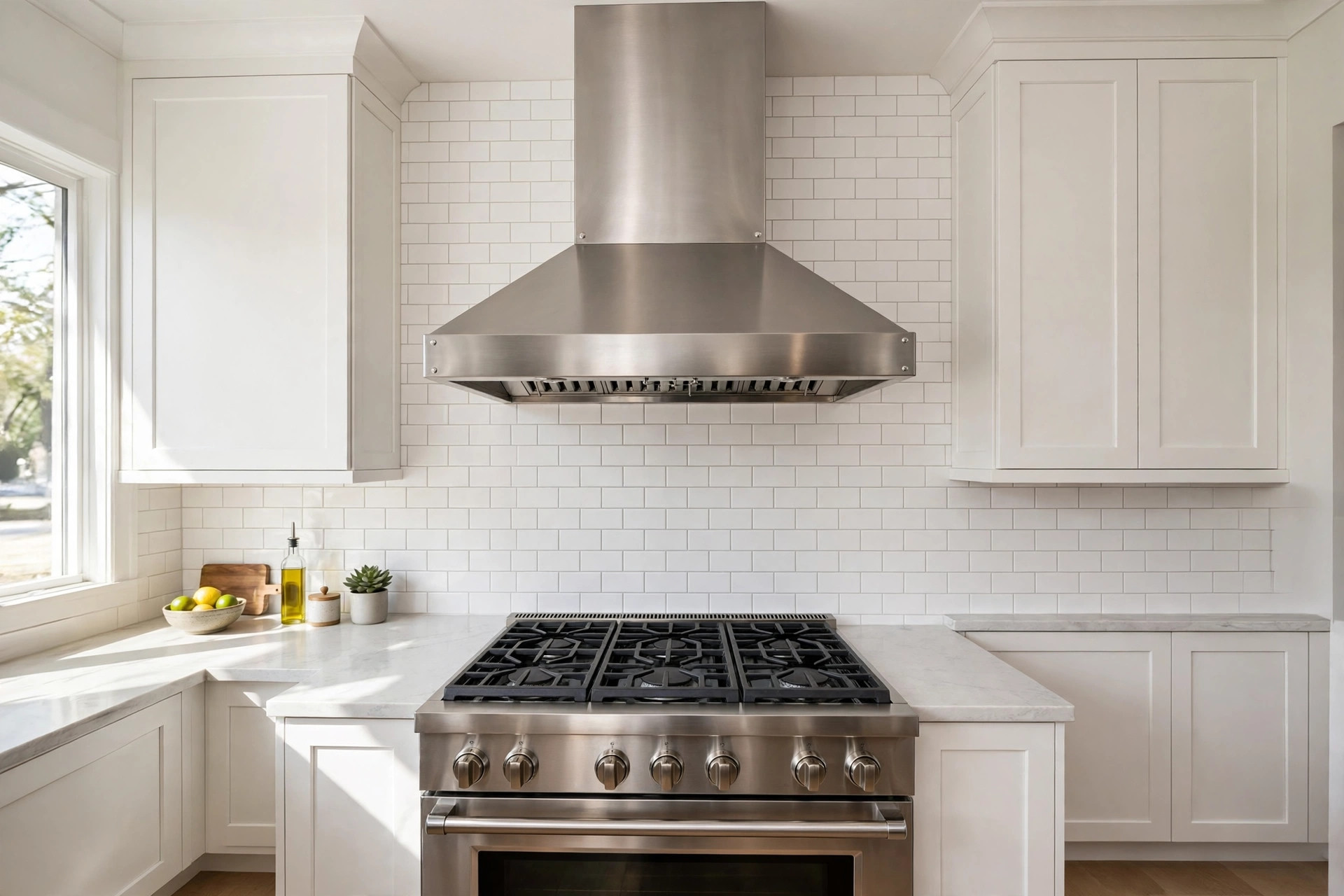

When you cook a big meal, smoke, steam, and grease rise off the stove. A good range hood pulls all of that out of your kitchen. Stainless steel hoods are the most popular choice in the United States because they last long, clean up well, and look right in almost any kitchen. This stainless range hoods buying guide USA will walk you through everything you need to know before you buy one.
Why a Range Hood Matters
A stove without a range hood leaves grease on cabinets, moisture on windows, and cooking smells in the curtains. Over time, grease builds up on walls and in cabinets. That film is hard to clean once it settles.
A range hood with a fan and a filter catches grease and smoke at the source. It moves steam outside or cleans the air and sends it back into the room. Homes with gas ranges gain even more from a good hood. Gas burners release heat, moisture, and combustion fumes. A hood that vents outdoors carries all of that away.
Many building codes in the United States require a vented hood over a commercial-style range. Even where the code does not require one, a hood protects your cabinets and your indoor air. Buyers of resale homes also look for a working hood, so it adds value at sale time.
Types of Stainless Range Hoods: Stainless Range Hoods Buying Guide Usa
Range hoods come in several shapes. The right shape depends on your stove and your cabinets.
Wall-Mount Chimney Hoods
These hoods hang on the wall above the range. A chimney cover runs from the hood up to the ceiling. Wall-mount chimney hoods are the most common style in American homes. They suit ranges that sit against a wall. They come in widths from 30 to 48 inches and look like a classic fixture above the stove.
Under-Cabinet Hoods
Under-cabinet hoods mount beneath a wall cabinet that sits over the range. They save space and cost less than chimney hoods. The cabinet above hides the duct. These hoods suit standard kitchens where a cabinet is already in place above the stove. They are easy to install during a remodel.
Island Range Hoods
Island hoods hang from the ceiling above a cooktop on a kitchen island. They cost more because they need ceiling ductwork and a stronger motor. An island hood should be a little wider than the cooktop. It catches smoke that drifts sideways in the open room.
Insert and Liner Hoods
Inserts and liners hide inside a custom wood hood or cabinet. You see the wood surround, not the metal. Only the filter area shows below. This style suits homeowners who want a traditional look. The stainless insert does the work inside the enclosure.
Downdraft Hoods
Downdraft units pop up from behind the cooktop and pull smoke down instead of up. They suit islands where a ceiling hood is not wanted. They vent less well than overhead hoods, so they work best for light cooking.
Professional-Style Hoods
Pro-style hoods have thick stainless bodies, baffle filters, and strong fans. They match professional ranges with high heat output. They cost more and often need larger ducts and makeup air systems.
How to Choose the Right Size
Size is the first thing to get right. A hood should be at least as wide as the cooktop. For a 30-inch range, buy a 30-inch hood. For an island cooktop, go one size wider than the cooktop when you can. A 36-inch hood over a 30-inch cooktop catches more drifting smoke.
Mounting height matters too. Most makers suggest 24 to 30 inches above an electric cooktop and 30 to 36 inches above a gas cooktop. Mount too high and the hood misses the smoke. Mount too low and it gets in the way of tall pots. Check the manual for your exact model.
The hood should also cover the full depth of the burners when possible. Shallow hoods miss smoke from front burners. A hood that reaches from the wall to near the front edge of the stove works best.
Understanding CFM Ratings
CFM stands for cubic feet per minute. It measures how much air the fan moves. A higher CFM means stronger ventilation.
A simple rule says you need about 100 CFM for every 10 inches of cooktop width. By that rule, a 30-inch range needs about 300 CFM. Gas ranges need more. For gas, a common rule is 1 CFM for every 100 BTU of burner output. A range with 40,000 BTU of burner power needs about 400 CFM.
Heavy cooking styles like frying and wok cooking need extra power. A 600 to 900 CFM hood suits serious home cooks. Keep in mind that very strong hoods may need makeup air. When a hood pulls more than 400 CFM, some local codes require a makeup air system that brings fresh air into the house. Check with your local building office before you buy a high-CFM model.
Ducted vs. Ductless Models
Ducted Range Hoods
Ducted hoods move air through a duct to the outside of the house. They remove smoke, steam, grease, and odors completely. This is the best choice when a duct run is possible. The duct should be as short and straight as possible. Round ducts move air better than flat ones. A 6-inch or 8-inch round duct suits most home hoods.
Ductless Range Hoods
Ductless hoods filter the air and return it to the kitchen. They use charcoal filters to trap odors. They do not remove steam or heat as well as ducted models. They suit condos and apartments where cutting a duct hole is not allowed. You must replace the charcoal filters every few months for the hood to keep working.
If you are remodeling and can add a duct, choose ducted. The performance gap is large. Home experts at This Old House and Bob Vila recommend ducted models in most kitchen remodels. While you plan the kitchen, it also pays to review related appliance guides such as a double wall oven review guide or, if you have a Florida home with a gas range, this double wall oven guide for Florida homes.
Filters: Baffle, Mesh, and Charcoal
The filter sits under the fan and traps grease.
Baffle filters use curved metal plates. Grease hits the plates and drips into cups. Baffle filters suit gas ranges and heavy frying. They go in the dishwasher for easy cleaning.
Mesh filters use layers of fine aluminum mesh. They catch grease well but clog faster. They also go in the dishwasher. Mesh filters come standard on many under-cabinet models.
Charcoal filters sit behind the grease filter in ductless hoods. They absorb odors. You cannot wash them. Replace them on schedule.
Most stainless range hoods include dishwasher-safe filters. That one feature makes upkeep far easier than scrubbing fixed filters by hand.
Noise Levels
Fan noise is measured in sones. One sone sounds like a quiet refrigerator. A hood at 1 to 2 sones is very quiet. At 4 sones it sounds like a normal conversation. At 7 sones it is loud.
High CFM fans make more noise at full speed. A hood with several speed settings lets you run low and quiet for simmering and high only for frying. Look for the sone rating at each speed in the spec sheet. Shoppers who compare ratings on Consumer Reports often find that mid-price models can run quieter than some expensive ones.
Cost and Price Ranges
Stainless range hoods come at many price points.
– Under $200: Basic under-cabinet models. Fine for light cooking and small kitchens. – $200 to $600: Good under-cabinet and entry wall-mount chimney hoods. Baffle or mesh filters. Enough power for most homes. – $600 to $1,500: Mid-range chimney and island hoods. Stronger motors, better lighting, quieter fans. – $1,500 and up: Professional-style and large island hoods. High CFM, thick steel, premium finishes.
Installation adds to the cost. An electrician may need to run a circuit. A contractor may need to cut the duct hole and run ductwork through the attic. Plan $200 to $800 for installation depending on the job. You can see current model prices at retailers like The Home Depot and Lowe’s to set your budget. If your remodel adds new appliances too, check current dishwasher third rack deals to round out the kitchen package.
Stainless Steel Finishes and Grades
Most hoods use 430 or 304 grade stainless steel. Grade 304 resists rust and corrosion better. It costs more. Grade 430 works fine in dry kitchens.
Some hoods have a brushed finish that hides fingerprints. Others have a polished finish that shows every mark. Smudge-resistant coatings are worth the small extra cost in busy kitchens.
Clean stainless with a soft cloth and warm soapy water. Wipe with the grain of the brush marks. Avoid steel wool and harsh cleaners. They scratch the surface and dull the finish. A stainless cleaner made for appliances adds shine and protection.
Care and Upkeep
A range hood needs little care if you keep a simple schedule.
Monthly: Remove the grease filters and wash them in hot soapy water or the dishwasher. Let them dry fully before you put them back.
Every few months: Wipe the inside of the hood body with a degreaser. Grease that builds up inside can drip or cause odors.
For ductless models: Replace charcoal filters every 3 to 6 months, or as the manual says.
Yearly: Check the duct for grease buildup and make sure the outside vent cap opens freely. Clear any nests or leaves from the cap.
A hood with clean filters pulls more air and runs quieter. Dirty filters cut airflow by a large amount.
Safety Tips
Never leave frying food alone under a running hood. Grease fires spread fast. If a grease fire starts in a pan, turn off the burner and smother the flames with a lid. Do not use water on a grease fire.
Keep the hood free of heavy grease buildup. Grease inside a hood or duct can catch fire. Regular filter cleaning prevents most of this risk.
Make sure the outside vent has a backdraft damper. The damper lets air out but keeps cold air and pests from coming in.
If your hood is very powerful, talk to your contractor about makeup air. A strong fan can pull flue gases back down a water heater or furnace chimney. Local codes address this in many areas.
FAQ
What size range hood do I need for a 30-inch stove? Buy a hood at least 30 inches wide. For an island stove, choose 36 inches if space allows. Match the CFM to your cooking style and your stove type, gas or electric.
Is ducted or ductless better? Ducted is better. It removes smoke, steam, and odors from the house. Ductless works only when you cannot run a duct, as in many condos. Ductless hoods need new charcoal filters on a regular schedule.
How many CFM do I need? For electric ranges, about 100 CFM per 10 inches of width is a start. For gas ranges, use 1 CFM per 100 BTU of total burner output. Heavy frying and wok cooking call for 600 CFM or more.
Can I install a range hood myself? A skilled homeowner can install a simple under-cabinet or ductless model. Ducted hoods that need new ductwork, roof cuts, or new wiring are best left to a contractor and an electrician. Poor ductwork ruins even the best hood.
Do stainless range hoods show fingerprints? Plain stainless can show fingerprints, but many models now have smudge-resistant coatings. Brushed finishes hide marks better than polished ones. A quick wipe with a microfiber cloth keeps the hood looking clean.
How long does a range hood last? A well-made stainless hood lasts 15 to 20 years or more. Motors are the part most likely to wear out. Keep filters clean and the motor will run longer and quieter.
A Short Final Word
The best stainless range hood is the one that fits your stove, your kitchen, and your cooking habits. Get the width right, pick enough CFM, and choose ducted when you can. A mid-range model with baffle filters and several fan speeds serves most American homes well for many years. Use this stainless range hoods buying guide USA as a checklist when you shop, and compare models at trusted sources such as GE Appliances, Whirlpool, Bosch, The Spruce, and Energy Star for ratings on energy use. With the right hood over your stove, your kitchen will stay cleaner, smell better, and cook more safely.
References
Bob Vila. (n.d.). Home improvement advice. https://www.bobvila.com Bosch. (n.d.). Home appliances. https://www.bosch-home.com Consumer Reports. (n.d.). Product reviews and ratings. https://www.consumerreports.org ENERGY STAR. (n.d.). Energy efficient products. https://www.energystar.gov GE Appliances. (n.d.). Kitchen and home appliances. https://www.geappliances.com Lowe’s. (n.d.). Home improvement products. https://www.lowes.com The Home Depot. (n.d.). Home improvement products. https://www.homedepot.com The Spruce. (n.d.). Home and garden advice. https://www.thespruce.com This Old House. (n.d.). Home renovation guidance. https://www.thisoldhouse.com Whirlpool. (n.d.). Home appliances. https://www.whirlpool.com
Was this guide helpful?

About Michael Thompson
The My Garden US editorial team writes practical, in-depth home and garden guides for American homeowners — tested advice, no fluff.
You May Also Like
Microwave Drawer Units USA Online Deals: A Buyer Guide to Finding the Best Price
January 28, 2026 0 views
French Door Refrigerators Buying Guide USA
May 31, 2026 0 views
Undermount Stainless Sinks for Texas Homes: A Plain Buying Guide
January 11, 2026 0 views