
Weeds do not wait. A single dandelion can seed a whole lawn in one week, and crabgrass spreads across bare soil at a speed that shocks most new gardeners. The best garden sprayer for weed control turns this losing battle into steady, even work. With the right sprayer in hand, you can place weed killer exactly where it is needed and nowhere else.
A sprayer is a simple tool, but small differences matter. A weak pump gives an uneven spray. A poor seal leaks onto your hands. A nozzle that cannot be tuned wastes product on the path and the roses. This guide walks through the types of sprayers, the features worth paying for, and the care that keeps a sprayer working for years.
Why a Good Sprayer Matters
Hand pulling works in a small bed. It fails in a big yard. When weeds cover hundreds of square feet, a sprayer covers ground far faster than a hoe, and it reaches plants in tight spots between paving stones and along fences. A gardener with a good sprayer can treat a whole side yard in the time it takes to pull one bad patch by hand.
Precision is the real point. A tuned nozzle lays down a fine, even mist that coats leaves without drift. That means less chemical in the soil, less risk to nearby plants, and less money spent on refills. A cheap jug with a splash spout cannot match it. When gardeners compare the best garden hoe for weeding reviews, they learn that hand tools handle small jobs, but wide coverage calls for a sprayer.
Timing matters too. Weeds take up herbicide best in the cool hours of the morning, when leaves are dry and the air is still. A reliable sprayer lets you work fast during that short window. You fill once, walk steady lines, and finish before the sun is high.
What to Look For When You Buy: Best Garden Sprayer for Weed Control
Not all sprayers suit every yard. A tool that suits a small patio may be too small for an acre. Start with your ground, then match the sprayer to it. Garden experts at The Spruce often remind readers to buy for the job they do every week, not the job they do once a year.
Tank Size
Tank size sets how often you stop to refill. A one to two gallon tank suits most home gardens and small lawns. It is light enough to carry by hand, and it covers a bed or two per fill. For a large yard, look at three to four gallon tanks. More than that grows heavy fast. A full four gallons weighs over thirty pounds, and that weight sits on your arm all morning.
Pump Type and Pressure
Hand pump models build pressure with a handle you work up and down. They cost little and suit light work. Battery powered models hold steady pressure at the push of a button, which gives a more even spray and saves your arm on long jobs. Either way, check that the pressure is rated for herbicides, not just water. Weed killer needs a fine, forceful mist to coat leaves well.
Nozzle Options
The nozzle is where cheap sprayers show their limits. Look for an adjustable cone nozzle that moves from a tight stream to a wide fan. A tight stream reaches weeds under a deck or behind a shed. A wide fan covers a gravel drive in quick passes. Some models add a foaming tip that shows exactly where you sprayed, which cuts down on missed spots and double dosing.
Build Quality and Seals
Herbicides are hard on plastic and rubber. Viton or EPDM seals last longer against harsh mixes than basic rubber. A wide mouth at the top makes filling easy and keeps you from spilling mix on the lawn. Check the hose too. A long, flexible hose lets the tank rest on the ground while you work close to the plants, and that saves your back.
Types of Garden Sprayers
Handheld Pump Sprayers
These small units hold one to two quarts and suit spot jobs. You see a few weeds along the walk, you fill the bottle, and you treat them in minutes. They cost little and store on a shelf. They are not the best garden sprayer for weed control across a whole lawn, but every home should own one for touch ups.
Standard Pump (Compression) Sprayers
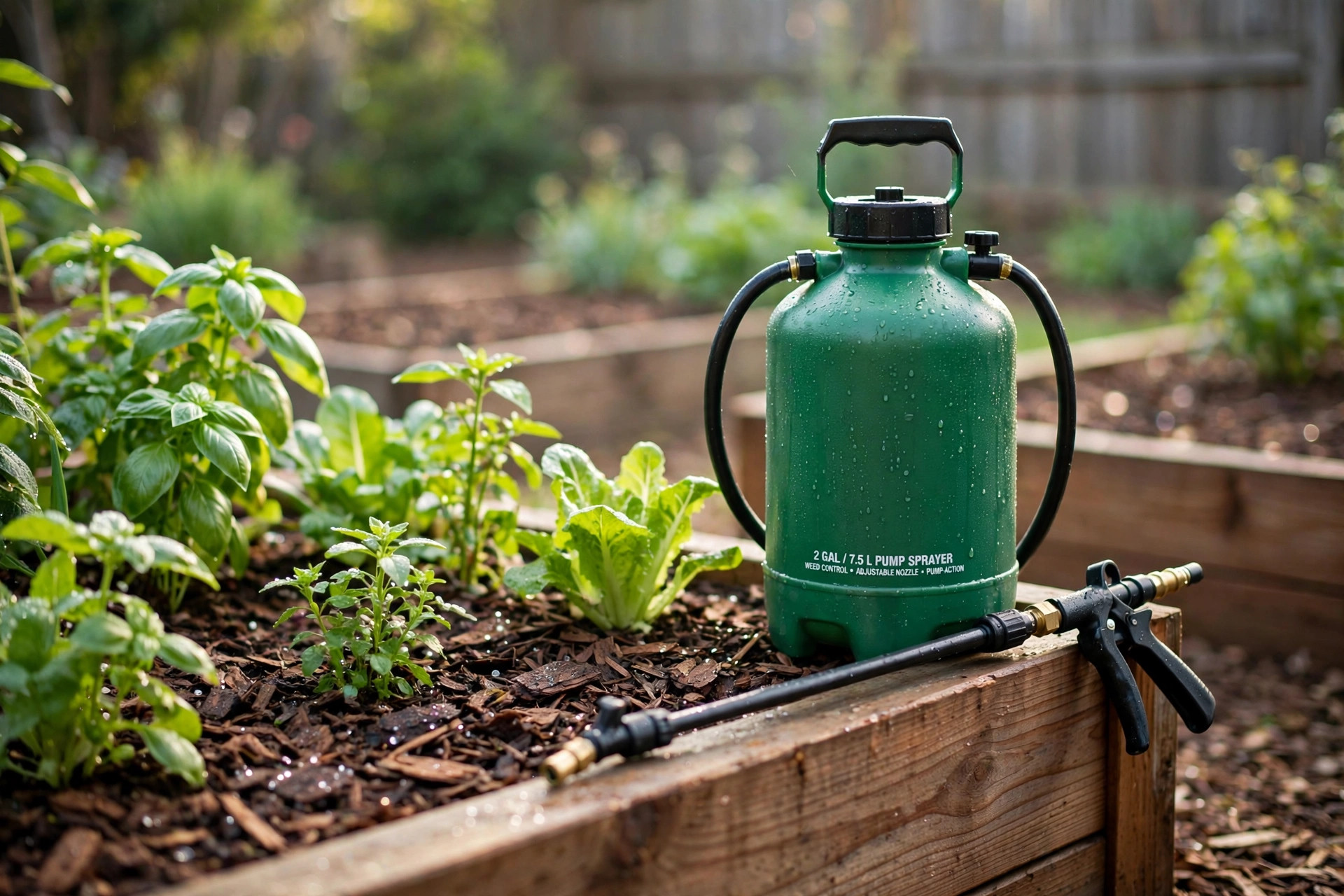
The classic garden sprayer holds one to three gallons in a tank with a hand pump on top. Pump the handle to build pressure, squeeze the wand trigger to spray. They are the most common choice for home weed control, and a mid priced model from a brand like Corona or Fiskars can last a decade with basic care.
Backpack Sprayers
A backpack sprayer carries three to four gallons on padded straps. The tank sits on your back, which leaves both hands free and spreads the weight. This type suits large lawns and long fence lines where a hand carried tank would tire you out. Retailers such as Home Depot and Lowe’s stock a wide range of backpack models each spring.
Battery Powered Sprayers
Battery models remove the pumping entirely. An electric pump holds constant pressure, so the spray pattern never fades as the tank empties. They cost more than hand pump units, but for anyone with a bad shoulder or a large lot, the price is fair. Look for a battery that holds at least two full tanks per charge.
Hose End Sprayers
A hose end sprayer attaches to your garden hose and mixes chemical with water as you spray. They cover big lawns fast and need no pumping. The trade off is control. They suit broadcast spraying over open turf far better than careful work near flower beds. If your yard is large, a hose that reaches every corner helps, as the guides to the best garden hose for large yards explain.
Cost and Price
A handheld spray bottle costs under fifteen dollars. A quality one to three gallon pump sprayer runs from thirty to seventy dollars. Backpack models run from sixty to one hundred fifty dollars, and battery powered units run from eighty to two hundred dollars. Hose end sprayers sit in the twenty to forty dollar range.
Price buys durability more than features. A thirty dollar sprayer and a seventy dollar sprayer may look the same in the store, but the dearer one has better seals, a stronger pump handle, and a nozzle that stays tuned. For weed control work that you repeat all season, the middle of the range is the sweet spot. Spend enough to get Viton seals and a solid wand.
Do not forget the small extras that add to the bill. A foaming nozzle tip, a spare seal kit, and a measuring cup for mixing are worth buying at the start. Together they cost less than twenty dollars, and they make each job cleaner and faster. A wide mouth funnel also helps. It keeps the mix off your hands and off the patio when you pour.
Care and Upkeep
Rinse the tank after every use. This single habit adds years to a sprayer. Fill it partway with clean water, shake it well, and spray the rinse through the nozzle until it runs clear. Residue left inside hardens on the seals and the filter, and the next batch of mix may clog or spray weak.
Once a season, take the sprayer apart. Remove the nozzle, the filter screen, and the pump assembly. Wash each part in warm soapy water and check the seals for cracks. A dab of silicone grease on the pump shaft keeps the action smooth. Replace worn seals before they fail, not after. Spare seal kits cost little and fit most common models.
Store the sprayer clean and dry, out of direct sun. Sunlight breaks down plastic tanks over time, and freezing water can crack the pump body. Many guides from Family Handyman and Bob Vila place sprayer storage with winter garden prep, and that is sound advice.
Safety
Treat every herbicide with respect. Read the product label before you mix, and follow the rates exactly. More is not better. Over mixing burns the lawn and wastes money. Wear gloves, long sleeves, and eye protection when you fill and spray.
Mix outdoors or in a well aired space, never near food or pet bowls. Keep children and pets off treated ground until the label says it is safe, which is often when the spray has dried. Mark your sprayer with a tag that says weed killer only, and never use the same tank for insect spray on vegetables. A sprayer dedicated to one job avoids cross harm. Reviews of the best garden sprayer for pesticides reviews make the same point about keeping tanks separate.
Clean up spills at once with soil or cat litter, and dispose of leftover mix as the label directs. Many towns hold free drop off days for yard chemicals, and the label or your local extension office can point you to one.
Frequently Asked Questions
What size sprayer is best for a typical home lawn?
A two gallon pump sprayer suits most quarter acre lots. You can treat the edges, the beds, and the driveway cracks on one fill. If your lot is larger or you spray often, step up to a three or four gallon backpack model.
Can I use a weed control sprayer for fertilizer too?
You can, but clean it well between jobs. Herbicide residue can harm the plants you meant to feed. Many gardeners keep two tanks, one marked for weed killer and one for feed. Sites like Gardener’s Supply sell labels and spare parts that make this easy.
Why does my sprayer lose pressure while I spray?
Three causes cover most cases. The pump seal may be worn, the filter screen may be clogged, or the nozzle may be blocked. Check the filter first, since it is the fastest fix. If the pump handle moves with no resistance, the seal needs replacement.
Is a battery sprayer worth the extra cost?
For small yards, a hand pump is fine. For large lots or for anyone with joint pain, a battery sprayer is worth every cent. Steady pressure gives a more even coat, which means better weed kill with less product.
When is the best time of day to spray weeds?
Early morning is best. The air is calm, the leaves are dry, and weeds take up the herbicide before the heat of the day. Avoid windy days, since drift can carry the spray to plants you want to keep.
How long does a good garden sprayer last?
With rinsing after each use and yearly seal checks, a quality sprayer lasts eight to twelve years. Cheap models with thin seals may fail in two or three seasons. Burpee and other garden suppliers note that simple upkeep is the main difference between a sprayer that lasts and one that ends up in the trash.
Final Word
The best garden sprayer for weed control is the one that fits your yard, holds pressure, and gets cleaned after each use. Match the tank to your ground, buy seals built for harsh mixes, and keep one tank for weeds alone. Do that, and weed season becomes a short morning chore instead of a long summer war. A sprayer is not a glamorous tool, but it earns its keep year after year.
References
Bob Vila. (n.d.). Home improvement advice. https://www.bobvila.com Burpee. (n.d.). Seeds, plants, and gardening supplies. https://www.burpee.com Corona Tools. (n.d.). Garden and landscape tools. https://www.corona-tools.com Family Handyman. (n.d.). DIY home repair and maintenance. https://www.familyhandyman.com Fiskars. (n.d.). Garden and cutting tools. https://www.fiskars.com Gardener’s Supply Company. (n.d.). Gardening tools and supplies. https://www.gardeners.com Lowe’s. (n.d.). Home improvement products. https://www.lowes.com The Home Depot. (n.d.). Home improvement products. https://www.homedepot.com The Spruce. (n.d.). Home and garden advice. https://www.thespruce.com
Was this guide helpful?

About Michael Thompson
The My Garden US editorial team writes practical, in-depth home and garden guides for American homeowners — tested advice, no fluff.
You May Also Like
Best Garden Soil for Tomatoes Reviews: What Actually Grows the Best Crop
June 30, 2026 0 views
Cold Weather Vegetables to Plant Fall: A Complete Guide
May 28, 2026 0 views
Best Garden Tool Storage Rack Reviews: What Buyers Say
March 10, 2026 0 views