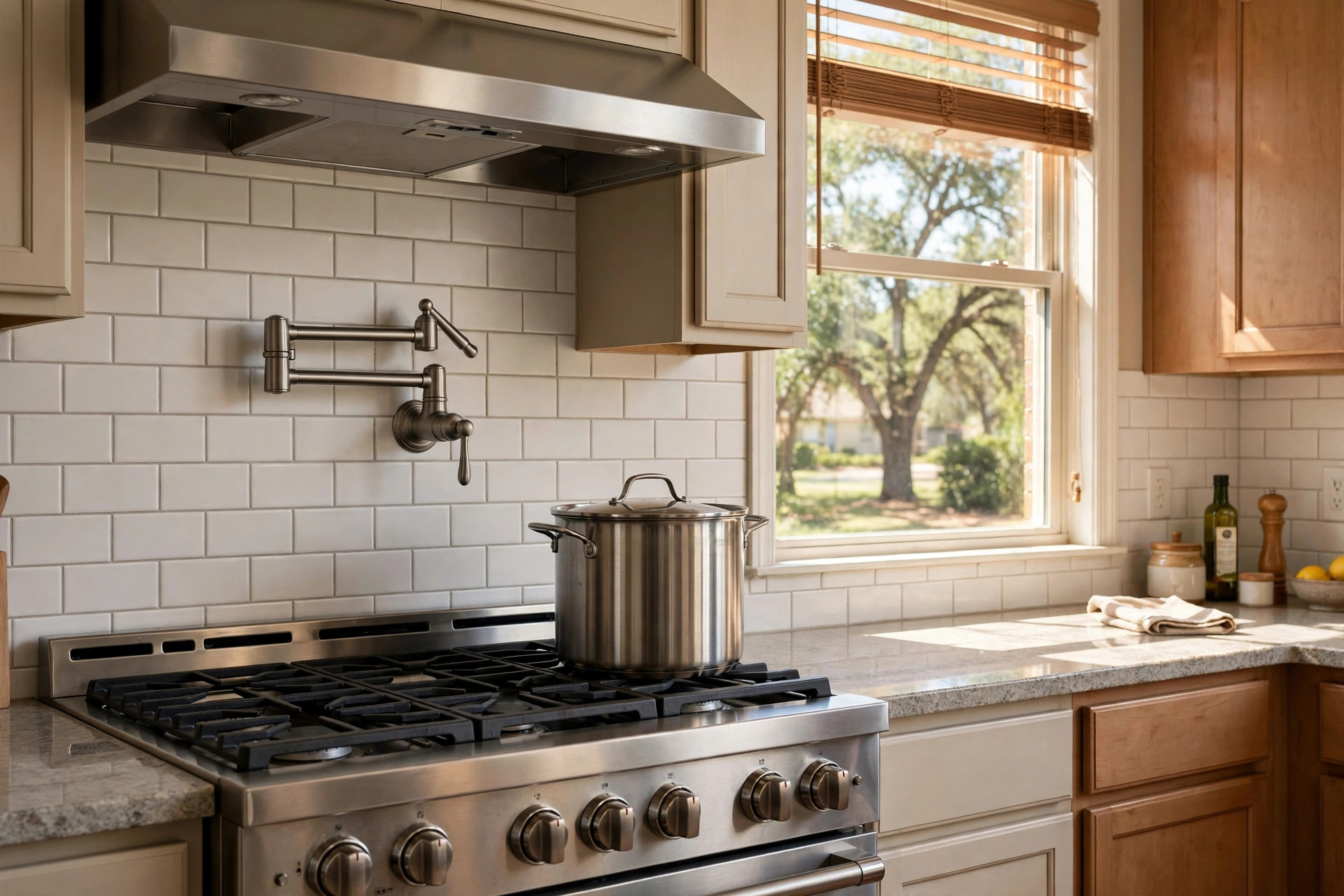

What a Pot Filler Faucet Brings to a Texas Kitchen
Homeowners searching for pot filler faucets texas homes usa shoppers recommend often want one simple thing: water where they cook. A pot filler is a faucet mounted on the wall or backsplash behind the stove. It swings out over the burners and fills pots in place. There is no need to carry a heavy pot of water across the kitchen.
In many Texas homes, the kitchen is a place of large meals. Families gather around big pots of soup, gumbo, chili, and tamales. Filling a tall stock pot at the sink and carrying it to the range takes strength and care. A pot filler removes that trip. It puts cold water right where the heat is.
Interest in pot fillers has grown as open kitchens and large ranges have become common. Many gas kitchen ranges sold today are 36 or 48 inches wide. Builders in Texas now offer pot fillers as an upgrade in new kitchens, and owners of older homes add them during remodels.
This guide covers how pot fillers work, the types sold in the United States, what to check before buying, typical costs, and how to keep one working well. It also notes safety points for Texas homes.
Why It Matters: Pot Filler Faucets Texas Homes Usa
Less Lifting, Less Spilling
A full eight-quart stock pot holds about two gallons of water. That weighs more than 16 pounds before the food goes in. Carrying it from the sink to the stove risks spills and burns. A pot filler removes that trip.
Big Meals Are Common in Texas
Texas cooking leans large. Weekend barbecues, church suppers, family tamale days, and crawfish boils all call for big pots. Many households cook for ten or more on holidays. A pot filler helps when a cook must refill a pot that is already hot. The pot stays on the burner. Only the water moves.
Home Value and Kitchen Appeal
Real estate agents in Texas often list a pot filler as a premium touch. It does not add as much value as new cabinets or stone counters, but it catches the eye in listings. Home design sites such as This Old House have covered pot fillers as a sought-after upgrade in kitchen remodels.
How a Pot Filler Works
A pot filler is a cold-water faucet with one or two folding arms. The arms stay flat against the wall when not in use. The cook pulls them out, swings the spout over a burner, and opens the valve. Water flows into the pot. After filling, the cook closes the valve and folds the arms back.
Because it carries only cold water, it needs a single supply line. Most models use a standard half-inch connection. Many have two shut-off points: a main valve at the wall and a second handle at the spout. This double shut-off is a key safety feature. Both must be closed for the flow to stop in some designs, so owners should learn their own model.
What to Look For When Choosing
Shoppers comparing pot filler faucets for Texas homes across the usa market will find many choices. The points below help narrow them down.
Reach and Arm Length
Measure from the wall to the center of the farthest burner you plan to use. The faucet must reach it with room to spare. Arms range from about 18 to 24 inches when extended. A 36-inch range may need a longer arm than a standard 30-inch model. Stand at your range and mark the spots before you shop.
Single Joint or Double Joint
Single-joint fillers swing out on one arm. Double-joint models fold in two places. Double joints give more reach and fold flatter against the wall. They cost more. For a large range with front and back burners, a double joint is often the better pick.
Wall Mount or Deck Mount
Most pot fillers mount on the wall above the backsplash. Some mount on the counter behind the range. Wall mount is the common choice. It keeps the counter clear. It also needs a water line inside the wall, which is easier to run during a remodel than after one.
Finish and Style
Common finishes are chrome, stainless steel, brushed nickel, oil-rubbed bronze, and matte black. Match the finish to your main kitchen faucet and range hood. Matte black and bronze suit Texas farmhouse styles. Chrome and stainless suit modern kitchens. Retailers like Lowe’s and Home Depot stock all of these finishes, often with matching faucet sets.
Valve Type and Handles
Look for ceramic disc valves. They last long and seal well. Many pot fillers use a quarter-turn handle. Cross handles look classic. Lever handles are easier for wet or full hands. A model with a handle at the spout plus a wall valve gives the safest shut-off.
Water Pressure Fit
Texas homes on city water usually have plenty of pressure. Homes on wells may have less. Check the flow rate listed for the model. A rate near 4 to 5 gallons per minute fills a stock pot fast.
Brand Reputation and Warranty
Stick with brands sold by major home stores and plumbing supply shops. GE Appliances and Bosch Home make ranges that pair well with pot fillers, and their dealer networks can point you to matching fixtures. A warranty of five years or more is a good sign. Consumer Reports tests many kitchen fixtures and notes which brands hold up best over time.
For a full walkthrough of specs, read our pot filler faucets buying guide alongside this article.
Types and Options
Classic Articulating Fillers
These have two folding arms and a spout that swings side to side. They are the most common type in the United States. Prices run from modest to high depending on finish and brand.
Single-Arm Fillers
A single arm reaches out and back. The design is simple and the price is lower. Reach is shorter. They suit standard 30-inch ranges and smaller pots.
Pull-Down Pot Fillers
A few models add a short pull-down spray head. They are less common and cost more, and the extra moving parts need more care.
Commercial-Style Fillers
These are taller and heavier, with a spring or high-arc look. They suit large pro-style ranges and need strong wall backing to hold their weight.
Finishes for Texas Homes
In Texas, oil-rubbed bronze and matte black remain popular in farmhouse and ranch styles. Brushed nickel and stainless fit newer builds. White enamel and brass are rising in custom kitchens. Pick a finish that will still please you in ten years, not just this season. Design guides at The Spruce track finish trends and care tips for each one.
Cost and Price
The Faucet Itself
Basic pot fillers start around 60 to 120 dollars. Mid-range models run 150 to 400 dollars. High-end and designer models run 500 to 1,200 dollars or more. Finish, brand, and arm design drive the price. Bob Vila project guides put the fixture cost in the same bands and note that finish choices add the most to the ticket.
Plumbing and Installation
Adding a pot filler to an existing wall costs more than adding one during a remodel. A plumber must open the wall, run a cold-water line, add shut-off valves, and close the wall. Typical labor in Texas runs 300 to 800 dollars. If tile must be cut and patched, add more. During new construction or a full remodel, the added cost is often 200 to 400 dollars since walls are already open.
Total Project Cost
A modest project with a mid-range faucet and simple installation runs about 500 to 900 dollars. A high-end faucet with tile work and a full remodel tie-in can reach 1,500 to 2,500 dollars. Get two or three written quotes. Ask each plumber to list the valve work, the wall repair, and the permit if one is needed.
Ongoing Costs
A pot filler uses only cold water, so it adds little to water and sewer bills. It has no motor and no power draw. The main cost over time is upkeep: washers, cartridges, and finish care.
Installation Tips for Texas Homes
Best Time to Add One
The best time is during a kitchen remodel or new build. The water line goes in before drywall and tile. If you add one later, the plumber can open the wall from behind if the back side is a pantry or garage, which keeps the tile front intact.
Plumbing Code Notes
Most Texas cities follow state plumbing rules that call for an accessible shut-off for the fixture. Many plumbers add a second shut-off valve inside a nearby cabinet. Check with your city permit office before work starts. A permit is often required when a new water line is added inside a wall.
Height Above the Range
Mount the faucet 12 to 18 inches above the range top. That clears tall pots but keeps the spout low enough to fill them without splash. For a pro-style range with a high backguard, measure with your tallest pot on the burner.
Backing in the Wall
The faucet needs solid wood blocking behind the drywall. Do not rely on drywall anchors alone. Ask the plumber or carpenter to add blocking before the wall closes.
Hot Climates and Water Lines
Texas heat does not harm a pot filler, but long runs of pipe in hot attics can warm the “cold” water. Run the line through interior walls when you can. Insulate any run through an attic. This keeps the first water from the tap truly cold.
Care and Upkeep
Daily and Weekly Care
Wipe the arms and spout with a soft damp cloth after cooking. Grease and steam from the range settle on the finish. Dry it to stop water spots. Use no harsh pads.
Cleaning by Finish
Chrome and stainless take mild dish soap and water, the same routine you would use at an undermount stainless sink. Matte black and bronze need gentle cleaners with no bleach and no ammonia. Oil-rubbed bronze may show wear at touch points over years. A light coat of mineral oil now and then keeps the look even. Never use oven cleaner or limescale removers on the finish.
Checking for Leaks
Once a year, pull the arms out and run the water while you watch the joints. Look for drips at the wall joint and the elbow joints. Open the cabinet below or behind the wall if you can, and check for damp spots. Small leaks inside a wall cause big damage over time.
Washers and Cartridges
If the handle drips after it is closed, the cartridge or washer likely needs a change. Turn off the shut-off valve first. Most cartridges swap out with basic tools. Keep the model number and brand on file so you can order the right part.
Winter Watch in North Texas
South Texas rarely freezes, but North Texas does. A pot filler sits on an interior wall, so it is safer than outdoor spigots. Still, know where the shut-off valve is before hard freeze nights.
Safety
Scald and Burn Risk
The water from a pot filler is cold, but the pot and burner are hot. Keep the spout clear of open flames. Do not reach across a lit burner to close the valve. Teach every cook in the home the same steps: fill, close both handles, fold the arms back.
Double Shut-Off Habit
Many models have a wall valve and a spout handle. Both must be closed to stop flow in some designs. Make it a habit to close both every time. A handle left open at the spout can flood the range the next time someone opens the wall valve.
Keep the Arms Folded
Folded arms stay clear of flames and pan handles. Extended arms over a lit burner can heat up. They also get in the way of large skillets. Fold them back after each use.
Child Safety
Children love to turn handles. If small children use the kitchen, choose a model with stiff quarter-turn handles that are hard for little hands. Some families add a small lock on the cabinet shut-off valve for extra safety.
Water Damage Prevention
A pot filler is a water line inside your wall. That is normal, but it deserves respect. Know where the main house shut-off is. Check the wall and cabinet twice a year for moisture. Fast action on a small leak saves thousands.
Frequently Asked Questions
Do I need a plumber to install a pot filler?
Yes, in most cases. A licensed plumber should run the water line and set the valve. In Texas, many cities also require a permit for new water lines.
Can a pot filler be added to an existing kitchen?
Yes. The plumber opens a section of wall behind the range, runs a cold-water line up from below or across from nearby, and patches the wall. If the wall is tile, the plumber cuts and patches the tile. It costs more than adding one during a remodel, but it is a common job.
Do pot fillers use hot water too?
Almost all are cold-water only. Hot water at the range is not needed since the burner heats the pot. A single cold line is simpler and cheaper to install. If you want instant hot water at the stove, that is a different fixture and a bigger job.
How high should a pot filler sit above the stove?
Most installers place it 12 to 18 inches above the range surface. This clears tall stock pots. Measure with your tallest pot on the burner before the plumber sets the height.
Are pot fillers hard to clean?
No. They wipe clean like any faucet. The folding arms have joints that collect grease, so wipe the joints after heavy cooking. Avoid harsh cleaners on matte and bronze finishes. A soft cloth and mild soap are enough.
Will a pot filler raise my home’s value?
It can help, but modestly. Buyers see it as a premium kitchen touch. It will not pay for itself the way a full kitchen update can. Add one because you will use it, not only for resale.
A Short Final Word
A pot filler is a small fixture with a clear job. It moves water to the heat. For Texas homes where big pots and big meals are the norm, that job matters. Choose a model with the reach your range needs and a double shut-off for safety. Have it installed by a licensed plumber with solid wall backing.
References
Bob Vila. (n.d.). Home improvement advice. https://www.bobvila.com Bosch. (n.d.). Home appliances. https://www.bosch-home.com Consumer Reports. (n.d.). Product reviews and ratings. https://www.consumerreports.org GE Appliances. (n.d.). Kitchen and home appliances. https://www.geappliances.com Lowe’s. (n.d.). Home improvement products. https://www.lowes.com The Home Depot. (n.d.). Home improvement products. https://www.homedepot.com The Spruce. (n.d.). Home and garden advice. https://www.thespruce.com This Old House. (n.d.). Home renovation guidance. https://www.thisoldhouse.com
Was this guide helpful?

About Jennifer Lee
The My Garden US editorial team writes practical, in-depth home and garden guides for American homeowners — tested advice, no fluff.
You May Also Like

Butcher Block Countertops in Florida Homes: A Complete Guide for USA Buyers
May 16, 2026 0 views
Dishwasher Third Rack Texas Homes USA: A Practical Guide
February 21, 2026 0 views
Stainless Range Hoods for Sale USA: A Plain Buyer’s Guide
July 1, 2026 0 views