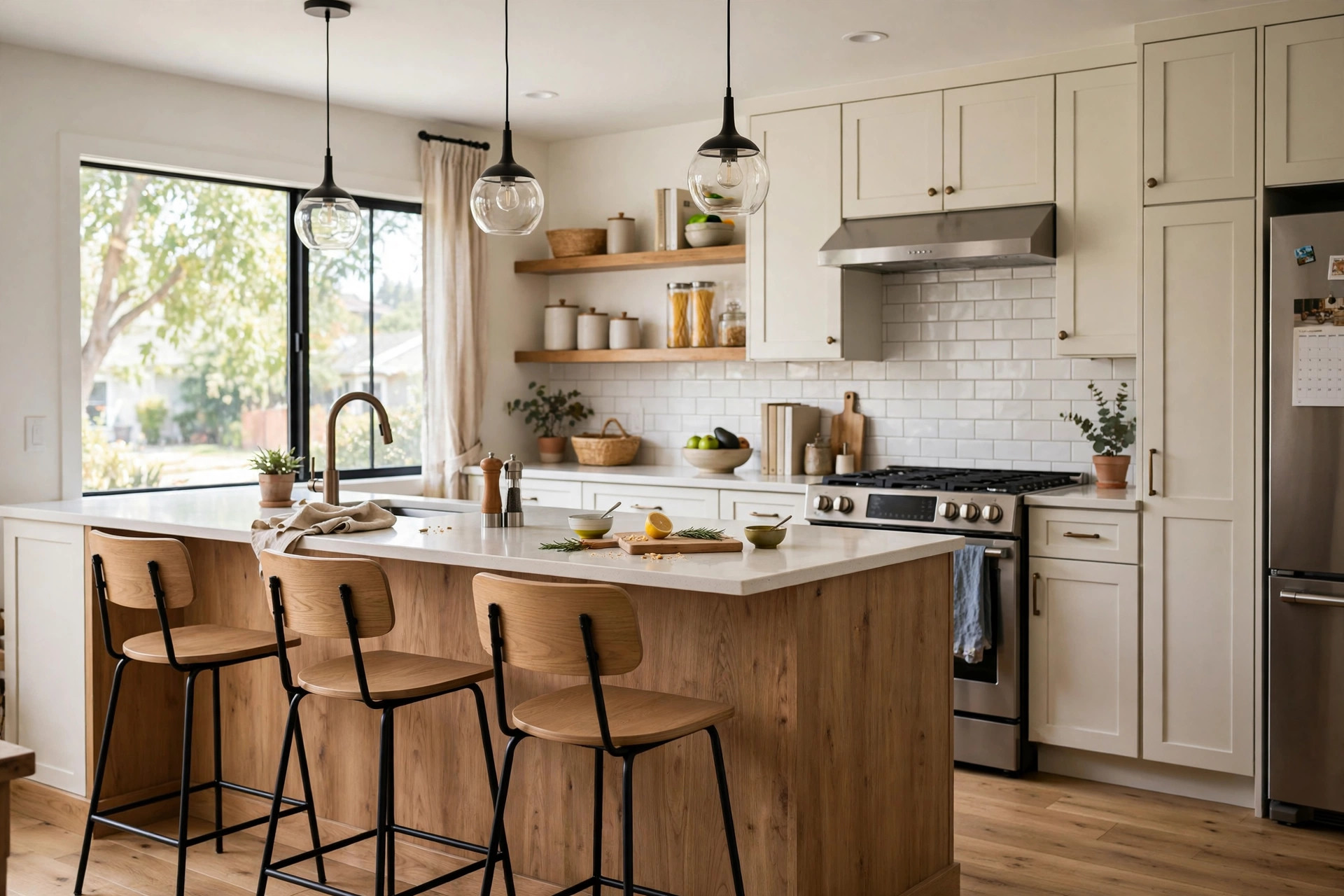

A kitchen island is the busiest spot in many homes. It is where breakfast is served. It is where homework is done. It is where guests stand and talk while dinner cooks. Good seating turns that island into a true room of its own. When shoppers search for kitchen island seating deals near me, they want two things at once: a fair price and a stool that fits their home. This guide covers both. It explains what to look for, what the main types are, what prices look like in the United States, and how to keep the seating safe and clean for years.
Why Island Seating Matters
An island without seating is only a work counter. With seating, it becomes a place to gather. Children eat cereal there before school. Adults read the mail there in the evening. The right seats make these small moments easy and pleasant. The wrong seats cause sore legs, wobble, and scuffed floors.
Height is the heart of the matter. A stool that is too tall forces knees against the counter edge. A stool that is too short leaves the user reaching up for the plate. Comfort follows from correct fit. That is why any kitchen island seating buying guide starts with the distance between seat and counter top.
Style matters too. The island is often the first thing a visitor sees in an open kitchen. Stools that match the room make the whole space feel finished. Mismatched stools can still work if they share a color or a material. Many designers advise buyers to pick seating after the cabinets and counters are set, so the whole picture agrees.
What to Look for When You Choose: Kitchen Island Seating Deals near Me
Buyers face shelves full of stools. The choices blur together. A few plain checks cut through the noise.
Height and Fit
Measure first and shop later. Standard kitchen counters stand about 36 inches tall. A stool for such a counter should have a seat height near 24 to 26 inches. That leaves roughly 10 to 12 inches between the seat and the counter top. This gap suits most adults and teens.
Some islands are built at bar height, about 42 inches. Those need taller stools, with seats near 30 to 32 inches. A few homes have extra-high counters. For those, seats near 34 to 36 inches may fit. A tape measure and a pencil remove all guesswork. Measure the counter height, then subtract 10 to 12 inches. The result is the seat height to look for.
Seat width counts as well. Plan about 24 inches of counter width per stool. A six-foot island can hold three stools with elbow room. Crowding seats too close spoils the comfort of all of them.
Materials and Build
Wood stools feel warm and classic. They suit farmhouse and traditional kitchens. Metal stools feel cool and strong. They suit modern rooms and take hard use well. Upholstered stools feel soft and inviting. They suit homes where people sit for long talks.
Weight tells a story about build quality. A stool that feels solid when lifted will usually last longer than a very light one. Check the joints. Wood joints should be tight. Welds on metal stools should look clean and even. Give the stool a firm push in the store. It should not rock or twist.
Check the feet. Felt pads or rubber caps protect floors. Bare metal or wood legs can scratch tile and wood flooring. Many stools sold today come with pads fitted, but it costs little to add them later.
Swivel and Adjustability
Some stools turn. A swivel seat lets a person spin to face the room or the counter. This suits islands that face the living area. Other stools stay fixed. Fixed stools are often sturdier and cheaper. Adjustable stools change height with a lever. These serve homes where both children and tall adults use the same island. Each choice has a cost. Moving parts add price and add things that can wear out.
Types of Island Seating
Shoppers will meet a few main types again and again. Each has its own strengths.
Backless Stools
Backless stools slide fully under the island. They keep the walkway clear. They cost less than stools with backs. They suit small kitchens and simple styles. The drawback is clear: no back support. For a quick meal they are fine. For a long evening they tire the back.
Stools With Backs
Stools with backs cost more but give real comfort. Low backs look modern and support the lower back. Full backs give the most support and look like small chairs. Homes that use the island as the main eating place often choose these. They take more room, so the island needs enough overhang for feet and legs.
Benches
A long bench on one side of the island seats many people. It suits large families and open rooms. Benches are simple to build and easy to clean. They can look plain, so a cushion or a pad adds comfort. A bench works best where the island has a wide, straight edge.
Counter Chairs
Some makers sell counter-height chairs with arms. These feel like dining chairs. They give the most comfort of all. They also take the most space and cost the most. A wide island with deep overhang handles them well.
Buyers who want a wider view of the market often read a kitchen island seating buying guide before they visit stores. For those ready to shop, listings for kitchen island seating for sale give a quick sense of what styles cost today. And shoppers who want local help can look up where to buy kitchen island seating in the USA to find stores and dealers in their area.
Cost and Price
Prices spread wide. A simple backless wood stool can cost under 50 dollars each. A well-made metal stool with a back often costs 80 to 150 dollars. Upholstered stools with solid frames run 150 to 300 dollars or more. Designer pieces can pass 500 dollars each. A set of four can therefore cost anywhere from 200 dollars to well over 1,000 dollars.
Deals appear in waves. January and February bring clearance prices as stores make room for spring lines. Late summer brings sales as outdoor lines move out. Holiday weekends, especially Memorial Day, Labor Day, and the weeks near Thanksgiving, bring deep cuts on furniture. Floor models cost less and are often in fine shape. Open-box items at large stores can save a third or more.
Online sellers list wide ranges, and shoppers can compare quickly. Big home stores publish regular sale prices that help set a baseline. Sites such as the Home Depot and Lowe’s list stools with customer reviews, which help buyers judge comfort before they buy. Review sites such as Consumer Reports test furniture for build quality and value. Home advice sites such as Bob Vila and The Spruce publish buying advice that explains what each type of stool offers.
Shipping changes the true cost. Four stools can be heavy. Free shipping saves a real sum. Some sellers charge per stool, which adds up fast. Local pickup avoids the fee and lets the buyer see the stool first. Used stools from resale shops cost far less, but the buyer must check every joint.
Care and Upkeep
Good care keeps stools looking new for a decade or more. Wipe wood stools with a damp cloth and dry them at once. Oil or wax them once or twice a year to feed the finish. Tighten screws every few months. Loose screws lead to wobble, and wobble breaks joints.
Metal stools need little care. Wipe them with a damp cloth. Touch up paint chips with matching paint so rust cannot start. Powder-coated finishes last longer than plain paint.
Upholstered seats need more care. Blot spills at once. Use a fabric cleaner made for the material. Leather seats do well with a leather conditioner twice a year. Keep upholstered stools away from strong sun. Sun fades fabric and dries leather.
Check swivel parts once a year. A drop of oil on the bearing keeps the turn smooth. Replace worn felt pads under the feet. This small habit protects expensive floors. Sites such as This Old House offer step-by-step repair advice for loose joints and worn finishes.
Safety
Safety deserves real thought. The island is a high-traffic spot. Children climb. Guests lean. Pets bump into legs.
Choose stools with a wide base. A wide base resists tipping. Stools with four legs tip less than stools with one center post, unless the post base is heavy and broad. Backless stools are easy to knock over when a child climbs on them. Stools with backs and arms are harder to tip.
Mind the weight limit. Every stool has one. Cheap stools may list limits near 200 pounds. Sturdier models hold 300 pounds or more. Check the label before buying. Overloading breaks joints and can cause falls.
Place stools so they do not block the work path. Cooks move fast between stove, sink, and fridge. A stool sticking into that path invites a hip check and a spill. Keep at least 36 inches of clear walkway behind seated users.
Watch for pinch points. Folding stools and adjustable stools have moving parts. Small fingers find them. Teach children to keep hands clear. Anchoring is rarely needed for stools, but tall narrow ones near a busy edge may tip toward the floor if climbed. Put them where climbing is unlikely.
The federal Consumer Product Safety Commission publishes guidance on furniture stability and tip-over risks. Buyers can also check manufacturer pages, such as Whirlpool and GE Appliances, for general kitchen layout advice, and Bosch Home for kitchen design ideas. Energy-conscious buyers who remodel around a new island can look at Energy Star for efficient lighting and appliance guidance.
Frequently Asked Questions
How tall should a kitchen island stool be?
Measure the counter top height first. Subtract 10 to 12 inches. The result is the seat height to buy. For a standard 36-inch counter, choose a seat near 24 to 26 inches. For a 42-inch bar-height island, choose a seat near 30 to 32 inches.
How many stools fit a kitchen island?
Plan 24 inches of counter width per stool. A four-foot island holds two stools. A six-foot island holds three. An eight-foot island holds four. These numbers leave elbow room between users.
Are backless stools a good choice?
Backless stools suit quick meals and small spaces. They slide under the counter and cost less. They give no back support. Homes that eat full meals at the island often prefer stools with backs.
What is the best material for island stools?
There is no single best material. Wood suits warm, classic kitchens. Metal suits modern rooms and heavy use. Upholstery suits comfort and long sits. Choose the material that matches the kitchen style and the way the family lives.
When are the best deals on kitchen island seating?
January clearance sales, holiday weekends, and late-summer sales bring the deepest cuts. Floor models and open-box items cost less all year. Compare prices online first, then check local stores for matching deals.
How do I stop stools from scratching my floor?
Fit felt pads or rubber caps on every leg. Replace them when they wear thin. Lift stools to move them instead of dragging them. Sweep grit from the floor often, since grit grinds finish off wood and tile.
A Short Final Word
Finding kitchen island seating deals near me is not hard. Finding the right seats at a fair price takes a little homework. Measure the counter. Count the space. Pick a material that fits the home. Compare prices across stores and seasons. Check the build with your own hands. Then buy once and enjoy the island for years. A good stool is a quiet thing. It holds you steady while life happens around it. That is worth paying for, and worth waiting for a deal to get.
Related guides on this site include stainless range hoods buying guide usa, gas kitchen ranges buying guide usa, and french door refrigerators buying guide usa.
References
Bob Vila. (n.d.). Home improvement advice. https://www.bobvila.com Bosch. (n.d.). Home appliances. https://www.bosch-home.com Consumer Reports. (n.d.). Product reviews and ratings. https://www.consumerreports.org ENERGY STAR. (n.d.). Energy efficient products. https://www.energystar.gov GE Appliances. (n.d.). Kitchen and home appliances. https://www.geappliances.com Lowe’s. (n.d.). Home improvement products. https://www.lowes.com The Home Depot. (n.d.). Home improvement products. https://www.homedepot.com The Spruce. (n.d.). Home and garden advice. https://www.thespruce.com This Old House. (n.d.). Home renovation guidance. https://www.thisoldhouse.com U.S. Consumer Product Safety Commission. (n.d.). Product safety information. https://www.cpsc.gov Whirlpool. (n.d.). Home appliances. https://www.whirlpool.com
Was this guide helpful?

About Michael Thompson
The My Garden US editorial team writes practical, in-depth home and garden guides for American homeowners — tested advice, no fluff.
You May Also Like

Butcher Block Countertops Reviews: A Plain Buying Guide for USA Homes
July 19, 2026 0 views
Kitchen Backsplash Tiles Deals Near Me: A Plain Guide to Smart Buying
July 1, 2026 0 views
Quartz Countertop Installation Reviews Buying Guide USA
July 15, 2026 0 views