
California cooks take their kitchens seriously. A cook who loves the quick heat of gas on the stove but wants the steady heat of an electric oven has a clear choice. That choice is a dual fuel range. A dual fuel range puts a gas cooktop on top of an electric oven. It is one of the most wanted appliance types in the United States today, and dual fuel ranges California homes USA shoppers look at are among the finest models made.
This guide explains how dual fuel ranges work. It covers the parts, the types, the cost, and the care. It also covers safety and common questions. Read it before you shop so you can pick the right range for your home.
Why Dual Fuel Ranges Matter
A range is the heart of the kitchen. Most homes use one of three types. An all-gas range burns gas on the cooktop and in the oven. An all-electric range uses electric coils or smooth tops with an electric oven. A dual fuel range mixes the two. It gives gas burners on top and an electric element in the oven.
Why mix them? Each fuel has a strength. Gas gives instant heat on the cooktop. A cook can see the flame and change the heat in a second. It also cools fast when the flame goes down. This control is hard to beat for searing meat or simmering sauce.
Electric ovens, on the other hand, hold a steady temperature. The heat spreads evenly across the oven walls. Cakes rise evenly. Bread bakes with a level crust. Pastries come out the same shade on every side. Many bakers say electric heat is the best heat for an oven.
A dual fuel range gives both strengths in one machine. It suits a serious home cook who wants control on top and even heat below. For a full look at gas cooking options, see our gas kitchen ranges buying guide.
How a Dual Fuel Range Works: Dual Fuel Ranges California Homes Usa
A dual fuel range needs two fuel hookups. It needs a gas line for the burners. It also needs a 220 to 240 volt electric outlet for the oven. Most California homes built in recent years have both. Older homes may have only a 110 volt outlet behind the range. Those homes need an electrician to add the 240 volt circuit before the range can work.
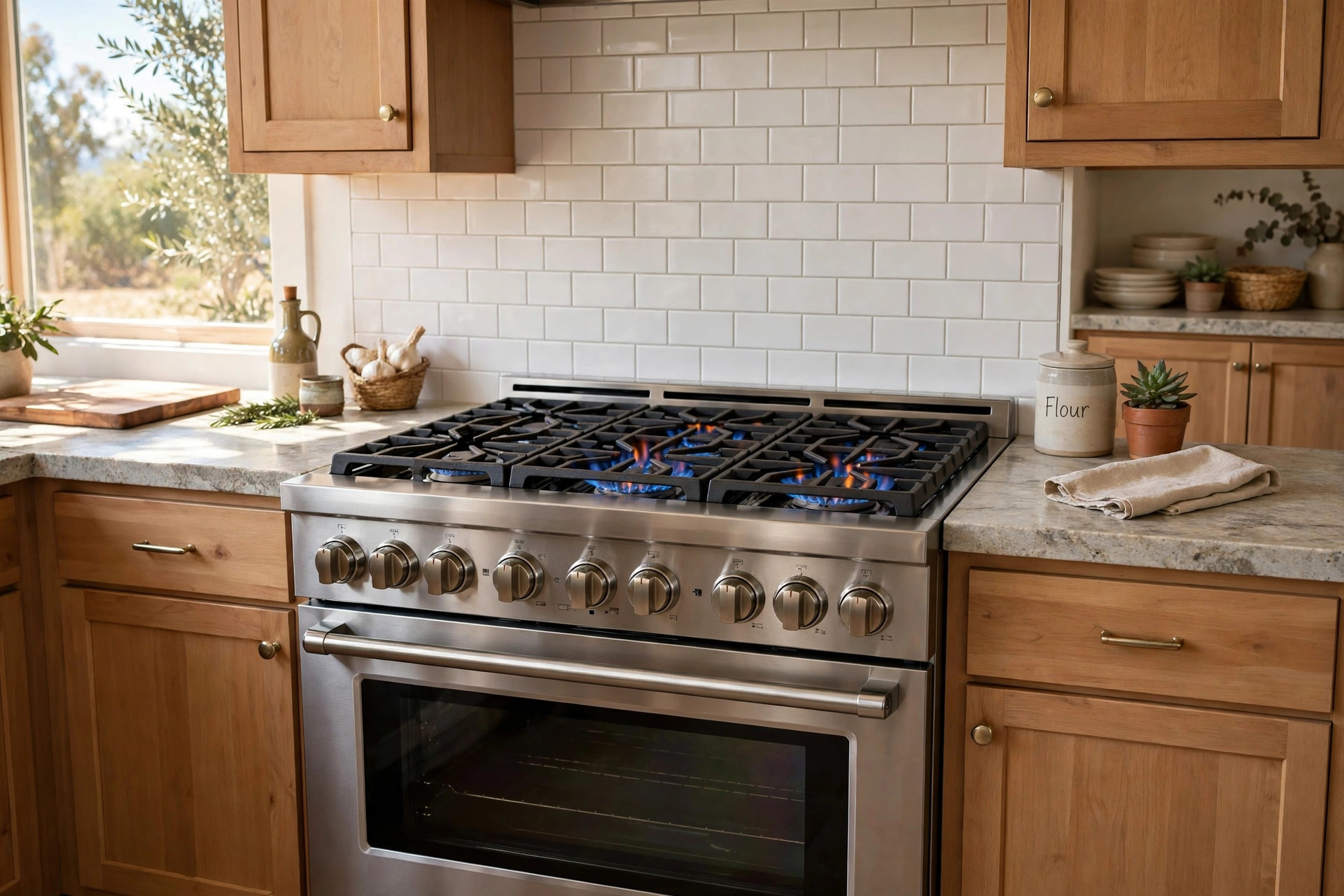
The cooktop works like any gas range. The gas flows to each burner. The cook lights it with a spark igniter. Most models have sealed burners, which sit under a flat pan support. Sealed burners keep spills on the surface so cleanup is easier.
The oven works like an electric oven. Heating elements sit at the top and the bottom. Many models also have a fan at the back. The fan moves the hot air around. This is called convection. Convection cuts hot spots and bakes food faster. Some ovens add a third element around the fan. This is true convection. It gives the most even heat of all.
The controls may be simple knobs or a digital panel. High end models have touch screens. They also have meat probes, slow cook modes, and self cleaning cycles. You can compare features across brands at Whirlpool’s range guide and GE Appliances.
Types and Options
Dual fuel ranges come in several widths. The common sizes are 30 inch, 36 inch, and 48 inch.
30 inch models are the standard fit for most kitchens. They usually have four burners and one oven. They drop into the space of an old 30 inch range. This size costs the least and fits the most homes.
36 inch models give more room to cook. They often have five or six burners. Some have a built in griddle or grill plate in the center. The oven is wider than a 30 inch oven. This size suits families and people who cook for guests.
48 inch models are professional style ranges. They have six to eight burners. They may have two ovens side by side, or one large oven and one small oven. They need a wide kitchen and a strong gas line. They also need a large range hood to clear the smoke and heat. If you are planning the hood too, read our stainless range hoods for sale guide.
Slide in and freestanding. A freestanding range has finished sides and a back panel with controls. A slide in range has no back panel. Its controls sit on the front. It sits between cabinets for a built in look. Both types work the same way.
Burner layouts. Look at how the burners are placed. Some models have one strong power burner for fast boiling. Some have a small simmer burner for sauces. A center oval burner fits a griddle pan. Think about how you cook and pick the layout that fits.
What to Look for When You Choose
Shopping for dual fuel ranges California homes USA buyers trust takes some study. Use this checklist.
Fit. Measure the width, depth, and height of the space. Leave room for the gas line behind the unit. Leave room for the door to swing open. Bring a tape measure to the store.
BTU ratings. BTU is the British thermal unit. It tells how much heat a burner makes. A good power burner makes 18,000 to 23,000 BTU. A simmer burner makes 5,000 BTU or less. High BTU means faster boiling and better searing.
Oven size. A 30 inch oven holds about 4.8 to 5.8 cubic feet. A 36 inch oven holds more. Check the number of racks. Two racks are common. Three racks help with big meals.
Convection. Most dual fuel ovens now have convection. True convection with a third element is better. It keeps the temperature even on every rack. Reviews at Consumer Reports often test this.
Self cleaning. Pyrolytic self cleaning heats the oven very hot and burns food to ash. You wipe the ash out with a damp cloth. Steam clean uses water and lower heat. It is gentler but weaker. Pick pyrolytic for heavy use.
Ignition and safety valves. Electronic ignition lights the burners with a spark. Flame failure valves cut the gas if the flame goes out. This is a must for safety.
Finish. Stainless steel is the most popular finish. It shows fingerprints, so many brands now sell fingerprint resistant steel. Black stainless and white are also common. Pick a finish that matches your other appliances.
Brand support. Buy from a brand with service in your area. Bosch Home and GE Appliances both list service networks on their sites. Check that parts are easy to get.
California buyers should also check local rules. Some cities have rules about new gas hookups. Read more at This Old House for project advice, and check the Energy Star site for efficiency notes.
Cost and Price
Dual fuel ranges cost more than all gas or all electric ranges. The price depends on size, brand, and features.
30 inch models start near 2,500 dollars and run to about 5,000 dollars. Basic models have four burners and one convection oven. Premium brands cost more for the same size.
36 inch models range from about 5,000 to 10,000 dollars. They add burners, griddles, and larger ovens. Professional style brands sit at the top of this range.
48 inch models range from about 9,000 to 20,000 dollars or more. These are built like restaurant equipment. They need heavy duty ventilation and a strong gas supply.
Installation cost. You pay for the gas line and the 240 volt circuit if they are not there. A new gas line can cost 300 to 800 dollars. A new 240 volt circuit can cost 200 to 600 dollars. A delivery team may charge 100 to 300 dollars to haul away the old range. Prices vary by city. Both Home Depot and Lowe’s list delivery and installation prices.
Running cost. Gas is often cheap in California for cooking. The electric oven uses more power than a gas oven. The Energy Star program notes that electric ovens with convection waste less heat than old models.
Set a budget before you shop. Add 500 to 1,000 dollars for hookups and delivery if your kitchen is not ready.
Care and Upkeep
A dual fuel range lasts 15 to 20 years with good care. Follow these steps.
Clean spills fast. Lift the grates and burner caps. Wipe the cooktop with a damp cloth and mild soap. Do not let grease build up around the burners.
Wash the grates. Cast iron grates go in hot soapy water. Scrub with a soft brush. Dry them fully before you put them back. Wet grates can rust.
Clean the oven. Run the self clean cycle every few months if you cook often. Remove the racks first, since the high heat can dull them. After the cycle, wipe the ash with a damp cloth.
Check the igniter. If a burner clicks but does not light, the igniter may be dirty. Wipe it with a dry cloth. If it still fails, call for service.
Keep vents clear. The oven vents need air flow. Do not block them with towels or pans. Good air flow keeps the temperature true.
Check the door seal. The rubber gasket around the oven door keeps heat in. If it is torn or flat, replace it. A bad seal wastes energy and bakes unevenly.
Bob Vila and The Spruce both publish step by step cleaning guides that suit these ranges.
Safety
Gas and high voltage need respect. Keep these rules in mind.
Install with care. Have a licensed plumber connect the gas line. Have a licensed electrician wire the 240 volt outlet. Do not move or tip the range with the gas line attached.
Use the anti tip bracket. Every range ships with an anti tip bracket. It bolts to the wall or floor. It stops the range from tipping if a child climbs on the open door. Install it during setup.
Ventilate. Always run the range hood when you cook on gas. Gas burners make carbon monoxide and nitrogen dioxide. A good hood pulls these out of the kitchen. Open a window if you have no hood.
Watch open flames. Keep towels, paper, and plastic away from the burners. Turn pot handles inward so they do not stick out over the edge.
Teach children. Keep children away from the hot cooktop. Use the back burners for pots when children are near. Many models have a control lock for the oven panel.
Carbon monoxide detector. Put a detector near the kitchen. Test it every month. Change the battery each year.
FAQ
Are dual fuel ranges worth the extra cost? They are worth it if you cook a lot and care about results. The gas cooktop gives fast control. The electric oven bakes more evenly than gas. If you rarely cook, a standard range may be enough.
Do I need both gas and 240 volt power? Yes. A dual fuel range needs a gas line and a 240 volt electric circuit. Check behind your old range before you buy. If one is missing, add the cost of new wiring or plumbing to your budget.
Can a dual fuel range fit in a 30 inch space? Yes. Many brands make 30 inch dual fuel models. They drop into the same space as a standard range. Measure first to be sure.
Is a dual fuel range hard to clean? No. Sealed burners wipe clean on top. The oven usually has self cleaning. Cast iron grates need hand washing, but that takes only a few minutes.
Which is better: slide in or freestanding? Both cook the same. A slide in range looks built in and has front controls. A freestanding range has a back panel and costs less. Pick the look you want.
How long does a dual fuel range last? With good care, 15 to 20 years. Burners and igniters may need small repairs over time. Buy from a brand with local service so parts are easy to find.
A Short Final Word
A dual fuel range is the best of both worlds for the home cook. Gas on top gives speed and control. Electric below gives steady, even heat. For California homes, where cooking culture runs deep and kitchens are a point of pride, it is a strong pick.
Measure your space. Check your gas and power hookups. Set a budget that covers installation. Then compare models with the checklist in this guide. If you also plan to upgrade your wall ovens, see our double wall ovens buying guide for more help.
References
Bob Vila. (n.d.). Home improvement advice. https://www.bobvila.com Bosch. (n.d.). Home appliances. https://www.bosch-home.com Consumer Reports. (n.d.). Product reviews and ratings. https://www.consumerreports.org ENERGY STAR. (n.d.). Energy efficient products. https://www.energystar.gov GE Appliances. (n.d.). Kitchen and home appliances. https://www.geappliances.com Lowe’s. (n.d.). Home improvement products. https://www.lowes.com The Home Depot. (n.d.). Home improvement products. https://www.homedepot.com The Spruce. (n.d.). Home and garden advice. https://www.thespruce.com This Old House. (n.d.). Home renovation guidance. https://www.thisoldhouse.com Whirlpool. (n.d.). Home appliances. https://www.whirlpool.com
Was this guide helpful?

About James Carter
The My Garden US editorial team writes practical, in-depth home and garden guides for American homeowners — tested advice, no fluff.
You May Also Like
Kitchen Backsplash Tiles Texas Homes USA: A Complete Guide
July 20, 2026 0 views
Vinyl Plank Flooring Reviews and Buying Guide for USA Homes
June 23, 2026 0 views
How to Find French Door Refrigerators Deals Near Me
March 10, 2026 0 views