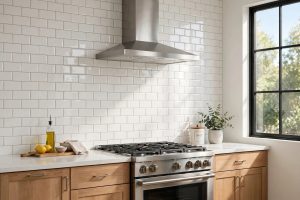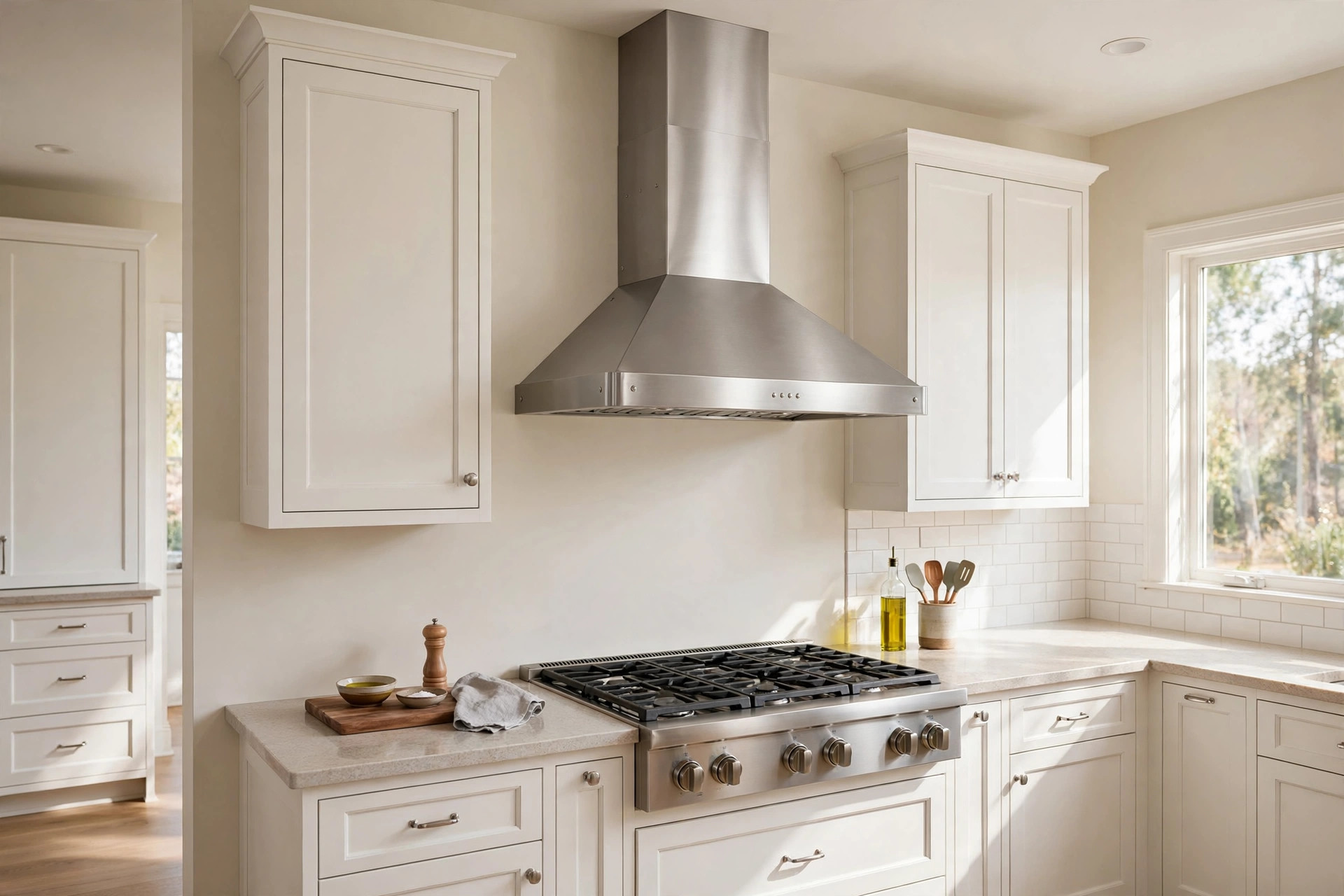

There are more stainless range hoods for sale USA shoppers than at any time in the past. The kitchen has become the heart of the American home. People cook more at home. They fry, sear, and simmer. All of that cooking sends smoke, steam, and grease into the air. A good range hood pulls those things away from the kitchen. A stainless steel model does the job and looks fine for years.
This guide walks through the whole process. It explains why a hood matters. It shows what to look for. It compares the main types. It gives price ranges. It covers care, upkeep, and safety. By the end, you will know how to shop with confidence. If you want a deeper walk-through of features, our stainless range hood buying guide covers the details side by side.
Why a Range Hood Matters
Every meal you cook changes the air in your home. A gas burner burns fuel. An electric element gets hot. Oil in a pan breaks down. The result is heat, smoke, steam, grease, and smells. Without a hood, those things settle on walls, cabinets, and ceilings. Over time, grease builds up into a sticky film. Smells linger for days. In winter, when windows stay shut, the problem gets worse.
A range hood sits above the stove and pulls the air up and out. It catches grease in a filter. It moves smoke out of the house. It cuts down on smells. Good ventilation also helps with indoor air quality. Gas ranges in particular produce combustion byproducts. A hood that vents outside is the simplest way to keep those out of the rooms where your family eats and lives.
The choice of stainless steel is not an accident. Steel stands up to heat. It does not stain the way painted finishes can. It wipes clean. It matches other steel appliances. In resale terms, buyers notice a steel hood. It signals a kitchen that was planned with care.
How to Choose the Right Hood: Stainless Range Hoods for Sale Usa
Start with three basic facts: the width of your stove, the type of venting your home allows, and the amount of cooking you do. Get these right and most other choices fall into place.
Size and Coverage
A hood should be at least as wide as the stove below it. A 30-inch stove needs a 30-inch hood at minimum. A 36-inch stove needs a 36-inch hood. For island cooktops, go one size wider if you can. The extra width catches smoke that drifts past the edges.
Mounting height matters too. For most homes, the hood sits 24 to 30 inches above an electric cooktop and 30 to 36 inches above a gas cooktop. Too low and you bump your head and trap heat. Too high and the hood misses the smoke. Measure before you shop. Bring the number to the store.
Depth counts as well. A hood should cover the front burners. Shallow hoods look neat but miss the front of the pan. Aim for a depth of 22 to 24 inches on a standard range.
Venting Type
Ducted hoods move air outside through ductwork. This is the best option. It removes heat, smoke, and grease completely. If your kitchen can be vented to the outside wall or roof, choose ducted.
Ductless hoods, also called recirculating hoods, pull air through a charcoal filter and blow it back into the room. They are easier to install. They cost less to put in. But they do not remove heat or steam. They are weaker on smells. Use them only where ducting is not possible, such as some apartments and interior walls.
Some hoods can be set up either way. These convertible models give you room to change your mind. They are a fair choice for buyers who are not sure about their ductwork.
Airflow and Noise
Airflow is measured in CFM, or cubic feet per minute. A higher number means more air moved. For light cooking, 200 to 400 CFM is enough. For gas ranges and heavy frying, aim for 600 CFM or more. A rough rule: you need about 100 CFM for every 10,000 BTU of your stove. Add 100 CFM if the duct run is long.
Noise is measured in sones. A quiet hood runs at about 1 to 3 sones on low speed. Four to seven sones is loud. Look for a hood with multiple speeds. You can run it low for simmering and high for searing. Variable speed gives you control without living with roar all the time.
Check both numbers before you buy. Strong airflow with honest noise ratings is the mark of a well built unit. Independent reviews from Consumer Reports often test real-world noise and suction side by side.
Types of Stainless Range Hoods
Shoppers looking at stainless range hoods for sale USA wide will find four main styles. Each fits a different kitchen layout.
Wall-Mount Chimney Hoods
These are the most common. They mount against the wall above the range. A chimney cover hides the duct up to the ceiling. They come in widths from 30 to 48 inches. Chimney hoods suit kitchens where the range sits against a wall. They are the easiest to vent because the duct runs straight up.
Under-Cabinet Hoods
These tuck under the kitchen cabinets above the stove. They take up little room. They are common in smaller kitchens and apartments. Many are ductless or convertible. They do not pull as much air as a chimney hood. For light cooking they are fine. For heavy frying, they can fall short.
Island Hoods
Island hoods hang from the ceiling over a cooktop set into a kitchen island. They are finished on all sides. They need a ceiling duct run, which can raise the install cost. Choose one wider than the cooktop. Island cooking drifts more than wall cooking because air moves from every side.
Downdraft and Insert Hoods
Downdraft hoods rise from behind the cooktop and pull air down. They save the view. But physics works against them. Hot air rises. Downdraft units fight that and pull less effectively. Insert hoods hide inside a custom wood surround or cabinet. They look built in. They need a skilled installer.
If you are not sure which style fits your kitchen, a look at how these hoods suit American homes can help you picture each type in a real room.
Cost and Price
Prices run a wide range. Basic under-cabinet stainless hoods sell for 150 to 400 dollars. Mid-range wall-mount chimney hoods run 400 to 1,200 dollars. Premium chimney and island hoods from brands like Whirlpool or GE Appliances can run 1,200 to 2,500 dollars. Pro-style hoods over 36 inches wide can pass 3,000 dollars.
Installation adds to the bill. A simple swap of a like-for-like hood may cost 200 to 400 dollars. Adding new ductwork can run 500 to 1,500 dollars, more if the run is long or crosses an attic. Island hoods with ceiling ductwork cost the most to install.
Where to buy also affects the price. Big-box stores such as The Home Depot and Lowe’s carry a wide range and often run sales. Online sellers widen the choice further. If you want help deciding where to shop, our notes on where to buy stainless range hoods in the USA list the main options and what each does well.
A few price tips help. Measure first so you do not pay for the wrong size twice. Decide on ducted or ductless before you shop, since the install cost differs a lot. Watch for holiday sales; kitchen appliances are often marked down in spring and fall. And remember that the cheapest hood is not the cheapest deal if it cannot move enough air.
Care and Upkeep
A stainless hood needs little care, but regular cleaning keeps it working and looking new. Grease filters catch the oil from cooking. Mesh filters go in the dishwasher once a month. Baffle filters, common on pro-style hoods, also wash by hand or in the dishwasher. A dirty filter chokes airflow. The motor works harder. Noise goes up. Suction goes down.
Wipe the outside steel with a soft cloth and mild soap. Rub with the grain of the steel, not against it. Never use steel wool or harsh cleaners. They scratch the finish. For fingerprints, a drop of mineral oil or a stainless cleaner on a soft cloth works well. Dry the surface after wiping to avoid water spots.
Ductless hoods use charcoal filters. These cannot be washed. Replace them every three to six months, depending on how much you cook. Ducted hoods have no charcoal filter. Their ducts should be checked once a year for grease buildup and loose joints.
Check the light bulbs too. Most hoods use halogen or LED lamps. LEDs last longer and use less power. ENERGY STAR keeps current lists of efficient kitchen appliances if you want to compare.
Small habits add years of life. Turn the hood on before you start cooking so the airflow is already moving. Let it run a few minutes after you finish to clear the last of the smoke. Clean spills on the steel the same day.
Safety
A range hood is part of your kitchen’s safety system. A few rules keep it that way.
Mount the hood at the right height. Too close to the burners risks heat damage to the motor and filters. Follow the maker’s minimum clearance, and never go below it on a gas range.
Clean the filters on time. Grease buildup in a filter can catch fire if a flare-up sends flames too high. This is rare, but it is the reason filter cleaning is not just about looks.
Make sure the duct is the right size. A 6-inch duct on a 600 CFM hood chokes the flow and strains the motor. Most high-CFM hoods need 7 or 8 inch ductwork. The install guide states the size. Follow it.
If you vent through the roof, use a proper roof cap with a damper. It keeps rain out and stops cold air from flowing back in winter. Seal duct joints with foil tape, not duct tape. Foil tape stands up to heat.
For gas ranges, think about makeup air. A strong hood can pull so much air out that the house goes slightly negative in pressure. In a tight modern home, this can backdraft a furnace or water heater. Some codes now require makeup air for hoods over 400 CFM. Check your local code before buying a very powerful unit. Guidance from This Old House and Bob Vila covers the practical side of venting and makeup air for homeowners.
FAQ
How wide should my range hood be? At least as wide as your stove. A 30-inch range needs a 30-inch hood. A 36-inch range needs a 36-inch hood. For an island cooktop, one size wider is better.
Is a ducted hood better than a ductless one? Yes, in almost every case. Ducted hoods move heat, smoke, and grease outside. Ductless hoods filter and return the air to the room. Choose ducted if your home allows it.
How many CFM do I need? For light cooking, 200 to 400 CFM works. For gas ranges or heavy frying, aim for 600 CFM or more. Add about 100 CFM for every 10,000 BTU of stove power, plus extra for long duct runs.
Are stainless range hoods hard to keep clean? No. Wipe with mild soap and a soft cloth, with the grain. Wash grease filters monthly. Avoid steel wool and harsh cleaners.
Can I install a range hood myself? A simple like-for-like swap is within reach of a skilled homeowner. New ductwork, roof cuts, and electrical changes are better left to a pro. When in doubt, hire one.
How long does a stainless range hood last? Most last 15 to 20 years with basic care. Motors wear out slowly. Filters are replaceable. Buying a known brand such as Bosch or one of the other major makers often means parts stay available longer.
A Final Word
Shopping for stainless range hoods for sale USA wide comes down to a few plain decisions. Pick the right width. Choose ducted venting if you can. Size the airflow to your cooking. Buy enough quality to last 15 years. Keep the filters clean. None of this is complicated. It just takes a little care up front.
A good hood changes how your kitchen feels. Less grease on the cabinets. Less smoke in the air. Fewer lingering smells. The steel finish stays bright for years with simple wiping. Whether you buy from a big-box store, a local dealer, or an online seller, measure first and read the specs twice. For more room-by-room ideas, The Spruce keeps solid guides on kitchen layout and appliance placement. Your kitchen, and your nose, will thank you.
References
Bob Vila. (n.d.). Home improvement advice. https://www.bobvila.com Bosch. (n.d.). Home appliances. https://www.bosch-home.com Consumer Reports. (n.d.). Product reviews and ratings. https://www.consumerreports.org ENERGY STAR. (n.d.). Energy efficient products. https://www.energystar.gov GE Appliances. (n.d.). Kitchen and home appliances. https://www.geappliances.com Lowe’s. (n.d.). Home improvement products. https://www.lowes.com The Home Depot. (n.d.). Home improvement products. https://www.homedepot.com The Spruce. (n.d.). Home and garden advice. https://www.thespruce.com This Old House. (n.d.). Home renovation guidance. https://www.thisoldhouse.com Whirlpool. (n.d.). Home appliances. https://www.whirlpool.com
Was this guide helpful?

About Michael Thompson
The My Garden US editorial team writes practical, in-depth home and garden guides for American homeowners — tested advice, no fluff.
You May Also Like

Quartz Countertop Installation for Sale USA: A Plain Guide for Homeowners
May 9, 2026 0 views
Dishwasher Third Rack Deals Near Me: How to Find and Choose One
March 22, 2026 0 views
Kitchen Island Seating for California Homes
February 1, 2026 0 views