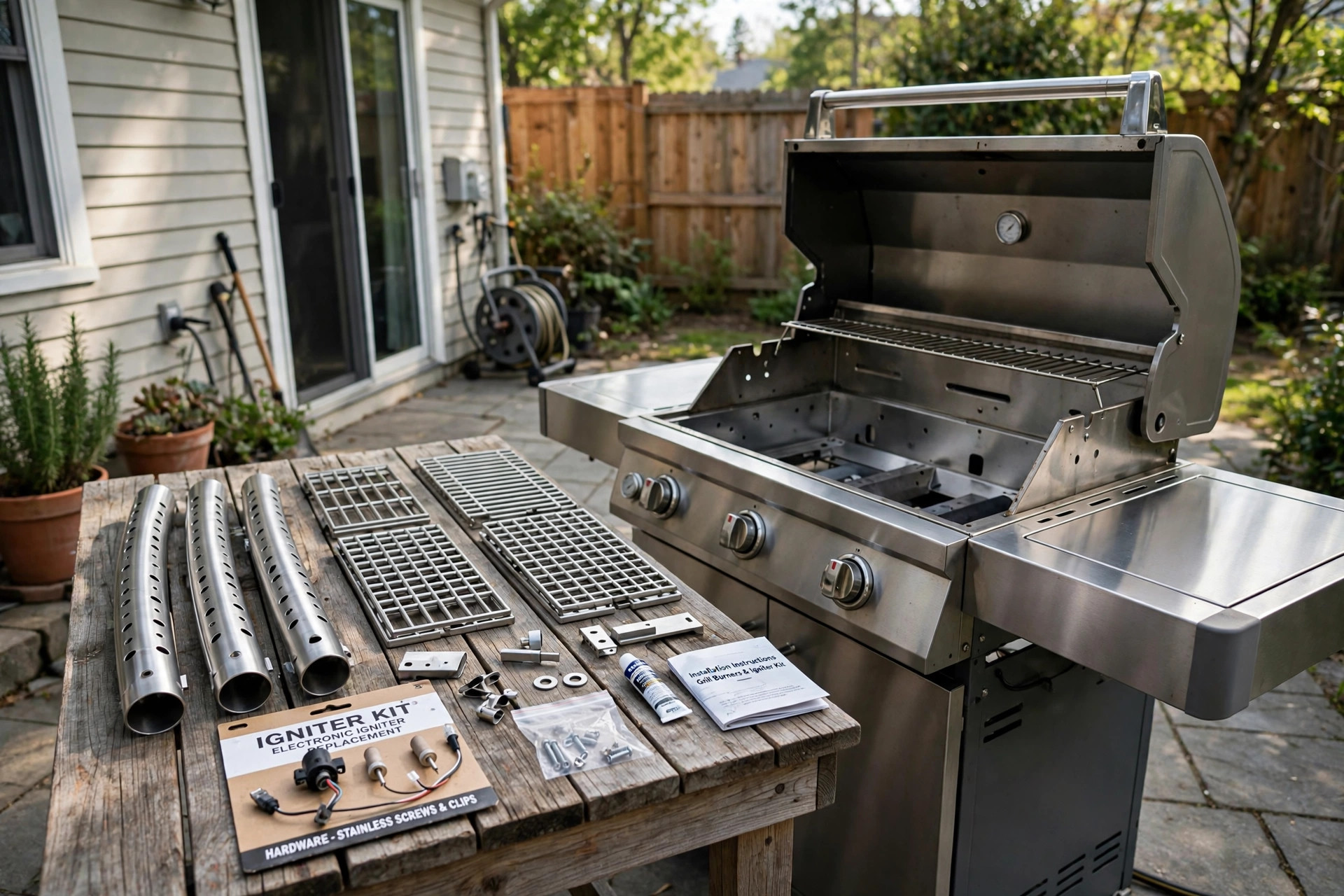
A gas grill can last ten years or more. The parts inside it wear out much sooner. Burners rust. Cooking grates lose their coating. Igniters stop clicking. When one part fails, many people buy a whole new grill. That is a waste of money. This gas grill parts replacement guide explains how to find the failing part, buy the right replacement, and install it with simple tools.
Why Replacing Parts Is Worth the Trouble
A new mid-size gas grill can cost four hundred dollars or more. A new burner costs twenty to forty dollars. A set of cooking grates costs thirty to sixty dollars. An igniter kit costs fifteen dollars or less. The math is simple. One hour of work and fifty dollars in parts can give a grill five more years of life.
There is another reason to repair instead of replace. Most grill owners know their grill well. They know how it heats. They know its hot spots. A new grill means a new learning period. Food may burn or cook unevenly for weeks until the owner learns the new machine. Keeping the old grill means keeping the old results.
Repair is also better for the waste stream. Grills are heavy steel. They do not break down in landfills. Consumer Reports notes that extending the life of home appliances reduces both cost and waste. A grill is no different.
Signs That a Part Needs Replacement: Gas Grill Parts Replacement Guide
A grill tells its owner when something is wrong. The signs are easy to read.
Uneven heat
If one side of the grill is hot and the other is cool, a burner may be blocked or corroded. Grease and food can clog the small gas ports along a burner tube. A blocked burner can sometimes be cleaned. A rusted burner with holes eaten through the metal cannot. It must be replaced. For cleaning advice before you decide, see our article on how to clean gas grill burners properly.
Yellow or weak flames
Healthy gas flames are blue. Yellow flames mean the burner is not mixing gas and air in the right ratio. Spider webs in the burner tube are a common cause in spring. Brush them out. If the flames stay yellow after cleaning, the burner may be damaged.
Food sticks to the grates
Porcelain-coated grates flake with age. Cast iron grates rust. When the coating is gone, food sticks and the metal underneath starts to rust faster. Weber recommends inspecting grates each season. If you can see bare metal through the coating, replace the grates. Stainless steel grates last longer than coated steel, though they cost more. Our look at the best grill replacement grates stainless compares the top options.
The igniter does not click
Push-button igniters wear out. The clicking sound gets weak or stops. The grill may still light with a long lighter. That is safe as a short-term fix. But a working igniter is worth the fifteen-dollar kit.
Gas smells or the tank empties too fast
If you smell gas when the grill is off, stop at once. Close the tank valve. Do not light the grill. Check the hose and the regulator for cracks or dry rot. Hoses harden with sun and age. A cracked hose is a fire risk. Replace it before you grill again.
How to Identify the Right Part
The hardest step in any gas grill parts replacement guide is buying the correct part. Grills are not standard. A burner that fits one brand will not fit another. Follow these steps.
Find the model number
The model number is usually on the inside of the cabinet door, on the back panel, or under the control panel. Write it down. Do not guess it. Take a photo of the label with your phone.
Measure the old part
Take the old part out of the grill before you order. Measure it. Burners are sold by length and by shape. Straight burners, H burners, and oval burners are common. Grates are sold by width and depth. Measure to the quarter inch. Compare the old part side by side with the photos on the seller page.
Check the brand
Original equipment parts fit best. Most big brands sell their own parts through their websites. Char-Broil, Napoleon, and Big Green Egg each keep parts catalogs for current and past models. Generic parts are cheaper. Some fit well. Some do not. For burners and valves, original parts are worth the extra cost.
Match the fuel type
Liquid propane parts and natural gas parts are not the same. The burner tubes and the orifices differ. A part made for propane will burn wrong on natural gas. If your home runs on a gas line, see our guide to the best natural gas grill for home for how the two fuel types differ.
Common Replacement Parts and How to Change Them
Burners
Burners are the heart of the grill. They last three to five years in a covered grill, less in an uncovered one. To replace a burner, close the gas, remove the cooking grates and the heat tents above the burner, and pull the burner pin or screw at the back. Slide the burner out from the venturi tube at the front. Push the new burner into the same slot. Reconnect the gas line and check for leaks with soapy water. Bubbles mean gas is escaping.
Cooking grates
Grates are the easiest part to change. Lift the old grates out. Drop the new ones in. That is all. Choose the right material for your cooking style. Cast iron holds heat well and gives strong sear marks. It needs oil after each use to stop rust. Stainless steel heats less evenly but cleans fast and never needs seasoning. Porcelain-coated cast iron sits in the middle. It sears well and cleans well, but the coating chips if you bang it.
Igniters
Igniter kits include the button, the wire, and the electrode. The electrode sits near the burner with a small gap. When you push the button, the spark jumps the gap and lights the gas. Most kits are universal. Follow the kit instructions. Keep the electrode about one-eighth inch from the burner. Too far and the spark will not reach.
Heat tents and flavorizer bars
These V-shaped metal covers sit over the burners. They spread the heat and turn drippings into smoke. They rust through in two to four years. New ones cost ten to twenty-five dollars. They drop in with no tools. When you replace them, the grill often cooks like new again.
Regulator and hose
The regulator controls gas flow from the tank. It has a built-in safety shutoff. If the regulator trips, the grill gets very little gas and the flames are tiny. Many owners think the grill is broken. Turn off the gas, disconnect the tank, wait one minute, and reconnect. This resets the regulator. If the hose is cracked or stiff, replace the whole hose and regulator as one unit. Home Depot and most grill brands sell these kits for twenty to forty dollars.
Thermometer and knobs
Grill lid thermometers are cheap and often wrong by fifty degrees. Replace them with a new probe or, better, use a handheld meat thermometer at the food level. Control knobs crack with sun exposure. They pull off and push on. Keep one spare knob in the drawer.
Cost and Price Guide
Costs vary by brand and size. These ranges cover most home gas grills in the United States.
| Part | Typical cost | |—|—| | Tube burner | $20–$45 | | Cooking grates, set | $30–$70 | | Igniter kit | $12–$25 | | Heat tents, set | $15–$35 | | Hose and regulator | $20–$40 | | Flavorizer bars | $25–$50 | | Lid thermometer | $10–$20 | | Control knob | $5–$12 |
A full refresh of a four-burner grill costs about one hundred to two hundred dollars. That is less than half the price of a new grill of the same size. The Spruce Eats keeps buying guides that compare grills by price class, which helps when you weigh repair against replacement.
Buy parts in the off season when you can. Late fall and winter bring lower prices and more stock. Spring brings high demand and back orders on popular burners.
Care and Upkeep After the Repair
New parts last longer with simple care. Brush the grates while they are still hot after each cook. The heat burns food off and the brush finishes the job. Empty the grease tray every few cooks. Grease fires start in full trays.
Burn off the grill at high heat for ten minutes after greasy cooks. This turns drippings to ash. Then brush the burners gently with a soft brush. Never poke the burner ports with wire. The metal is thin and the ports grow larger if you force them.
Cover the grill. A cover is the cheapest part of all. Sun and rain are what kill grill parts. A thirty-dollar cover can add years to a two-hundred-dollar parts repair. AmazingRibs publishes long-term equipment tests showing how covered grills keep their parts far longer than uncovered ones.
Check the gas hose each spring. Flex it gently. Look for cracks. Sniff near the connections. Soapy water finds leaks fast. If the tank valve feels sticky, replace the valve or the tank rather than forcing it.
Safety Rules for Gas Grill Repair
Gas is safe when it is handled with respect. It is dangerous when it is not. Keep these rules.
First, always close the tank valve before you touch a part. Then disconnect the tank from the regulator. Work with no gas connected to the grill.
Second, never test for leaks with a match or a flame. Use soapy water in a spray bottle. Spray the connections. Open the gas. Bubbles show a leak. Close the gas and fix the connection.
Third, read the manual. Every grill brand prints a parts diagram. The diagram shows how each part fits. Traeger and Broil King both post manuals and diagrams online for older models, which helps when the paper manual is long gone.
Fourth, know when to stop. A rusted-out firebox is a structural failure. If the bottom of the grill is soft with rust, the grill is unsafe no matter how many parts you change. A warped lid that does not close is another end-of-life sign. Parts fix what sits inside the box. They do not fix the box.
Frequently Asked Questions
How do I know the model of my old gas grill?
Look for the rating plate on the back, inside the cabinet door, or under the drip tray. It lists the brand, model, and serial number. If the plate is gone, measure the burner and the grates. Part sellers list parts by size and shape, and a photo of the old part next to a ruler helps customer service find the match.
Can I replace only one burner on a multi-burner grill?
Yes. Burners fail one at a time. Replace the failed one now. If the others are the same age, they may fail within the year. Many owners replace all the burners at once to save a second round of shipping and labor.
Are universal gas grill parts safe to use?
Universal burners, igniters, and grates are safe when they fit the grill well and are listed for gas grill use. The risk is fit. A loose burner can shift and leak gas at the venturi. If a universal part rattles in the slot, return it and buy the original part.
How long should a gas grill burner last?
Most steel burners last three to five years. Stainless burners can last seven years or more in a covered grill. Salt air near the coast cuts that life in half. Cleaning the ports and covering the grill are the two best ways to reach the top of the range.
Why does my grill flame up even after I replaced the grates?
Flare-ups come from grease, not from the grates. New grates do not stop them. Trim fat from meat. Close the lid to starve small flames of oxygen. Clean the heat tents and the drip tray. Keep a spray bottle of water nearby for flare-ups, and keep the lid closed most of the cook.
Should I convert my propane grill to natural gas?
Conversion needs new orifices and a new regulator made for the lower pressure of home gas. Some brands sell conversion kits. Some brands do not allow it at all. Never drill out the orifices by hand. The wrong hole size makes the grill run too hot or too lean, and the warranty ends at once.
A Final Word
A gas grill is a simple machine. Gas flows, sparks fly, metal gets hot. When one piece fails, the rest of the grill is often fine. This gas grill parts replacement guide gives you the plan: find the model number, measure the old part, buy the right replacement, and test with soapy water. Spend fifty to one hundred dollars and an afternoon. Your grill will cook like it did in its first summer.
References
AmazingRibs.com. (n.d.). Barbecue and grilling science. https://www.amazingribs.com Big Green Egg. (n.d.). Kamado grills and outdoor cooking. https://www.biggreenegg.com Broil King. (n.d.). Gas and charcoal grills. https://www.broilkingbbq.com Char-Broil. (n.d.). Gas and charcoal grills. https://www.charbroil.com Consumer Reports. (n.d.). Product reviews and ratings. https://www.consumerreports.org Napoleon. (n.d.). Fireplaces, grills, and heating products. https://www.napoleon.com The Home Depot. (n.d.). Home improvement products. https://www.homedepot.com The Spruce Eats. (n.d.). Recipes and cooking guides. https://www.thespruceeats.com Traeger. (n.d.). Wood pellet grills. https://www.traeger.com Weber. (n.d.). Grills and outdoor cooking. https://www.weber.com
Was this guide helpful?

About Robert Taylor
The My Garden US editorial team writes practical, in-depth home and garden guides for American homeowners — tested advice, no fluff.