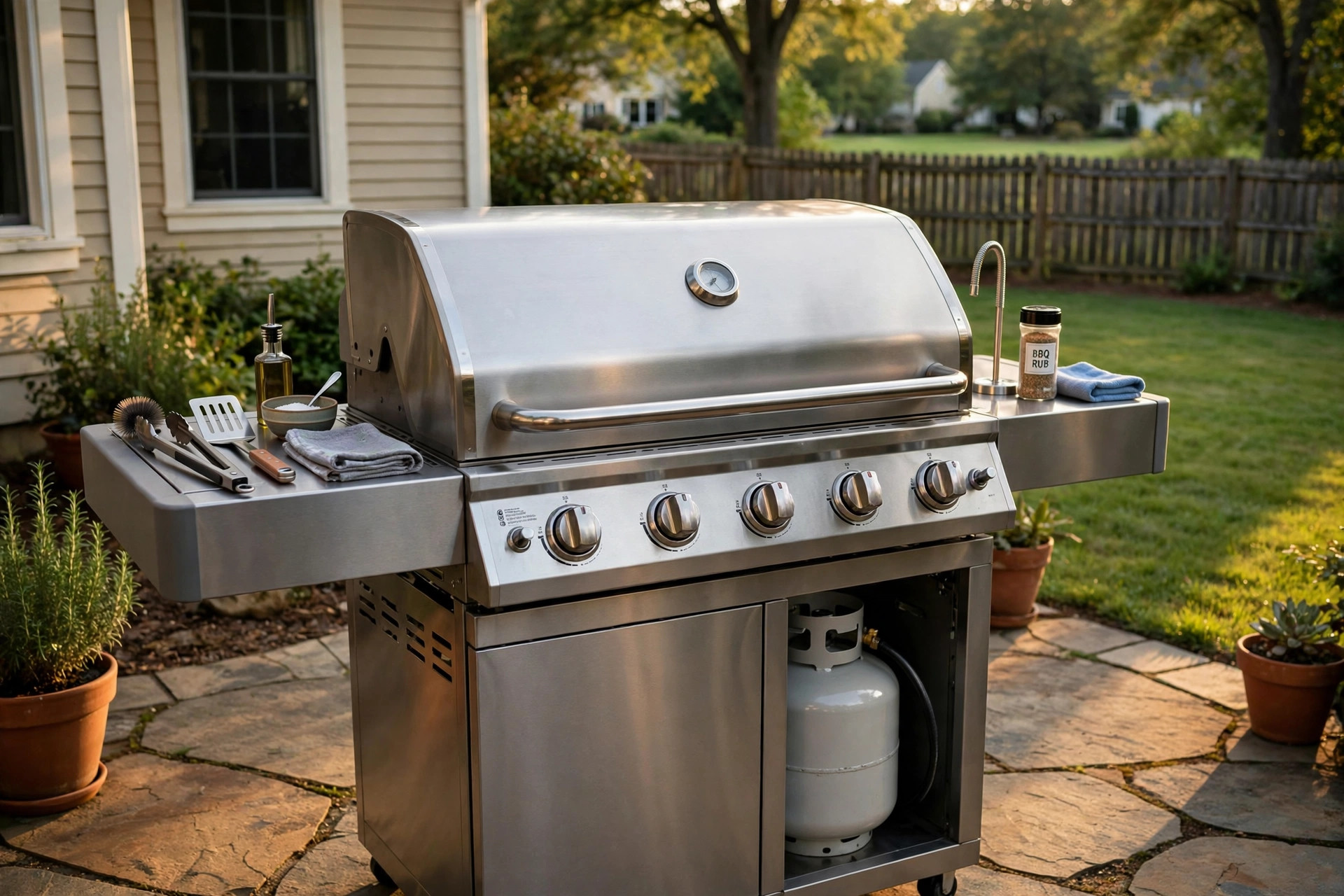

Choosing the best natural gas grill for home use is one of the smarter upgrades a family cook can make. A natural gas grill ties into the gas line of your house. You never run out of fuel in the middle of a cookout. You never haul a heavy propane tank to the filling station. You turn a knob, push a button, and the grill lights. For anyone who grills often, that steady supply of fuel is hard to beat. This guide walks through what matters: size, heat, build quality, cost, installation, care, and safety. Read it through, and you will know exactly what to look for in the store.
Why a Natural Gas Grill Makes Sense at Home
Natural gas costs less than propane in most parts of the country. The savings are small at first. They add up over years of weekend cooking. A family that grills twice a week can save a real sum over the life of the grill. Beyond money, there is the simple comfort of a fuel line that never runs dry. No more guests waiting while you race to the store for a fresh tank.
Natural gas also burns clean. It leaves less soot inside the grill. The burners stay cleaner longer. That means easier maintenance and more even heat across the grates. Many independent testers at Consumer Reports note that gas grills give steady, controllable heat, which is exactly what home cooks need for weeknight meals.
There is one trade-off to know. A natural gas grill must connect to your home gas line. It cannot travel to the park or the campsite. If you want a grill for road trips, look at portable models instead. For the backyard, the fixed line is a strength, not a weakness.
What to Look for When You Choose: Best Natural Gas Grill for Home
Size and Cooking Area
Start with how many people you feed. A couple needs far less space than a family of six with neighbors dropping by. Cooking area is measured in square inches. For two to four people, 400 to 500 square inches is plenty. For larger groups, look for 600 to 800 square inches. Bigger grills cost more and take more patio space. Do not buy more grill than you will use. Extra burners you never light are wasted money.
Measure your patio or deck before you shop. Leave at least two feet of clear space around the grill. The Home Depot grilling section lists the outside dimensions of each model, which helps you plan the layout at home.
Heat Output and Burners
Heat is measured in BTUs per hour. A home grill needs enough power to reach high heat for searing, and enough control to hold low heat for slow cooking. Look for at least 30,000 BTUs on a mid-size grill. Three burners are better than two for most families. Three burners let you set up hot and cool zones. You sear a steak on one side and finish it gently on the other.
Stainless steel burners last longer than cheap cast iron or aluminized steel. Check the warranty on the burners. A ten-year burner warranty is a good sign of quality. Some owners replace a worn burner after many seasons; a simple gas grill regulator replacement guide is worth keeping on hand for gas-related parts.
Build Quality and Materials
The body of the grill takes the weather all year. Stainless steel resists rust and cleans up well. Look for heavy gauge steel and solid welds. Open and close the lid in the store. It should move smoothly and feel heavy. A thin, rattling lid will not hold heat well.
Good wheels matter too. You will move the grill for cleaning and for storage. Large, locking wheels make that easy. Side shelves should be sturdy enough to hold a full tray of meat. Plastic knobs are fine, but metal knobs last longer in the sun.
Types of Natural Gas Grills
Most home buyers choose between two styles. Freestanding cart grills look like the classic backyard grill on wheels. They roll anywhere on the patio and connect to the gas line with a flexible hose. They cost less and need no building work.
Built-in grills sit inside an outdoor kitchen. They look handsome and they add value to the home. They cost much more, and they need a proper gas line run by a professional. For owners planning an outdoor kitchen on a budget, a freestanding model is the sensible start. You can add built-ins later.
Pellet grills are a different fuel entirely, burning wood pellets for a smoky flavor. If that interests you, makers like Traeger specialize in them. For pure ease of use, though, natural gas remains the simplest fuel for the home cook.
Cost and Price
The best natural gas grill for home use does not have to be the most expensive one. Prices fall into three bands. Entry models run from 300 to 600 dollars. They grill well but use thinner steel and shorter warranties. Mid-range models from 700 to 1,400 dollars offer the best balance for most families. They have stronger burners, better lids, and longer warranties.
Premium grills cost 1,500 dollars and up. Brands such as Weber, Napoleon, and Broil King sell models in this range with thick stainless steel and fifteen-year warranties. If you grill year-round, a premium grill can be worth it. For most families, the middle band gives the best value.
Do not forget the hidden costs. You may need a longer gas hose. You may pay a plumber to add a gas line outlet on the patio. A good cover costs 50 to 80 dollars and is worth every penny. Add these to your budget before you buy.
Installation and the Gas Line
This is the one part of natural gas grilling that needs care. The grill must connect to a gas outlet on your house. Many homes already have one on the patio or near the kitchen wall. If you do not, hire a licensed plumber or gas fitter to install one. Do not run gas lines yourself.
Some owners convert a propane grill to natural gas with a conversion kit. Each maker sells its own kit, and the process differs by model. If you go this route, follow the maker guide step by step, and read a trusted how to convert grill to natural gas walkthrough before you start. When in doubt, call a professional. Gas work is no place for guesswork.
After the line is in place, test for leaks. Brush soapy water on every connection and watch for bubbles. No bubbles means no leak. Repeat this test each spring when grilling season starts.
Care and Upkeep
A natural gas grill is easy to keep, but it still needs regular care. Brush the grates while they are hot after each cook. A stiff brush takes seconds and stops buildup. Every month, pull out the heat tents or flavorizer bars and scrape them clean. Clogged burners cause uneven heat and yellow flames.
Once a year, give the grill a deep clean. Take out the grates and burners. Scrub the inside of the firebox with a putty knife and a damp cloth. Check the burner tubes for spider webs, which are a common cause of poor lighting. The grilling experts at AmazingRibs stress that a clean grill cooks better and lasts longer, and they are right.
Cover the grill when it is not in use. A cover keeps out rain, sun, and dust. It is the cheapest way to add years to your grill. Store the cover dry so it does not grow mildew.
Safety at the Grill
Gas grills are safe when used with care. Place the grill at least three feet from the house wall, from railings, and from anything that can burn. Never grill in a garage or under a low roof. The heat and fumes need open air.
Light the grill with the lid open. This lets any built-up gas escape before the spark. If the grill does not light in a few seconds, turn the gas off, wait five minutes, and try again. Keep a spray bottle of water nearby for small flare-ups, and keep a fire extinguisher within reach for larger ones.
Teach children to stay clear of the hot grill. The outside of the lid gets hot enough to burn. Set a firm rule: no one touches the grill but the cook. After cooking, turn off the burners first, then close the gas valve at the source. This drains the hose and adds a layer of safety.
Frequently Asked Questions
Is natural gas cheaper than propane for grilling?
Yes, in most areas. Natural gas is sold by the utility company at a lower rate per unit of heat than propane in a tank. The savings grow with use. A heavy griller can save over a hundred dollars a year. The main catch is the one-time cost of a gas line if your patio does not already have one.
Can I use a natural gas grill in winter?
You can, and many owners do. Natural gas pressure stays steady in cold weather, unlike propane tanks which can lose pressure in the cold. The grill takes longer to heat up on a freezing day. Give it ten extra minutes of preheat and keep the lid closed as much as possible.
How long should a good natural gas grill last?
A well-made stainless steel grill lasts ten to fifteen years with basic care. Cheaper models last five to eight years. The burners usually wear out first. Makers like Char-Broil and Weber sell replacement parts, so you can extend the life of a good grill frame by swapping worn parts.
Do I need a special line for a natural gas grill?
You need a gas outlet rated for outdoor use, with a quick-connect fitting. The line must be sized to feed the grill’s BTU rating. A licensed gas fitter can tell you if your existing line is enough or if it needs an upgrade. This is a short job for a professional and usually costs less than owners expect.
What is the difference between natural gas and propane grills?
The grills look alike, but the fuel and the parts differ. Natural gas burns at lower pressure, so the burner openings are sized differently. You cannot safely run a propane grill on natural gas without a proper conversion kit. The fuel cost, the endless supply, and the fixed location are the main differences in daily use. For recipes and technique, the team at The Spruce Eats treats gas grilling the same no matter the fuel.
Which burner material is best?
Stainless steel burners resist rust and heat damage the longest. Cast iron burners give even heat but need more care. Avoid thin aluminized steel if you plan to keep the grill many years. Whatever you choose, learn how to clean gas grill burners properly and do it every few months.
A Final Word
The best natural gas grill for home use is the one that fits your family, your patio, and your budget. Choose a size that matches your cooking, burners that hold steady heat, and a body built to last. Have the gas line installed by a professional. Keep the grill clean and covered. Do those things, and your grill will serve your family for many happy seasons. For shoppers who like to compare ceramic cookers too, Big Green Egg is a well-known name in that style, though it uses charcoal rather than gas.
References
AmazingRibs.com. (n.d.). Barbecue and grilling science. https://www.amazingribs.com Big Green Egg. (n.d.). Kamado grills and outdoor cooking. https://www.biggreenegg.com Broil King. (n.d.). Gas and charcoal grills. https://www.broilkingbbq.com Char-Broil. (n.d.). Gas and charcoal grills. https://www.charbroil.com Consumer Reports. (n.d.). Product reviews and ratings. https://www.consumerreports.org Napoleon. (n.d.). Fireplaces, grills, and heating products. https://www.napoleon.com The Home Depot. (n.d.). Home improvement products. https://www.homedepot.com The Spruce Eats. (n.d.). Recipes and cooking guides. https://www.thespruceeats.com Traeger. (n.d.). Wood pellet grills. https://www.traeger.com Weber. (n.d.). Grills and outdoor cooking. https://www.weber.com
Was this guide helpful?

About Emily Rodriguez
The My Garden US editorial team writes practical, in-depth home and garden guides for American homeowners — tested advice, no fluff.
You May Also Like
Outdoor Kitchen Cabinets Weatherproof Reviews: A Buyer’s Guide
June 23, 2026 0 views
Best Portable Charcoal Grill for Beach Trips: A Complete Buying Guide
September 8, 2026 0 views
Best BBQ Seasoning for Chicken Wings: A Plain Guide to Great Flavor
March 16, 2026 0 views