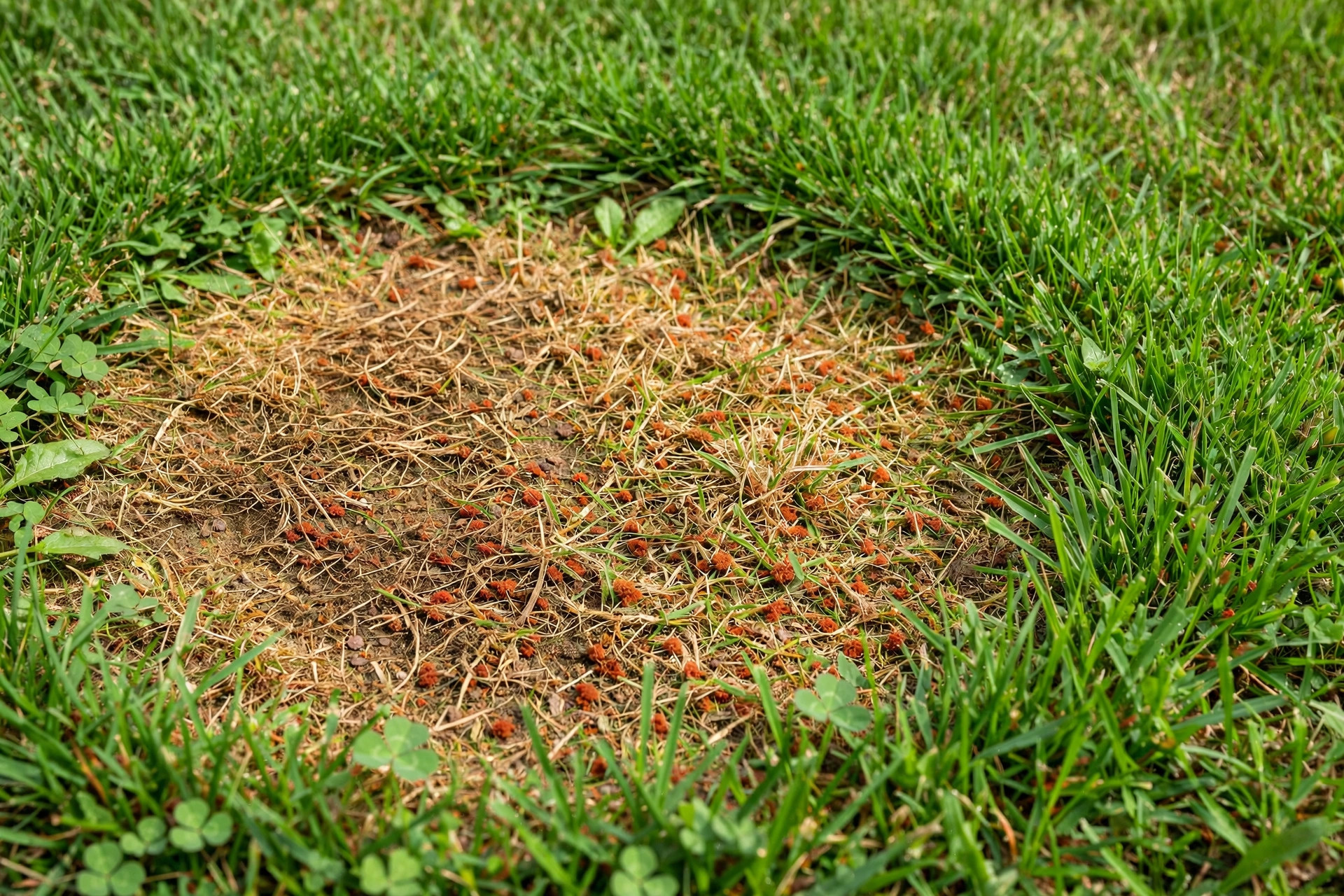

This lawn fungus treatment home remedy guide is for the home owner who wakes up one morning and finds brown spots spreading across the grass. The lawn looked fine last week. Now there are circles of dead grass, and they grow larger each day. Many people fear they must dig up the whole yard and start again. That is rarely needed. Most common lawn fungi can be treated with simple home remedies and a few changes in how the lawn is watered.
Lawn fungus is not one single disease. It is a group of plant diseases caused by tiny organisms that live in the soil and in the grass. They show up as brown patch, dollar spot, snow mold, rust, and red thread. Each one looks a little different. Each one has its own cause. But they all share the same root causes: too much water, poor air flow, and grass that stays wet for too long.
Before any treatment, it helps to know what you are dealing with. This guide walks through the signs, the home remedies that have worked for home owners for years, and the daily habits that keep fungus from returning. Plain step-by-step help is also published by the lawn teams at LawnStarter, who cover disease spotting in simple terms.
Why It Matters
A lawn with fungus is more than an ugly yard. The grass is weak. Its roots are short and thin. Weeds move into the bare spots because there is no thick grass to crowd them out. A weak lawn also needs more water to stay alive, and the dead patches heat up fast in the sun, which makes the problem worse.
Many people reach for strong chemical sprays first. Those products can work, but they cost more, and they kill helpful organisms in the soil along with the bad ones. For mild and medium cases, home remedies are often enough. They cost little, they are safe around children and pets, and they work with the soil instead of against it.
Timing matters. Fungus spreads fast in warm, wet weather. A small spot can double in size in a week. The earlier you start treatment, the less damage you have to repair. The lawn experts at Scotts agree that early action is the cheapest form of lawn care.
How to Spot Lawn Fungus: Lawn Fungus Treatment Home Remedy Guide
Look at the shape and color of the damage. Brown patch forms round circles of brown grass, sometimes with a dark ring around the edge. The circles can grow to a foot wide or more. Dollar spot shows small silver-dollar-sized spots that are light tan in color. Snow mold appears in spring after the snow melts, in gray or pink matted patches. Rust coats the grass blades with an orange or yellow powder that rubs off on your shoe. Red thread shows pink threads on the tips of the grass blades in cool, damp weather.
Pull up a few blades from the edge of a dead spot. If the roots are short and the base of the blade is rotted, fungus is likely the cause. Insect damage looks different. Grubs chew the roots so the grass pulls up like loose carpet. Fungus rots the base of the blade itself.
Check the weather history. If the damage appeared after several warm rainy days, fungus is the prime suspect. If it appeared during a dry spell, the cause may be drought or insects instead. Photo guides at The Spruce show side-by-side images of each common lawn disease.
What to Look For in a Home Remedy
A good home remedy for lawn fungus does three things. It dries out the area where the fungus grows. It makes the soil less friendly to the fungus. And it feeds the grass so it can grow through the damage.
Avoid any remedy that keeps the grass wet for long periods. Fungus loves wet leaves. Treatments that are sprayed on should be applied in the morning so the grass dries by nightfall. Never water in the evening when fungus is active.
Look for remedies with simple, known ingredients. Baking soda, neem oil, and hydrogen peroxide have long histories of safe home use. Be careful with any mixture that includes bleach or heavy soap. Those can burn the grass and kill the soil life you want to protect.
Types of Home Remedies and How to Use Them
Baking Soda Spray
Baking soda changes the surface of the grass blades so fungus cannot grow on them. Mix one tablespoon of baking soda with one gallon of water. Add one teaspoon of light oil, such as neem oil or vegetable oil, so the mixture sticks to the blades. Add a few drops of mild dish soap.
Spray the affected spots in the morning on a dry day. Wet the blades well but do not soak the soil. Repeat every five to seven days for three weeks.
Neem Oil Treatment
Neem oil comes from the seeds of the neem tree. It fights many kinds of fungus and also repels insects. Mix two tablespoons of cold-pressed neem oil with one gallon of water and one teaspoon of mild soap. Spray in the cool of the morning or evening.
Neem oil is one of the most trusted natural lawn fungus treatment options. It works against brown patch and dollar spot. It will not harm bees when it is dry, so spray when bees are not active. Store any leftover mix in a cool place and use it within a week.
Hydrogen Peroxide Spray
Ordinary three percent hydrogen peroxide from the drugstore can kill fungus on contact. Mix one part peroxide with three parts water in a spray bottle. Spray directly on the spots. This treatment foams a little. That is normal.
Hydrogen peroxide breaks down into water and oxygen in the soil, so it leaves no harmful residue. It is a strong treatment, so test it on a small hidden patch first. Do not use it on hot afternoons when the sun is strong.
Cornmeal Treatment
Cornmeal feeds helpful fungi in the soil that compete with the bad fungi. This is an old remedy that many gardeners still use. Spread plain horticultural cornmeal or corn gluten meal over the affected areas at a rate of about two pounds per one hundred square feet. Water it in lightly.
Cornmeal works slowly. It takes two to three weeks to show results. It is best used as a preventive treatment in spring and fall. It is also one of the safest remedies for yards where children and pets play. Seed and soil specialists at Pennington note that healthy soil life is the best long-term defense against repeat outbreaks.
Removing Thatch and Improving Air Flow
Thatch is the layer of dead grass between the green blades and the soil. When thatch gets thicker than half an inch, it holds water and blocks air. Fungus thrives there. Rake out heavy thatch with a garden rake or rent a dethatching tool for a day.
Aerate compacted soil with a core aerator. Pull small plugs of soil from the lawn so air and water can reach the roots. This one step makes every other remedy work better, and it helps you identify lawn fungus problems early because healthy soil shows damage sooner.
Cost and Price
Home remedies cost very little. A box of baking soda, a bottle of neem oil, and a bag of cornmeal together cost less than most single bottles of lawn fungicide from the store. Most home owners spend under twenty dollars on supplies for a whole season of treatment.
Compare that to a professional lawn service visit, which can cost seventy five to one hundred fifty dollars per treatment, and a season may need four to six visits. Chemical fungicides from the garden center cost twenty to forty dollars per bag or bottle. Testers at Consumer Reports regularly compare lawn care products and remind buyers to read labels before paying for extra features.
The real cost of lawn fungus is in repair. If large areas die, reseeding can cost fifty to one hundred dollars in seed and soil for an average yard, plus weeks of watering. Early treatment with home remedies is the cheapest path by far.
Care and Upkeep That Stop Fungus
Treatment fixes the current outbreak. Care stops the next one. Most lawn fungus returns because the same conditions return.
Water deeply but rarely. Give the lawn one inch of water once or twice a week instead of a little every day. Deep watering grows deep roots. Shallow watering keeps the top wet and invites fungus. Water in the early morning so the blades dry in the sun. If you use a sprinkler system, learn the right settings before you guess. Many home owners find an affordable lawn sprinkler installation cost estimate helpful when planning a system that waters evenly without soaking low spots.
Mow high. Set the mower to cut at three inches or more for most grass types. Tall grass shades the soil, keeps it cool, and grows deeper roots. Never cut off more than one third of the blade at one time. Home owners with bigger yards sometimes consider a robot lawn mower for half acre yards to keep mowing steady and even through the season. A sharp blade cuts cleanly. A dull blade tears the grass and opens wounds where fungus enters. Replacement blades and sharpening kits are sold at stores like Home Depot, which stocks parts for most common mower models. A top rated string trimmer for thick weeds helps keep edges clean without tearing the lawn border.
Pick up clippings when fungus is active. The clippings carry spores to healthy areas. In normal weather you can leave clippings to feed the lawn, but during an outbreak, bag them and throw them away. Do not compost diseased grass.
Feed the lawn on a steady schedule. Hungry grass is weak grass. A light feeding of balanced fertilizer in spring and fall keeps growth steady. Too much nitrogen at once causes fast soft growth that fungus attacks easily, so feed lightly and often rather than heavily once.
Thin out shade where you can. Trim low tree branches so sun and air reach the grass. Fungus loves dark, damp corners. If one area stays shaded all day, consider shade-tolerant seed or a ground cover plant instead of fighting a losing battle.
Safety
Home remedies are safer than chemicals, but they still need care. Keep mixtures away from children and pets until they are applied and dry. Wear gloves when handling neem oil or hydrogen peroxide concentrates. Read the label on any product you buy, even natural ones.
Never mix treatments unless a trusted source says it is safe. Some combinations can burn grass. Test every new spray on a small patch and wait two days before treating the whole area.
Keep pets off the lawn until sprays have dried. Most natural treatments are safe once dry, but wet leaves can irritate paws and stomachs if chewed.
Store supplies in a cool, dry place out of reach of children. Label every spray bottle clearly with the name of the mixture and the date you made it.
FAQ
How do I know my lawn has fungus and not insects? Look at the pattern. Fungus makes round spots with rotted blade bases. The grass stays rooted but the blades die. Insects like grubs chew roots, so the grass pulls up easily like a loose rug. If you find white grubs in the soil under a damaged spot, insects are the cause. If the blades are slimy or coated with colored powder or threads, fungus is the cause.
How long do home remedies take to work? Most sprays show results in one to two weeks. The spots stop growing first. Then new green growth fills in from the edges. Full recovery can take four to six weeks in good weather. Cornmeal and soil treatments work more slowly and need two to three weeks before you see change.
Can I prevent lawn fungus from spreading to the rest of the yard? Yes. To prevent lawn fungus from spreading, stop watering in the evening, bag diseased clippings, and clean your mower blade and rake after working on infected areas. Spores travel on tools and shoes. Treat the healthy grass around each spot too, not just the dead center.
Is baking soda safe for all grass types? Baking soda is safe for most common lawn grasses when mixed as directed. Use it in the morning and do not over-apply. Heavy repeated use can build up salts in the soil, so limit treatment to three weeks and switch to another remedy if the problem continues.
Should I reseed the dead spots or wait for the grass to fill in? For small spots, wait. Healthy grass spreads into dead areas in a few weeks once the fungus is gone. For spots larger than six inches across, rake out the dead grass, loosen the top half inch of soil, scatter matching seed, and water lightly each morning until it sprouts.
Do I need to call a professional? Try home remedies first for mild to medium outbreaks. Call a lawn care professional if the damage covers more than a quarter of the yard, if spots keep spreading after three weeks of treatment, or if you cannot tell what disease you have. A professional can test the soil and identify the exact fungus.
A Short Final Word
Lawn fungus looks frightening, but it is one of the most fixable problems a home owner faces. Start with the simple remedies in this guide. Change your watering and mowing habits. Give the grass clean air, morning sun, and deep drinks of water. Most lawns recover fully within a month or two.
For product information and lawn care guidance, maker homepages such as Toro, John Deere, and Briggs & Stratton offer manuals and seasonal tips.
References
Briggs & Stratton. (n.d.). Engines and outdoor power equipment. https://www.briggsandstratton.com Consumer Reports. (n.d.). Product ratings and buying guides for home and garden. https://www.consumerreports.org Deere & Company. (n.d.). Lawn and garden equipment. https://www.deere.com LawnStarter. (n.d.). Lawn care tips and professional services. https://www.lawnstarter.com Pennington. (n.d.). Grass seed, lawn care, and plant health resources. https://www.pennington.com Scotts. (n.d.). Lawn care products and step-by-step lawn guides. https://www.scotts.com The Home Depot. (n.d.). Home improvement and garden supplies. https://www.homedepot.com The Spruce. (n.d.). Gardening and lawn care how-to guides. https://www.thespruce.com Toro. (n.d.). Lawn mowers and yard care equipment. https://www.toro.com
Was this guide helpful?

About James Carter
The My Garden US editorial team writes practical, in-depth home and garden guides for American homeowners — tested advice, no fluff.
You May Also Like
Best Backpack Leaf Blower for Homeowners: A Practical Guide
January 30, 2026 0 views
Weed Barrier Fabric Reviews for Gardens: What Really Works
March 9, 2026 0 views
Outdoor Ant Killer for Lawns Reviews: What Works and What Does Not
July 29, 2026 0 views