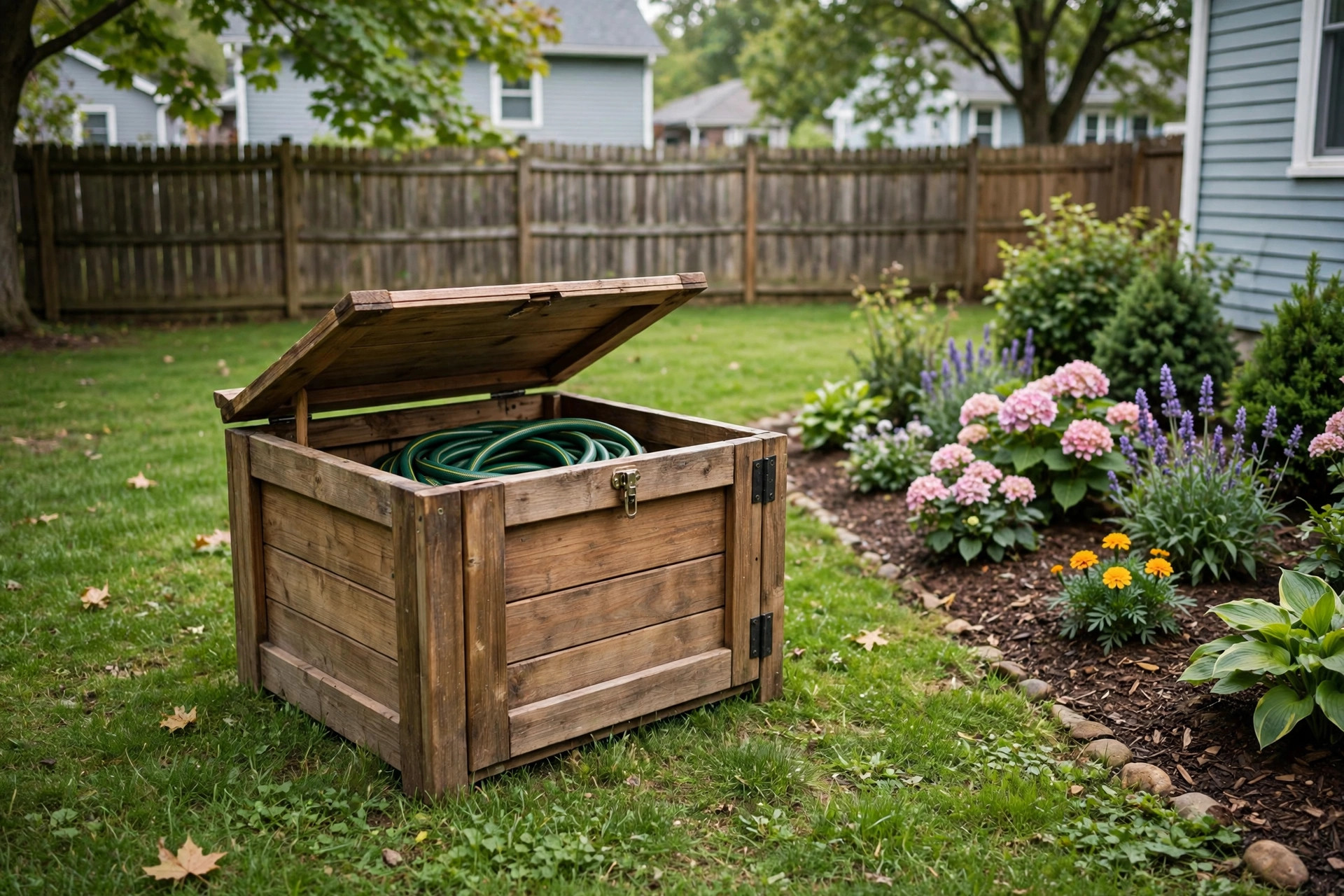
A tangled garden hose is a common sight in American backyards. It lies in loops on the grass. It catches underfoot. It kinks and wears out long before its time. The best garden hose storage box reviews show a simple fix. A good storage box winds the hose neatly inside. It keeps the hose out of the sun. It keeps the yard safe and orderly. This guide explains what to look for, which types work best, and how much you should plan to spend.
Why a Hose Storage Box Matters
A garden hose left on the ground takes real punishment. Sunlight breaks down rubber and vinyl over the years. Heat and cold make the material brittle. A hose that lies in a wet corner can grow mold on its surface. A hose across a path is a tripping hazard. Small children and older visitors are the ones most likely to stumble on it.
A storage box solves these problems at once. The hose rests off the ground inside the box. The lid blocks the sun. The yard looks cleaner. Many boxes have a small tray or shelf on the lid. You can set a spray nozzle or a pair of gloves there. A home advice site like Bob Vila often notes that tidy tool storage adds years to the life of garden gear, and a hose box is one of the cheapest ways to get that benefit.
A box also helps with drainage. A hose should never be stored full of standing water. Water left inside can freeze in winter and split the lining. Many boxes let the hose rest in loose coils. Air moves between the coils. The hose dries between uses. This is a small point, but it matters for long hose life.
What to Look For in a Hose Storage Box: Best Garden Hose Storage Box Reviews
Reading the best garden hose storage box reviews teaches one lesson fast. Not all boxes are built the same. Here are the points that count.
Size and Hose Capacity
Hoses come in 50, 75, and 100 foot lengths. The box must hold the full hose with room to spare. A 50-foot hose fits a compact box. A 100-foot hose needs a larger one. Check the stated capacity before you buy. A box packed too tight is hard to use. You will fight the lid each time. A do-it-yourself magazine like Family Handyman suggests choosing a box one size larger than you think you need. The extra room makes winding the hose much easier.
Material Strength
Most boxes are made of plastic resin, wood, or metal. Plastic resin is the most common. It resists rain and does not rot. Look for thick walls. Thin plastic cracks in cold weather. Wood looks handsome in a garden bed, but it needs stain or sealant to last. Metal boxes are strong but can rust where the paint chips. A garden tool company such as Corona Tools builds tools for hard daily use, and the same rule applies to storage: thicker material lasts longer.
Drainage Holes
A good box has small holes in the floor. Rain and hose drips run out through them. Without drainage, water pools at the bottom. The hose sits in a puddle. That shortens hose life and can breed mosquitoes. Check for drain holes in photos before you order.
The Lid
The lid should open wide and close firmly. A hinged lid is best. It stays attached and cannot blow away. Some lids double as a bench or a shelf. That is a nice extra if you need a place to set a watering can. A lid that lifts off fully can be lost or broken in wind.
Hose Guide Openings
The box should have slots or holes where the hose passes in and out. The front slot lets you pull out just enough hose to reach the garden bed. The back slot lets the supply line from the spigot enter the box. Smooth edges on these slots matter. Rough edges can rub the hose each time you pull it. Over a season, that rubbing can wear a weak spot into the rubber.
Lock and Child Safety
Some boxes accept a small padlock. This is useful if you store an expensive nozzle inside. It also keeps small children from climbing into a large box. Reviews often mention this feature. Families with toddlers rate it highly.
Types of Hose Storage Boxes
Plastic Resin Boxes
These are the most popular choice. They are light, cheap, and easy to move. Good ones have wood-grain or wicker patterns pressed into the sides. They blend into a patio or deck. An independent testing group such as Consumer Reports has reviewed outdoor storage gear for years and tends to favor thick-walled resin for its balance of cost and weather resistance. Look for boxes marked UV-resistant. The sun is the main enemy of plastic, and UV treatment slows fading and cracking.
Wooden Boxes
Wooden hose boxes look natural beside flower beds. Cedar and teak resist rot better than pine. A wooden box needs a coat of sealant every year or two. Without care, boards warp and the box falls apart in three to five seasons. Wooden boxes often cost more than plastic ones. Many gardeners accept the trade. A garden supply site like Gardeners.com sells wooden storage that matches garden furniture sets, and the look is hard to beat.
Metal Boxes
Steel boxes are the toughest of the three. They resist impacts and cannot be chewed through by squirrels or rats. The weak point is rust. Buy only boxes with a powder-coated finish. Check inside corners where paint is thinnest. A metal box left with standing water inside will rust from the bottom up. With dry storage, a good metal box can last a decade.
Reel-and-Box Combos
Some products put a hand-crank reel inside the box. You turn a handle, and the hose winds itself onto the reel. These cost more. They also hold less extra room for nozzles and fittings. But for a long hose, a reel saves real effort. Older gardeners often prefer them. A gardening guide like The Spruce lists reel boxes among the easiest options for people with back trouble.
Cost and Price
Prices range from about twenty dollars to over one hundred fifty dollars. A basic plastic box for a 50-foot hose sits at the low end. A large wooden box with a reel sits at the high end. Most buyers spend between forty and eighty dollars.
Do not judge by price alone. A cheap thin box may crack in the first winter. Then you buy a second box. Two cheap boxes cost more than one good one. Read the best garden hose storage box reviews for reports of cracking after a season of sun. A home improvement store such as Home Depot lists many boxes with customer photos, and the photos often show how a box looks after a year outside.
Watch for shipping costs on large boxes. They are bulky. Some sellers charge extra freight. A garden center such as Lowes often stocks boxes in store, which saves the shipping fee and lets you check wall thickness in person.
Care and Upkeep
A hose box needs little care, but small steps help.
Clean the box each spring. Hose it out and let it dry in the sun. Remove leaves and grit from the drain holes. A clogged drain hole turns the box into a basin.
Before winter, drain the hose fully. Disconnect it from the spigot. Walk its length and lift it to push water out. Coil it loosely in the box. If you live where freezes are hard, bring the hose indoors. Many gardeners store tools beside seeds and small supplies, and a seed company like Burpee reminds gardeners in its seasonal notes that dry winter storage extends the life of all garden gear.
Check the lid hinges once a year. Tighten loose screws. Oil a stiff hinge with a drop of household oil. If the box is wood, add sealant where the old coat has worn thin. If it is metal, touch up paint chips with a small brush to stop rust.
Keep the inside organized. A nozzle left loose in the box can punch a hole in a thin plastic wall when the lid slams. Set small parts on the lid tray or in a small bag. This habit also saves time. You will not hunt for the sprinkler head each Saturday morning.
Safety Notes
A hose box is simple, but a few safety points deserve mention.
Place the box on level ground. A box on a slope can tip when the lid is open. Put it near the spigot to keep the supply line short. A short supply line means less hose underfoot.
Do not let children play in or around the box. A large box with a heavy lid can pinch small fingers. Choose a box with a slow-closing lid if toddlers are in the house.
Drain standing water often. A box with poor drainage becomes a breeding spot for mosquitoes in summer. The drain holes should never stay blocked.
Never store fuel, pesticides, or sharp tools in a hose box. The box is not a chemical locker. Sharp pruning tools can puncture the hose inside the box. Many gardeners keep a separate place for cutting tools, and our guide on best garden tool sharpener for pruners covers how to store pruners safely apart from hoses.
Frequently Asked Questions
What size hose storage box do I need?
Match the box to your hose length. A 50-foot hose fits most compact boxes. A 75-foot hose needs a medium box. A 100-foot hose needs a large box. When in doubt, buy the next size up. A roomy box is easier to use and lets the hose dry between coils.
Can I leave the box outside all winter?
Most boxes can stay outside. The hose inside is the concern. Drain the hose before hard freezes. Water inside a hose can freeze, expand, and split the lining. In very cold states, bring the hose into the garage. The empty box itself will survive the winter fine.
Will a storage box stop my hose from kinking?
It helps a great deal. A box encourages loose, even coils. Tight sharp bends are what cause kinks. Wind the hose in wide loops and it will lay flat when you pull it out. Reel-style boxes do this best because the reel keeps each loop the same size.
Is a wooden box worth the extra cost?
It depends on what you value. Wood looks better in a planted bed. It costs more and needs sealant every year or two. Plastic costs less and needs almost no care. If looks matter to you, wood is worth it. If you want the cheapest long-term choice, thick plastic wins.
How do I clean mold from inside the box?
Scrub with warm water and a little dish soap. Use a stiff brush on the drain holes. Rinse well and dry the box in full sun. Sunlight kills most surface mold. If the box is plastic, a weak bleach solution works too. Rinse the hose before putting it back so no cleaner touches the rubber.
Where should I put the box in my yard?
Near the spigot is best. A short run from spigot to box keeps things tidy. Place it on flat, firm ground. Keep it out of the lowest spot in the yard where water pools. A spot with morning sun helps the box dry after rain.
A Final Word
The best garden hose storage box reviews all point to the same ideas. Buy a box larger than your hose needs. Choose thick walls and a hinged lid. Check for drain holes and smooth hose slots. Spend a little more once instead of buying twice. A good box keeps your hose out of the sun, off the ground, and ready for work. That is a small price for years of easy watering.
Garden care is a set of small habits. Storing the hose well is one of them. Pruning at the right time is another. See our notes on how to prune tomato plants properly for more seasonal yard care. Raking and tool care matter too. Our look at best garden rake for gravel reviews and the advice of a well-known tool maker like Fiskars round out a simple toolkit for a tidy yard.
References
Bob Vila. (n.d.). Home improvement advice. https://www.bobvila.com Burpee. (n.d.). Seeds, plants, and gardening supplies. https://www.burpee.com Consumer Reports. (n.d.). Product reviews and ratings. https://www.consumerreports.org Corona Tools. (n.d.). Garden and landscape tools. https://www.corona-tools.com Family Handyman. (n.d.). DIY home repair and maintenance. https://www.familyhandyman.com Fiskars. (n.d.). Garden and cutting tools. https://www.fiskars.com Gardener’s Supply Company. (n.d.). Gardening tools and supplies. https://www.gardeners.com Lowe’s. (n.d.). Home improvement products. https://www.lowes.com The Home Depot. (n.d.). Home improvement products. https://www.homedepot.com The Spruce. (n.d.). Home and garden advice. https://www.thespruce.com
Was this guide helpful?

About Emily Rodriguez
The My Garden US editorial team writes practical, in-depth home and garden guides for American homeowners — tested advice, no fluff.