
A garden hose nozzle with multiple settings is one of the handiest tools in a home garden. It turns a simple garden hose into a tool that can do many jobs. With a twist of the head, the water changes from a soft shower to a strong jet. This one small tool can water young plants, wash a car, clean a porch, and reach high window screens. It saves time. It saves water. And it costs less than most other garden tools. For these reasons, it is worth learning how to pick a good one.
Many homes already own a hose. But a plain hose end is hard to control. Water rushes out in one form only. A garden hose nozzle with multiple settings gives the owner control over that water. The nozzle lets you pick the right spray for each job. Gentle rain for new seeds. A firm stream for washing mud off the driveway. This control is the main reason gardeners buy one.
Why a Multi-Setting Nozzle Is Worth Having
The first reason is water saving. A good garden hose nozzle with multiple settings shuts off fully when you release the handle or when it is not in use. A hose without a nozzle keeps running. That wastes water. A nozzle that stops the flow between tasks can cut water use by a large amount over a season. This also lowers the water bill.
The second reason is plant health. Young seedlings need a soft touch. A hard stream of water can knock them over or wash soil away from their roots. A shower or mist setting gives them water without harm. Full-grown shrubs, on the other hand, may need a deeper soak. A multi-setting nozzle serves both needs with one tool.
The third reason is reach and force. A strong jet setting can clean patio furniture, rinse paint rollers, and wash away dirt from walkways. It can reach the second story of a house to rinse window screens. Without a nozzle, a hose cannot do these jobs well. The nozzle turns water pressure into a useful tool.
The fourth reason is comfort. A well-made garden hose nozzle with multiple settings feels easy in the hand. The handle opens and closes without much force. This matters for people who water for a long time each day. A poor nozzle can make the hand tired or sore. A good one feels like it works with you, not against you.
How to Choose the Right Nozzle: Garden Hose Nozzle with Multiple Settings
Choosing a nozzle is not hard, but there are a few points to weigh. The best choice depends on your hose, your hand, and the jobs you plan to do. The guides below walk through the main points. You can also find general buying advice for hoses in the guide to the best garden hose for large yards.
Body Materials
Nozzles are made from three main materials. Plastic is the cheapest. It is light and will not rust. Cheap plastic can crack in hot sun, but good plastic can last for years. It is a fair pick for light work.
Metal, such as brass or aluminum, is stronger. Brass nozzles are heavy and built to last. They stand up to rough use and hard knocks. The weight can tire the hand during long watering, though. Aluminum is lighter than brass but still strong.
Many nozzles mix both. A metal core with a plastic shell gives strength and a comfortable grip. These mixed-body nozzles are a popular pick. They are often sold at home centers and reviewed by sites like Consumer Reports.
Handle and Grip
Look at how the water is turned on and off. Some nozzles use a rear trigger like a pistol. You squeeze to start the flow and release to stop it. These are easy for quick jobs. Others use a front trigger. Still others use a twist handle that you turn to open the valve. Twist handles can stay on without holding, which is nice for long watering.
The grip should feel comfortable. Some nozzles have soft rubber covers. These help when hands are wet or cold. If the nozzle is heavy metal, a rubber grip is a real help. People with weak hands may prefer a light plastic model with a wide trigger.
Check the lock if there is one. A lock holds the water on so you do not have to squeeze the whole time. This is a small feature, but it makes a big difference during long watering tasks. You can read more about hand-friendly tools on Family Handyman.
Fit and Thread
Almost all nozzles in the United States use a standard hose thread. They screw right onto a garden hose. Some very cheap hoses have odd threads. Before you buy, check your hose end. If the old fitting is worn, a new multi-setting nozzle from a trusted maker will fit most hoses.
A quick-connect set can be added to make swapping tools easy. These small brass pieces snap on and off. They are handy if you change often between a nozzle, a sprinkler, and a soaker. Just note that each connection can leak a little, so buy good ones. Retailers such as Gardener’s Supply and The Home Depot carry nozzles that fit most standard hoses.
Spray Patterns and What They Are For
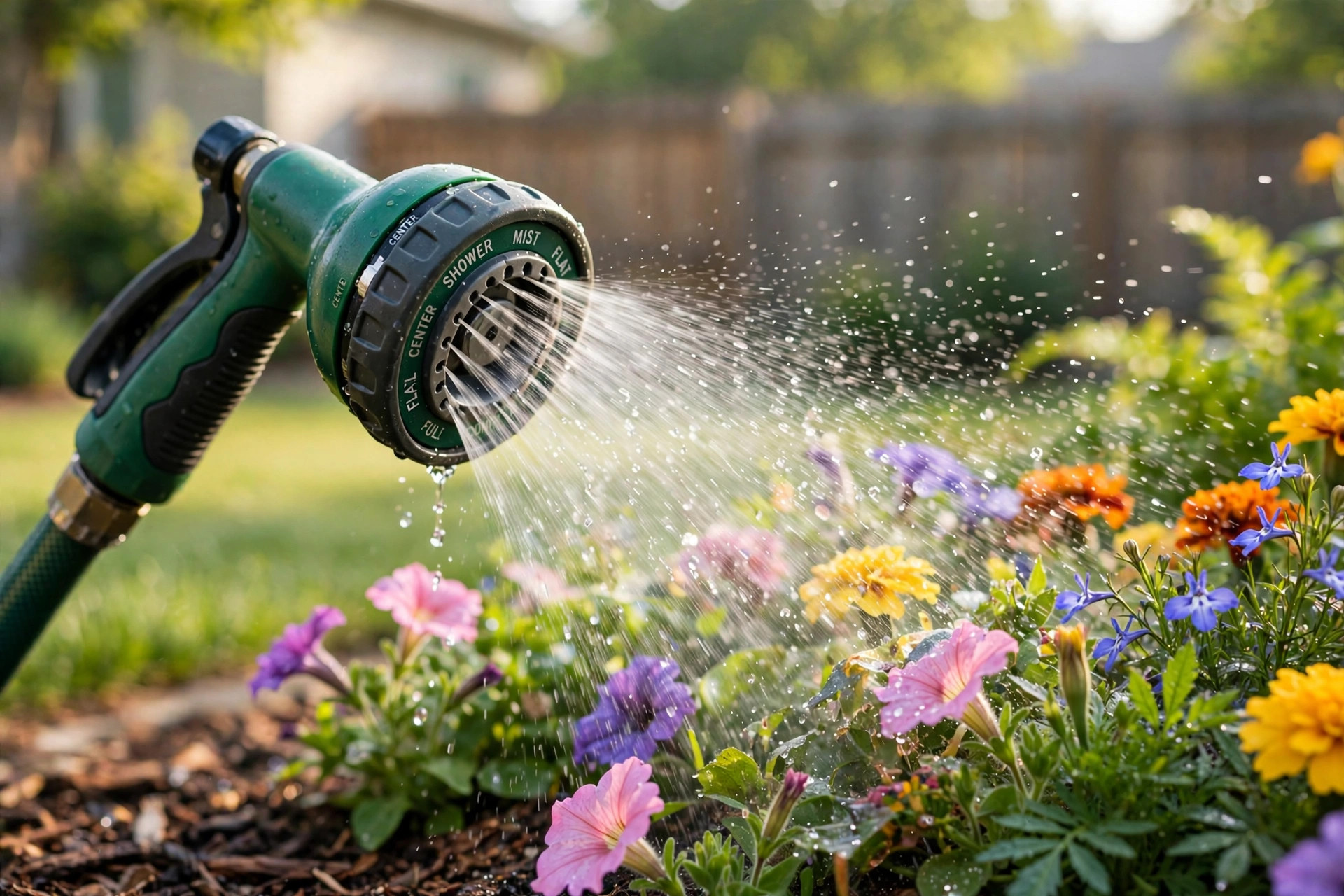
Most nozzles offer between five and nine settings. Each setting has a use. Here are the common ones and what they do best.
Shower. A wide, soft rain. This is the most used setting in most gardens. It waters beds, pots, and hanging baskets without beating the soil down. If you buy a nozzle for one main job, this is the setting that matters most.
Mist. A fine, light cloud of water. Mist is for seeds and tiny seedlings. It wets the top of the soil without moving it. It is also used for plants that like damp air.
Cone or center. A round ring of water with an empty middle. This setting suits delicate flowers. It gives good coverage with a soft touch.
Flat. A wide fan of water. Flat is useful for washing. It rinses cars, decks, and siding in wide strokes. It covers more area than a narrow stream.
Jet. A strong, narrow stream. Jet reaches far. It cleans mud from tools and blasts dirt from cracks in a walkway. Do not use jet on plants. It will cut leaves and roots.
Soak or stream. A slow, steady flow. Soak fills watering cans and deep-soaks tree roots. Some gardeners use it at the base of shrubs.
Not every job needs all nine settings. Five good settings beat nine weak ones. Test each pattern before you buy if the store allows it. A solid review from The Spruce or Bob Vila can also tell you which settings work best on a given model.
Cost and Price
A garden hose nozzle with multiple settings is not costly. Prices in most United States stores fall into three groups.
The lowest group runs about five to ten dollars. These are light plastic nozzles with five or six settings. They work fine for small yards and light jobs. They may wear out in a year or two of hard use.
The middle group runs about ten to twenty dollars. These have stronger bodies, better seals, and more settings. Many are metal with rubber grips. For most home gardeners, this is the best value. A nozzle in this range can last many years.
The top group runs twenty to forty dollars or more. These are heavy brass or pro-grade models. They have fine control and strong seals. They suit people who water large gardens every day. For most homes, they are more than needed.
Price is not the only cost. A nozzle that leaks wastes water. A nozzle that breaks each year costs more in the long run than one good nozzle. Buy the best seal and body you can afford. Sales at Lowe’s and The Home Depot often bring the price down.
Care and Upkeep
A nozzle lasts longer with simple care. The steps below take only a few minutes and add years of life.
Clean the head now and then. Mineral deposits can clog the small holes. Soak the head in white vinegar for an hour. Then scrub it with an old toothbrush. This opens the holes and restores the spray. Rinse well before use on plants.
Check the washer. The small rubber ring inside the hose end wears out over time. A worn washer causes drips at the connection. Washers are cheap and sold in packs. Keep a few on hand. This is the same kind of small upkeep that keeps other garden tools in shape, much like learning how to sharpen garden tools properly.
Store the nozzle out of the sun. Hot sun makes plastic brittle and rubber seals hard. Hang it in a shed or garage when the season ends. If winters freeze where you live, drain the hose and nozzle before the first freeze. Ice can crack the body.
Oil moving parts once a year. A drop of light oil on the trigger pin and the rotating head keeps them smooth. Do not use too much. Wipe off the extra so it does not reach the soil.
Watch for leaks at the head. A leak there often means a worn seal inside. Some nozzles take apart for seal changes. Others do not. If it does not come apart and the leak grows, it is time for a new one.
Safety
A garden hose nozzle with multiple settings is safe when used with care. Still, water under pressure can cause harm. A few rules keep everyone safe.
Never point a jet setting at people or pets. The strong stream can sting skin and harm eyes. Keep the nozzle on a soft setting when children are near. Teach children not to spray each other at close range.
Check the water temperature first. A hose left in the sun can hold very hot water. Let it run for a few seconds before watering plants or touching it. Hot water can burn skin and harm roots.
Watch your footing. Wet concrete, deck boards, and slopes get slick. Work slowly when the area is wet. Put the nozzle down before you move a heavy hose.
Store chemicals away from the hose. When you mix fertilizer or cleaner in a hose-end sprayer, keep the nozzle clean after. Rinse it well so no residue reaches plants or pets later. Guides from Burpee and Corona Tools give good notes on safe tool use.
Frequently Asked Questions
How many settings does a garden hose nozzle need?
Five to seven settings cover most jobs. Shower, mist, flat, jet, and soak are the core five. More settings are nice but not needed. Pick a nozzle with strong, even patterns rather than one with many weak patterns.
Will a multi-setting nozzle fit my hose?
In most cases, yes. Almost all nozzles and hoses in the United States use the same standard thread. If your hose is very old or very cheap, check the fitting first. A hose washer in good shape helps the seal.
Why does my nozzle leak at the handle?
A leak at the handle often comes from a worn internal seal or a loose part. Tighten what you can by hand. If the leak stays, the seal is worn. Some nozzles can be taken apart and fixed. Cheap sealed models usually need to be replaced.
Can I leave the nozzle on the hose all winter?
It is better not to. Freezing water can crack the nozzle body and damage the hose. Drain both before the first hard freeze. Store the nozzle in a dry place indoors or in a shed.
Which setting is best for new seedlings?
Mist or shower. Both are soft. Mist wets the soil surface with no force. Shower gives a bit more water for pots and trays. Keep jet far away from young plants.
Does a nozzle really save water?
Yes. A hose with no nozzle runs full flow all the time. A nozzle lets you shut the water off between tasks and pick a soft pattern that puts water only where it is needed. Over a summer, this adds up to real savings. This pairs well with other water-wise picks, like the right hose length covered in the guide to the best garden hose for large yards.
A Final Word
A garden hose nozzle with multiple settings is a small buy with a large payoff. It gives you control over water. It protects plants. It helps with cleaning jobs around the yard. And it saves water every time you use it.
Pick a body that suits your strength. Test the spray patterns if you can. Buy the best seal you can afford, not the most settings. Take a few minutes each year for simple care. Do these things and your nozzle will serve you well for many seasons. For more tool picks, see the best pruning shears for rose bushes and notes from Fiskars on keeping garden tools in good shape.
References
Bob Vila. (n.d.). Home improvement advice. https://www.bobvila.com Burpee. (n.d.). Seeds, plants, and gardening supplies. https://www.burpee.com Consumer Reports. (n.d.). Product reviews and ratings. https://www.consumerreports.org Corona Tools. (n.d.). Garden and landscape tools. https://www.corona-tools.com Family Handyman. (n.d.). DIY home repair and maintenance. https://www.familyhandyman.com Fiskars. (n.d.). Garden and cutting tools. https://www.fiskars.com Gardener’s Supply Company. (n.d.). Gardening tools and supplies. https://www.gardeners.com Lowe’s. (n.d.). Home improvement products. https://www.lowes.com The Home Depot. (n.d.). Home improvement products. https://www.homedepot.com The Spruce. (n.d.). Home and garden advice. https://www.thespruce.com
Was this guide helpful?

About Sarah Mitchell
The My Garden US editorial team writes practical, in-depth home and garden guides for American homeowners — tested advice, no fluff.
You May Also Like
Best Garden Kneeler Bench Combo Reviews
May 7, 2026 0 views
How to Grow Peppers from Seed: A Complete Beginner’s Guide
January 15, 2026 0 views
Garden Edging Ideas for Vegetable Beds: Borders That Work as Hard as You Do
August 31, 2026 0 views