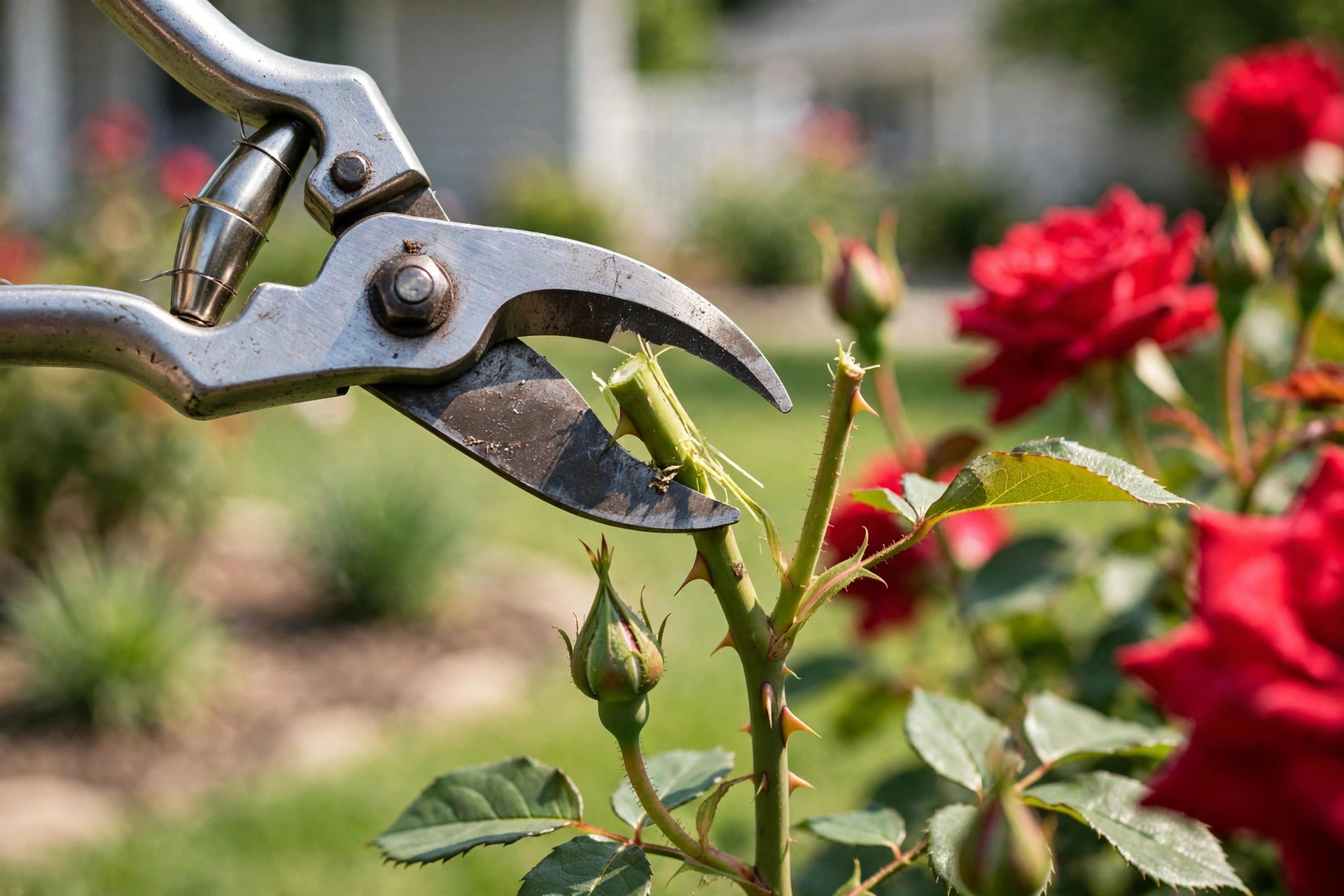

The best pruning shears for rose bushes are sharp, light, and easy to clean. A rose is a tough plant, but it answers to good tools. Dull blades tear the stems. Torn stems invite disease. Clean cuts heal fast and send out strong new growth. That is the whole story.
Every rose grower faces the same task. Dead wood must come out. Spent blooms must come off. Crowded stems must be thinned. A pair of hand pruners does this work better than any other tool. This guide explains what to look for, the main types, what they cost, how to keep them sharp, and how to use them safely around rose bushes.
Why the Right Shears Matter for Roses
Roses grow on woody canes. Some canes are soft and green. Others are old and hard. A good pair of shears handles both. The right tool saves your hands too. Rose thorns are sharp. A cut that takes three squeezes is three chances to slip into a thorn. A clean cut takes one squeeze.
Healthy pruning keeps the bush open. Air moves through the center. Sun reaches the lower leaves. Wet leaves dry fast. This lowers the chance of black spot and mildew. Gardeners who prune on time often use fewer sprays. The plant does the rest on its own.
A poor tool does the opposite. It crushes stems. It spreads disease from a sick bush to a healthy one. It tires the hand. Many new rose growers blame the plant for weak growth when the tool is the real cause. Buy shears that fit the job and the job gets easy.
What to Look for When You Choose: Best Pruning Shears for Rose Bushes
Start with blade material. High-carbon steel holds an edge longest. Stainless steel resists rust better in damp climates. Many good shears use carbon steel blades with a rust-resistant coating. Look for blades you can replace. A top brand sells spare blades for years.
The cutting action matters most. Bypass shears work like scissors. Two curved blades pass each other. They cut live stems cleanly. Anvil shears have one straight blade that closes onto a flat plate. They suit dead wood better. For the best pruning shears for rose bushes, bypass is the usual pick. Most rose cuts are on live canes.
Comfort comes next. Grips should be soft and non-slip. The spring between the handles should open the blades with a light touch. Try the safety latch. It should lock with one hand. A rotating lower handle helps on long jobs. It turns with your grip and cuts hand strain.
Check the size. Shears come in small, medium, and large. Your fingers should reach the latch without stretching. People with small hands often do better with a shorter model. Never buy by price alone. A twenty-dollar pair that fits beats a fifty-dollar pair that does not.
Many growers also plan other garden work for the same season. A raised bed watering schedule for vegetables pairs well with rose care days, since both jobs land in spring and summer.
Types of Pruning Shears for Rose Bushes
Bypass Pruners
These are the first choice for most rose work. The curved blade slides past a thinner hook blade. The cut is clean and does not crush the stem. Bypass pruners handle canes up to three quarters of an inch thick. They need care. Sap builds up on the curved blade. Wipe it often.
Anvil Pruners
Anvil pruners cut with force. One blade presses down on a flat anvil plate. They cut dead wood well. The plate can crush live stems, though. Use anvil shears for old, dead canes. Keep bypass shears for live growth. Many rose growers own both. That pair covers every cut in the garden.
Ratchet Pruners
Ratchet pruners cut in steps. You squeeze once and the blade holds. You squeeze again and it moves deeper. Three small squeezes finish a thick cane. They suit people with weak hands. The cut is slower but needs less force. Rose gardeners with arthritis often prefer them.
Long-Reach Pruners
Some roses grow into tall climbers. Long-reach pruners add a handle of two or three feet. You cut from the ground. The head turns to reach odd angles. They do not replace hand shears. They reach what hand shears cannot.
Guides from Fiskars describe how bypass heads differ from anvil heads in daily garden use. Reviews at Consumer Reports test how long blades stay sharp under real work.
Cost and Price Guide
Hand pruners fall into three bands. Basic models cost fifteen to thirty dollars. They use simple steel and plastic grips. They suit a few bushes and light work. Blades may need sharpening twice a season.
Mid-range models cost thirty to sixty dollars. This is where most of the best pruning shears for rose bushes sit. Blades are better steel. Handles fit the hand well. Spare parts are easy to find. One good mid-range pair can serve a whole rose bed for years.
Premium models cost sixty to one hundred dollars or more. They use forged steel and fine machining. The cut feels smoother. They suit large gardens and daily use. A professional pruner may cut thousands of stems a year with one pair.
Watch for hidden costs. Sharpening tools cost ten to twenty dollars. Spare blades cost eight to fifteen. A holster saves pockets and costs little. Budget for these small items when you buy.
Care and Upkeep
Sharp tools are safe tools. A dull blade slips. A sharp blade goes where you aim it. Sharpen your shears after every few hours of rose work. A small diamond file takes two minutes. Follow the blade angle. Five light strokes per side is enough.
Clean the blades after each use. Rose sap is sticky. It traps grit that dulls the edge. Wipe with a rag and soapy water. Dry at once. A drop of camellia oil on the blade stops rust. Keep oil away from rubber grips.
Disinfect between bushes. Disease moves on blades. A spray bottle with rubbing alcohol works well. Wipe the blades after each bush, not just each day. This one habit stops many infections. Garden suppliers like Burpee and Gardeners Supply sell disinfectant wipes made for this task.
Store shears dry. Hang them in a shed or garage. Do not leave them in soil. Keep the latch closed so the blades do not nick each other. Once a year, take the shears apart. Clean the bolt. Add a drop of oil to the pivot. Check the spring. Replace worn parts before they break in the middle of a job.
The Family Handyman publishes step-by-step tool care routines that fit well with seasonal rose work. Tool makers at Corona show how to change blades on common models.
Safety Around Roses
Roses punish careless hands. Wear thorn-proof gloves. Gauntlet gloves cover the wrist. Thin gloves slip on thorns and do little. Eye protection helps too. A cane can spring back when it breaks free.
Cut away from your body. Never reach across a bush while cutting. Pull the cane toward you with a gloved hand, then cut below your hand. Keep your free hand clear of the blades. Lock the shears when you walk. An open pair in a pocket is a bad plan.
Work in daylight. You need to see what you cut. Wet stems are slick. Wait until the bush dries if you can. Tell someone where you are if you prune a large garden alone. These rules sound plain. They stop most injuries.
A cold frame for winter gardening reviews is worth a look when you plan winter protection for your roses, since the same cold months are when heavy pruning happens.
How to Prune Roses With Hand Shears
When to Prune
Spring is the main season. Prune when the buds start to swell. That is the plant waking up. In warm states this can be late winter. In cold states it may be April. Watch the plant, not the calendar. A second light trim can follow in early summer to shape the bush. Heavy cuts belong to spring.
Making the Cut
Cut dead wood first. Dead canes are brown or gray all through. Live canes are green under the bark. Scratch the bark with your nail to check.
Cut at a forty-five degree angle. Place the cut one quarter inch above an outward-facing bud. The angle lets water run off. The outward bud sends new growth away from the center. This keeps the bush open.
Remove crossing canes. Where two canes rub, one must go. Take out thin, weak stems. Keep three to five strong canes on a hybrid tea. Leave more on shrub roses. Step back often. Look at the shape. A rose bush should look like an open bowl.
Deadhead through the season. Cut spent blooms back to the first strong leaf with five leaflets. This tells the plant to make new buds. Stop deadheading in early fall. The plant needs to harden off before winter.
Different plants need different cuts. A guide on how to prune hydrangeas by type shows how pruning rules change from one shrub to another, and roses follow the same idea.
The Spruce keeps seasonal pruning calendars that help you time rose cuts with the rest of the yard. Bob Vila offers tool setup tips for first-time pruners.
Frequently Asked Questions
Are bypass or anvil shears better for rose bushes?
Bypass shears win for most rose work. They cut live canes cleanly without crushing. Anvil shears suit dead wood. Many growers keep one of each. For daily pruning, deadheading, and shaping, reach for the bypass pair.
What size pruners should I buy for roses?
Buy the size that fits your hand. Your fingers should close the handles with room to spare. Small hands need small shears. Large shears strain small hands and cause blisters. Some brands mark sizes clearly. Try them in the store if you can.
How often should I sharpen my pruning shears?
Sharpen after every four to six hours of use. Roses dull blades fast. Thick old canes dull them faster. A quick touch-up with a diamond file takes minutes. Do not wait until the blade tears stems. By then you have already harmed the plant.
Can I use the same shears for roses and other shrubs?
Yes, with one rule. Clean and disinfect the blades between plants. Disease spreads on dirty blades. Some gardeners keep a cheap second pair for rough jobs. They save the good pair for roses. This habit keeps both tools in better shape.
Do I need to oil my pruning shears?
Yes. A light oil on the blade stops rust. A drop on the pivot keeps the action smooth. Camellia oil is the classic choice. Any light machine oil works. Wipe off extra oil. Too much oil attracts dust.
Where can I buy replacement blades?
Most major brands sell spare parts through their own stores and large retailers. Home Depot and Lowes stock blades for the popular models. Bring the old blade or the model number. The wrong blade will not fit.
Final Word
The best pruning shears for rose bushes are the ones you will pick up and keep sharp. Fit matters more than brand. Clean blades matter more than price. Start with a good bypass pair in your size. Learn to sharpen it. Wipe it clean after every bush. Your roses will answer with strong canes and full blooms. A sharp tool in a patient hand is the oldest trick in the garden, and it still works.
References
Bob Vila. (n.d.). Home improvement advice. https://www.bobvila.com Burpee. (n.d.). Seeds, plants, and gardening supplies. https://www.burpee.com Consumer Reports. (n.d.). Product reviews and ratings. https://www.consumerreports.org Corona Tools. (n.d.). Garden and landscape tools. https://www.corona-tools.com Family Handyman. (n.d.). DIY home repair and maintenance. https://www.familyhandyman.com Fiskars. (n.d.). Garden and cutting tools. https://www.fiskars.com Gardener’s Supply Company. (n.d.). Gardening tools and supplies. https://www.gardeners.com Lowe’s. (n.d.). Home improvement products. https://www.lowes.com The Home Depot. (n.d.). Home improvement products. https://www.homedepot.com The Spruce. (n.d.). Home and garden advice. https://www.thespruce.com
Was this guide helpful?

About Michael Thompson
The My Garden US editorial team writes practical, in-depth home and garden guides for American homeowners — tested advice, no fluff.
You May Also Like
The Best Garden Trowel Set for Beginners: How to Choose Well
March 24, 2026 0 views
The Best Garden Gloves for Arthritis Sufferers: A Gentle Guide
September 6, 2026 0 views
How to Compost Food Scraps Safely
July 22, 2026 0 views