
Learning how to lay sod in summer heat is a skill worth having. Summer is when most people want a new lawn. It is also the hardest time to put sod down. Sod is living grass with roots cut short. It dries out fast. In heat above eighty-five degrees, fresh sod can lose its water in a few hours.
That does not mean you should wait. You can lay sod in summer. You just need a plan. Work early in the day. Water right away. Give the roots steady water until they grow into the soil below. The tips in this guide come from the same plain steps that garden books have given for years.
Why It Matters
A failed sod job is not cheap. Sod costs good money per pallet. If it dries out and dies, you pay twice. That is why it matters to learn how to lay sod in summer heat before you order.
Summer sod also fights weeds. Heat wakes up crabgrass and other weeds. If your sod fails, weeds move into the bare soil fast. A lawn that takes root in two weeks keeps weeds out. A lawn that dies gives them room to grow.
The good news is that heat has one benefit. Warm soil helps roots grow fast. Roots grow best when soil is warm. If you keep the sod wet, the roots can reach down in ten to fourteen days. That is faster than in cool spring weather.
A summer lawn also pays you back in use. A new lawn is ready for play weeks sooner than seed. Kids get their yard back. A home looks cared for. That value is real, even if you cannot put a price on it.
What to Look for When You Choose Sod: How to Lay Sod in Summer Heat
Start with fresh sod. Fresh matters more than brand. Ask the farm when the sod was cut. It should be cut the same day you lay it. Sod that sits on a pallet for two days in summer heat will already be stressed.
Signs of Fresh Sod
Pick up a piece. It should feel cool and damp. The roots should look moist and white or light brown. The grass should be green and upright. Do not accept rolls that are brown at the edges. Do not accept rolls that feel hot inside.
Smell the roll. Fresh sod smells like earth. Sod that has sat too long smells sour. A sour smell means the grass is heating up inside the roll. That sod may not recover once you lay it.
Look at the thickness of the soil layer. Good sod has about an inch of soil with the roots. Too little soil means the roots dry out fast. Too much soil makes the rolls heavy and hard to handle.
Choose the Right Grass
Ask the farm which grass fits your area. In the South, Bermuda and Zoysia handle heat well. In the middle states, tall fescue works with enough water. In dry western states, ask about low water grasses. The wrong grass will struggle no matter how well you water.
Think about shade too. Some grasses need full sun all day. Others take part shade from trees. Walk your yard at noon and note where the shade falls. Tell the farm what you see.
How to Prepare the Ground
Soil prep is half the job. Sod laid on hard, dry ground will not root. Take the time to do this right, and the rest of the work gets easier.
First, clear the area. Remove rocks, sticks, and old grass. Pull weeds by the root if you can. For a large dead lawn, some people kill the old grass first and wait a week. This gives you a clean bed.
Then till the top four to six inches of soil. Loose soil lets roots push down fast. A rented tiller makes this quick work on a big yard. For a small patch, a garden fork will do.
Level the ground with a rake. Rake out bumps and low spots. Water will sit in low spots and rot the roots. Bumps will dry out fast in the heat. A level bed is worth the extra hour.
Add a starter fertilizer if your soil is poor. A soil test is best, but many people skip it. If you skip the test, use a mild starter fertilizer and follow the label. Rake it into the top inch of soil.
Wet the soil before the sod arrives. Water it the evening before the job. The soil should be moist, not muddy. Sod laid on damp soil roots faster than sod laid on dry soil.
How to Lay the Sod
Order the sod for early morning delivery. Lay it the same day it is cut. In heat, every hour matters. Have the ground ready before the truck arrives.
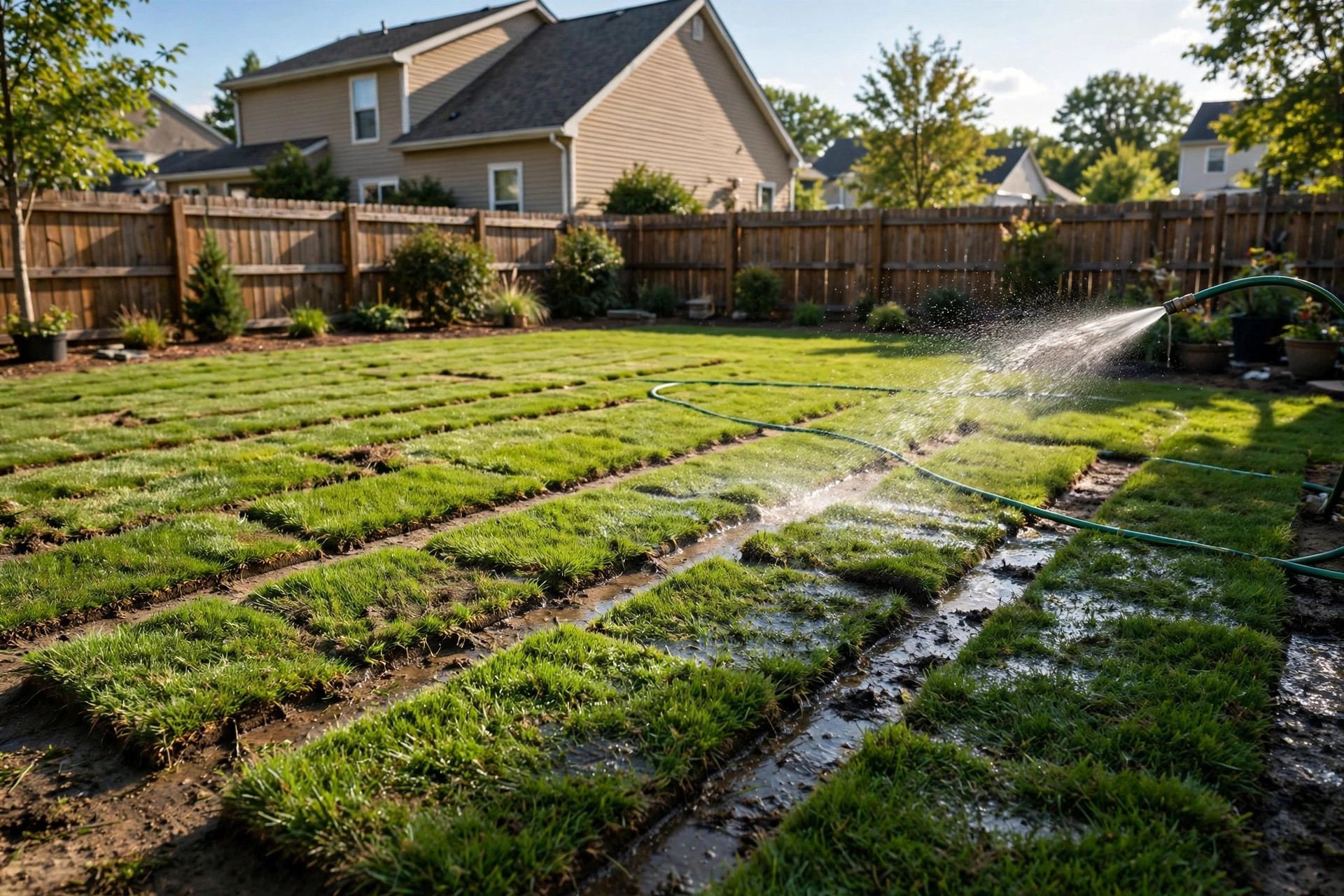
Start along a straight edge, like a driveway or a walk. Lay the first roll in a straight line. Then lay the next roll tight against it. Press the edges together. Gaps will dry out and turn brown in the sun.
Stagger the seams like bricks in a wall. Seams that line up will form lines in the lawn. Staggered seams grow together into one sheet of grass.
Cut rolls to fit around trees and beds with a sharp knife. A dull knife tears the grass. Keep the pieces tight. Press each roll down with your hands so the roots touch the soil. Air pockets under the sod will kill patches.
Work fast. Do not leave cut sod sitting in the sun. Lay one section, then start watering it while you work on the next. Some people water each section as they go. That is the best way in heat.
If you need help weighing your options, read our sod vs seed cost comparison guide before you order. Seed is cheaper but slow. Sod is fast but costs more. The guide walks through both choices side by side.
Watering: The Work That Decides It All
Water is the whole story in summer. New sod has no deep roots. It lives on what you give it each day.
Water each section within minutes of laying it. Soak the sod until water reaches through to the soil below. You should be able to pull back a corner and see wet soil under the roll.
For the first two weeks, keep the sod and the top inch of soil damp all day. That may mean watering two or three times a day in heat. Water in the morning, then again in the early afternoon. Do not let the sod dry out between waterings.
After two weeks, test the roots. Pull gently on a corner. If it resists, the roots are growing into the soil. Then you can cut back to one deep watering a day. After a month, water deeply two or three times a week like a normal lawn.
Morning watering is best. Water before ten in the morning. This gives the grass time to dry before night. Grass that stays wet at night can get disease.
A smart sprinkler controller for usa homes can run these morning cycles for you. It saves water and keeps the schedule steady when you are at work.
Watch for puddles. Too much water is also bad. If water stands on the sod for hours, cut back. The goal is damp soil, not a swamp.
Types of Sod for Hot Weather
Warm season grasses fit summer heat best. Bermuda sod grows fast in heat. It spreads and fills gaps on its own. It needs full sun most of the day.
Zoysia is slower but tough. It handles heat and some shade. It forms a thick lawn that crowds out weeds. It costs more per pallet than Bermuda in many areas.
Tall fescue is a cool season grass. Many people in the middle states use it. It can work in summer if you water well. It stays green longer into fall than warm season types.
Centipede grass fits the deep South. It needs less care and less fertilizer. It is not as tough under foot traffic, so it fits quiet yards.
Ask your local sod farm what grows best near you. They know the local soil and heat. Equipment makers like Toro and John Deere also post lawn care guides that cover grass types by region.
Cost and Price
Sod usually sells by the pallet or by the roll. A pallet covers about four hundred to five hundred square feet. Prices change by area and season. Summer demand can push prices up.
Measure your yard first. Multiply length by width to get square feet. Add ten percent for cuts and waste. Then call two or three farms for prices.
Our cheap sod installation cost per pallet article breaks down current prices by region. It also covers delivery fees, which can add up in summer when demand is high.
You can lay sod yourself to save money. It is hard work but simple. Hiring a crew costs more but gets the job done fast. In heat, speed has real value. A crew can finish before the afternoon sun does its worst.
Consumer Reports tests lawn mowers and other gear you may need after the sod roots. A good mower keeps new grass thick for years.
Care and Upkeep After the First Weeks
Wait three weeks before the first mow. The roots need time to hold. When you mow, set the blade high. Take off no more than one third of the grass height. Sharp blades cut clean. Dull blades tear new grass.
Do not walk on new sod for two weeks if you can avoid it. Foot traffic pushes the sod off the soil. Keep kids and pets off until the roots hold firm.
Fertilize lightly after six weeks. Use a balanced lawn fertilizer. Too much nitrogen in summer heat can burn new grass. Follow the label and water well after you feed.
Watch for brown spots. Small brown spots may just need more water. Large dead patches may need new pieces of sod. You can patch with leftover rolls from the same farm. Keep a few rolls aside for this.
Check for grubs and pests in late summer. Lift a brown patch and look under it. If you see white grubs, treat the area. A farm store can point you to the right product.
Safety
Summer sod work is hard on the body. Heat stroke is a real risk. Drink water often. Take breaks in the shade. Work in the morning and stop by noon if you can.
Wear a hat and sunscreen. Light clothes help your body cool. Take a break at the first sign of dizziness or nausea. Do not push through heat sickness.
Lift rolls with your legs, not your back. A roll of sod is heavy. Wet rolls are heavier still. Get help if the job is big. Two people make the work much safer.
Keep kids and pets away from fertilizers and tools. Store chemicals in a locked shed. Read every label before you use a product on your lawn.
FAQ
How soon can I lay sod after delivery? Lay it the same day. In summer heat, do not wait until the next day. Sod on a pallet heats up fast and can die within hours.
How much should I water new sod in summer? Keep it damp all day for two weeks. That often means two or three soakings a day. Then cut back slowly as roots grow into the soil.
Can I lay sod in one hundred degree heat? You can, but the risk is high. Work at dawn. Water each section as you lay it. If you can wait for a cooler week, wait.
How long before I can mow new sod? About three weeks. Pull on a corner first. If it holds tight, the roots are set. Mow high and keep the blades sharp.
Should I use sod or seed in summer? Sod gives you a lawn right away. Seed needs steady water for weeks and loses to weeds in heat. Sod costs more but wins in summer.
What if my sod turns brown after a week? Brown edges often mean dry seams. Water more and press seams down. If whole rolls are brown, they may have been old when laid. Call the farm.
A Final Word
Laying sod in summer heat takes work, but it works. Prep the soil. Lay fresh sod fast. Water it like your lawn depends on it, because it does. In a month you can have thick green grass while the heat is still on.
References
Toro. (n.d.). Lawn care products and guides. https://www.toro.com Deere & Company. (n.d.). Lawn and garden equipment. https://www.deere.com Consumer Reports. (n.d.). Lawn and garden product reviews. https://www.consumerreports.org
Was this guide helpful?

About Robert Taylor
The My Garden US editorial team writes practical, in-depth home and garden guides for American homeowners — tested advice, no fluff.
You May Also Like

Sod vs Seed Cost Comparison Guide: Which Way Saves You More?
September 28, 2026 0 views
Lawn Grub Treatment Schedule by Zone: A Year-Round Plan
September 17, 2026 0 views
Best Organic Lawn Care Products in the USA
January 27, 2026 0 views