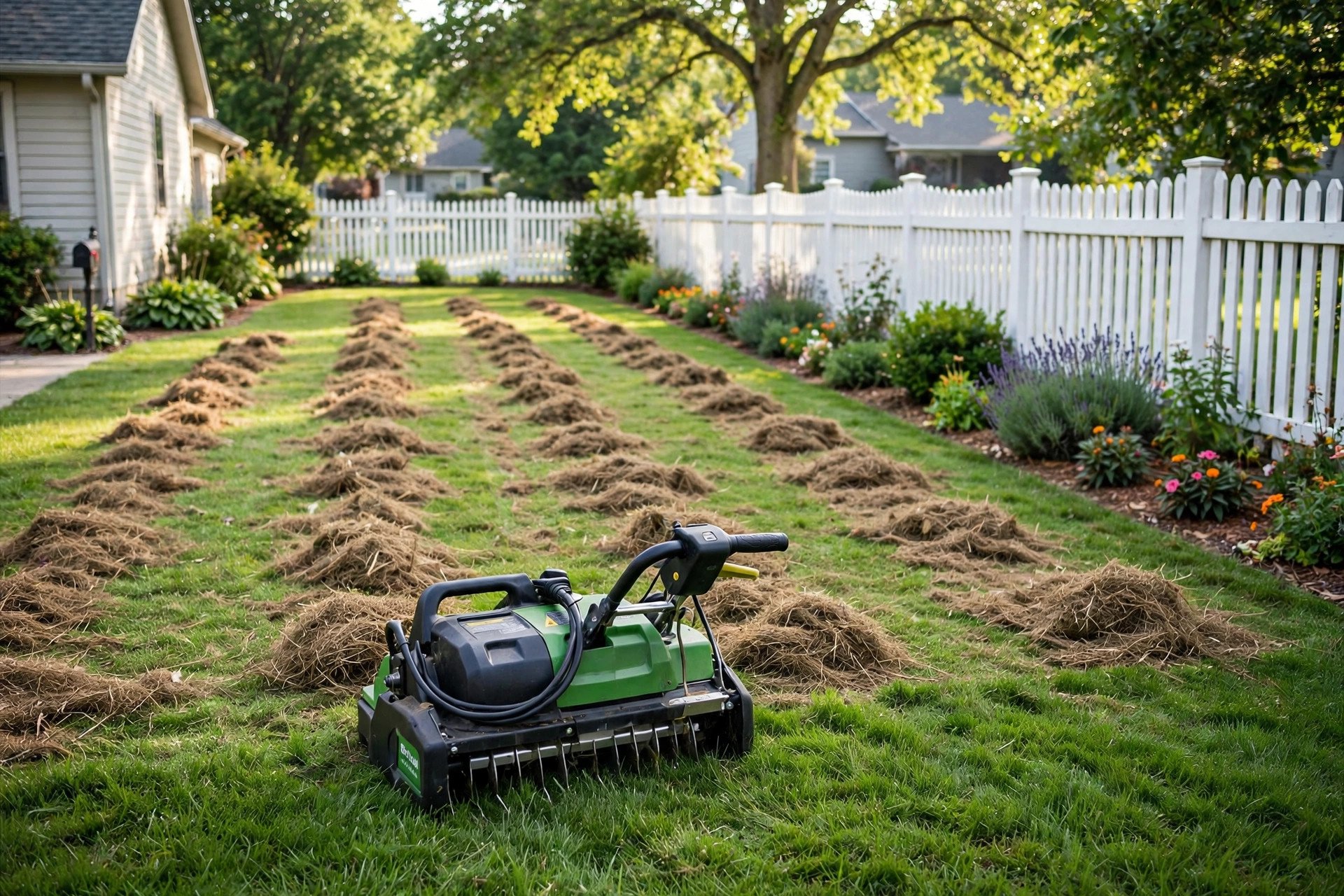

A thick, green lawn does not come by luck. It comes from work that is done at the right time. One of the most useful jobs is dethatching. The best electric dethatcher for small lawns makes this job quick and simple. It pulls up the dead layer of thatch that sits between the grass and the soil. When that layer is gone, water, air, and food can reach the roots again.
Many owners of small yards put off dethatching. The lawn looks fine from a distance. But up close, the grass may feel spongy underfoot. Water may run off instead of soaking in. New seed may fail to grow. These are signs of too much thatch. An electric dethatcher is a good tool for yards under a few thousand square feet. It is light, quiet, and easy to store. This guide explains how to choose one, how to use it, and how to keep your lawn healthy after.
Why Dethatching Matters for a Small Lawn
Thatch is a mat of dead grass stems, roots, and leaves. It builds up between the living grass and the soil. A thin layer, under half an inch, is normal. It protects the soil and holds water. But when thatch grows thicker than half an inch, it starts to harm the lawn.
Thick thatch blocks rain. It also blocks fertilizer and seed. Roots then grow up into the thatch instead of down into the soil. These shallow roots dry out fast in summer heat. Pests and disease also like to hide in a thick mat. A small lawn shows these problems faster than a big one. There is less room for the grass to recover.
Dethatching pulls up the dead mat without tearing out the healthy grass. The best electric dethatcher for small lawns does this with spring tines or metal blades that scratch the surface. After the job, the lawn may look rough for a week or two. Then it comes back greener and thicker than before.
Dethatch at the right time of year. For cool-season grasses, such as Kentucky bluegrass and fescue, the best time is early spring or early fall. For warm-season grasses, such as Bermuda and zoysia, the best time is late spring or early summer. These are the seasons when the grass grows fast and heals quickly.
Before you buy any tool, it helps to know the difference between the two jobs. Many homeowners mix them up. Read about lawn aeration vs dethatching which first to learn the right order for each job.
What to Look for in an Electric Dethatcher: Best Electric Dethatcher for Small Lawns
Electric dethatchers come in corded and cordless models. Both have merits. The right one for you depends on your yard, your outlet access, and your budget.
Power and Motor
Most corded models use 12 to 15 amp motors. A 12-amp motor is enough for light thatch on a small yard. A 14 or 15-amp motor handles thick thatch with more ease. Cordless models run on rechargeable battery packs, often 40 volt or 20 volt. A 40-volt pack gives more power and longer run time. Check how long one charge lasts. For a small lawn, 30 to 45 minutes of run time is usually enough.
Working Width
The working width is how wide a path the machine clears in one pass. Common widths are 12 to 16 inches. A wider machine covers ground faster. But a wider machine is also heavier and harder to turn in tight spots. For a small lawn with beds, trees, and paths, a 13 or 14 inch width is a good middle ground.
Tine and Blade Type
Electric dethatchers use two kinds of heads. Spring tines are flexible metal fingers. They rake out dead material with little harm to live grass. They suit lawns with light to medium thatch. Fixed blades, sometimes called scarifier blades, cut into the thatch more deeply. They suit lawns with heavy thatch. Some models come with both heads so you can switch between them.
Depth Control
Good machines let you set the working depth. You want the tines to touch the top of the soil, not dig into it. A depth lever with several stops gives fine control. Cheap models may have no depth control. They are harder to use well and can scalp the lawn.
Weight and Storage
One of the main draws of an electric model is light weight. Most weigh 15 to 30 pounds. That is far less than a gas dethatcher. Look for folding handles for storage in a garage or shed. Small yards mean small storage space, so a machine that folds flat is a real plus.
Corded or Cordless
Corded models never run out of power, and they cost less. But the cord limits your reach. You may need a long outdoor extension cord rated for the motor amps. Cordless models give full freedom of movement. The trade-off is run time and the cost of extra batteries. For a very small yard, cordless is often the simpler choice.
Types of Electric Dethatchers Compared
Shoppers will meet three main types. Each fits a different yard and a different budget.
Two-in-one dethatcher and scarifier. These are the most popular. They ship with a spring-tine head and a blade head. You use the tines for a light clean and the blades for heavy thatch. They cost a bit more, but they cover every case. If you only buy one tool, this is the one.
Dethatcher only. These use spring tines alone. They are light and simple. They suit lawns that are dethatched each year, so the thatch never gets thick. They are the cheapest option.
Manual thatch rake. This is not electric, but it is worth a mention. A thatch rake costs little and works fine for a patch of a few hundred square feet. For a whole small lawn, it is hard work. Most people give up halfway. An electric machine finishes the job in under an hour.
How to Dethatch a Small Lawn, Step by Step
Good results come from good timing and good method. Follow these steps.
1. Mow the grass a bit shorter than usual. This lets the tines reach the thatch layer. Bag the clippings. 2. Mark sprinkler heads and hidden obstacles. For tips on watering equipment, see this guide to affordable lawn sprinkler installation cost estimate. Small stones, edging, and sprinkler heads can damage the machine. 3. Water lightly the day before. Damp soil lets the tines pull thatch free without tearing roots. Do not soak the lawn. Wet, muddy ground makes a mess. 4. Set a shallow depth. Start with the tines just touching the soil surface. You can go deeper on a second pass if needed. 5. Work in straight, slightly overlapping rows. Go slowly. Let the machine do the work. Push too fast and you leave thatch behind. 6. Rake up the debris. A dethatched lawn drops a large amount of dead material. Rake it up and compost it or bag it. 7. Water and feed after. This is the moment to help the lawn heal. A light feeding and steady water bring quick recovery. If your soil is poor, read about lawn fertilizer for sandy soil florida for feeding ideas that suit weak soils.
After dethatching, the lawn may look thin and brown in spots. This is normal. With water and mild weather, new growth fills in within two to three weeks. Avoid heavy foot traffic on the lawn during this time.
Cost and Price Ranges
Electric dethatchers are among the cheapest powered lawn tools. Prices in 2026 run as follows:
– Budget spring-tine models: about 60 to 100 dollars. Fine for light thatch and very small yards. – Mid-range two-in-one models: about 100 to 180 dollars. The best value for most small lawns. They include depth control and both heads. – High-end cordless models: about 180 to 300 dollars, often sold without the battery. With battery and charger, the cost rises.
Corded models cost less to run. They use a small amount of electricity per hour. Cordless models cost more up front, and batteries lose strength after several years. Spare parts, such as tine sets, cost 15 to 40 dollars.
Renting is another option. Some garden centers rent electric dethatchers for about 40 to 60 dollars a day. If you dethatch only once a year, renting may cost less than buying. But owning the tool means you can work on your own schedule, and you will use it more often.
Care and Upkeep of the Machine
An electric dethatcher needs little care. A few habits will keep it running for years.
– Clean the head after each use. Knock off grass and soil. A stiff brush works well. Built-up debris bends tines and cuts power. – Check the tines each season. Spring tines wear down and bend. Replace a worn tine set rather than forcing the machine to work harder. – Store it dry. Keep the machine in a shed or garage. Never leave a corded model out in the rain. – Inspect the cord. Look for cuts or cracks before each use. A damaged cord is a shock hazard. Replace it at once. – Charge batteries right. Follow the maker’s rules for charging and storage. Do not leave batteries in extreme heat.
A machine that is cleaned and stored well will last ten years or more. The job takes only a few minutes after each use.
Safety Tips
Electric garden tools are safe when used with care. Still, respect the power.
– Wear closed shoes, gloves, and eye protection. Dethatchers can throw small stones. – Keep children and pets away from the work area. – Never use a corded tool in wet conditions or standing water. – Keep the cord behind you as you work. Cut cords are a common cause of shock. – Unplug the machine, or remove the battery, before clearing a jam or changing heads. – Do not force the machine. If it stalls in heavy thatch, raise the depth and make a second pass.
Read the manual that comes with your model. Each machine has its own warnings and limits. For general yard equipment safety standards, the U.S. Consumer Product Safety Commission offers guidance at cpsc.gov.
Where to Learn More About Lawn Equipment
When you shop for a dethatcher, the maker’s site often lists specs, manuals, and parts. Toro sells a wide range of yard tools and publishes clear guides on lawn care at toro.com. John Deere offers homeowner equipment and advice on grounds care at deere.com. Briggs & Stratton, a long-time maker of small engines and outdoor power products, provides maintenance help at briggsandstratton.com.
Frequently Asked Questions
How often should I dethatch a small lawn? Most lawns need dethatching every one to two years. Lawns with fast-growing grasses, such as Bermuda, may need it each year. Check the thatch layer each spring. Cut a small wedge of turf and measure the brown mat. If it is more than half an inch, it is time to dethatch.
Is an electric dethatcher strong enough? Yes, for a small lawn. Electric models have enough power for the thatch levels that most home lawns build up. They are not built for large fields or for thatch that has been left for many years. For a yard of a few thousand square feet, an electric machine is the right size.
Should I dethatch before or after aerating? Dethatch first, then aerate. Dethatching clears the surface mat. Aerating then opens the soil below. Doing them in this order gives the best result. For a fuller look at both jobs, see lawn aeration vs dethatching which first.
Can I dethatch a new lawn? No. Wait until a new lawn is well rooted, usually after the second year. Dethatching too early can tear out young grass plants. A new lawn rarely has much thatch anyway.
What should I do with all the dead thatch? Rake it up and add it to a compost pile. It breaks down well. You can also bag it for yard waste pickup. Do not leave it lying on the lawn. It will smother the grass you just freed.
Will dethatching hurt my grass? A healthy, well-timed lawn recovers quickly. The lawn may look rough for a week or two. That is normal. Dethatching at the wrong time, such as in the heat of summer or on dormant grass, can cause real harm. Stick to the active growing season for your grass type.
A Final Word
A small lawn repays a little care. The best electric dethatcher for small lawns is not the biggest or the priciest. It is the one that fits your yard, your hands, and your budget. Pick a light machine with depth control. Use it in the right season. Clean it and put it away dry. Your lawn will answer with thick, even growth year after year. A dethatcher is a simple tool, and in a small yard, simple tools do the best work.
References
Toro. (n.d.). Lawn care equipment and guides. https://www.toro.com Deere & Company. (n.d.). Homeowner lawn and garden equipment. https://www.deere.com Briggs & Stratton. (n.d.). Outdoor power products and maintenance. https://www.briggsandstratton.com U.S. Consumer Product Safety Commission. (n.d.). Yard and garden equipment safety. https://www.cpsc.gov
Was this guide helpful?

About Michael Thompson
The My Garden US editorial team writes practical, in-depth home and garden guides for American homeowners — tested advice, no fluff.
You May Also Like
Finding a Lawn Mower Blade Sharpening Service Near Me
October 4, 2026 1 views
Grub Killer for Lawns Safe for Dogs: A Practical Guide
July 1, 2026 2 views
How to Get an Affordable Lawn Sprinkler Installation Cost Estimate
July 1, 2026 3 views