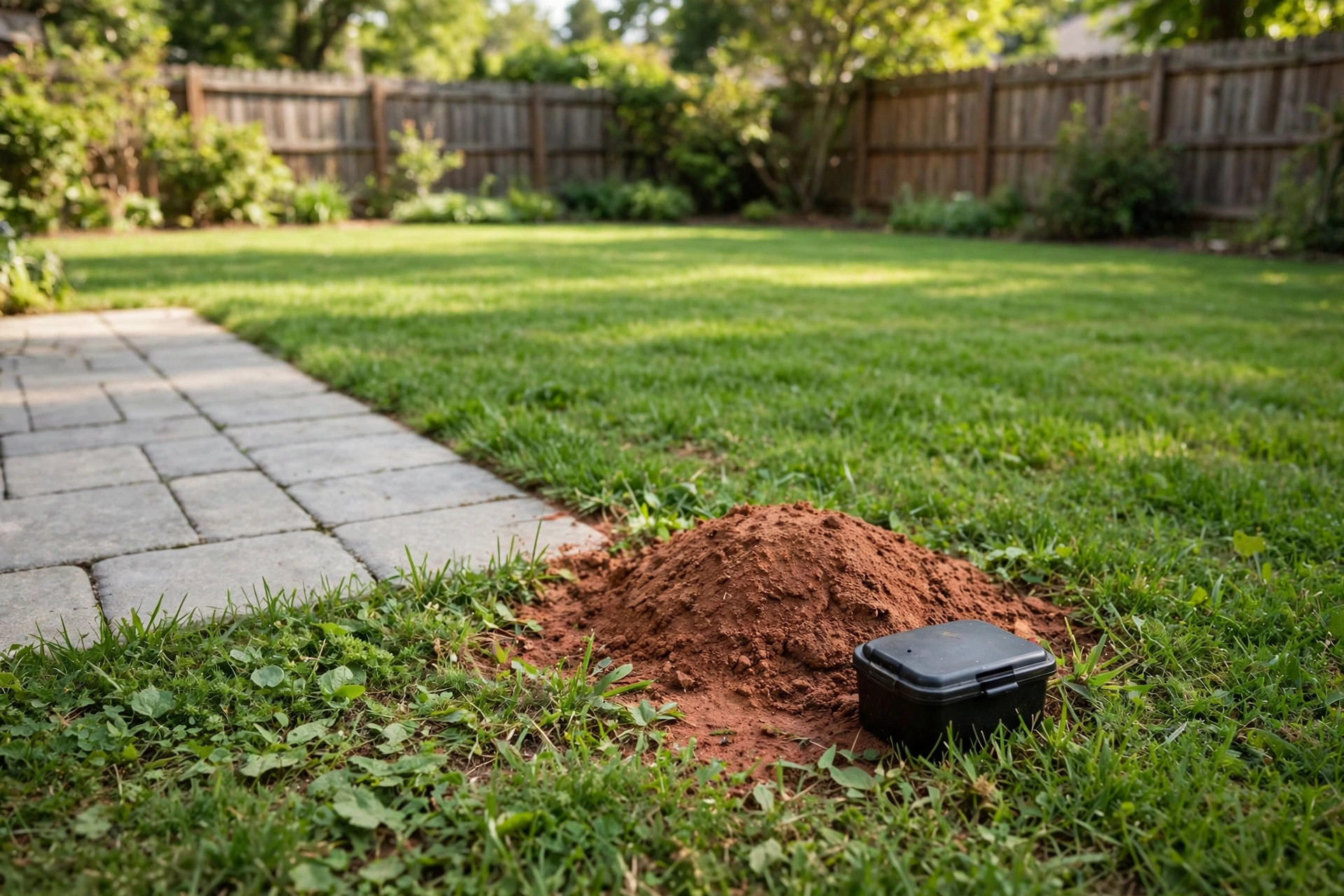

Ants march across the patio in June. They climb the fence posts. They build small dirt mounds near the swing set and along the dog run. When you have dogs that play in the yard, you cannot reach for just any ant spray. The best pet safe ant killer for yard dogs must kill the ants and still keep your dog safe when he runs, rolls, and sniffs in the grass.
Many ant killers use strong poisons. A dog that licks his paws after a walk can pick up that poison. A puppy that chews a grass stem can take in more. This is why dog owners look for pet safe ant killer products made with gentler active parts. The best pet safe ant killer for yard dogs is one that works on the ants and breaks down in a way that does not harm pets when used as the label says.
This guide covers why ants move into yards, what makes an ant killer safe for dogs, the main types you can buy, what they cost, how to use them, and how to keep your yard ant free over time.
Why Ants Love Yards With Dogs
Ants look for three things. They want food. They want water. They want shelter. A yard with dogs gives them all three.
Dog food bowls left outside give off smell. Crumbs fall on the patio. Wet bowls give ants a drink. Thick grass and mulch beds give them cool, damp places to nest. Fire ants like open, sunny lawns. Carpenter ants like damp wood in fences and decks. Pavement ants nest under patios and walkways. The ASPCA reminds pet owners that what is harmless to us can still hurt a dog, so ant control in a dog yard needs extra care.
Warm weather brings the worst of it. Ants send out scouts in spring. By early summer the colonies are large. If your dog digs at a mound, the ants may swarm and sting him. Fire ant stings hurt dogs too, on the belly, the nose, and the paws. Act early with a pet safe ant killer rather than waiting for the yard to fill with mounds.
What Makes an Ant Killer Safe for Dogs: Best Pet Safe Ant Killer for Yard Dogs
No ant killer is fully safe if a dog eats a whole bag of it. The phrase pet safe means the product is low in risk when used as the label says. The label is the law on this point. The EPA registers ant killer products and reads the label claims before a product can be sold.
Look for these marks of safety:
– Active parts with low toxicity to mammals, such as borax-based baits, diatomaceous earth, or botanical oils like d-limonene. – Bait stations with closed, tamper-proof cases that a dog cannot chew open. – Granules that soak into the soil or break down fast after watering. – Clear reentry times on the label that tell you when dogs can go back on the lawn.
Avoid sprays that leave a heavy wet film on low grass where a dog’s belly drags. Check the label for the signal word: “Caution” is milder than “Warning,” and “Danger” needs the most care around pets.
The AKC notes that many common yard chemicals rank among the top risks for dogs. If you are unsure about a product, call the maker’s hotline on the label or ask your vet before you spread it.
Main Types of Pet Safe Ant Killers
Borax-Based Bait Stations
Borax baits use sugar to draw ants in. The ants carry the borax back to the nest. It works slow, and that is the point. A slow kill lets the bait reach the queen, and when the queen dies the colony dies.
Closed bait stations are the best form for yards with dogs. The bait sits inside a plastic case with small entry holes for ants. Dogs cannot reach the bait. Set these near trails, along fences, and under shrubs. The best pet safe ant killer for yard dogs in many cases is a set of these closed stations, since they need no spreading and no reentry wait.
Diatomaceous Earth
Diatomaceous earth is a fine powder made from tiny sea fossils. It cuts and dries out insects that walk through it. Use only the food-grade kind, never the pool-grade kind. The pool-grade kind is treated with heat and can harm lungs.
You dust a light ring around mounds and along paths. It works only while it stays dry. Rain or a sprinkler makes it stop working until it dries again. Wear a dust mask when you spread it so you do not breathe the fine dust. Once it settles into the grass, dogs can walk on it without harm. PetMD explains that dogs are far more at risk from strong chemical sprays than from these low-toxicity options, which is why simple powders have a place in a dog-safe plan.
Botanical Oil Sprays
These sprays use plant oils such as d-limonene from citrus peels, clove oil, or peppermint oil. They kill ants on contact and smell strong to us. Ants dislike them, so they also work as a short-term barrier.
They break down fast in sun and air. This is good for pets but means you must spray again often. Keep dogs off the wet spray until it dries. Read the label on each brand, since some add other chemicals that are not botanical.
Beneficial Nematodes
Nematodes are tiny worms you mix with water and spray on the lawn. They hunt down ant larvae and other soil insects. They are fully safe for dogs, cats, people, and plants, and you can let the dogs out right after you spray.
They cost more than baits and need the right soil warmth to work. The colony fades over a few weeks rather than days, but many gardeners like them as a long-term, chemical-free step.
Boiling Water and Physical Removal
Pouring boiling water on a mound is free and chemical free, but it rarely kills the queen deep below. Use it only for small new mounds, and keep dogs inside until the water has cooled.
How to Choose the Best Pet Safe Ant Killer for Yard Dogs
Start with the ant. Watch them for a few minutes. Small red ants that sting may be fire ants. Big black ants near wood may be carpenter ants. Tiny brown ants on the patio may be pavement ants. The bait that works best depends on what the ants like to eat. Fire ants take protein baits well. Sugar ants take sweet baits.
Next, think about your dogs. A puppy that chews everything needs closed stations and nothing he can dig up. A dog with a habit of eating grass needs products that break down fast or wash into the soil.
Then check the label for three facts: the active part, the reentry time, and the warning for pets. If the label says nothing about pets, pick another brand. The CPSC and EPA guidance both push makers to list clear use rules, and a silent label is a reason to pick another brand.
Read reviews from other dog owners. A product can be safe on paper and still fail in a real yard if your dog chews every new object.
You may also want to pair your ant plan with other dog-safe yard steps, such as pet friendly pest control for yard and home, which covers broader pests, and best pet safe lawn fertilizer for dog owners, so the whole yard stays safe for play.
Cost and Price: What to Expect
Pet safe ant killers cost about the same as standard ones. A pack of closed bait stations runs about ten to twenty dollars and covers a normal yard for a season. A bag of food-grade diatomaceous earth costs about ten to fifteen dollars and lasts a long time if you keep it dry. Botanical sprays cost about eight to fifteen dollars a bottle, but you will buy more than one bottle per summer since they need repeat use.
Beneficial nematodes cost more, often twenty to forty dollars for enough to treat a medium yard. You may need a second round if the first does not take. Boiling water costs nothing but your time and your gas bill.
A single visit from a pest control firm can cost one hundred dollars or more, and many now offer pet-safe plans. If you hire one, get the product names and the reentry time in writing before the dogs go out.
How to Apply It the Right Way
Apply baits in the evening when ants feed most. Do not water right after a bait goes down, since water can wash bait away before ants find it. Read each label for the exact order.
Mow the lawn short before a treatment. Short grass lets granules reach the soil. Pick up toys, bowls, and chews before you start so nothing soaks up product. Put the dogs inside with a treat puzzle while you work.
For mounds, treat the mound itself, not the whole yard. Circle it with diatomaceous earth or set a bait station at the base. For broad coverage, spread granules on a calm day with no wind so dust does not blow onto patios.
After treatment, follow the reentry time. If the label says keep pets off for two hours, keep them off for two hours. Water the lawn as the label says to move granules down into the soil and off the grass blades where dogs walk. Store all products in a locked shed or high cabinet, since dogs have chewed through bags left in garages.
Keeping Ants Away for Good
Killing the ants you see is only half the job. The yard must stop drawing them back.
Feed dogs indoors when you can. If they eat outside, pick up the bowls after twenty minutes and wipe up patio spills the same day. Keep trash cans shut tight and clear fallen fruit fast, since rotting fruit feeds whole ant armies.
Fix water problems. Ants need water as much as food. Repair leaky outdoor spigots. Do not let sprinklers pool in low spots. Trim mulch beds back from the house walls by a few inches. Thick mulch holds dampness and gives ants a dark, safe home.
Seal entry points on the house. Caulk gaps around pipes and windows. Keep shrubs cut back from siding. These small steps cut down the ants that reach the kitchen, which means less need to spray near the dog door.
A thick, healthy lawn also fights ants. Bare spots bake in the sun and draw fire ants. Overseed thin areas in fall. Water deep and less often so grass roots grow strong. If cats share the yard, best outdoor cat tree weatherproof for patio covers pet-safe outdoor comfort for them too.
Safety Rules Every Dog Owner Should Follow
Keep these rules on the fridge during ant season:
– Never spread ant killer while dogs are in the yard. Put them inside first. – Wear gloves and wash your hands after you handle any product. – Keep dogs from treated spots until the label says it is safe. – Wipe paws and bellies if a dog walks on a treated lawn before the wait time ends. – Keep the product label or a photo of it, since the vet needs the active part name if a dog gets sick. – Watch for signs of trouble: drooling, vomiting, shaky legs, or heavy tiredness. Call your vet or an animal poison hotline at once if you see these.
The ASPCA poison control line and PetMD both stress that fast action matters more than the exact product name. Do not wait to see if the dog gets better on his own.
FAQ
Is borax safe for dogs in ant baits?
Borax has low toxicity in the small amounts used in closed bait stations. It is a risk only if a dog eats a large amount, so call your vet if your dog chews a station open.
How long should dogs stay off the lawn after treatment?
Follow the label. Many pet-safe products ask for one to two hours, or until the spray dries. Granules often need a watering-in step first. When in doubt, wait longer.
Can I use vinegar to kill ants in a dog yard?
Vinegar kills ants it touches and the smell pushes others away. It is safe for dogs once dry, but it does not kill the nest, so ants come back. It works best as a quick fix on patios and along trails.
What if my dog eats ant bait?
Take the product label or a clear photo of it and call your vet or a pet poison hotline right away. Tell them how much the dog may have eaten. Do not make the dog vomit unless the vet tells you to.
Are fire ant mounds more dangerous for dogs?
Yes. Fire ants sting in groups and a dog that steps on a mound can get many stings at once. Stings on the nose and eyes are the most painful. Treat fire ant mounds early with a pet-safe bait, and keep dogs off new mounds until the treatment works.
A Short Final Word
The best pet safe ant killer for yard dogs is not one magic bottle. It is a plan. Pick a low-toxicity product that fits your ants and your dogs. Use closed stations or targeted treatments instead of broad poison. Follow the label to the letter. Then keep the yard clean, dry, and thick with grass so ants find little reason to come back. Your dogs get their yard. The ants do not.
For more background, see The Home Depot, Chewy, and The Spruce Pets. See also Petco and PetSmart for further detail.
References
American Kennel Club. (n.d.). Dog care and training resources. https://www.akc.org ASPCA. (n.d.). Pet care and animal welfare resources. https://www.aspca.org Chewy. (n.d.). Pet supplies. https://www.chewy.com Petco. (n.d.). Pet supplies and services. https://www.petco.com PetMD. (n.d.). Pet health information. https://www.petmd.com PetSmart. (n.d.). Pet supplies and services. https://www.petsmart.com The Home Depot. (n.d.). Home improvement products. https://www.homedepot.com The Spruce Pets. (n.d.). Pet care guides and product reviews. https://www.thesprucepets.com
Was this guide helpful?

About Michael Thompson
The My Garden US editorial team writes practical, in-depth home and garden guides for American homeowners — tested advice, no fluff.
You May Also Like
The Best No Pull Dog Harness for Strong Pullers: A Plain Guide
September 9, 2026 0 views
Dog Life Jacket for Small Breeds Pool Safety: A Simple Guide for Owners
June 27, 2026 0 views
Best Orthopedic Cat Bed for Senior Cats: A Guide to Comfort for Older Felines
January 7, 2026 0 views