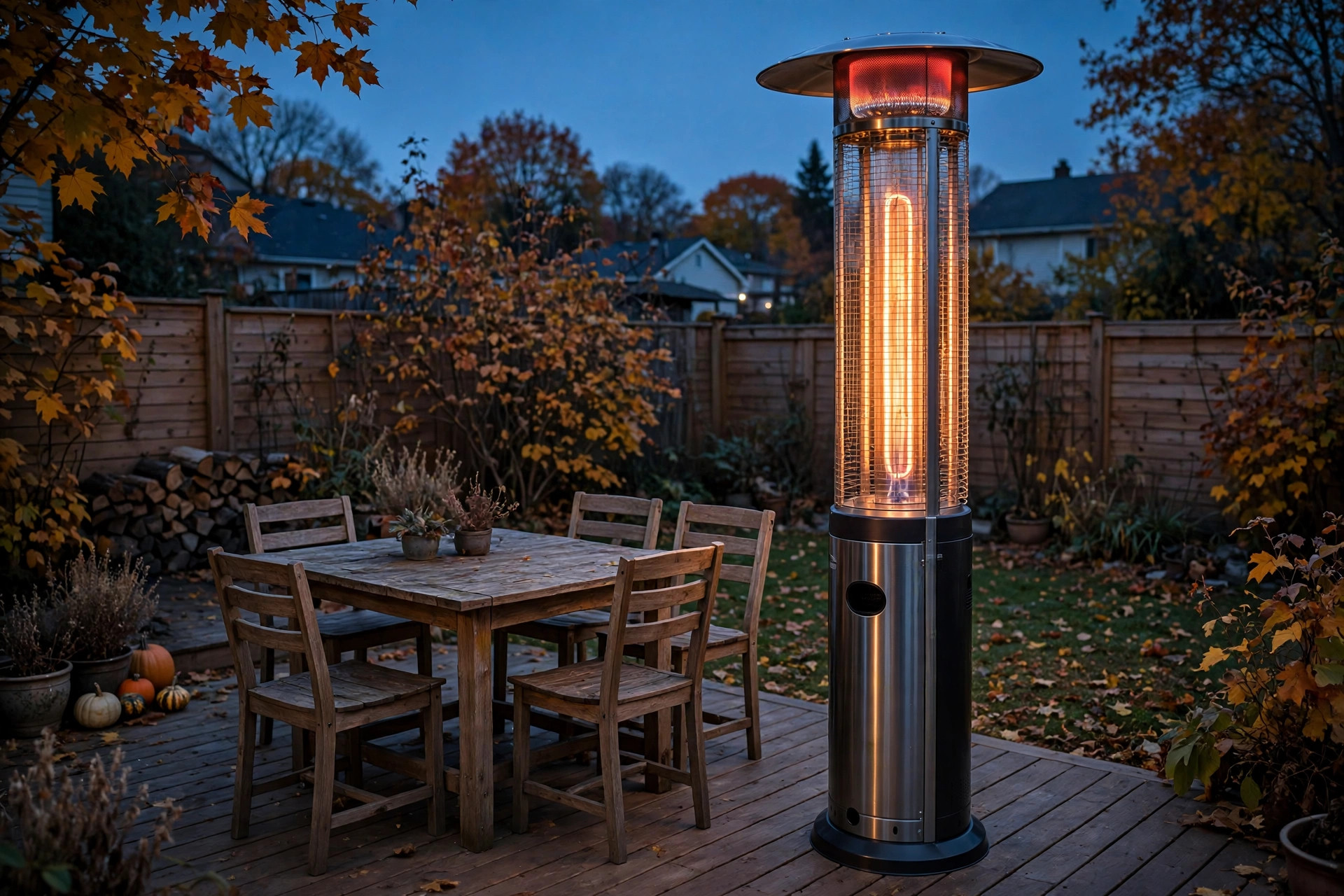

A cold evening should not force you back inside. An electric patio heater extends the life of your porch, deck, or backyard well past the warm months. This best electric patio heaters buying guide walks you through every step of the choice. You will learn how these heaters work, what types exist, how much heat you need, and what safety rules to follow. By the end, you will know exactly which unit suits your space and your budget.
Many homeowners once relied on gas heaters with heavy tanks. Electric models are simpler. You plug them in, flip a switch, and feel warmth within seconds. They produce no flame and no fumes. They are quiet. They also work in places where open flame is banned, such as balconies and covered porches in some towns. The U.S. Department of Energy offers general guidance on efficient home heating, and much of that advice applies to outdoor heat as well.
Why It Matters
Outdoor space is valuable. A deck that sits empty from October to April is wasted space. An electric heater turns those cold months into usable time. Families gather outside for dinner in November. Friends linger on the patio after a football game in January. A small business with a cafe terrace can serve guests longer into the year.
Electric heat also suits people who want low fuss. There are no propane tanks to refill. There is no chimney to sweep. Most units need only a standard outlet and a wipe-down now and then. The running cost is easy to predict because it depends only on the wattage and your local electric rate.
Another point matters more than ever. Many rental homes and condos ban gas heaters on balconies. Electric units often remain allowed because they have no open flame. Always check your lease and local rules first. A quick look at This Old House shows how often patio projects run into local codes, so the check is worth the time.
What to Look For: Best Electric Patio Heaters Buying Guide
Start with the size of your space. Measure the area you want to warm. Most electric patio heaters list a coverage area in square feet. A 1,500-watt unit typically covers about 100 to 160 square feet. That is enough for a small porch or a single seating group. A large deck of 300 square feet may need two units or one stronger model.
Next, look at the wattage. Most plug-in models run at 1,500 watts on a standard 120-volt outlet. This is the same draw as a strong hair dryer. Some larger units need 240 volts or a dedicated circuit. Check your breaker panel before you buy. If your outdoor outlet shares a circuit with other heavy loads, a heater may trip the breaker.
Think about mounting. Where will the heater live? Free-standing towers work well on open decks. Wall-mounted units save floor space on small porches. Ceiling-mounted models suit covered patios with solid overhead beams. Tabletop heaters fit a balcony table but warm only a tiny radius.
Look for weather resistance. Outdoor heaters face rain, wind, and dust. The best carry an IP rating of at least IPX4, which means they resist splashes from any direction. The Environmental Protection Agency notes that outdoor equipment should handle local weather, and a heater left out in a storm without protection will fail early.
Check the controls. Simple dials are reliable. Remote controls add comfort on cold nights. Timers and tip-over shutoff add safety. A heater that switches itself off when knocked over is worth the extra dollars, especially with children or pets around.
Types of Electric Patio Heaters
Electric patio heaters come in four main forms. Each suits a different space.
Freestanding tower heaters are tall units, often six to seven feet high. The heat source sits at the top and radiates outward in a wide circle. They need floor space and a stable base. They are easy to move, so you can shift them as guests move. Readers who like standalone electric heat indoors may also enjoy reading a freestanding electric stoves reviews and buying guide.
Wall-mounted heaters bolt to a wall or post. They aim heat in one direction. They are ideal for narrow porches where floor space is tight. Installation takes basic tools and a solid mounting surface.
Ceiling-mounted or hanging heaters hang from a covered roof or pergola. They spread heat downward over a table or seating area. They stay out of the way and out of reach of children. They need a sturdy overhead structure.
Tabletop heaters are small units that sit on a table. They warm only the people closest to them. They suit tiny balconies where nothing larger fits.
Two heating technologies appear across these types. Infrared heaters warm people and objects directly, like sunlight. They work fast and lose little heat to wind. Quartz tube and carbon fiber elements are common infrared choices. For shoppers comparing infrared options, an affordable infrared outdoor heaters buying guide can help narrow the field. Convection heaters warm the air instead. They work more slowly outdoors because breezes carry the warm air away. For open patios, infrared is usually the better pick.
Cost and Price
Electric patio heaters range widely in price. Small tabletop units start around $40 to $80. Mid-range freestanding towers cost $100 to $250. High-end wall-mounted or ceiling models with strong infrared elements can run $300 to $600 or more. Big retailers like Home Depot and Lowe’s carry options across this whole range, so you can compare prices in one place.
Running cost is simple to estimate. A 1,500-watt heater uses 1.5 kilowatt-hours per hour. Multiply that by your electric rate. At 15 cents per kilowatt-hour, one hour costs about 23 cents. Four hours of use costs under a dollar. This makes electric heat one of the cheapest ways to warm a patio for an evening.
Compare that to propane. A 20-pound propane tank holds about 430,000 BTUs and costs $15 to $25 to refill. A typical gas patio heater burns 40,000 BTU per hour, so a tank lasts about ten hours. That is $1.50 to $2.50 per hour. Electric heat often costs less than a quarter of that. The savings add up over a long season.
Installation cost matters too. A plug-in unit costs nothing to install. A 240-volt unit may need an electrician to run a new circuit, which can add $200 to $500. Wall and ceiling mounts may need a handyman if you are not comfortable with tools. Factor these costs into your budget before you buy.
Placement and Care
Where you put the heater decides how well it works. Place infrared heaters where they can shine directly on the seating area. Heat does not bend around corners. A heater behind a sofa warms the sofa, not the people on it. For a dining table, center the heater over or beside the table. For a lounge set, aim it at the chairs.
Keep clearance around the unit. Most makers ask for three feet of clear space on all sides and six feet above. Do not place a heater under a low awning or near curtains. Read the manual for the exact numbers for your model. The Family Handyman site has useful checklists for outdoor projects that cover spacing and mounting basics.
Care is simple. Unplug the unit before cleaning. Wipe the housing with a damp cloth once a month during the season. Keep the reflector clean, because a dusty reflector throws less heat. Check the power cord for cracks or fraying before each use. If the cord is damaged, stop using the heater until it is repaired.
At the end of the season, store the heater dry. Bring portable units into a garage or shed. Cover fixed units with a weatherproof cover. Napoleon and Heatilator, both known for home heating products, stress that covers extend the life of outdoor equipment. A $20 cover can add years to a $200 heater.
Timers and smart plugs make daily use easier. A simple outdoor timer switches the heater off after a set number of hours, so you never forget it. A smart plug lets you turn the unit on from inside the house, giving it time to warm the patio before you step out. Both cost little and add real comfort on cold evenings.
Safety
Electric heaters are safer than gas ones, but they still demand respect. Electricity and water do not mix. Never use an indoor-rated heater outdoors. Never leave a heater running in the rain unless it is rated for it. Use outlets with ground-fault protection (GFCI) on all outdoor circuits.
Keep children and pets at a safe distance. The housing of an infrared heater gets hot. Teach children not to touch it. Place tabletop units where they cannot be knocked over. Use models with tip-over shutoff when possible.
Never run a heater unattended. Turn it off when you go inside. Unplug portable units when not in use. Do not use extension cords unless the maker allows it, and then only a heavy-duty outdoor cord rated for the wattage. A thin indoor cord can overheat and melt.
Check local rules. Some cities restrict outdoor heaters of any kind. Some condo boards ban them on balconies. A short call to your local office can save you a fine. The Spruce home site regularly covers how local codes shape patio choices.
If you also enjoy open flame outdoors, you may want to read a best outdoor fire pits for humid climates guide for a different kind of evening warmth.
FAQ
How much area does a 1,500-watt electric patio heater cover? Most cover 100 to 160 square feet in calm air. Wind shrinks that range. For best results, place the heater close to the seats and out of direct wind.
Can I use an electric patio heater on a covered porch? Yes, if the unit is rated for it and you keep the required clearance. Ceiling-mounted models are made for covered spaces. Always check the manual for minimum distances from the ceiling and walls.
Do electric patio heaters work in wind? Infrared models work better in wind than convection models because they heat people, not air. Still, strong wind cuts their effect. A wind screen or a sheltered corner helps a great deal.
What does IPX4 mean on a patio heater? It is a weather rating. IPX4 means the unit resists water splashes from any direction. It can handle light rain but should not sit in a downpour. Look for higher ratings if your patio is fully exposed.
How long do electric patio heaters last? A well-kept unit lasts five to ten years. The heating element may need replacement after a few thousand hours. Storing the heater dry in winter adds years to its life.
Are electric patio heaters cheaper to run than propane? In most cases, yes. Electric heat costs roughly 20 to 30 cents per hour at average rates. Propane often costs $1.50 or more per hour. The gap grows with heavy use.
A Final Word
Choosing an electric patio heater comes down to three questions. How big is your space? Where will the heater sit? How much do you want to spend? Answer those, and the right type picks itself. Measure your patio, check your outlets, and buy a unit with solid safety features. Then enjoy the cold months outside. A warm patio on a crisp night is one of the simple joys of home life.
References
Family Handyman. (n.d.). DIY home repair and maintenance. https://www.familyhandyman.com Heatilator. (n.d.). Fireplaces and fireplace products. https://www.heatilator.com Lowe’s. (n.d.). Home improvement products. https://www.lowes.com Napoleon. (n.d.). Fireplaces, grills, and heating products. https://www.napoleon.com The Home Depot. (n.d.). Home improvement products. https://www.homedepot.com The Spruce. (n.d.). Home and garden advice. https://www.thespruce.com This Old House. (n.d.). Home renovation guidance. https://www.thisoldhouse.com U.S. Department of Energy. (n.d.). Energy efficiency and renewable energy. https://www.energy.gov U.S. Environmental Protection Agency. (n.d.). Protecting human health and the environment. https://www.epa.gov
Was this guide helpful?

About Lisa Anderson
The My Garden US editorial team writes practical, in-depth home and garden guides for American homeowners — tested advice, no fluff.
You May Also Like
EPA Certified Fireplace Remote Controls With Free Shipping: A Plain Guide to Buying and Using Them
April 29, 2026 0 views
Where to Buy Corner Electric Fireplaces in California
February 20, 2026 0 views
Affordable Freestanding Electric Stoves With Free Shipping: A Plain Guide
June 22, 2026 0 views