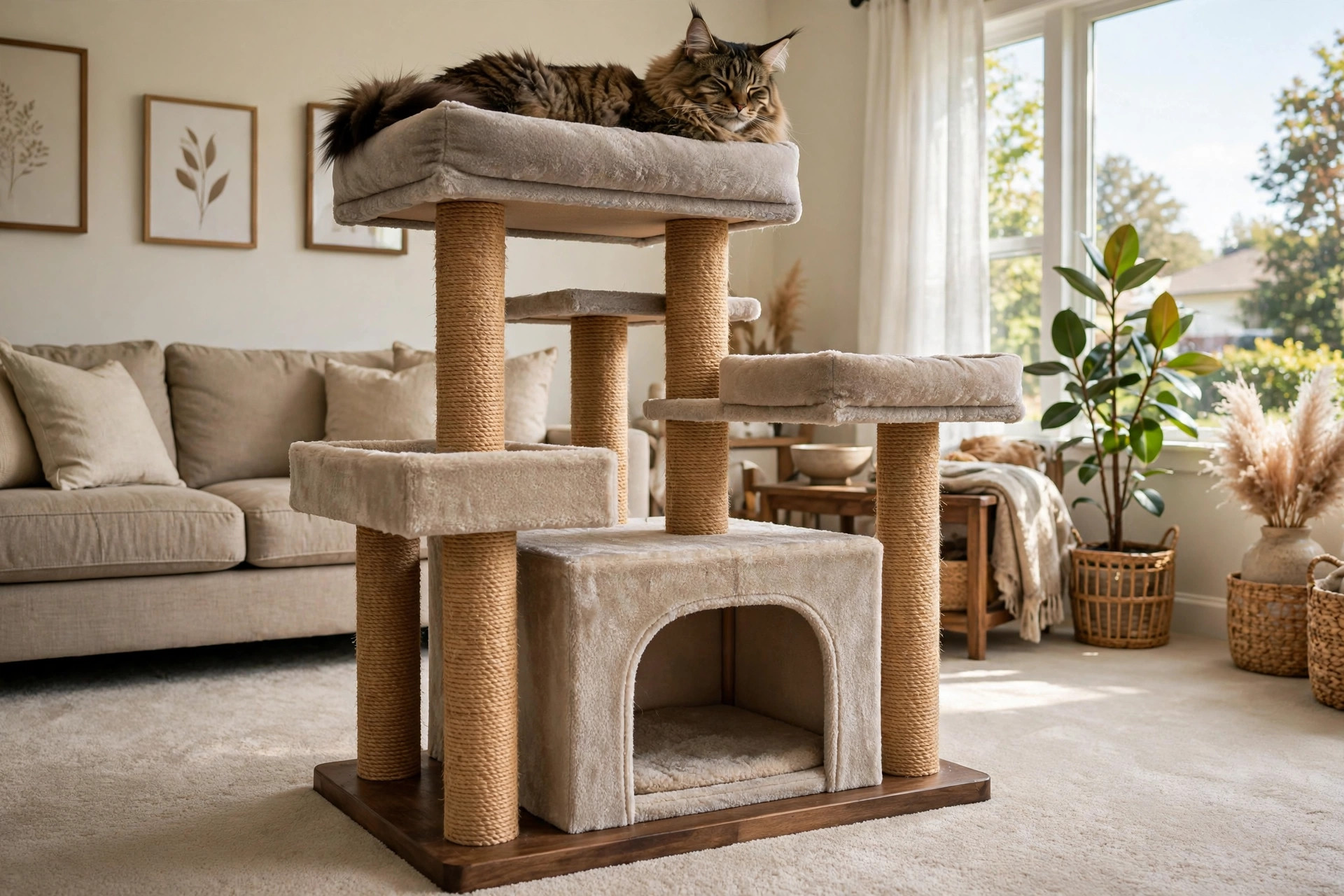

A big cat needs a big tree. Small cat trees tip. They wobble. They break. The best cat tree for large cats sturdy tall enough for Maine Coons and Ragdolls is built like furniture, not like a toy. It has a wide base. It has thick posts. It can hold 20 pounds or more without a shake. This guide explains what to buy and what to skip.
Many owners learn the hard way. A large cat jumps on a flimsy tower. The tower leans. The cat falls. Nobody gets hurt, but the trust is gone. Cats do not climb what they fear. A sturdy tall tree earns that trust back. It gives your cat a high place to watch the room. High places matter to cats. They feel safe up there.
Big breeds add a real challenge. A Maine Coon male can weigh 18 to 25 pounds. A Ragdoll can pass 20. Normal cat trees are tested for 8 to 12 pounds. That math does not work. When you search for the best cat tree for large cats sturdy tall, you need real weight numbers, not cute photos.
Why a Sturdy Cat Tree Matters for Large Cats
Cats love height. It is in their nature. In the wild, cats climb to watch for danger and prey. House cats do the same. A window sill or a bookshelf works. But a cat tree gives them a spot that belongs to them.
For large cats, the tree must be steady. A wobbling tree is a danger. A heavy cat puts real force on the frame when it leaps. The landing hits hard. If the base is narrow, the whole tower can tip. A falling tree can hurt a cat. It can break a lamp. It can scare a child.
A strong tree also protects your furniture. Cats scratch. It is normal. They scratch to mark scent. They scratch to stretch. A tall tree with good sisal posts gives them a legal place to scratch. Many owners find their couch survives once the cat has a real post. That only works if the post is tall enough for a big stretch.
Tall trees help big cats move. A large cat that climbs uses its legs and back. Older heavy cats lose muscle fast. A tree with wide, low steps lets them keep moving without pain. That is good for weight control. Vets say indoor cats need daily play and climb time. Guides from The Spruce Pets explain how climbing keeps indoor cats fit.
What to Look for in a Tall Cat Tree: Best Cat Tree for Large Cats Sturdy Tall
Shop with a checklist. Do not trust the box art. Trust numbers and build.
Weight Capacity
Check the listed weight limit first. Look for 20 pounds per perch at least. Better trees list 25 pounds. Some list total frame capacity instead of per-perch. Per-perch numbers are more honest. If no weight is listed, walk away. The maker is hiding something.
Base Width and Stability
The base is the foundation. For a tall tree, the base should be at least 24 by 24 inches. Square or round does not matter much. Wide matters. Heavy matters. A base made of thick plywood or solid wood beats thin particle board. Some owners add weight to light bases. A bag of sand in the bottom works. But a good tree should not need help.
Height and Perch Size
Tall means 5 feet or more for a large cat. Six feet is better. A big cat needs to stretch full length on a post. That means scratch posts of 30 inches or more. Perches should fit a loafing cat. For a 20-pound cat, a perch 16 inches wide is a tight squeeze. Look for 18 to 20 inches wide. Round beds need a big opening. Measure your cat if you can. Add two inches.
Posts and Scratching Material
Posts carry the load. Thin posts bend. Look for posts 4 inches thick or more. Solid wood cores beat cardboard tubes. Real sisal rope wrapping lasts longer than carpet. Sisal holds up to big claws. Carpet frays fast under a heavy cat. Check that the sisal is glued and wound tight. Loose sisal peels in weeks.
Fabrics and Joinery
Soft coverings should be thick plush, not thin fleece. Fleece pills and rips. Plush carpet stands up. Look at how parts join. Screws through wood last. Plastic connectors crack. Metal brackets at joints add strength. Test reviews on sites like Amazon often show photos of broken joints. Read the bad reviews. They tell the truth.
Types of Tall Cat Trees
Three main types work for large cats. Each has strong points.
Floor-to-Ceiling Tension Trees
These use a tension pole between floor and ceiling. They are slim. They fit small rooms. The height gives cats a real climb. They are very stable because the ceiling holds the top. But they suit slim cats best. Big cats may find the platforms small. Check platform size before buying. A tension tree with one wide bed at top works well.
Multi-Level Towers with Condos
These are the classic big towers. They have several levels, hide boxes, and perches. They suit homes with room. For large cats, pick a tower with fewer, wider levels rather than many tiny ones. Condos need a large door. A 20-pound cat will not squeeze through an 8-inch hole. Look for 10-inch openings. Solid bases on these towers matter most because they stand free.
Single Tall Posts with Platforms
Some owners prefer a tall scratch post with one or two platforms. These are simple. They are strong. They take little floor space. A single 4-foot sisal post on a wide base can hold a big cat for years. Add a tall scratching post made for large cats at the window, and the cat has both scratch and view.
Many homes mix types. A big tower in the living room. A tall post by the window. A window perch made for sunny windows adds a nap spot. Cats like choices. Options cut boredom. Bored cats scratch doors and fight with other pets.
Cost and Price
Prices vary wide. Budget trees cost 60 to 100 dollars. Mid-range trees cost 120 to 200 dollars. Premium trees cost 200 to 350 dollars or more.
Budget trees use cardboard tubes and thin carpet. They work for small cats. For large cats, they rarely last. Posts bend. Bases crack. You buy twice. That is false saving.
Mid-range is the sweet spot for big cats. You get plywood bases, thick posts, and real weight ratings. Many good towers for large breeds sit near 150 dollars. Watch for sales at major retailers like Target and budget options at Walmart. Holiday sales cut prices by a third.
Premium trees use solid wood. They look like furniture. They last for years. Some are hand made by small shops. They cost more up front but hold value. Testing notes from Consumer Reports show that frame material predicts lifespan better than price alone. Thick wood outlasts thick marketing.
Also budget for extras. Replacement sisal rope costs about 15 dollars. A spare perch cushion costs 20. If you need a self-cleaning litter box for busy cat owners, that is a separate budget line.
Care and Upkeep
A good tree lasts longer with basic care. Vacuum it monthly. Cat hair mats the plush. Mats hold smell. A lint roller works between vacuums. Wash removable cushions in cold water. Air dry them. Heat breaks elastic and shrinks covers.
Check joints every few months. Big cats loosen screws over time. Tighten what you can reach. If a post wobbles, stop use until fixed. A loose joint under a leaping 20-pound cat is a risk.
Rewrap sisal when it frays. Buy natural sisal rope. Wrap it tight from top to bottom. Glue the ends. This takes twenty minutes. It adds a year of life. Specialty sellers like Chewy carry sisal rope and replacement parts.
Spot clean stains fast. Blot, do not rub. Rubbing spreads the stain. Use a mild pet-safe cleaner. Test on a hidden spot first. Keep the tree away from heat vents. Dry heat cracks wood and stiffens glue.
Safety
Safety comes first with heavy climbers. Anchor tall towers when you can. Wall straps stop tip-overs. They cost little. They mount in minutes. This matters in homes with kids or dogs that bump furniture.
Place the tree on flat ground. Rugs under the base can make it rock. Use a hard floor or a thin mat. Keep the tree away from stairs edges. A falling cat near stairs is a bad mix.
Check weight limits as your cat grows. Kittens become large cats fast. A tree that fit at 8 pounds may fail at 18. Plan ahead for big breeds. Buy for the adult size.
Watch old trees. Sunlight weakens glue. Humidity swells particle board. If the frame creaks under your cat, retire it. A broken tree is not worth the risk. Chains such as PetSmart and home stores such as Home Depot stock sturdy replacements.
Cat behavior experts at PetMD note that cats avoid unstable surfaces. A shaky tree does not just risk a fall. It teaches the cat to avoid the tree. Then the couch becomes the tree.
Frequently Asked Questions
How tall should a cat tree be for a large cat? Aim for 5 to 6 feet. The tree should let the cat stand tall and stretch. Posts of 30 inches or more give a full stretch. Perches should sit high enough for a view but low enough for a safe jump down.
What weight should a cat tree hold? Each perch should hold at least 20 pounds for a large cat. A 25-pound rating is safer. Big breeds like Maine Coons reach 18 to 25 pounds. Always buy above your cat’s current weight.
Are carpet or sisal cat trees better for big cats? Sisal wins for scratching posts. It lasts longer under big claws. Plush carpet works well for perches and beds. Many owners pick sisal posts with carpet perches. That mix gives scratch and comfort.
Can a cat tree hold two large cats at once? Only if the frame rating covers both cats together. Two 18-pound cats need 36 pounds of capacity on shared levels. Check the total frame rating, not just per-perch. Many towers fail this test. Buy bigger than you think you need.
How do I stop a tall cat tree from wobbling? Widen the base if you can. Tighten all screws. Add wall straps. Put the tree on a flat hard floor. If it still wobbles with your cat on top, the frame is too weak. Replace it.
Do large cats actually use tall cat trees? Yes, when the tree is stable. Cats seek high spots. A big cat will claim a tall perch fast if it feels safe. If the tree shakes, the cat will quit. Stability is the whole game.
A Final Word
The best cat tree for large cats sturdy tall is not the cutest one in the store. It is the one with a wide base, thick posts, and honest weight numbers. Measure your cat. Read the specs. Read the bad reviews. Anchor it to the wall. A good tree gives your big cat a safe high home for years. That is money well spent.
References
Amazon. (n.d.). Online shopping. https://www.amazon.com Chewy. (n.d.). Pet supplies. https://www.chewy.com Consumer Reports. (n.d.). Product reviews and ratings. https://www.consumerreports.org PetMD. (n.d.). Pet health information. https://www.petmd.com PetSmart. (n.d.). Pet supplies and services. https://www.petsmart.com Target. (n.d.). Retail store. https://www.target.com The Home Depot. (n.d.). Home improvement products. https://www.homedepot.com The Spruce Pets. (n.d.). Pet care guides and product reviews. https://www.thesprucepets.com Walmart. (n.d.). Everyday low prices. https://www.walmart.com
Was this guide helpful?

About Robert Taylor
The My Garden US editorial team writes practical, in-depth home and garden guides for American homeowners — tested advice, no fluff.
You May Also Like

Best Pet Stroller for Large Dogs Jogging: A Complete Buying Guide
May 4, 2026 0 views
The Best Pet Fence Wireless for Stubborn Dogs: A Plain Guide
July 17, 2026 0 views
Best Pet Safe Weed Killer for Lawns Dogs Can Roam Without Worry
January 19, 2026 0 views