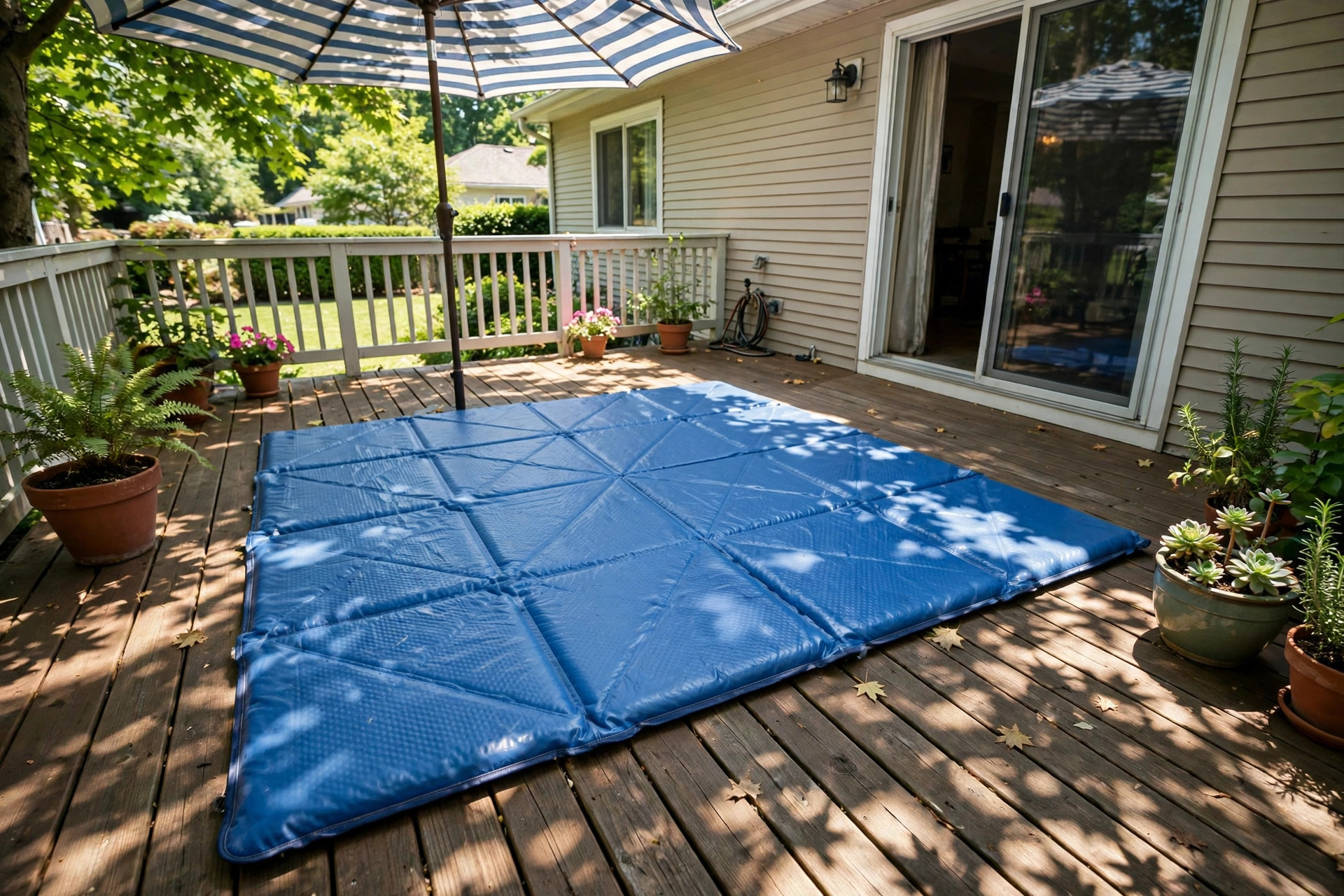

Every summer, American patios turn into ovens. Stone pavers, brick, and concrete decks soak up the sun all morning and give it back all afternoon. A dog lying on that surface feels the heat through its belly and paws. A dog cooling mat for hot summer patios usa shoppers can rely on is one of the simplest tools a pet owner can buy. It needs no power, no ice, and no upkeep to speak of. This guide explains how the mats work, how to pick the right one, what they cost, and how to keep your dog safe when the weather turns hot.
Why a Cooling Mat Matters on a Hot Patio
Dogs do not cool down the way people do. People sweat across their skin. Dogs sweat only through their paw pads and cool off mostly by panting. When the air is hot and still, panting is not enough. Large breeds, older dogs, and flat-faced dogs such as bulldogs and pugs are at special risk. The American Society for the Prevention of Cruelty to Animals warns that heat can injure a dog in minutes, not hours.
Patios make the problem worse. A wooden deck in full sun can reach temperatures far above the air temperature. Concrete and stone hold heat into the evening. Shade helps, but a dog resting in the shade is still lying on a warm slab. A cooling mat gives the dog a spot that stays cool to the touch. The dog lies on the mat, body heat moves into the gel, and the animal rests easier.
A cooling mat will not replace water, shade, and common sense. It is a helper, not a cure. But for dogs that spend time outdoors with their owners in July and August, it is a small purchase that brings real comfort.
What to Look For When You Choose a Mat: Dog Cooling Mat for Hot Summer Patios Usa
Not all mats are made the same. The differences show up in how long they stay cool, how well they hold up to claws, and how easy they are to clean.
Size
Measure your dog from nose to tail while it lies stretched out. Add four to six inches. A mat that is too small forces the dog to hang its legs or belly off the edge, which defeats the purpose. A mat that is too large wastes patio space and may fold at the edges. Most mats come in small, medium, large, and extra-large. For a golden retriever or a German shepherd, buy large or extra-large without thinking twice.
Cooling Gel Quality
Most patio mats use a pressure-activated gel sealed inside a plastic or fabric shell. When the dog lies down, the gel absorbs body heat and feels cool. Better mats stay cool for two to four hours and then recharge on their own in about fifteen to twenty minutes without use. Cheaper mats may warm up in under an hour. Read product notes for the stated cooling time, and be skeptical of claims that seem too good to be true.
Durability
Claws are the enemy of thin plastic shells. Look for mats with reinforced seams and a heavy outer layer. Owners of large or active dogs should avoid mats that feel like a water balloon. Some mats use a woven nylon cover that resists punctures better than bare vinyl. Reviews from owners of similar breeds are worth more than the marketing text on the box.
Ease of Cleaning
Patios are dusty. Dogs drag in dirt. Pick a mat you can wipe down with a damp cloth. Mats with removable, machine-washable covers are even better. Avoid mats with deep quilted pockets that trap grit.
Non-Toxic Materials
Check that the gel is non-toxic and that the mat is labeled safe for pets. Dogs chew. A mat that leaks a chemical gel is a hazard. Reputable makers state clearly that their gels are non-toxic. The American Veterinary Medical Association reminds pet owners to check product labels the way they would check food labels.
Types of Cooling Mats and How They Work
Three main designs serve the patio market. Each has its strengths.
Pressure-Activated Gel Mats
These are the most common. The gel core reacts to pressure and weight, so the mat begins cooling as soon as the dog settles on it. No water, no freezing, no cords. This is the type most owners mean when they talk about a dog cooling mat for hot summer patios usa retailers stock each spring. It folds flat for storage in the fall.
Water-Filled Mats
These mats work like a thin water bed. You fill them with water, and the water pulls heat away from the dog. They cool longer than gel mats in some cases, but they are heavier and can leak if a claw punctures them. They also need refilling and occasional cleaning to prevent odors.
Elevated Cooling Cots
These are not mats at all but raised mesh beds that let air flow under the dog. They work well on patios because hot air rises off the deck while cooler air passes beneath. Some owners pair a cot with a gel mat on top. The cot alone is often enough for dogs that dislike lying on gel.
For most patio owners, a pressure-activated gel mat is the best balance of price, ease, and performance.
Cost and Price: What You Should Expect to Pay
Prices are modest. Small gel mats start around fifteen dollars. Large mats from well-known makers run between thirty and sixty dollars. Extra-large mats for giant breeds can reach eighty dollars. Water-filled mats cost about the same. Elevated cots run from forty to ninety dollars depending on size and frame quality.
Do not judge by price alone. A twenty-dollar mat that lasts one summer and then leaks is dearer than a fifty-dollar mat that lasts four. Watch for sales in late spring at pet stores and home centers. Online sellers such as Chewy and big-box stores such as The Home Depot carry wide selections, and seasonal stock often drops in price by August.
If your dog also spends time at the lake or in the pool, budget for related summer gear too. A dog life jacket is a wise buy for dogs that swim, and an outdoor dog shower makes cleanup after patio and yard time far easier.
Care and Upkeep
A cooling mat asks little of its owner, but a few habits keep it working well.
First, store it indoors when not in use. Constant sun breaks down the outer shell and fades the cover. Bring it inside at night or keep it in a shaded storage box.
Second, wipe it down weekly. Patio dust, pollen, and dog hair build up fast. A damp cloth with mild soap is enough. Rinse and let it air dry before the dog uses it again.
Third, inspect the seams once a month. Look for bulges, thin spots, or damp patches that signal a slow leak. A leaking gel mat should be thrown away and replaced. Do not patch it with tape and hope for the best.
Fourth, give the mat time to recharge. If the dog lies on it for hours, the gel warms up. Move the mat to a shaded spot or bring it inside for fifteen to twenty minutes so it can return to its full cooling power.
Finally, wash any removable cover in the machine on a gentle cycle. This keeps odors down and the patio area fresh.
When summer ends, clean the mat fully and let it dry before you fold it. Store it flat in a dry closet or garage, away from sharp tools and heavy boxes that could press a crease into the gel. A mat stored with care will be ready the day the heat returns.
Safety on Hot Days
A cooling mat is part of a larger plan for summer safety. Keep these rules in mind.
Keep fresh water within reach at all times. A dog on a hot patio drinks more than usual. If you travel with your dog, a no-spill water bowl keeps water available in the car without soaking the seats.
Watch for the signs of heat trouble. Heavy panting, thick drool, glazed eyes, and stumbling are warnings. PetMD lists these among the early signs of heatstroke and urges owners to act fast: move the dog to shade, offer cool water, and call a veterinarian.
Never leave a dog alone on a patio in direct sun, mat or no mat. The Humane Society of the United States is blunt on this point: shade moves as the sun moves, and a patio that was shaded at noon can be fully exposed by three in the afternoon.
Know your dog. Puppies, senior dogs, overweight dogs, and flat-faced breeds overheat faster. The American Kennel Club offers breed-by-breed guidance that is worth reading before summer begins.
Learn basic pet first aid. The American Red Cross publishes guidance on cooling an overheated animal safely, and a short course in pet first aid is time well spent for any dog owner.
Frequently Asked Questions
How long does a gel cooling mat stay cool?
Most good mats stay cool for two to four hours of steady use. After that, the gel needs about fifteen to twenty minutes without the dog on it to recharge. In very hot weather, expect the shorter end of that range.
Do I need to put the mat in the freezer?
No. Pressure-activated gel mats do not need freezing. That is their main advantage over ice packs and frozen towels. Water-filled mats need only tap water. Freezing can damage some gel formulas, so follow the maker’s instructions.
Will my dog actually lie on the mat?
Most dogs take to it quickly, especially if you place it in their favorite shady spot. Put a familiar blanket or a treat on it the first few times. A few cautious dogs need a day or two. If your dog chews bedding, supervise at first.
Can the mat be used indoors too?
Yes. The same mat works on kitchen tile, in a crate, or beside your chair. Many owners buy one for the patio and move it inside on the hottest days. The Spruce Pets, which tests pet products hands-on, notes in its reviews at The Spruce Pets that indoor use can extend a mat’s life by keeping it out of harsh sun.
What size should I buy for two dogs?
Buy for the larger dog, or buy two mats. Two dogs sharing one mat will push each other off the cool surface, and the gel will warm faster under double the body heat.
Are cooling mats safe if my dog chews them?
Mats made with non-toxic gel are safer, but no mat is meant to be eaten. If your dog is a heavy chewer, choose a mat with a tough woven cover, supervise use, and replace the mat at the first sign of damage. Veterinary schools such as the one at Cornell University advise owners to treat any leaking pet product as a reason to call the vet.
A Final Word
A dog cooling mat for hot summer patios usa owners is a small, simple answer to a real summer problem. It costs little, needs no power, and gives your dog a cool place to rest when the deck is too hot to touch. Pair it with shade, fresh water, and a watchful eye, and your dog can enjoy the patio season safely by your side.
References
American Kennel Club. (n.d.). Dog care and training resources. https://www.akc.org American Red Cross. (n.d.). Swimming and water safety. https://www.redcross.org American Veterinary Medical Association. (n.d.). Pet care resources. https://www.avma.org ASPCA. (n.d.). Pet care and animal welfare resources. https://www.aspca.org Chewy. (n.d.). Pet supplies. https://www.chewy.com Cornell University College of Veterinary Medicine. (n.d.). Veterinary education and animal health. https://www.vet.cornell.edu PetMD. (n.d.). Pet health information. https://www.petmd.com The Home Depot. (n.d.). Home improvement products. https://www.homedepot.com The Humane Society of the United States. (n.d.). Animal protection and care. https://www.humanesociety.org The Spruce Pets. (n.d.). Pet care guides and product reviews. https://www.thesprucepets.com
Was this guide helpful?

About Michael Thompson
The My Garden US editorial team writes practical, in-depth home and garden guides for American homeowners — tested advice, no fluff.
You May Also Like

Pet Gate Extra Wide for Open Floor Plans: A Complete Guide
September 7, 2026 0 views
Best Pet Water Bottle for Hiking With Dogs: A Complete Guide
February 13, 2026 0 views
Dog Crate With Wheels for Easy Transport: A Complete Buyer’s Guide
October 2, 2026 0 views