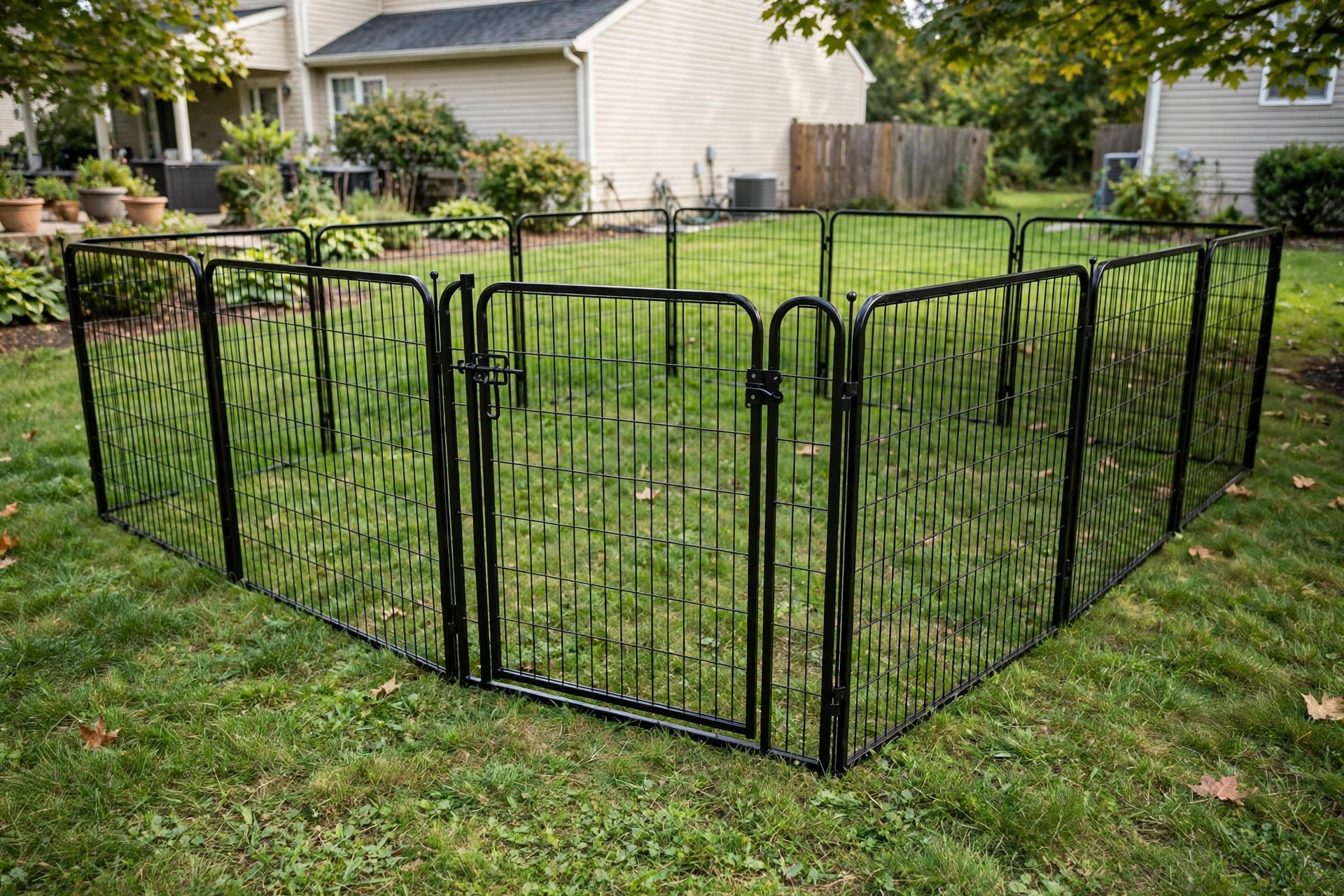

Many dog owners need a safe outdoor space for their pets. A full fence is not always an option. Some families rent their home. Some move often. Some only need a fence for part of the year. Dog fence panels for temporary yard enclosure solve this problem. These panels link together to form a pen. They stand in the yard with no digging and no posts set in concrete. When the need ends, the panels come down. The yard looks as it did before.
This guide explains everything about these panels. It covers why they help, how to pick them, the main types, typical costs, care, and safety. It also answers common questions. The goal is simple. Give your dog fresh air and room to play, without a permanent change to your property.
Why a Temporary Enclosure Matters
A dog needs time outdoors. Fresh air and movement keep a dog healthy. A yard gives room to run and sniff. But an open yard has risks. A dog may chase a car. It may wander into a neighbor’s yard. It may meet a wild animal. Dog fence panels for temporary yard enclosure remove these risks. They create a clear border the dog can see and respect.
Renters gain the most. Many rental homes have no fence. A landlord may refuse a permanent fence. Panels avoid that fight. They cause no damage to the land. They sit on the grass or patio. When a renter moves, the panels fold flat and go on the truck.
Seasonal needs matter too. Some families camp with their dog in summer. They set panels around the campsite. Some host holiday guests with pets. A panel enclosure keeps visiting dogs apart from the family dog. Foster dog homes also use panels. A new dog gets a safe zone while it learns the house rules.
Training becomes easier with a set space. A puppy learns where it may play. An older dog with weak hearing stays close. The American Kennel Club notes that a secure area helps dogs learn good habits outdoors. A panel pen gives that area in minutes.
Temporary panels also cost far less than a built fence. A chain link or wood fence can cost thousands of dollars. A set of panels often costs a few hundred. For many families, that gap decides the matter.
How to Choose the Right Panels: Dog Fence Panels for Temporary Yard Enclosure
Picking panels takes a little thought. The right set fits your dog, your yard, and your budget. The wrong set fails at the worst time.
Size and Strength for Your Dog
Start with the dog. A small terrier needs short panels. A large shepherd needs tall ones. The rule is simple. The panels should stand at least as tall as the dog’s head when it stands on its back legs. Many owners add six inches for safety.
Strength counts too. Light wire panels suit small calm dogs. Large or strong dogs need heavy steel tube frames. A dog that jumps or climbs needs a pen with a roof option or very tall walls. The ASPCA reminds owners to match any outdoor product to the size and power of the animal.
Number of Panels and Shape
Panels sell in sets of four, six, eight, or more. Each panel is often two to four feet wide. Count how much space you want. A rectangle of eight four-foot panels gives sixteen by eight feet. That suits one medium dog.
Shape matters as well. Most sets make squares or rectangles. Some make octagons. An octagon gives more floor space for the same wall length. Check that the yard has room for the shape with space to walk around it.
Ground and Weather Fit
Think about where the panels will stand. Soft soil holds anchor stakes well. Hard patio stone needs panels with flat feet. Wind is a real force. Tall light panels can tip in a storm. Look for stake holes or add ground anchors.
If rain is common, pick coated metal. Bare steel rusts fast. Powder coating or galvanized finish lasts much longer. For shaded yards, check that the coating has no sharp flakes that could cut a paw.
Types of Dog Fence Panels
Makers sell several styles. Each suits a different need. The main groups are wire exercise pens, modular fence panels, plastic panel sets, and heavy duty kennel panels.
Wire Exercise Pens
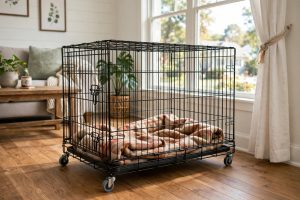
Wire exercise pens are the most common type. They come as a folded set of hinged panels. Open them like a book. Form a circle or square. Close the gate latch. That is all.
These pens are light and cheap. They fold flat for storage in a car trunk. Small dogs and puppies use them most. They also work well indoors for training. Many owners buy a second pen to join into a larger yard run.
The weak point is strength. A strong dog can bend thin wire. Check the wire gauge before you buy. A lower gauge number means thicker wire. PetMD advises owners of powerful breeds to test the pen with the dog watched at first.
Modular Fence Panels
Modular panels look like small fence sections. Each panel has a frame of square steel tube and a mesh fill. Clamps or pins join them. A gate panel gives a door.
These cost more than wire pens. They also last longer and look neater. A black finish blends with most yards. Some sets reach forty eight inches tall. That handles most medium dogs. For a big yard job, compare these with a best outdoor dog kennel for large breeds to see which fits your space.
Plastic and Resin Panel Sets
Plastic panels are light and quiet. They do not rust. They wipe clean with a hose. Many come in white or green. They suit small dogs and patios.
They have limits. Sun breaks down cheap plastic over years. A heavy dog can crack a thin panel. Buy panels with thick walls and UV rating. They work best as a short term answer, not a ten year fence.
Heavy Duty Kennel Panels
Heavy duty panels are the top tier. Welded steel frames, thick mesh, and strong latches. Some stand six feet tall. They hold large active breeds. Many kennel runs use them.
They cost the most and weigh the most. Each panel may need two people to move. But they survive storms, chewing, and jumping. If you need a pen that stands all summer, this type pays for itself.
Cost and Price
Prices run wide. A small wire exercise pen may cost forty dollars. A full set of heavy duty panels can pass six hundred dollars. Most families spend between one hundred and three hundred dollars for a good mid size set.
What drives the price? Height, metal thickness, panel count, and brand. Taller panels cost more. Thicker steel costs more. A gate panel adds to the set price. Known brands charge a premium but often give better latches and coating.
Shop with care. Chewy and big pet stores list many options side by side. Walmart and Tractor Supply stock panel sets in many towns. Home Depot and Lowe’s carry heavier kennel panels in the fencing aisle. Compare the wire gauge, the latch type, and the warranty. A cheap set that fails in a year costs more in the end than a fair set that lasts five.
Used panels save money too. Check local listings. Look for rust at the joints and test every latch. A wire brush and spray paint can renew an old steel set.
For help judging value, Consumer Reports tests many outdoor and pet products. Their buying guides explain which features matter and which are just marketing.
Care and Upkeep
Panels last longer with a little care. Clean them each month. A garden hose removes dirt and droppings. A mild soap helps with grime. Rinse well so no soap stays on the metal.
Check joints and latches often. Wind and dog pressure loosen pins. Tighten bolts. Replace a lost pin at once. A pen is only as strong as its weakest joint.
Watch for rust. Scratch the coating with a key? Touch it up with paint made for metal. Rust spreads fast once it starts. Store panels dry in winter if you can. A garage corner or shed keeps them off wet ground.
Grass grows through a pen that sits in one spot. Move the pen a few feet each week. This saves the lawn and keeps the ground dry under the dog. In muddy weeks, lay straw or wood chips inside. They keep paws cleaner and cut down on smell.
Safety
Safety is the first job of any fence. Start with a full walk around before the dog enters. Look for sharp wire ends. Run a hand along the top rail. Check that no bolt sticks out where a dog could catch a collar.
Mind the gate latch. It must close firm and need a human hand to open. Some dogs learn to nose a weak latch open. A clip or carabiner adds a second lock. This small step stops many escapes.
Never leave a young puppy alone in a new pen for long. Watch how it acts. Does it chew the wire? Does it dig at the edge? Does it try to climb? Fix problems before they turn into habits. If chewing is heavy, a solid panel style may suit better than open wire.
Heat and water need thought. A pen in full sun gets hot. Metal rails can burn paws in summer. Put the pen where shade falls part of the day. Always leave fresh water inside. In cold months, a pen is a daytime spot only. Pair it with a warm shelter such as a heated dog house for winter cold climates for nights.
Other animals can reach through the mesh. Cats, raccoons, and stray dogs may come close. For homes with cats too, an outdoor cat enclosure for safe garden roaming keeps each pet in its own safe zone. The Spruce Pets site, at The Spruce Pets, has plain guides on keeping outdoor pets calm around wildlife.
Check local rules. Some towns limit fence height or ban front yard pens. A quick call to the town office saves trouble. Homeowner groups may have rules too.
Frequently Asked Questions
How tall should the panels be for my dog? Measure your dog standing on its back legs. Add at least six inches. Small dogs do well with twenty four inch panels. Medium dogs need thirty six to forty two inches. Large or athletic dogs need forty eight inches or more. When in doubt, buy taller.
Can I use these panels on a patio or deck? Yes. Pick panels with flat feet instead of ground stakes. Put rubber pads under the feet to stop sliding and scratching. Sweep the area often. A patio pen needs shade and water just like a yard pen.
Will panels keep my dog from digging out? Panels stop a dog from walking out, not from digging. For diggers, lay a wire mesh mat on the ground inside the pen. Cover it with soil or chips. Or set the panels on a concrete pad. Heavy diggers may need a buried wire apron around the edge.
How long does a panel set last? Coated steel sets often last five to ten years with care. Cheap bare wire may rust in two seasons. Plastic sets last three to six years in strong sun. Store panels dry in winter and touch up paint chips. Good care doubles the life.
Are temporary panels legal in rental homes? In most cases, yes. They cause no permanent change, so most leases allow them. Still, read your lease and ask the landlord. Take photos of the yard before setup. Photos prove the panels left no damage when you move out.
Can panels join with a dog house or kennel? Yes. Many owners place a dog house inside the panel area. The pen gives the run space and the house gives shelter. Make sure the house door faces away from the wind. Leave room to walk around the house for cleaning.
A Final Word
Dog fence panels for temporary yard enclosure are a simple answer to a common need. They cost less than a built fence. They go up in minutes. They come down with no trace. Pick the right height and strength for your dog. Keep the pen clean and check it often. Put safety first every time. With a little care, these panels give your dog the outdoor time it needs and give you peace of mind.
References
American Kennel Club. (n.d.). Dog care and training resources. https://www.akc.org ASPCA. (n.d.). Pet care and animal welfare resources. https://www.aspca.org Chewy. (n.d.). Pet supplies. https://www.chewy.com Consumer Reports. (n.d.). Product reviews and ratings. https://www.consumerreports.org Lowe’s. (n.d.). Home improvement products. https://www.lowes.com PetMD. (n.d.). Pet health information. https://www.petmd.com The Home Depot. (n.d.). Home improvement products. https://www.homedepot.com The Spruce Pets. (n.d.). Pet care guides and product reviews. https://www.thesprucepets.com Tractor Supply Co. (n.d.). Farm and ranch supplies. https://www.tractorsupply.com Walmart. (n.d.). Everyday low prices. https://www.walmart.com
Was this guide helpful?

About James Carter
The My Garden US editorial team writes practical, in-depth home and garden guides for American homeowners — tested advice, no fluff.
You May Also Like
Best Pet Food Mat for Messy Eaters Floor
July 11, 2026 0 views
How a Cat Water Bowl Fountain Combo for Hydration Helps Your Cat Drink More
April 14, 2026 1 views
Best Outdoor Dog Toy for Fetch in Yard
March 9, 2026 0 views