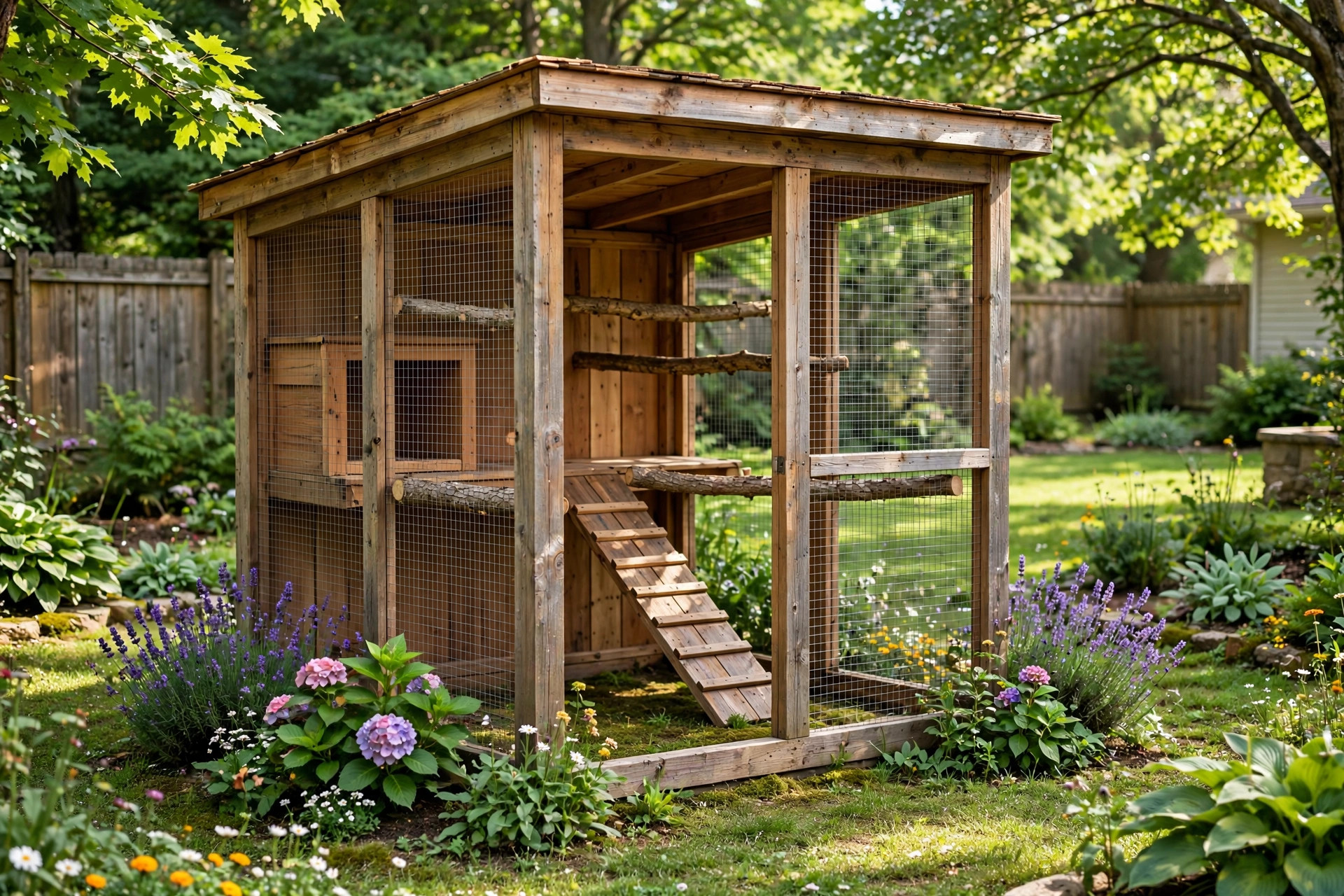

Many cat owners face the same hard question. Should the cat stay inside all day, or should it roam free in the garden and the street? Both choices have costs. Indoor cats often grow bored. Outdoor cats face cars, dogs, poison, and disease. An outdoor cat enclosure for safe garden roaming offers a middle path. It is a fenced structure that lets a cat enjoy fresh air, sunlight, and the sights and smells of the garden, while keeping it fully protected from danger.
This guide explains why such an enclosure matters and how to choose, build, furnish, and care for one.
Why It Matters
Cats are hunters by nature. They want to climb, scratch, stalk, and sit in warm sun. A cat that never leaves the house may still live a good life, but it misses out on much of what makes a cat feel alive. Owners often see the signs of boredom. The cat scratches the sofa. It sleeps all day and runs wild at night. Veterinary guides at PetMD note that indoor cats need play and stimulation to stay healthy, and fresh outdoor time is one of the best forms of enrichment.
Free roaming is not the answer for most cats. The average outdoor cat faces real threats. Cars kill thousands of cats each year. Dogs, coyotes, and other predators injure many more. Outdoor cats fight, catch infections, and pick up parasites. They may eat poison set out for rats, or drink from puddles with antifreeze. The ASPCA advises keeping cats indoors or in secure outdoor areas for their own safety. An outdoor cat enclosure for safe garden roaming solves this problem in a simple way. The cat gets the garden. The owner gets peace of mind.
A garden enclosure also protects local wildlife. Cats kill birds and small animals even when they are well fed. A catio lets your cat watch the birds without catching them. Many bird lovers welcome this. It is a choice that serves both the pet and the garden.
There is another benefit that owners mention again and again. A cat with safe outdoor time is often calmer indoors. It scratches less furniture. That change alone is worth the effort for many families.
What to Look for When Choosing: Outdoor Cat Enclosure for Safe Garden Roaming
A good enclosure is safe, strong, and pleasant for the cat. Before you buy or build, think through the points below.
Size and Space
Bigger is almost always better. A cat needs room to walk, stretch, climb, and rest in a sunny spot and a shady spot. A small box that holds one perch is not enough for long visits. Aim for at least six feet of length if you can, and give the cat vertical space too. Cats love height. Shelves, ramps, and perches at different levels make even a modest enclosure feel large.
If you have more than one cat, add space for each animal. Two cats need room to sit apart when they wish. Crowding leads to stress and fights. Measure your garden or patio before you shop, and mark the footprint with tape or string so you can picture the real size.
Materials and Build
The frame must stand up to weather and to the cat. Common frame materials include wood, powder-coated steel, and aluminum. Wood looks warm and natural in a garden, but it must be sealed against rot. Metal frames last longer with less care. Whatever the frame, check that all joints are tight and all edges are smooth. A sharp edge can cut a paw.
The mesh matters most. Look for galvanized or PVC-coated wire mesh with small openings, usually no larger than one inch square. Chicken wire is too weak. A determined cat can tear it, and it rusts fast. Welded wire mesh or hardware cloth is far stronger. The roof must be covered too, or the cat will climb out. Some owners also bury mesh a foot deep around the base to stop digging. Stores like The Home Depot and Lowe’s sell mesh, lumber, and hardware for a do-it-yourself build, and their staff can help you pick the right gauge of wire.
The door must latch with a lock or a carabiner clip. A simple hook is not enough. Raccoons can open simple latches, and a strong cat can push a loose door open. Test the latch yourself before you trust it.
Design and Access
The best enclosures connect to the house. A tunnel or a pet door that leads from a window or a cat flap lets the cat come and go on its own. If the enclosure stands alone in the yard, you will need to carry the cat there each time, which grows old fast.
Put the enclosure where you can see it from a window. This lets you check on the cat with a glance. Place part of it in shade. A full-sun box can overheat in summer. Add a water bowl, a scratching post, and a soft bed. A best outdoor cat tree weatherproof for patio is a fine addition for climbing and resting, as long as it is built for rain and sun.
Types of Outdoor Cat Enclosures
Enclosures come in several styles. Each suits a different home and budget.
Freestanding Catios
A freestanding catio is a large cage-like structure that stands on the lawn or patio. It may be as small as a playpen or as large as a small room. Some models are sold as kits that you bolt together in an afternoon. Online catalogs at Wayfair list many freestanding catios in wood and metal, and buyers can compare models at large pet supply stores like Chewy or Petco.
Freestanding models suit owners with a good-sized garden. They give the most space and the most design freedom. The main cost is time or money for assembly. A large wooden catio can cost several hundred dollars in materials.
Window and Balcony Enclosures
A window box is a small enclosure that fits into an open window like an air conditioner. The cat steps from the sill into a mesh box and sits in the fresh air. A cat enclosure for balcony apartment living usa is the flat-dweller’s version: netting or panels that fence in the balcony so the cat cannot slip through the rails or fall.
These options suit renters and apartment owners. They cost less and need no garden. Their limit is size. A window box holds one cat for a short visit, not a full afternoon of play. Make sure the unit is rated for your window type and that it locks in place.
Portable and Tent Models
Pop-up tent enclosures fold flat for storage and open in seconds. They are made of mesh fabric over flexible poles. Marketplaces like Amazon carry many portable tent models at low prices. They suit travel, camping, or a small patio. They also work well as a first test: buy a cheap tent, see if your cat enjoys the garden, then invest in a larger build.
The weakness of tents is strength. A bold cat can claw through fabric mesh, and a strong wind can carry a light tent away. Always stake a tent down and never leave a cat in one alone for long.
Cost and Price
Prices range widely. A simple pop-up tent may cost thirty to sixty dollars. A window box often costs one hundred to two hundred dollars. Kit catios in wood or metal run from two hundred to eight hundred dollars depending on size. A large custom wooden catio, built by a carpenter or as a serious weekend project, can cost one thousand dollars or more in materials alone.
Do-it-yourself building saves money but costs time. A medium wooden catio needs pressure-treated lumber, galvanized mesh, screws, hinges, a latch, and roof panels. Buying guides at The Spruce Pets can help you compare kit prices before you decide between buying and building.
Do not forget the extras. Perches, ramps, a scratching post, a bed, food and water bowls, and shade cloth add to the bill. Budget for them from the start. A bare cage is not a home. Furnish the space and the cat will use it far more.
A cat that prefers walks on a lead may need less structure. A cat harness and leash set for outdoor walks costs far less than a catio, though it needs your time and attention on every outing.
Care and Upkeep
An outdoor structure needs regular care. Check the mesh every month for rust, tears, or loose staples. A small hole is an escape route. Tighten bolts and screws twice a year. Wood frames need a fresh coat of pet-safe sealant every one to two years. Never use paint or stain that is toxic when chewed. Let all coatings dry and air out fully before the cat goes back in.
Clean the enclosure weekly. Sweep out leaves and dirt. Wash food and water bowls daily. In hot weather, refill water often and check that the shade still covers the resting spots. In winter, add a warm bed or a heated pad rated for outdoor use, and make sure wind cannot blow straight through. Remove snow from the roof of the structure so it does not sag.
Watch the plants inside and around the enclosure. Many common garden plants are toxic to cats. Lilies, sago palm, and oleander are dangerous. Keep such plants out of reach, or remove them from the area. When in doubt, move the plant.
Inspect the ground after heavy rain. Soft, washed-out soil can open gaps under the walls. Fill any gap with soil and pack it firm, or add a buried mesh skirt along the base.
Safety Tips
Safety is the reason the enclosure exists, so take it seriously. Never assume the structure is escape-proof. Walk around it and look for gaps with fresh eyes. Push on the walls. Rattle the door. Think like a cat that wants out.
Keep the cat’s collar and ID tag on, even inside the enclosure. If the cat does get out, a tag brings it home faster. A microchip is a wise backup.
Do not leave food out overnight. Food draws raccoons, rats, and stray cats, which can frighten or injure your cat through the mesh. Bring bowls in at dusk.
Supervise young kittens and new cats closely at first. Some cats test every corner for a way out. Stay nearby for the first few visits until you trust both the cat and the structure.
Think about predators in your area. In places with coyotes, hawks, or large dogs, the mesh must be strong and the roof fully closed. Pet fencing advice from groups like the American Kennel Club applies to cats too: a barrier must be tall, dig-proof, and fully enclosed to do its job.
In summer heat, an enclosure can turn into an oven. Always provide shade and water, and bring the cat inside during the hottest hours. In winter cold, limit time outside and provide warm shelter. Cats feel the cold more than many owners think.
Finally, introduce the cat to the enclosure slowly. Place treats and toys inside. Let the cat explore with the door open. Do not force it. Most cats take to the space within a few days and soon ask to go out on their own.
Frequently Asked Questions
Will my cat be happy in an enclosure instead of roaming free? Most cats adapt well. The enclosure gives them sun, air, grass smells, and a view of birds and insects. These are the things cats enjoy most about the outdoors. Many owners report that their cats choose the catio over the sofa within a week.
Can I build an outdoor cat enclosure myself? Yes. Many owners build their own with basic tools. You need a saw, a drill, a staple gun or screws, lumber, and wire mesh. Free plans are common, and hardware stores sell all the parts. Keep the design simple for your first build. A rectangle with a roof, a door, and two shelves is a fine start.
How big should the enclosure be? As big as your space and budget allow. A useful minimum is about six feet long, three feet wide, and six feet tall, with shelves for climbing. Larger is better, and multi-cat homes need more room. Measure twice before you buy or build.
Is it safe to leave my cat in the enclosure while I am at work? It can be, if the structure is strong, the weather is mild, and the cat has water, shade, and shelter. Many owners do this daily. Check the forecast first. On very hot, very cold, or stormy days, keep the cat indoors.
What is the difference between a catio and a cat enclosure? The words mean nearly the same thing. Catio is a casual name for a cat patio, usually a larger structure attached to the house. Cat enclosure is the general term for any fenced outdoor space for cats, from a window box to a full garden run.
A Final Word
An outdoor cat enclosure for safe garden roaming is one of the kindest gifts you can give a cat. It answers the oldest question in cat care with a simple yes to both sides. Yes to fresh air and sunshine. Yes to safety. Your cat gets the garden it dreams about, and you get to stop worrying about the road.
Start small if you must. A window box or a pop-up tent can teach you what your cat likes. Then build bigger as time and money allow. The cats do not grade your carpentry. They care about the sun on their fur, the wind in their whiskers, and a high shelf with a view. Give them that, and the garden becomes theirs, safely, every day.
References
Amazon. (n.d.). Online shopping. https://www.amazon.com American Kennel Club. (n.d.). Dog care and training resources. https://www.akc.org ASPCA. (n.d.). Pet care and animal welfare resources. https://www.aspca.org Chewy. (n.d.). Pet supplies. https://www.chewy.com Lowe’s. (n.d.). Home improvement products. https://www.lowes.com Petco. (n.d.). Pet supplies and services. https://www.petco.com PetMD. (n.d.). Pet health information. https://www.petmd.com The Home Depot. (n.d.). Home improvement products. https://www.homedepot.com The Spruce Pets. (n.d.). Pet care guides and product reviews. https://www.thesprucepets.com Wayfair. (n.d.). Furniture and home goods. https://www.wayfair.com
Was this guide helpful?

About James Carter
The My Garden US editorial team writes practical, in-depth home and garden guides for American homeowners — tested advice, no fluff.
You May Also Like

Cat Water Fountain Stainless Steel Quiet Pump: A Complete Guide
July 10, 2026 0 views
Best Pet Gate for Hallway with Door Opening: A Buyer’s Guide
July 29, 2026 0 views
Pet Door for Screen Door Installation Dogs: A Simple Guide for Dog Owners
July 25, 2026 0 views