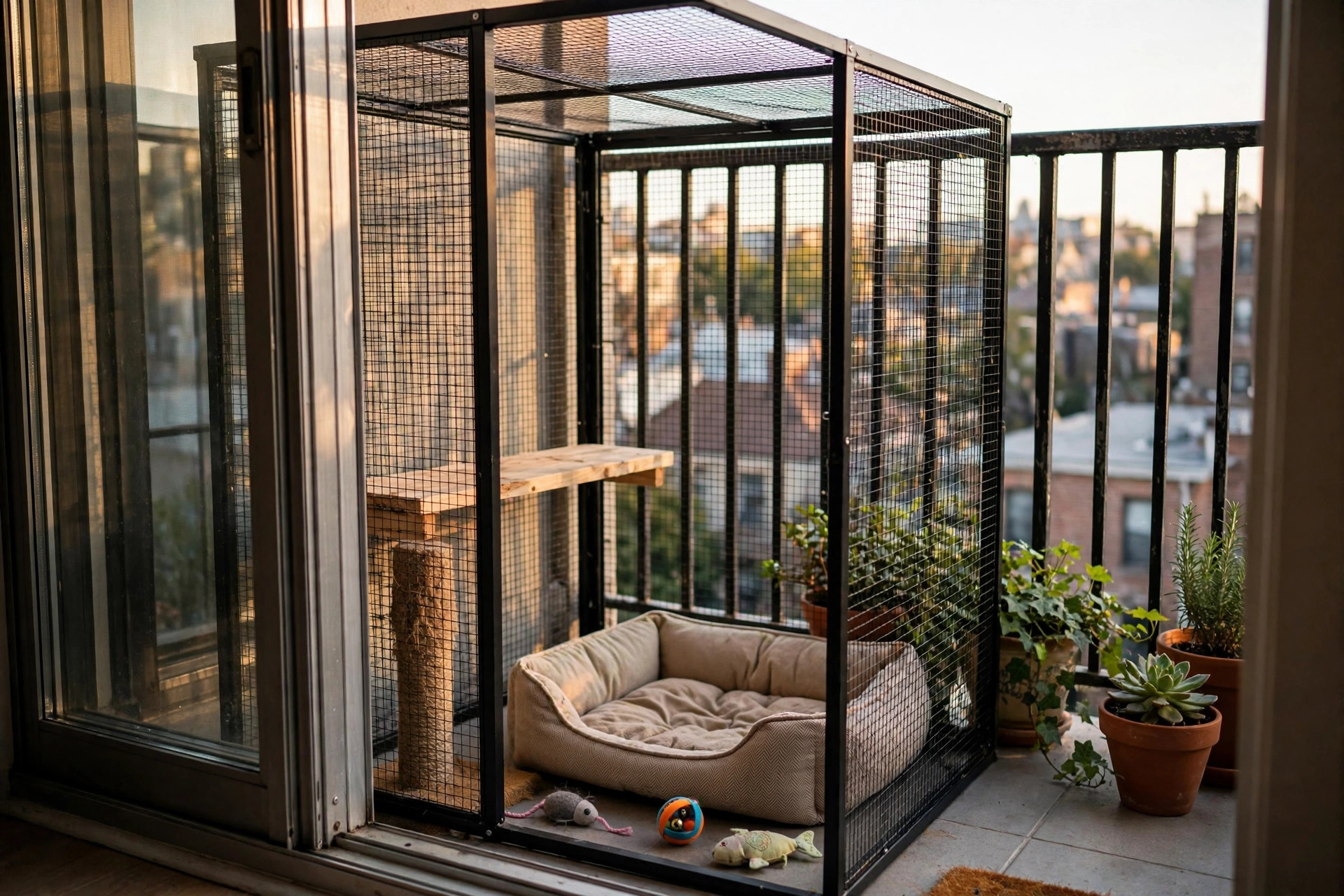

A cat enclosure for balcony apartment living usa gives an indoor cat a safe way to enjoy the open air. Many people who live in apartments want their cats to feel sun and wind. They also fear traffic, falls, and stray animals. An enclosure answers both needs at once. It builds a safe zone on the balcony where the cat can watch birds and breathe fresh air.
Why a Balcony Enclosure Matters
Indoor cats live longer than outdoor cats. Veterinarians have said this for years. Cars, dogs, fights, and disease are the main dangers outside. Yet a cat that never leaves the home can grow bored. Bored cats scratch furniture. They overeat. They sleep all day and gain weight. Some pull their own fur.
A balcony enclosure adds a new room to the cat’s world. It does not replace indoor play. It adds fresh smells, moving leaves, and warm light. Studies of animal welfare point to the value of new sights and sounds. A safe balcony gives the cat this variety without the risk of the street. For apartment dwellers, the balcony is often the only outdoor space they have. An enclosure turns it into a safe porch for the cat.
What to Look for When You Choose One: Cat Enclosure for Balcony Apartment Living Usa
Size and Fit
Measure the balcony before you shop. Write down the length, width, and height. Most apartment balconies in the USA are small. Some are only a few feet wide. A good enclosure uses most of the floor space but leaves room for you to step out. Check the railing height. The frame should fit under or behind the railing without blocking the door. Also measure the door swing so the enclosure does not hit the glass door.
Material and Mesh
Look for a strong frame. Metal frames last longer than wood in rain and sun. Steel or aluminum frames resist rust. The mesh must be small enough to stop paws and claws. Galvanized steel mesh is strong and lasts for years. Heavy nylon netting can work, but a strong cat may chew it. Read the product details for the mesh size. A hole of one inch or less keeps most cats inside.
Entry and Access
The enclosure needs a door for you and the cat. A human-sized door makes cleaning easy. Some models have a small cat flap that fits in the sliding door track. This lets the cat come and go while the glass stays shut. Check that all latches close tight. A latch that a cat can paw open is no latch at all.
Types of Cat Enclosures for Balconies
Free-Standing Pens
Free-standing pens are boxes of frame and mesh that sit on the balcony floor. They need no drilling. Many renters choose this type because leases often bar holes in walls. You set the pen down, stake it if needed, and add a litter box and bed. Pens work well on wide balconies. They are easy to move when you clean or when winter comes.
Modular Panels
Modular panels join like fence sections. You can shape them to fit a long thin balcony or a square one. Panels often connect with simple pins. You can add or remove sections as the space changes. Many panel kits sold through retailers like Home Depot list the size of each panel, which helps with planning.
Netting and Rail Systems
Netting systems stretch mesh from the railing to the ceiling or wall. They suit odd-shaped balconies where a pen will not fit. The net follows the line of the railing. This type gives the cat the most room because it uses the whole balcony. It needs good anchors at the top. If your lease bans drilling, look for kits that use tension poles or adhesive mounts.
Shoppers who compare these types may also look at outdoor cat enclosures for safe garden roaming for ideas about larger yard models.
Cost and Price Range
Prices vary with size and material. Small nylon pens often cost between forty and ninety dollars. Mid-size modular panel kits run from one hundred to two hundred fifty dollars. Large steel-frame models can cost three hundred dollars or more. Netting kits are often the cheapest, sometimes under fifty dollars, plus the cost of poles and anchors.
Add the cost of extras. You may want a weatherproof bed, a small shelf, and shade cloth. These items add twenty to sixty dollars. Many pet owners shop at large stores such as Chewy or Petco to compare prices and read reviews before they buy.
Setting Up the Enclosure
Start with a clean balcony. Sweep the floor and wipe the railing. Put down a mat or outdoor rug so the cat has soft footing. Then build the frame per the maker’s sheet. Work on a dry day. Tighten every joint. If the kit uses pins, push them in fully and check each one.
Place the enclosure where it gets some shade and some sun. A cat likes a warm patch of sun and a cool corner to rest. Add a perch at two levels if space allows. Cats feel safe when they can climb. A cat window perch for sunny window lounging inside the home can serve as the indoor side of the same habit.
Anchor the frame so wind cannot move it. Upper floors catch strong gusts. Use the straps or weights that come with the kit. If the balcony has a solid wall, rest the back of the frame against it. Leave the cat flap open for the first day. Let the cat explore at its own pace. Put treats inside to make the space inviting.
Care and Upkeep
Clean the enclosure once a week. Remove litter, leaves, and old food. Hose the floor mat or shake it out. Check the mesh for holes after storms. A small tear can grow fast. Patch it with wire or replace the panel. Oil hinges and latches once a month so they do not stick or rust.
Bring fabric items indoors during heavy rain. A soaked bed can grow mold. In hot months, add a shade cloth over part of the roof. Cats can overheat fast in a glass-like box. Always leave fresh water in the enclosure. In cold months, add an insulated pad. Some owners place heated cat houses made for outdoor cats on the balcony for winter warmth.
Watch the cat’s claws. Sharp claws catch in mesh and can tear it. Trim claws every two to three weeks. This protects the net and the cat.
Check the floor of the enclosure as well. Balcony floors can get very hot in summer sun. A dark tile floor can burn soft paw pads. Put down a light-colored outdoor rug or mat to keep the surface cool. In rain, make sure water drains off the floor and does not pool. Standing water can rust metal joints over time. Wipe joints dry after heavy rain if the maker does not coat them against rust.
Rotate the toys once a month. A fresh toy renews the cat’s interest in the space. Simple items work best: a small ball, a hanging feather, or a crinkle pad. Avoid toys with long strings. A cat left alone can tangle a string around its neck.
Look at the mesh in bright light twice a year. Rust spots, bent wires, or loose staples stand out in daylight. Fix small problems at once. A small repair takes minutes. A big tear may force you to replace a whole panel.
Safety Tips
Never leave a very young kitten alone in the enclosure at first. Watch how the cat acts near the edge. Make sure no gap at the railing is wider than the cat’s head. Cats can slip through gaps that look too small.
Check the building rules before you build. Many apartment leases cover balcony use. Some ban structures on the balcony. Others ban netting that changes the look of the building. A short note to the manager can save a fine. The U.S. Consumer Product Safety Commission also posts general guidance on safe consumer products, which is worth a look when you buy pet gear.
Keep toxic plants off the balcony. Lilies, sago palm, and many common flowers can poison cats. The ASPCA keeps a list of plants that are toxic to cats. Move any risky plant indoors or off the balcony. Also keep the cat away from citronella candles and bug sprays.
Lock the sliding door at night. Some cats learn to open cat flaps from the outside. A simple lock on the house side of the door stops this. In storm season, bring the cat inside before the wind rises. Lightweight frames can shift in strong gusts.
Also think about insects. Open mesh lets mosquitoes and flies in. Some owners hang a fine bug screen over one side of the enclosure. This adds shade and cuts bites. Check screens for tears each spring. Wasps may build nests on the frame in warm months. Check under the roof and around joints in spring. A nest near the cat’s perch is a danger. Remove small nests at dawn when wasps are slow, or call a pest service for large ones.
For general cat health questions, sites like PetMD offer vet-reviewed articles. The Humane Society of the United States also publishes care guides for indoor cats.
Frequently Asked Questions
Will my cat try to climb out of the enclosure?
Most cats test the mesh at first. A strong frame with tight mesh stops them. Give the cat perches and toys so it does not get restless. A bored cat will push harder on the walls.
Can I use the enclosure in winter?
Yes, with care. Add an insulated bed and block the wind with clear panels on one side. Short visits are best in cold weather. Bring the cat in when the temperature drops near freezing.
Does the enclosure need a roof?
Yes. A roof stops the cat from climbing out over the top. It also keeps rain off the cat and its bed. Even a simple mesh roof is enough.
How do I clean the mesh?
Brush off dust with a soft brush. Wash with mild soap and water twice a year. Rinse well. Harsh cleaners can leave smells that bother cats.
What if my lease bans balcony structures?
Ask the manager about small, free-standing pens. Many managers allow items that do not attach to the building. Netting that hangs from tension poles may also pass. Get the answer in writing. Groups like the American Kennel Club do not cover cats, but pet policy guides from The Spruce Pets often discuss renter issues for all pets.
What food should I leave in the enclosure?
Fresh water is a must. Dry food is fine for short visits. Wet food spoils fast in heat, so skip it on warm days. For feeding standards, the Association of American Feed Control Officials publishes nutrient profiles for cat food.
A Final Word
A cat enclosure for balcony apartment living usa is a simple answer to a common wish. It lets an indoor cat taste the outdoors without facing the street. Pick a frame that fits the space. Use strong mesh and tight latches. Check the lease, keep the space clean, and watch the weather. The cat will repay the effort with happy hours on the balcony and calm nights indoors.
Start small if you are unsure. A simple pen and a perch cost little. You can add panels or shelves later as the cat takes to the space. Many owners say the balcony becomes the cat’s favorite spot in the whole home.
References
American Kennel Club. (n.d.). Dog care and training resources. https://www.akc.org ASPCA. (n.d.). Pet care and animal welfare resources. https://www.aspca.org Association of American Feed Control Officials. (n.d.). Pet food labeling and regulation. https://www.aafco.org Chewy. (n.d.). Pet supplies. https://www.chewy.com Petco. (n.d.). Pet supplies and services. https://www.petco.com PetMD. (n.d.). Pet health information. https://www.petmd.com The Home Depot. (n.d.). Home improvement products. https://www.homedepot.com The Humane Society of the United States. (n.d.). Animal protection and care. https://www.humanesociety.org The Spruce Pets. (n.d.). Pet care guides and product reviews. https://www.thesprucepets.com U.S. Consumer Product Safety Commission. (n.d.). Product safety information. https://www.cpsc.gov
Was this guide helpful?

About Michael Thompson
The My Garden US editorial team writes practical, in-depth home and garden guides for American homeowners — tested advice, no fluff.
You May Also Like

The Best Pet Nail Clippers for Large Dog Nails
June 8, 2026 0 views
The Best Cat Tree for Maine Coon Large Breed Cats
September 27, 2026 0 views
The Best Cat Brush for Long Haired Shedding Control: A Complete Grooming Guide
August 11, 2026 0 views