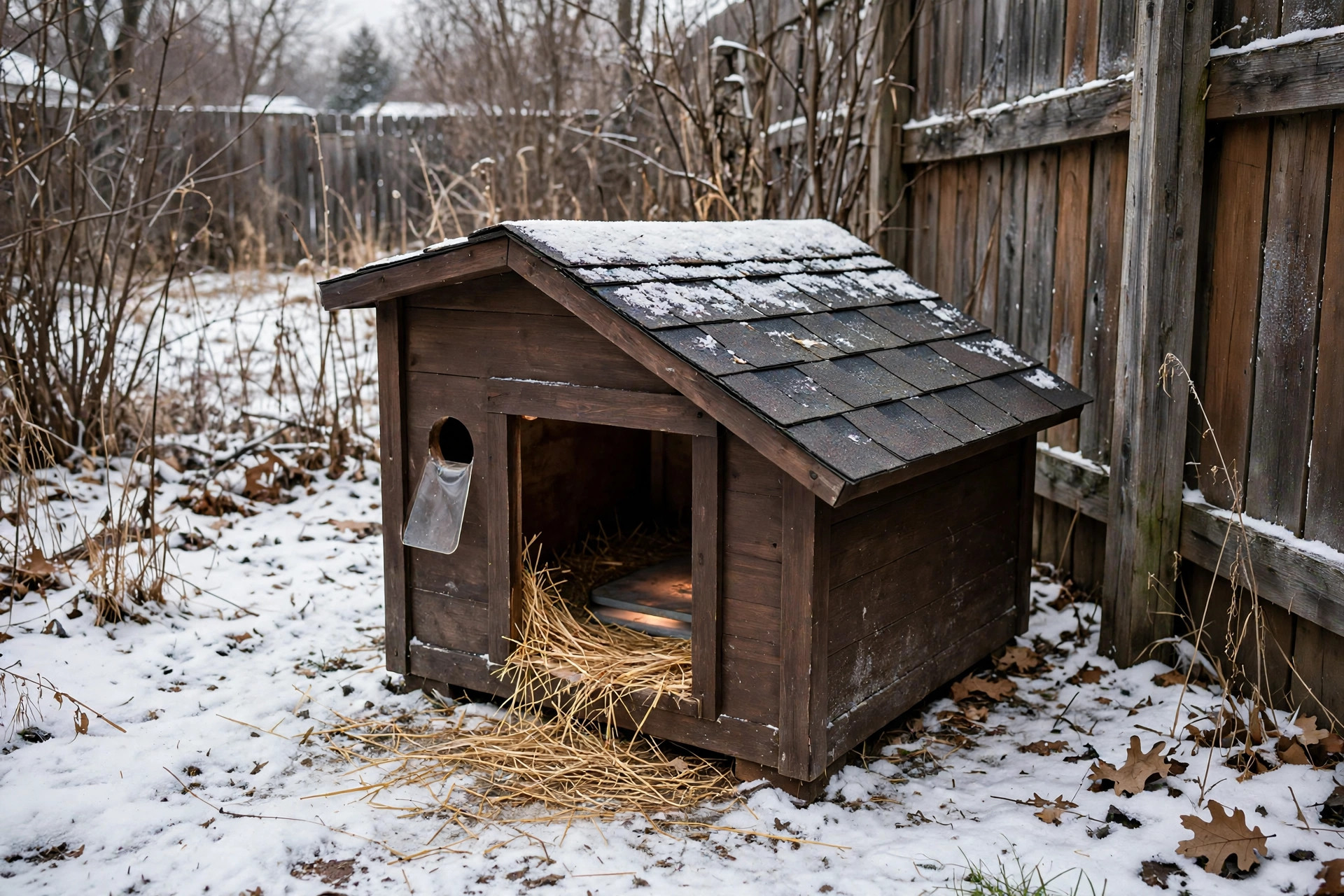

Winter is hard for cats that live outdoors. Wind and ice can drop the air to levels that harm them. A heated cat house for outdoor feral cats gives these animals a warm, dry place to rest. Feral cats do not trust people. They will not come inside a home. A heated shelter in the yard is often the best care we can give them. This guide explains why the shelter matters, what to buy, how much to spend, and how to keep the cats safe.
Why Feral Cats Need Warm Shelter
Feral cats are born outside or have lived outside so long that they fear people. They live in alleys, barns, woodlots, and city blocks. Many live in small groups called colonies. These cats find food from kind neighbors, trash bins, and small prey. They can manage in mild weather. Cold weather is another matter.
Cats lose body heat through their paws, ears, and thin fur. When the air falls below freezing, an unprotected cat can suffer frostbite on ears and tail. Long cold snaps can drain their energy. A cat that is cold burns more food just to stay warm. Older cats and young kittens suffer first. A warm shelter cuts this risk in a plain and direct way.
A heated cat house for outdoor feral cats works because the heat comes from below. The cat lies on a warm pad or floor. Heat rises into the small space. The cat keeps its own body heat inside. The result is steady warmth through the night, even when the wind blows. Many caretakers report that cats who once hid under cars begin to use a heated shelter within days.
A shelter also keeps cats dry. Rain and wet snow pull heat from fur fast. A roof and walls keep the damp out. Dry straw or a warm pad keeps the sleeping surface off cold ground. Together, heat and dryness protect a feral cat through the whole winter.
There is a wider point as well. Communities that care for feral colonies often pair shelters with trap-neuter-return work. Spaying and neutering stop the colony from growing. Vaccination protects against disease. Shelter is part of this kind care. It shows that a colony can be managed with mercy instead of removal. Groups like Alley Cat Allies have long taught this approach, and the Humane Society of the United States supports humane treatment of community cats.
What to Look for When You Choose: Heated Cat House for Outdoor Feral Cats
Size and Doorways
Pick a size that fits the cats who will use it. One adult cat needs a small box about two feet wide. A colony of three or four needs more than one house, or one long shelter with room inside. The space should be small enough to hold body heat but large enough for a cat to turn around and lie flat.
Doorways matter. Feral cats want two exits. A box with only one door can feel like a trap. They will not enter it. Look for a design with a front door and a back or side escape hole. Each opening should be about five to six inches across. Small doors keep large predators out and keep heat in. Flaps over the doors block wind.
The Heating Element
The heart of a heated cat house for outdoor feral cats is the heating part. Most units use a low-watt heated pad. The pad warms to a safe level, often near the temperature of a resting cat. Some pads switch on only when the cat lies on them. This saves power and avoids overheating.
Check the wattage. Good pads use between 20 and 60 watts. That is close to a small light bulb. A pad that runs hotter than body heat can burn a cat. Buy from a maker that lists the surface temperature and safety tests. PetMD offers clear advice on pet heating products and safe temperature ranges.
Power and Cord Safety
Most heated houses plug into a standard outlet. You will need an outdoor-rated extension cord. The cord should run along a wall or fence, away from walkways. Look for a unit with a steel-wrapped or chew-resistant cord. Rats and other animals chew cords at night. A metal wrap stops this.
Some models run on batteries or solar panels. These suit spots far from an outlet. They give less heat and need charging. For a barn or shed with power, a plug-in unit is the steady choice. Retailers such as Chewy, PetSmart, and Petco list the power type on each product page, so read the details before you buy.
Insulation and Weatherproofing
A heated pad cannot do the job alone. The walls must hold the heat in. Look for foam or thick plastic walls. Wood boxes work too if they are sealed against rain. The roof should slope so water runs off. A raised floor keeps the base out of puddles and snow melt.
Test the weather seal. Seams should be tight. Doors should close flat. A box that leaks will soak the bedding and chill the cat. Some caretakers add a simple wooden windbreak or place the house against a shed wall. The Spruce Pets has practical guides on winter-proofing outdoor pet shelters.
Types of Heated Cat Houses
Heated pad houses. These are the most common. A standard insulated box holds a heated pad on the floor. The pad plugs into an outlet. The box keeps wind out. The pad keeps the floor warm. Prices are modest and parts are easy to replace.
Heated igloo and dome houses. These have rounded roofs that shed snow. The shape holds heat well. Many have a heated floor built in. They suit snowy regions. Check that the dome has two openings, since some cheap models have only one.
Heated multi-cat shelters. Long boxes or small hutches house two to four cats. They use one long pad or two pads side by side. They suit managed colonies. They cost more and need a wider flat spot.
Self-warming non-electric houses. These use reflective foil that bounces the cat’s own body heat back to it. They need no power. They give mild warmth only. They are a fair stopgap when no outlet is near. They are not a true heated cat house for outdoor feral cats, but they beat an open porch.
Heated bowls and feeders. Some caretakers pair the house with a heated water bowl so water does not freeze. Warm water keeps cats hydrated in winter. This is an extra, not a must.
When you shop, read reviews from other colony caretakers. Petfinder connects adopters and caretakers with rescue groups, and local groups often share which shelter models held up over years of use.
Cost and Price
A heated cat house for outdoor feral cats is not a costly item. Basic models with a heated pad sell for about 60 to 120 dollars. Better insulated models with chew-proof cords run 120 to 200 dollars. Large multi-cat units can reach 250 dollars or more.
Running costs are small. A 40-watt pad that runs all day uses about one kilowatt-hour each day. At common electric rates, that is only a few dollars per month per house. Self-warming models cost nothing to run.
Straw is the best cheap bedding. A bale costs a few dollars and fills several houses. Change it when it gets damp. Avoid blankets and towels. Cloth holds damp and can freeze into a hard mat. Straw stays dry and lets cats nest.
If you care for a colony, plan for one house per two or three cats. The total cost for a small colony often stays under 500 dollars for the first winter. That is a small sum for the comfort it buys. Community groups sometimes offer grants or donated shelters, and Neighborhood Cats publishes advice on low-cost colony care.
Care and Upkeep
A shelter needs steady care through the season. Check each house once a day if you can, or at least twice a week.
Keep it dry. Lift the bedding and feel for damp. Replace wet straw at once. Check the roof for leaks after storms. Wipe up spills from water bowls placed nearby.
Check the heat. Put your hand on the pad each week. It should feel warm, not hot. If the pad stops working, replace it before the next cold night. Keep a spare pad on hand in deep winter.
Clean the box. Pull out old straw and food bits once a month. Scrub the floor with mild soap and water. Let it dry fully before adding fresh straw. A clean house draws cats back and keeps disease down.
Watch the cords. Look for chew marks or bare wire. Replace a damaged cord at once. Keep the plug end off the ground and under cover.
Refresh the site. Move the house to dry ground if meltwater pools near it. Add a windbreak of straw bales or plywood on the windy side. Shovel snow from the doorways so cats can enter.
Good records help too. Note which houses get used and which stay empty. An unused house may sit in too open a spot. Move it closer to the feeding station or along a fence line where cats travel.
Safety
Heat and electricity need respect. Buy pads and houses that carry a safety mark from a known testing lab. Follow the maker’s instructions word for word. Do not run cords under rugs or through standing water. Use only outdoor-rated cords and plugs.
Keep the shelter away from fire risks. Do not use heat lamps or space heaters in a cat house. Open bulbs can start straw bedding on fire. A low-watt pad made for pets is the only heat source to use.
Think about placement. Put houses where cats feel safe: near a wall, under a porch, or beside a shed. Avoid busy roads and dog runs. Keep houses away from areas where chemicals or salt pile up in winter.
Watch for other animals. Raccoons and opossums may try the house. Two doors let a cat escape if a larger animal enters. Do not place food inside the house. Food draws wildlife. Feed cats a few feet away from the shelter instead.
The ASPCA publishes winter safety guidance for pets, and the U.S. Consumer Product Safety Commission sets standards that cover many heated pet products. Following tested, labeled products is the safest path.
Frequently Asked Questions
Will feral cats actually use a heated house?
Most will, but not at once. Feral cats fear new objects. Place the house in a quiet spot and leave the doors open. Put a small treat trail near the door, not inside. Many cats enter within a week. Some take a month. Once one cat uses it, others often follow.
How cold is too cold for a cat outside?
Below freezing, risk rises fast. At 20 degrees Fahrenheit and lower, frostbite and illness threaten unprotected cats. Wind makes it worse. A heated cat house for outdoor feral cats keeps the sleeping spot far above these levels through most winter nights.
Can I use a heated house for a pet cat that goes outdoors?
Yes. The same rules apply. But a pet cat should also have the choice to come inside. A heated outdoor house suits daytime naps and barn cats that will not stay indoors.
What bedding is best inside the house?
Straw, not hay and not cloth. Straw sheds water and holds its loft. Hay molds fast. Blankets and towels soak up damp and freeze. Fill the floor with a thick layer of straw and replace it when damp.
Do heated houses work during power outages?
No. Plug-in pads stop without power. Keep a self-warming shelter or extra straw as backup for storm nights. In outage-prone areas, a battery or solar model can bridge short gaps.
How many houses does a colony need?
Plan one house per two or three cats. Cats in a colony often share, but shy cats need their own space. Watch who sleeps where and add houses until no cat is left out in the cold.
A Final Word
A heated cat house for outdoor feral cats is a small kindness with a large effect. It costs little. It takes little care. It turns a bitter night into a safe rest. Feral cats did not choose the streets. They survive them with help from people who notice. A warm, dry house is one of the finest gifts a caretaker can give. Pair it with steady food, fresh water, and spay-neuter care, and a colony can live out its days in comfort. If you care for cats indoors as well, you may also want to read about the best orthopedic cat bed for senior cats, the best cat tree for maine coon large breed, and a best cat litter box cabinet for hiding litter to keep indoor spaces calm and tidy.
References
Alley Cat Allies. (n.d.). Feral cat care and resources. https://www.alleycat.org ASPCA. (n.d.). Pet care and animal welfare resources. https://www.aspca.org Chewy. (n.d.). Pet supplies. https://www.chewy.com Neighborhood Cats. (n.d.). Colony care and trap-neuter-return. https://www.neighborhoodcats.org Petco. (n.d.). Pet supplies and services. https://www.petco.com Petfinder. (n.d.). Pet adoption resources. https://www.petfinder.com PetMD. (n.d.). Pet health information. https://www.petmd.com PetSmart. (n.d.). Pet supplies and services. https://www.petsmart.com The Humane Society of the United States. (n.d.). Animal protection and care. https://www.humanesociety.org The Spruce Pets. (n.d.). Pet care guides and product reviews. https://www.thesprucepets.com U.S. Consumer Product Safety Commission. (n.d.). Product safety information. https://www.cpsc.gov
Was this guide helpful?

About Jennifer Lee
The My Garden US editorial team writes practical, in-depth home and garden guides for American homeowners — tested advice, no fluff.
You May Also Like

Cat Window Perch for Sunny Window Lounging
August 7, 2026 0 views
Best Outdoor Dog Kennel for Large Breeds USA: A Plain Guide to Choosing Well
July 16, 2026 0 views
Best Pet Stroller for Large Dogs Jogging: A Complete Buying Guide
May 4, 2026 0 views