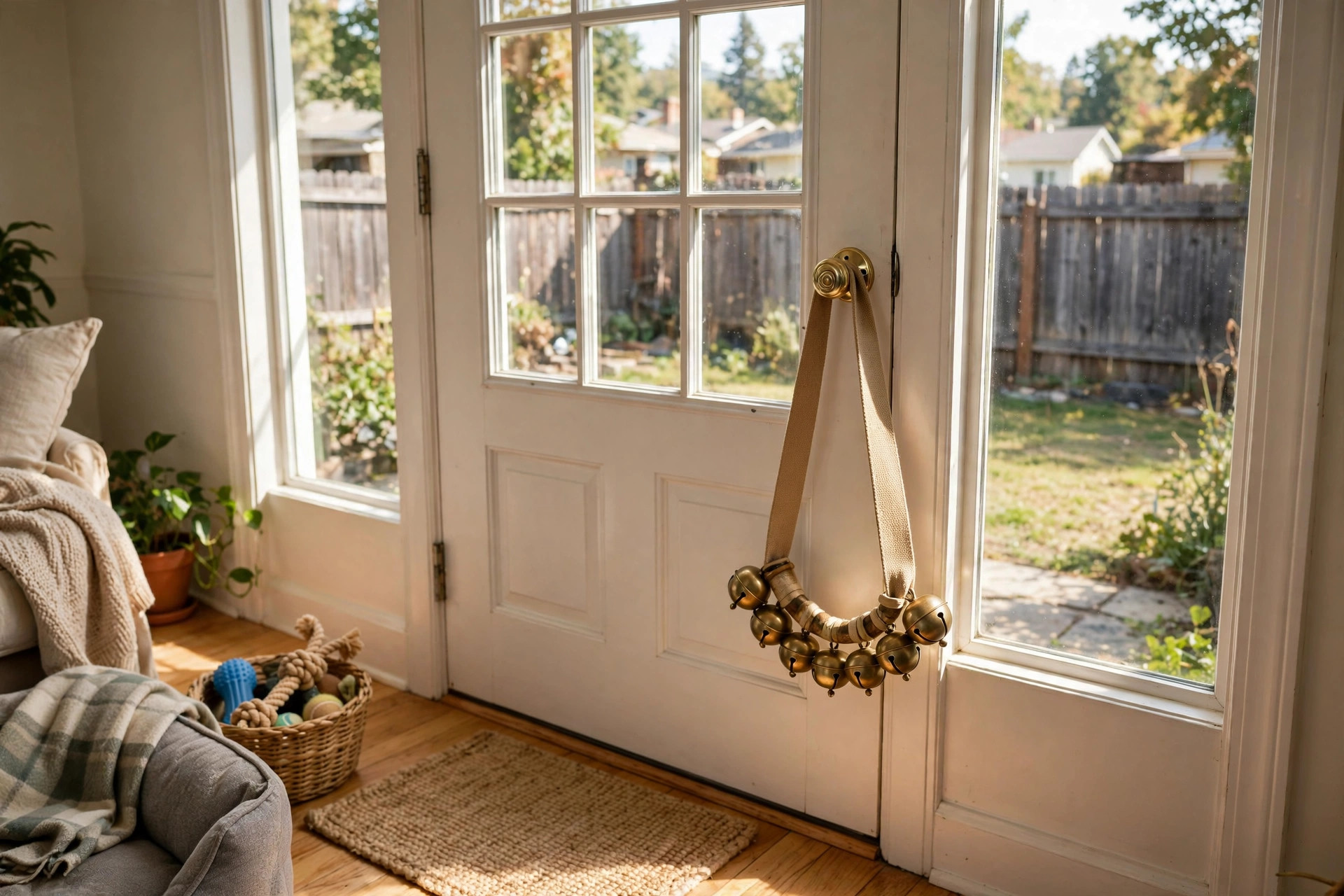

Why a Dog Doorbell Helps With Potty Training
Every new puppy owner knows the worry of a house accident. The pup stands by the door, looks at you, and hopes you understand. A dog doorbell for potty training puppies gives the pup a clear voice. It is a set of bells that hangs on a door handle or knob. The puppy learns to touch the bells with a nose or a paw when it needs to go out. The sound is clear and hard to miss, even in another room.
Puppies learn this skill fast. Many pups catch on within a week or two. The bell becomes part of a daily routine, and house accidents drop off. Owners say they feel less stress because they no longer have to watch the door every minute. The dog doorbell is cheap, simple, and kind. It does not punish the pup. It gives the pup a polite way to ask.
This tool works best as part of a full house training plan. Regular meal times, regular trips outside, and praise for good work still matter most. The bell is the signal that ties it all together. With steady use, most puppies ring the bell on their own and wait at the door with pride.
How a Dog Doorbell Works: Dog Doorbell for Potty Training Puppies Usa
The idea is plain. A strap with small metal bells hangs at nose height by the door. When the puppy touches the strap, the bells ring. Over time the puppy learns that the ring means “the door opens now.”
Training follows a short cycle. Take the puppy to the door before every trip outside. Help the puppy touch the bells. Say a cue word like “outside.” Open the door at once. Let the puppy go to its spot. Praise the puppy for going outside. Repeat this each time. The puppy soon links the bells, the open door, and the trip out.
Some owners use a push button doorbell instead of bells. It is a small disc that sticks to the wall at puppy height. The puppy presses it with a nose or paw, and it chimes or plays a tone. Both types work well. The choice comes down to sound, ease of use, and what fits the home.
Types of Dog Doorbells
Hanging Bell Straps
The classic type is a fabric or nylon strap with round jingle bells. It loops over the door handle or knob. These cost the least and need no batteries. The sound is soft and natural. They work on most doors, from front doors to back doors to sliding doors. A pup can learn to paw or nudge the strap. Many come with two or three straps of different lengths.
Wall-Mounted Push Buttons
These are small round buttons that stick to a wall or door frame with adhesive. Some are wired, but most run on a battery. The puppy pushes the button and a chime sounds. Owners who want a louder alert, or who live in a large home, often choose this type. The button sits at puppy nose height so the pup does not have to jump.
Wireless Electronic Doorbells
A wireless dog doorbell has two parts: a touch pad by the door and a plug-in chime that sits where the owner can hear it. The range can reach far through a house. Some models let the owner pick the chime tone and volume. These cost more, but they suit multi-story homes where a soft bell might not be heard upstairs.
Smart and Wi-Fi Connected Bells
Newer models connect to a home network and send a phone alert when the dog touches the pad. These are useful for owners who work in a home office or spend time in the yard. They cost the most and need setup. For most families, a simple strap or push button does the job just as well.
What to Look for When You Choose One
Sound level matters most. The bell or chime must be loud enough to hear from other rooms, but not so loud that it startles a young pup. Jingle bells give a gentle tone. Electronic chimes can be set to a soft volume at first, then raised as the puppy learns.
Fit and placement come next. The strap must hang low enough for the puppy to reach with ease. Small breeds and very young pups need a longer strap that hangs closer to the floor. Wall buttons must mount with strong adhesive or screws so a big pup cannot knock them off.
Material and strength count too. Chewing puppies test everything. A thick nylon or canvas strap holds up better than thin cloth. Metal bells should be firmly stitched so they do not come loose. For safety, small bells should be sewn on well, because loose metal parts are a choking risk.
Ease of cleaning helps as well. Straps pick up dirt and drool. A washable strap keeps things fresh. Push buttons wipe clean with a damp cloth.
Finally, think about noise type. Some homes suit a soft jingle. Others need a loud chime because the owner works upstairs or wears earplugs at night. Pet stores such as Chewy and Petco carry a wide range of both types, and large retailers like Amazon, Walmart, and Target stock them too.
Cost and Price Guide
A dog doorbell is one of the cheapest training tools a puppy owner can buy. Hanging bell straps are the lowest cost. Most sell between five and fifteen dollars in the United States. Many come in packs of two, which is handy for a home with two doors.
Wall-mounted push buttons cost more. A single button with a chime receiver often sells between twenty and forty dollars. Wireless models with a long range sit in the thirty to sixty dollar range. Smart Wi-Fi models are the top of the line and can reach sixty to one hundred dollars.
These prices cover the tool alone. There is no monthly fee for basic bells. Some smart models offer app features at no extra charge. The value is strong at every price point, because a well trained puppy saves money on carpet cleaning and floor repair.
Step-by-Step Training Plan
Start on day one with the bell. Hang the strap or mount the button by the door the puppy will use. Keep it at nose height. Let the puppy sniff the new item and grow used to it.
Each time you take the puppy out, pause at the door. Gently lift the strap or tap the button so it rings. Say “outside” in a calm voice. Then open the door at once. The puppy must learn that the ring opens the door.
Next, help the puppy touch the bell. Hold a small treat just past the bells so the puppy must nudge them to reach it. When the bells ring, praise the puppy and open the door. Do this before every trip out, at meal times, after naps, and after play.
Stay patient. Some puppies ring on purpose within days. Others need two or three weeks. Never scold a puppy for ringing too much. At first, extra rings are part of learning. Always open the door when the bell rings, even if you think the puppy just wants to play. If the puppy rings to play, take it out on a leash, stand still, and bring it back in. The puppy learns the bell is for potty trips, not games.
Trainers at the American Kennel Club stress steady routine and praise in all house training. The ASPCA also notes that positive methods build trust between dog and owner. Keep sessions short and cheerful, and end on a good note each time.
Care and Upkeep
A bell strap needs little care. Wash the fabric strap in warm soapy water when it looks dirty, then air dry it. Check the stitching around each bell once a month. Restitch or replace the strap if any bell feels loose.
Wipe push buttons with a damp cloth. Change batteries in electronic models before they run low, so the chime never fails at a key moment. Keep spare batteries in a drawer.
If the pup starts to chew the strap, redirect the chewing to a safe toy. A chewed strap can fray, and frayed threads can catch a small tooth or claw. Replace worn straps at once. A fresh strap costs little and keeps the training routine smooth.
Safety Tips
Hang the strap at a safe height. Very long straps can snag on a puppy collar if the pup jumps up, so keep the reach short and simple. For young puppies, rest the strap just above nose level and never leave the pup alone with it at first.
Choose bells that are too large to swallow. Tiny bells on cheap straps can break free. Check the stitching often. If a bell cracks or breaks, throw it away and replace the whole strap.
Electronic buttons have small batteries. Keep battery covers closed and check that screws stay tight. Some older button batteries can harm a dog if swallowed, so store spares where the dog cannot reach them.
Watch for over-ringing. Some clever puppies ring the bell every few minutes just to go out and sniff. This is normal and shows the pup has learned the skill. Answer the bell at first, then slowly shape the habit by taking the pup out on a leash and only for short breaks.
For more on safe puppy training methods, the PetMD site offers vet-reviewed guides, and The Spruce Pets publishes clear step-by-step advice for new owners.
Common Mistakes to Avoid
The most common mistake is giving up too soon. Bell training takes days or weeks, not hours. A puppy that ignores the bell on day two may ring it with joy by day ten. Keep the routine steady.
Another mistake is opening the door only sometimes. The puppy must trust that the bell works every single time. If the owner ignores the ring, the puppy stops ringing and goes back to quiet accidents by the door.
Some owners hang the bell too high. A small puppy cannot reach it, so it gives up. Lower the strap until the puppy can touch it without effort.
Others use the bell as a game and let the pup ring it for fun with no trip outside. This teaches the puppy that the bell means nothing. Answer each ring at first, then shape the habit with leash trips as noted above.
Pairing the Bell With Other Training Tools
A doorbell works well with other simple tools. A dog door for a sliding glass door lets an older, trained dog come and go on its own once the puppy phase is over. Until then, the bell teaches the pup to ask first.
A dog playpen for puppies indoor and outdoor gives the pup a safe space when the owner cannot watch the door. It keeps training on track during busy hours.
For apartment dwellers, an indoor dog potty can serve as a backup during storms or late nights. The bell still works, because the puppy rings it before using the indoor spot.
Home improvement retailers such as Home Depot also sell pet doors and related hardware for owners planning a larger setup.
Frequently Asked Questions
How long does it take to train a puppy to use a doorbell?
Most puppies learn in one to three weeks with steady practice. Younger puppies may take a bit longer because their bladders are small and their focus is short. Stay patient and ring the bell before every trip outside.
At what age can a puppy start bell training?
You can start as soon as the puppy comes home, often at eight weeks. Keep the strap low and the sessions short. Even very young pups learn the link between the ring and the open door.
Do puppies abuse the bell to go outside and play?
Some do. They learn fast that the bell opens the door, and play is fun. Take the puppy out on a leash and keep trips short and calm. The puppy soon learns that ringing means a potty break, not playtime.
Bell strap or push button: which is better?
Both work. Bell straps cost less and need no batteries. Push buttons give a louder, clearer alert in large homes. Choose based on home size, budget, and how well you hear soft sounds.
Can an older dog learn to use a dog doorbell?
Yes. Older dogs learn the skill, though it may take a bit more time than with a puppy. Use the same steps: ring, open the door, praise, repeat. Senior dogs often love the bell because they no longer have to bark or scratch.
What if my puppy is afraid of the bell sound?
Lower the volume first. For strap bells, hold a few bells still so the ring is soft. For electronic models, pick the softest chime. Pair the sound with treats. Fear fades as the puppy links the sound with the happy trip outside.
A Final Word
A dog doorbell for potty training puppies is a small tool with a big payoff. It costs little, takes minutes to set up, and gives the puppy a clear way to ask for what it needs. With steady practice, praise, and patience, the bell becomes part of daily life. The puppy gains trust, the owner gains peace, and the home stays clean. Start today, stay steady, and enjoy the sweet sound of a puppy asking politely to go out.
References
Amazon. (n.d.). Online shopping. https://www.amazon.com American Kennel Club. (n.d.). Dog care and training resources. https://www.akc.org ASPCA. (n.d.). Pet care and animal welfare resources. https://www.aspca.org Chewy. (n.d.). Pet supplies. https://www.chewy.com Petco. (n.d.). Pet supplies and services. https://www.petco.com PetMD. (n.d.). Pet health information. https://www.petmd.com Target. (n.d.). Retail store. https://www.target.com The Home Depot. (n.d.). Home improvement products. https://www.homedepot.com The Spruce Pets. (n.d.). Pet care guides and product reviews. https://www.thesprucepets.com Walmart. (n.d.). Everyday low prices. https://www.walmart.com
Was this guide helpful?

About Michael Thompson
The My Garden US editorial team writes practical, in-depth home and garden guides for American homeowners — tested advice, no fluff.
You May Also Like
Pet Door for Screen Door Installation Dogs: A Simple Guide for Dog Owners
July 25, 2026 0 views
Best Pet Camera With Night Vision Audio: A Practical Guide for Pet Owners
September 17, 2026 0 views
The Best Pet Safe Ice Melt for Driveways Dogs Owners Trust
July 5, 2026 0 views