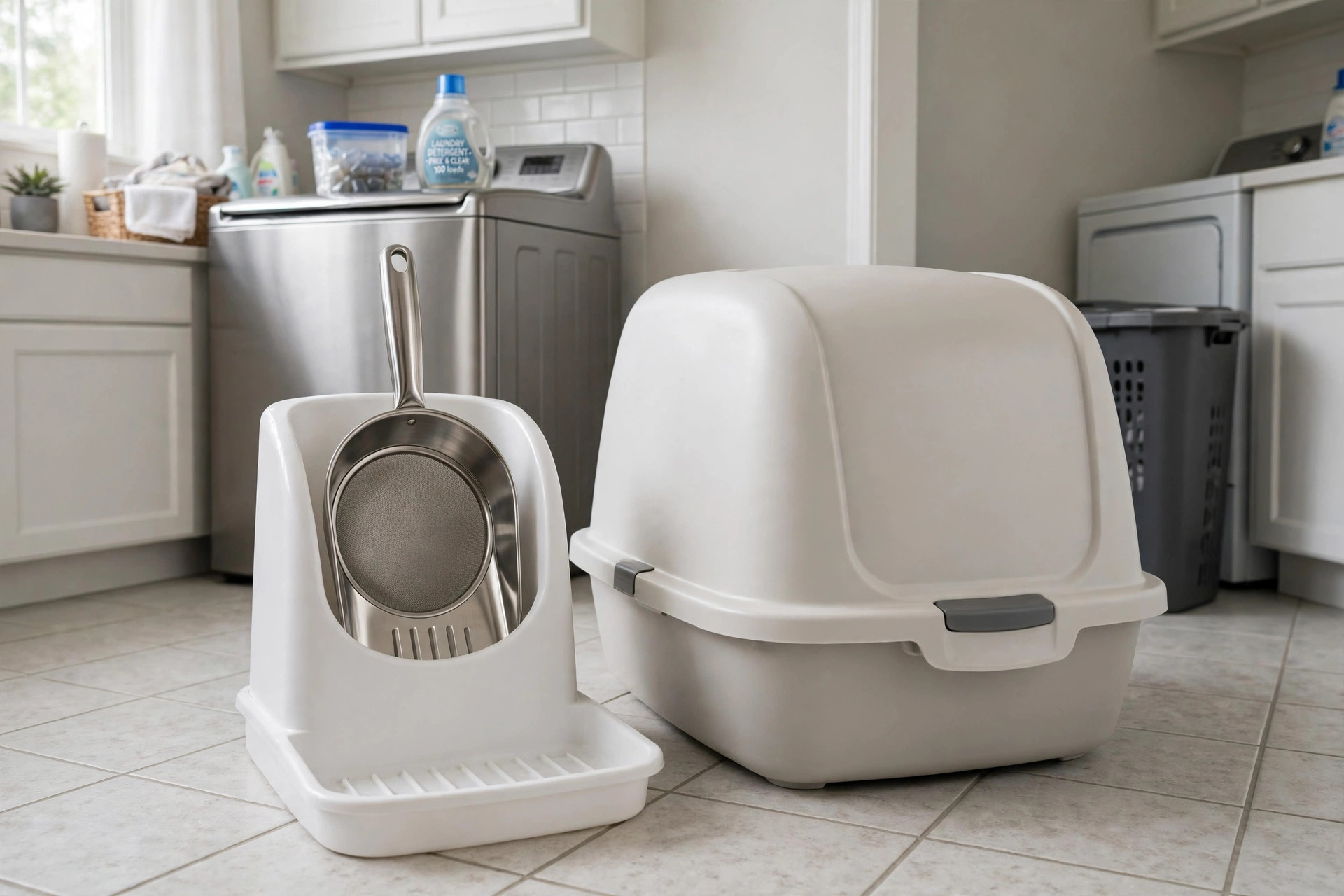

Cat owners know that scooping the litter box is the least loved part of the day. The best litter scoop with holder for easy cleaning turns a small daily chore into a quick, tidy task. A good scoop lifts clumps without breaking them apart. A holder gives the tool a clean home between uses, so it does not sit on a counter or rest in dust. This guide looks at what sets a fine scoop apart from a poor one, what kinds are sold, what they cost, and how to keep both the scoop and the holder fresh. You will also find answers to the questions owners ask most.
Why a Scoop with a Holder Matters
A litter box needs scooping once or twice a day. Vets agree that a clean box is the best way to keep a cat using it. When the box smells clean, the cat uses it without complaint. When it is dirty, the cat may seek out a corner of the room instead. The scoop is the tool that makes this habit easy.
A holder may seem like a small thing, but it solves real problems. Without one, owners hang the scoop on the edge of the box or set it on the floor. Both options spread litter dust. A holder keeps the scoop upright and clean. Many holders have a tray at the bottom that catches the bits that fall off the tool. That means the floor stays free of tracked litter. The set also keeps the scoop within arm’s reach, which makes the job faster.
There is another gain that owners notice only over time. A scoop that lives in a holder dries out between uses. A damp scoop left sitting in litter grows germs and picks up odors. When the tool air-dries in its holder, it stays fresher and lasts longer. The holder itself takes only seconds to wipe down. For a task you repeat every day, these small gains add up to a cleaner home and a happier cat.
What to Look for When You Choose: Best Litter Scoop with Holder for Easy Cleaning
Not all scoops work the same. Keep these points in mind as you shop.
Size and Shape
Pick a scoop that fits your litter box. A scoop that is too wide will not reach the corners. One that is too small makes the job slow. Most standard scoops are about six to seven inches wide. The handle should be long enough to keep your hand clear of the litter, usually five to six inches or more. A flat front edge helps push under clumps without digging into fresh litter.
Slot Design
Slots are the openings in the scoop’s basket. They let clean litter fall back through while holding waste. Slots that are too narrow trap clean litter and waste it. Slots that are too wide let small clumps slip back into the box. Look for slots around five millimeters wide. This size works with most clumping litters. If you use a fine-grain litter, choose slightly narrower slots. For coarse crystal litter, wider slots work better.
Material
Three materials show up most often.
– Metal. Stainless steel or aluminum scoops last the longest. They do not absorb smells. They slide under clumps with ease. They cost more, but many owners say they are worth it. – Heavy plastic. Thick plastic scoops are light and cheap. They work well for a time. Cheaper ones can bend or snap. Look for solid, thick plastic rather than thin, flexy kinds. – Recycled or plant-based plastic. Some scoops use corn or other plant-based materials. They work like regular plastic and appeal to owners who want greener goods.
Avoid flimsy plastic that flexes when you lift a heavy clump. A scoop that bends under weight will frustrate you every day.
The Holder
A good holder should be easy to wipe clean. It should fit the scoop snugly so the tool does not fall over. Many holders attach to the side of the litter box with a clip or hook. Others stand on the floor beside the box. A holder with a drip tray catches loose litter and keeps the floor clean. Some wall-mounted holders save floor space in small rooms.
Types and Options on the Market
Several designs exist. Each has its own strengths.
Standard Scoop and Stand Sets
This is the most common choice. The set includes a scoop and a simple stand that holds it upright. The stand often has a small tray at the base. These sets cost little and work well in most homes. Many owners pick this type first and stay happy with it.
Hook-On Holders
These holders clip onto the edge of the litter box. The scoop hangs on the side of the box, always where you need it. They save floor space and cost little. They work best with standard plastic scoops. Make sure the clip fits your box’s rim.
Wall-Mounted Holders
A wall-mounted holder screws or sticks to the wall near the box. This keeps the scoop off the floor entirely. It is a good choice for tight laundry rooms or bathrooms. A holder that is easy to wash is worth more than a fancy one that traps grime. Pick simple shapes with smooth surfaces.
Sifter-Style Scoops
Some scoops have extra-wide baskets and bigger slots for fast sifting. These suit owners with more than one cat. They clear a large box in fewer passes. The trade-off is that they may let small bits fall back through.
Self-Cleaning Scoop Sets
A few brands sell scoops with a spring or slide that pushes waste off the slots. This means you rarely touch the soiled tool. These cost more and have more parts to clean. They can be worth it for owners who dislike handling the scoop.
Readers who care for other pets may also look at gear like the best dog bed for chewers indestructible usa, since sturdy tools matter for every kind of pet.
Cost and Price
Prices stay low for this product. Most scoop-and-holder sets sell for five to twenty dollars. A basic plastic set can cost under seven dollars. Heavy-duty sets with a metal scoop often run twelve to twenty dollars. Wall-mounted or self-cleaning designs sit at the higher end.
The product is so simple that price does not always match quality. Read reviews before you buy. A three-dollar scoop made of thick plastic may last longer than a nine-dollar one made thin. Metal scoops cost more up front, but they can last for years, which makes them the better buy over time.
Stores that sell pet gear, such as Chewy and PetSmart, carry a wide range. Big home stores like Home Depot stock them too. Vet advice sites like PetMD explain how often to clean the box. For general pet care standards, the ASPCA offers solid guidance.
Care and Upkeep
A scoop stays clean only if you care for it. Follow these steps.
Wash the scoop at least once a week. Hot water and mild dish soap work fine. Scrub both sides of the basket, where clumps can stick. Rinse well and let it air dry before you put it back in the holder. A damp scoop in a closed holder can grow mildew.
Wipe the holder with a damp cloth each week. Empty the drip tray of loose litter every day or two. Once a month, wash the holder the same way you wash the scoop.
Replace the scoop when it shows wear. Cracked plastic can harbor germs in the cracks. A bent metal scoop will not sift well. Most plastic scoops last six to twelve months with daily use. Metal scoops can last several years.
The litter box itself needs a full change now and then. Dump all the litter once a month. Scrub the box with mild soap and water. Dry it fully before you refill it. This keeps smells down and keeps the box safe for your cat. A clean box also keeps the air in the room fresher, which matters in small apartments where the box sits near living space.
Safety Tips
Litter-box cleaning carries small risks. Take them in stride.
– Wash your hands. Always wash with soap after scooping. Litter can carry germs that harm people. – Wear gloves. Disposable gloves add a layer of safety, and they keep smells off your hands. – Wear a dust mask. Clay litter makes fine dust. A simple mask helps if the dust bothers your lungs. – Pregnant owners should take care. Cat waste can carry a germ called toxoplasma. Health experts say pregnant women should have someone else scoop the box, or wear gloves and wash well. See PetMD or the ASPCA for details. – Keep the set out of reach of small children. Toddlers should not handle used litter tools.
Store the scoop in its holder away from food prep areas. The laundry room or bathroom is a fine spot.
Dog owners face their own gear needs, such as a heated pet bed for arthritic older dogs for aging pets or a best dog playpen for puppies indoor outdoor for young ones. Good pet tools share one trait: they make daily care simple.
Frequently Asked Questions
How often should I scoop the litter box?
Scoop at least once a day. Twice a day is better if you have more than one cat. Frequent scooping keeps smells down and keeps your cat happy with the box. It also keeps waste from sticking to the scoop.
Can I use a regular kitchen slotted spoon instead?
It is not a good idea. Kitchen tools are not made for this job and may carry germs back to food. A real litter scoop has the right slot size and a long handle. Keep pet tools separate from kitchen tools.
Do I need a holder, or can I just set the scoop in the litter?
Setting the scoop in the litter is a common habit, but it is not the cleanest. The scoop picks up litter dust and sits in waste between uses. A holder keeps it cleaner and keeps the floor free of tracked bits. It is a small cost for a cleaner setup.
What litter works best with a standard scoop?
Most clumping clay litters work well with standard scoops. Fine-grain litters need narrower slots. Crystal and pellet litters need wider slots. Match the slot size to your litter for the best result.
How do I stop litter from sticking to the scoop?
Spray the scoop lightly with nonstick cooking spray before use. This helps clumps slide off. Wash the scoop each week so buildup does not form. Metal scoops stick less than cheap plastic ones.
When should I replace the holder?
Replace the holder if it cracks, warps, or starts to smell even after washing. Most holders last as long as the scoop. A monthly deep wash keeps them fresh for a long time.
For more pet care reading, the AKC publishes care guides, and The Spruce Pets covers home care topics. Retailer Petco also carries cleaning supplies.
A Short Final Word
The best litter scoop with holder for easy cleaning is not a luxury. It is a simple tool that makes a daily chore fast and clean. Choose a scoop that fits your box, slots that match your litter, and a holder that is easy to wash. Keep both clean with a weekly wash. Your cat will thank you by using the box without fail, and your home will smell better for it.
References
American Kennel Club. (n.d.). Dog care and training resources. https://www.akc.org ASPCA. (n.d.). Pet care and animal welfare resources. https://www.aspca.org Chewy. (n.d.). Pet supplies. https://www.chewy.com Petco. (n.d.). Pet supplies and services. https://www.petco.com PetMD. (n.d.). Pet health information. https://www.petmd.com PetSmart. (n.d.). Pet supplies and services. https://www.petsmart.com The Home Depot. (n.d.). Home improvement products. https://www.homedepot.com The Spruce Pets. (n.d.). Pet care guides and product reviews. https://www.thesprucepets.com
Was this guide helpful?

About Emily Rodriguez
The My Garden US editorial team writes practical, in-depth home and garden guides for American homeowners — tested advice, no fluff.
You May Also Like

Dog Backpack Carrier for Hiking Small Breeds: A Complete Guide
April 7, 2026 0 views
The Best Dog Crate Pad for Anxious Chewers: A Plain Guide
August 1, 2026 0 views
Cat Window Perch for Sunny Window Lounging
August 7, 2026 0 views